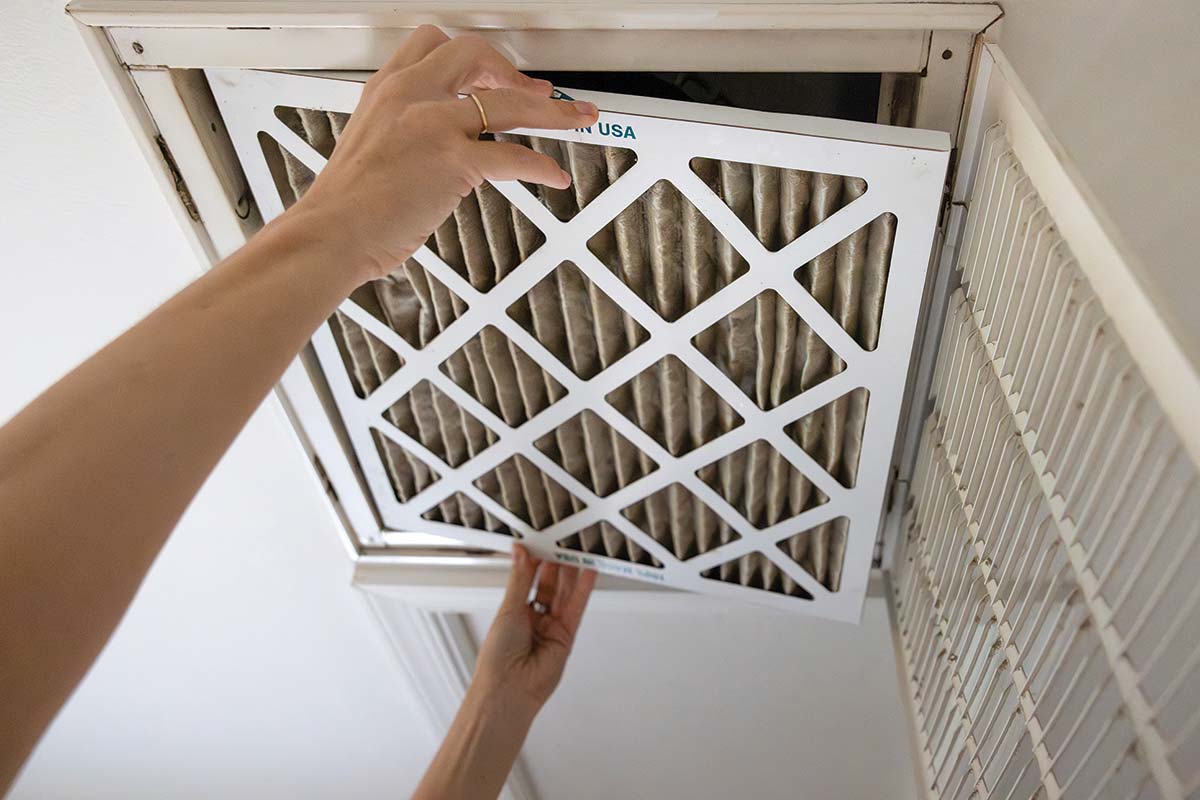
Clogged air filters reduce airflow, causing your heating, ventilation and air conditioning system to work harder and use more energy. Make one of your New Year’s resolutions to do a filter check every month of 2026.
Checking, changing or cleaning your filter once a month saves money and extends the life of your home’s HVAC system.
More than half of your energy bill goes toward keeping your home comfortable. While air filters prevent dust and annoying allergens from clogging the system, dirt builds up over time. If left unchecked, a dirty filter strains a home’s HVAC system and forces it to work harder, resulting in higher energy bills.
Filter Facts
Air filters protect HVAC systems and perform double duty by collecting loose dirt from the air. These handy sieves live in duct system slots or in return grilles of central air conditioners, furnaces and heat pumps.
Successful filters have a short lifespan—the better a filter catches dirt, the faster it gets clogged and must be cleaned or replaced. Leaving a dirty air filter in place cuts a home’s air quality and reduces HVAC system airflow.
While removing a clogged filter altogether relieves pressure on the system, the system can’t perform well without one. Unfiltered dust and grime accumulate on critical parts, including the evaporator coil, causing unnecessary wear and tear.
Monthly Checkup
The Department of Energy advises checking an air filter once a month and replacing it at least every three months. It’s crucial to inspect and replace filters during seasons of heavy use, like summer and winter.
If you have pets or smokers in the home, filters clog more quickly.
Remodeling projects or furniture sanding add more dirt than normal; a filter may need to be changed more often.
Turn your heating and cooling system off before checking your filter. Slide the filter out of your ductwork and look for layers of hair and dirt. Run a finger across the filter. If the finger comes away dirty or there’s a line left on the filter, it’s time for a change.
When replacing the filter, make sure the arrow on the filter indicating the direction of the airflow points toward the blower motor.
Choose Carefully
Shopping for a new filter? Before you leave home, snap a photo of your current filter’s measurements. If you get a filter that’s too small, dirt will get around the barrier and invade your system.
There are several different types of filters and levels of efficiency. Filters are either flat or pleated; pleated filters offer extra surface area to hold dirt, making them more efficient.
The most common filters use layers of fiberglass reinforced with metal grating. Some filters boost efficiency by using polyester fibers.
Air filters are rated by a minimum efficiency reporting value. Ranging from 1 to 20, this scale gauges a filter’s effectiveness at blocking debris. Low MERV-rated filters offer high airflow into a cooling or heating system but only catch large air particles. A higher rating isn’t always better—those filters block more dirt but also reduce system airflow.
Most experts recommend filters with a MERV 6 or higher. If a family member suffers from allergies, a high-MERV filter keeps out excess dander, smoke and other allergens. Ask a heating and cooling professional what type of filter works best for your home and family needs.
Once you find a filter that works well in your home, it’s a good idea to keep spares on hand.