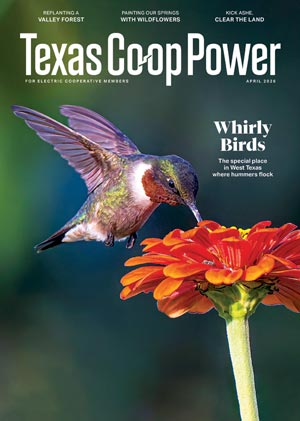
Thousands of black-chinned hummingbirds nest during the summer among the live oak and pecan trees on Dan Brown’s family ranch near Christoval in West Texas. And for nearly six decades, Brown has helped feed the tiny birds. Well into his 90s, his hearing has dulled but not his eyesight nor his energy.
One afternoon last June, Dan and his wife, Cathy, take a break from chores and relax in folding chairs in their observation room, an air-conditioned spot for watching the birds zip around sugar water feeders hung beneath roof eaves.
Beyond the room’s huge plate-glass windows, a wild bird community is on full display. A painted bunting ruffles his wet feathers on a tiered water feature surrounded by flowering native plants. Black-crested titmice and northern cardinals snatch sunflower seeds and white millet from ball-shaped feeders. From an iron skillet nailed to a live oak, a golden-fronted woodpecker swoops in for a mouthful of suet, then flies off to feed his nestlings.
“This has become more than a hobby,” muses Dan, focusing his blue eyes on the various birds. “Here it’s developed into an enterprise. I couldn’t do it without Cathy.”
The couple call their business the Hummer House, a wooded wildlife habitat just east of the South Concho River that includes three rentable guest cottages. Since 1996, visitors from across the country and around the world have come to witness the aerial antics.
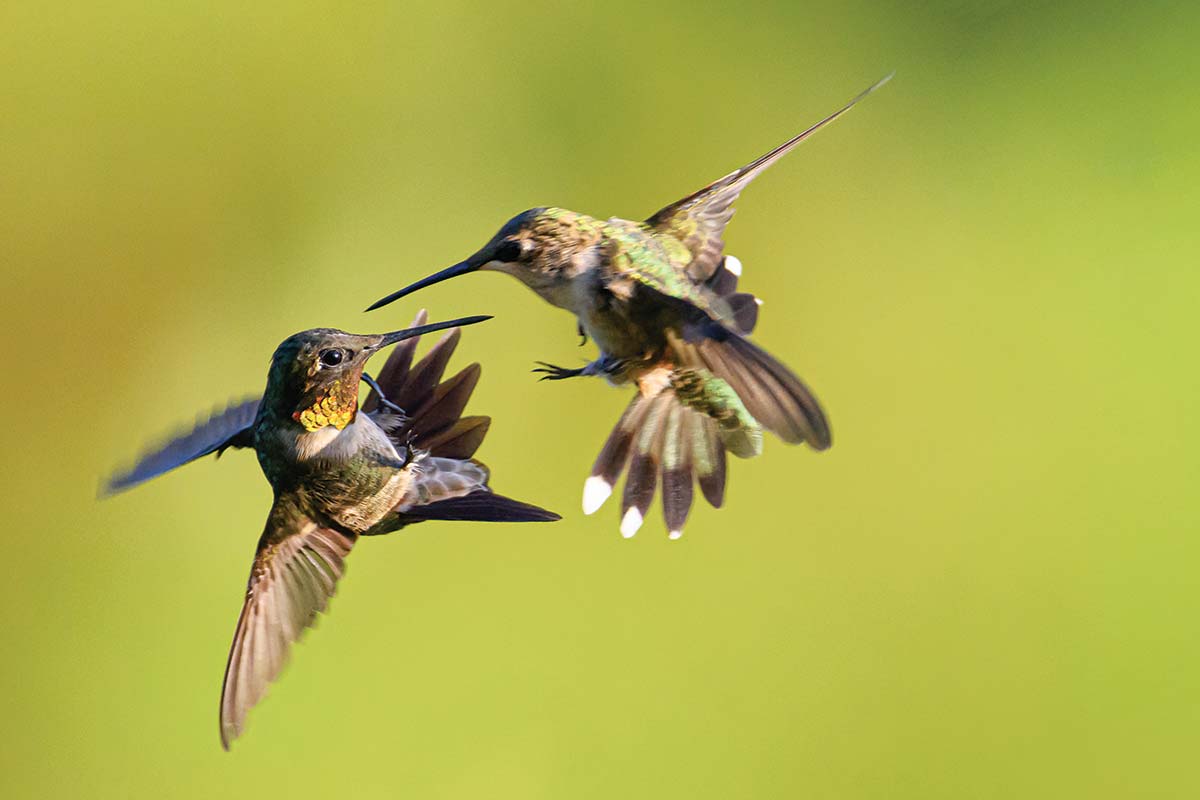
An interaction between ruby-throated hummingbirds.
Laurie Lawler
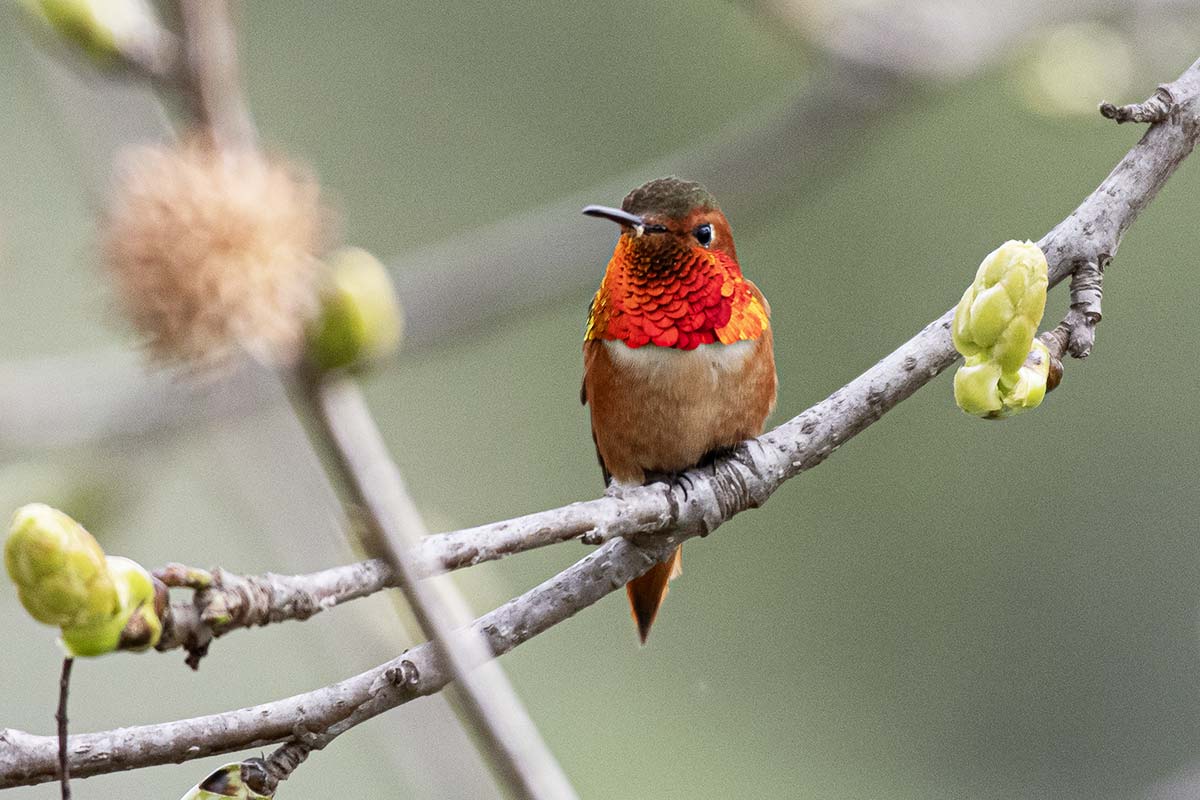
A male Allen’s hummingbird at rest.
Laurie Lawler
Altogether, the Browns put out 25 gigantic feeders that each hold 48 or 80 ounces of sugar water. Since one 48-ounce feeder lasts only 24 hours, keeping them filled is a daily job.
Production of the hummingbird fuel starts in a storage room, where Dan measures and pours sugar into 1-gallon plastic jugs, then sets them on shelves. As needed, the jugs are carried via golf cart to the observation room. At a sink, Cathy fills the jugs with water and shakes them well. Then she scours empty feeders with a long-handled brush and refills them with fresh sugar water.
In the 1990s, Dan bought sugar in annual amounts that ranged from 390 to 685 pounds. “Now we average about 1,500 pounds of pure cane sugar each year,” Cathy says. “We’re a very large nesting site for black-chinned hummingbirds. Within a quarter-mile radius, we estimate that there are probably about 3,000 hummingbirds.”
But they’re not just here for the sugar water. “Hummingbirds are insectivores,” Cathy explains. “We have thousands of native pecan trees that have aphids. Aphids are like T-bone steaks to hummingbirds. They’re very high in protein and very sweet. You could take down every one of these feeders, and we’d still have hummingbirds.”
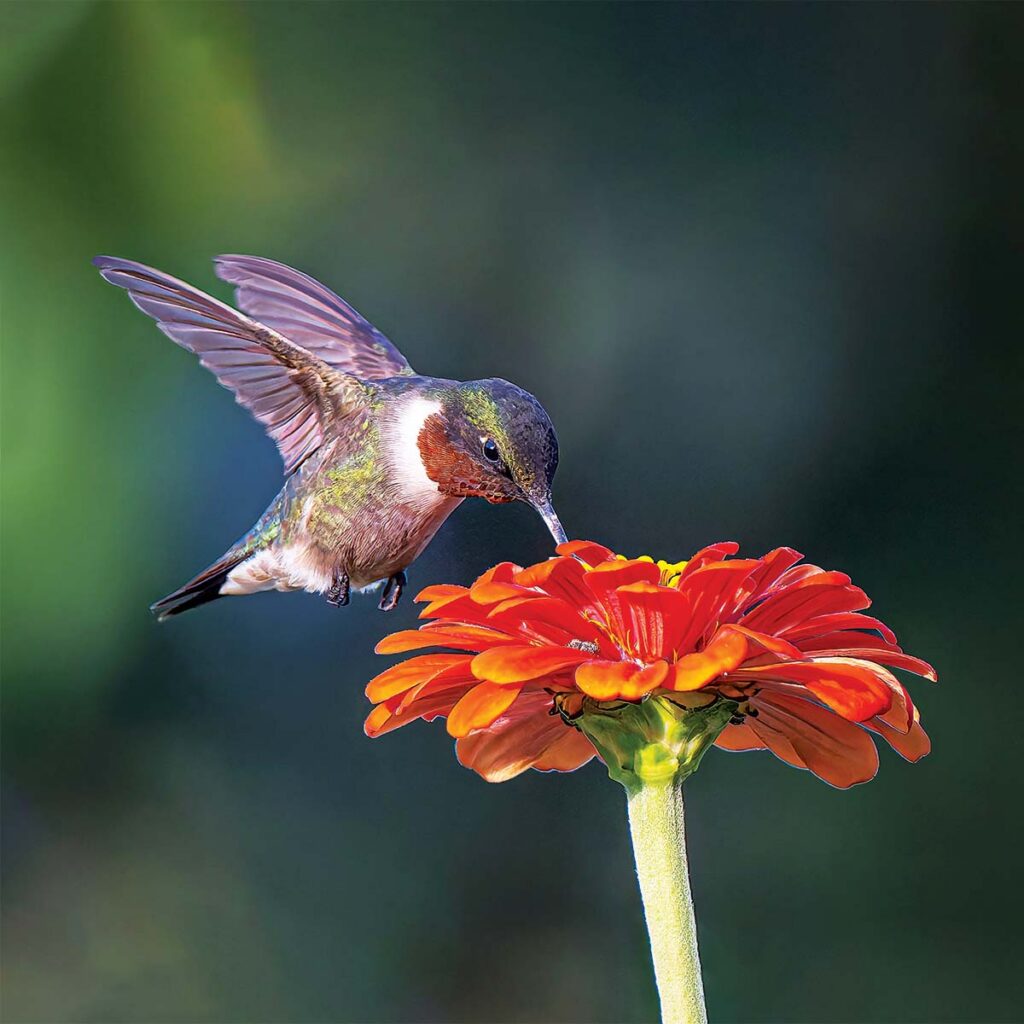
A male ruby-throated hummingbird fuels up on a zinnia bloom.
Laurie Lawler
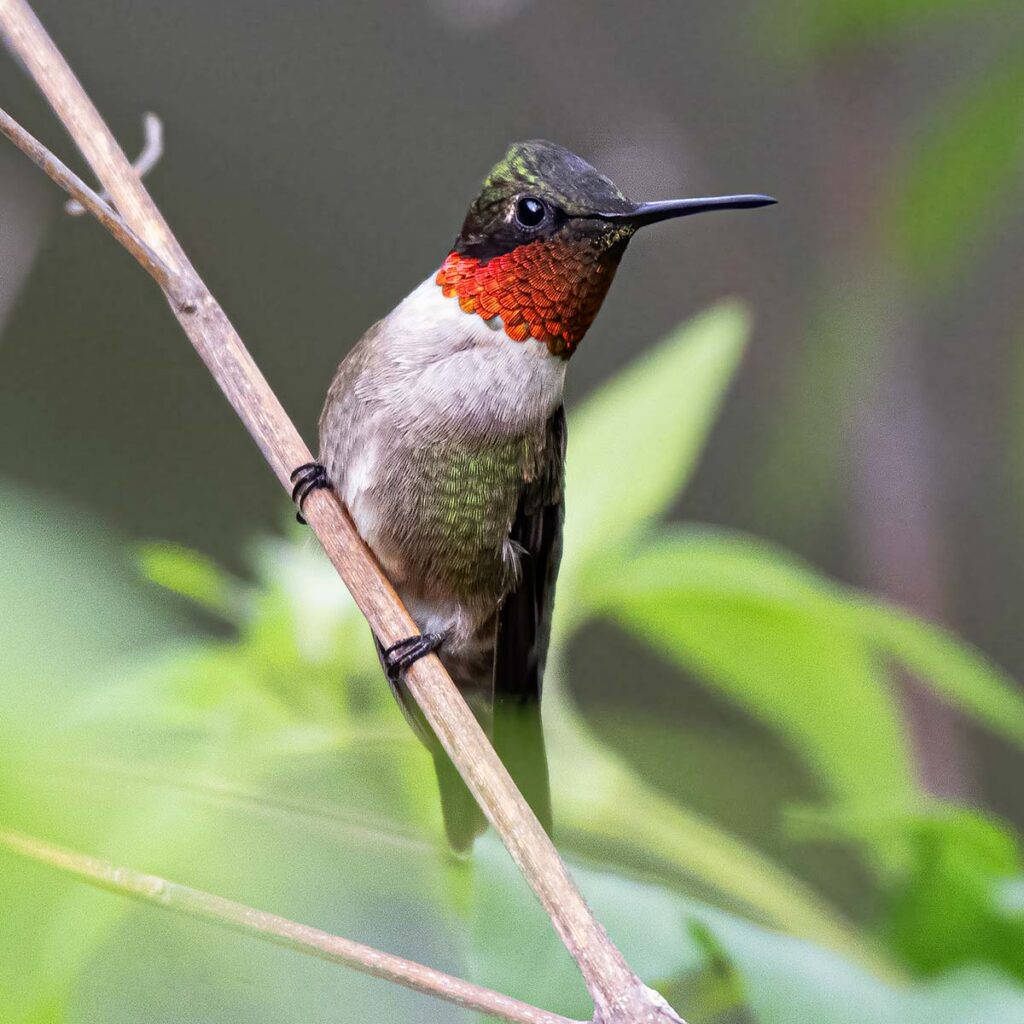
A male ruby-throated hummingbird.
Laurie Lawler
Fueling Fighter Jets
The next time a hummingbird streaks past, imagine you’ve been buzzed by a miniature fighter jet. That’s how fast nature’s smallest bird can fly relative to its size. In flight, a hummingbird beats its wings in a figure eight up to 40 times or more per second. This rapid motion enables it to spin, hover, and fly backward and upside down at speeds of 30 mph or more.

Since the 1990s, Dan and Cathy Brown have been guardians of a thriving hummingbird habitat near Christoval in West Texas.
Tiffany Hofeldt
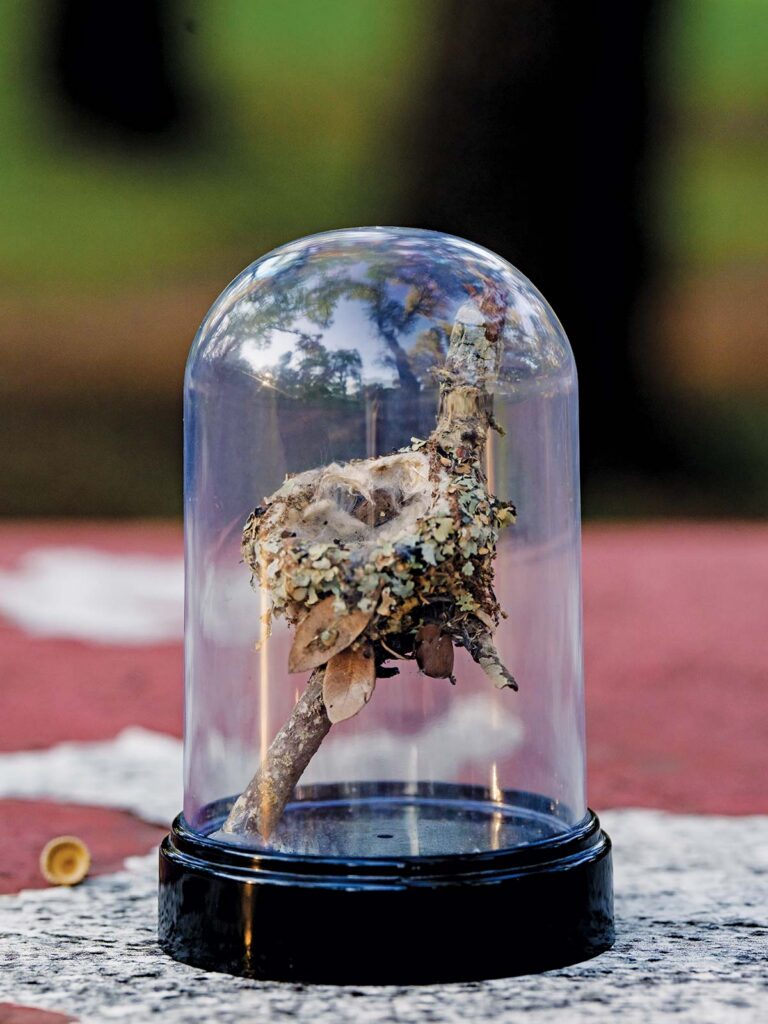
The Browns found this hummingbird nest, built from plant fibers, lichen and spider silk, on their property.
Tiffany Hofeldt
To fuel such a high metabolism, a hummingbird, which can weigh 2–20 grams, slurps up nectar that’s at least double its weight every day. One fill-up lasts 20 minutes, then it’s off to find more flowers and insects or return to a feeder—dining territory that a hummer will fiercely defend, even remembering which blooms it has already drained (and pollinated).
At night, a hummer may go into torpor to stave off starvation. During this deep sleep, its heart slows from 1,200 beats a minute down to 50.
Nineteen hummingbird species have been recorded across Texas. In summer breeding months, the two most common species are black-chinned hummers in West Texas and ruby-throated hummingbirds in East Texas. Depending on the species, hummingbirds can breed as far away as Alaska and Canada and migrate as far south as Central America.
Since 2010, federally licensed bird bander Charles Floyd and other permitted volunteers have banded more than 10,000 hummingbirds at the Hummer House. Based on his research, about 95% of all the black-chinned hummers there are returning females from prior years.
“It wouldn’t make a difference if the Browns hung a thousand feeders,” says Floyd, a retired school principal who lives nearby. “What matters most is that the Browns are preserving the trees, the understory and the natural habitat.”
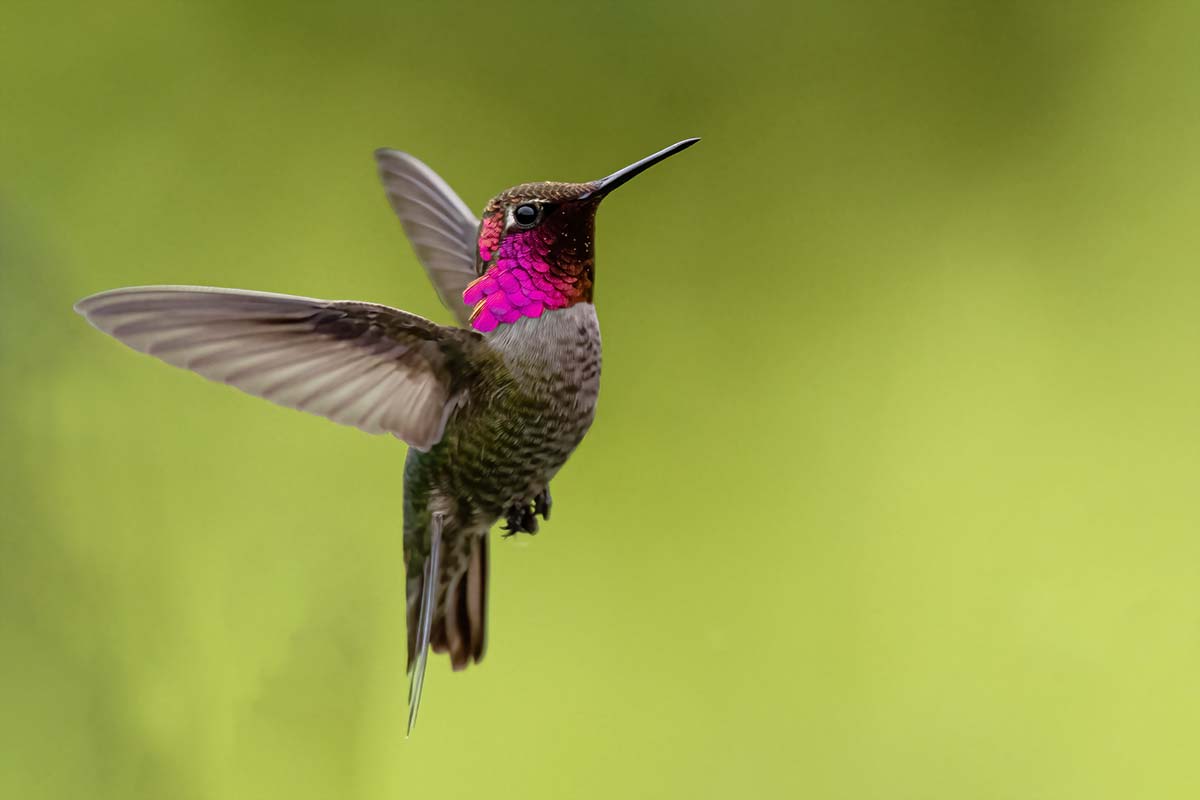
A male Anna’s hummingbird, with its iridescent pink-red throat.
Laurie Lawler
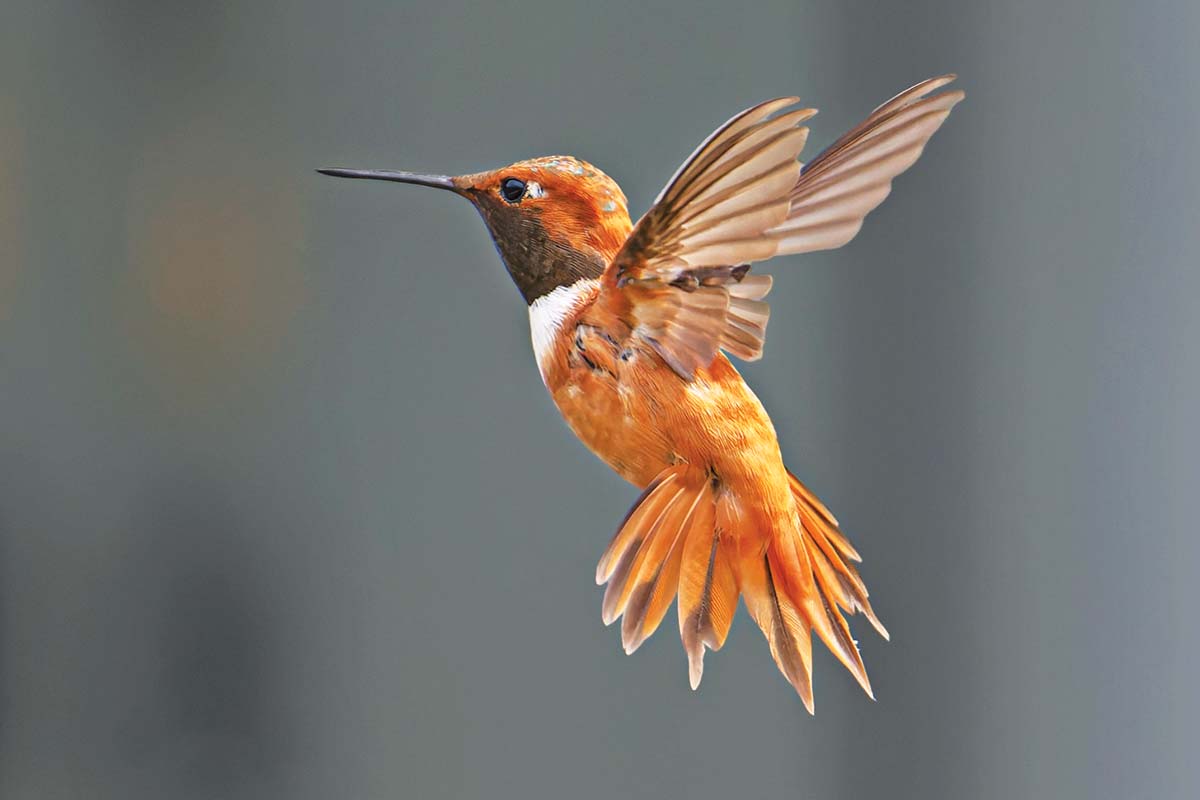
A male rufous hummingbird.
Laurie Lawler
Floyd and his banding partner—master bander and retired biologist Kelly Bryan of Rockport—collect banding data for West Texas Avian Research, a nonprofit they founded in 2011 to support bird banding research and bird conservation in West Texas.
“Banding has led me to understand the life cycle and migratory habits of hummingbirds,” Floyd says. “Their established pattern of habits and movements has continued for centuries. Certain factors, such as the widespread introduction of feeders, have made some changes in that behavior. But overall patterns have remained the same.”
So far, Floyd has banded 162 bird species at the Hummer House, including half of Texas’ hummingbird species. Many are banded Saturday mornings April through July at the ranch. That’s when the Browns welcome visitors free of charge to watch Floyd and his wife, Nancy, band hummers and other species. Children and overnight guests are often allowed to release birds after they’ve been banded.
Travel Plans
At the Hummer House, male black-chinned hummingbirds arrive first in mid-March and stake out their breeding territories. By April, females show up and begin gathering unbleached cotton the Browns put out for nest building. “They keep pulling it through mid-July,” Cathy says. “That’s a good indication that they breed twice.”
Males woo mates by performing dramatic aerial dives and buzzing their tails. They also flash their iridescent gorget, the colorful throat patch that sets males apart.
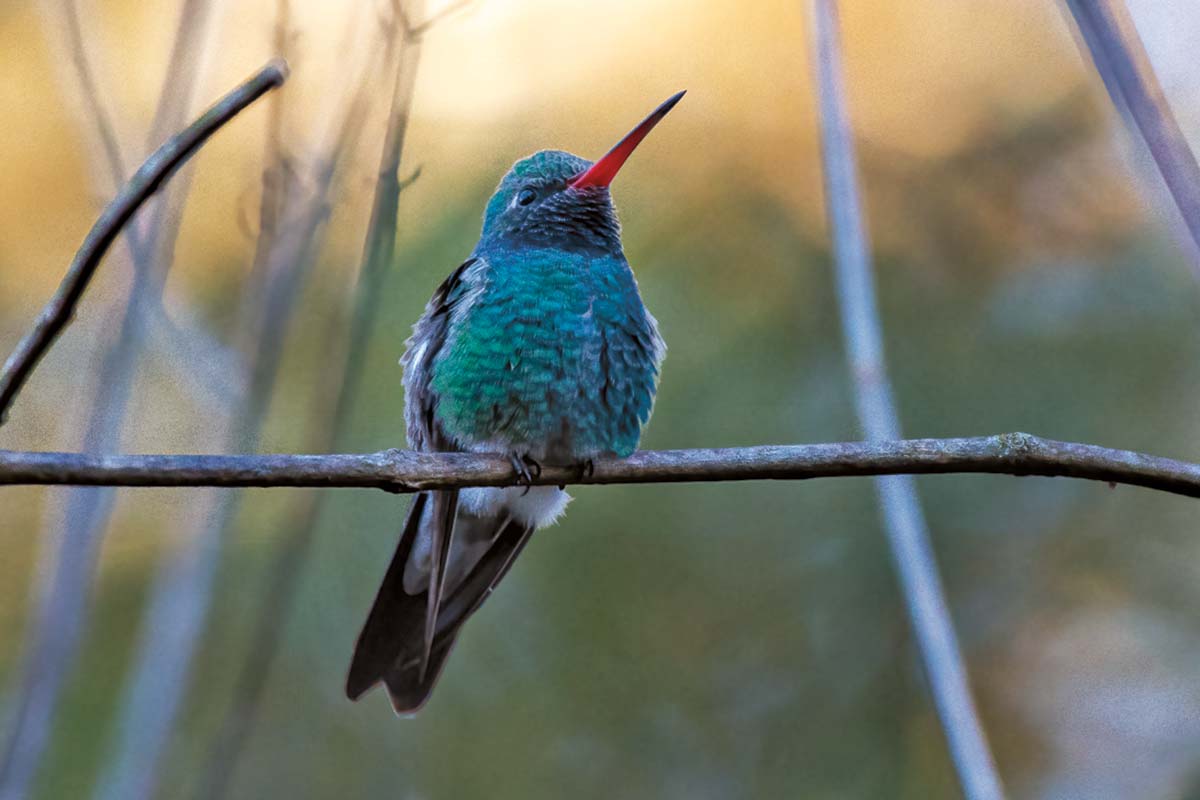
A male broad-billed hummingbird, with its black-tipped, long red bill.
Laurie Lawler
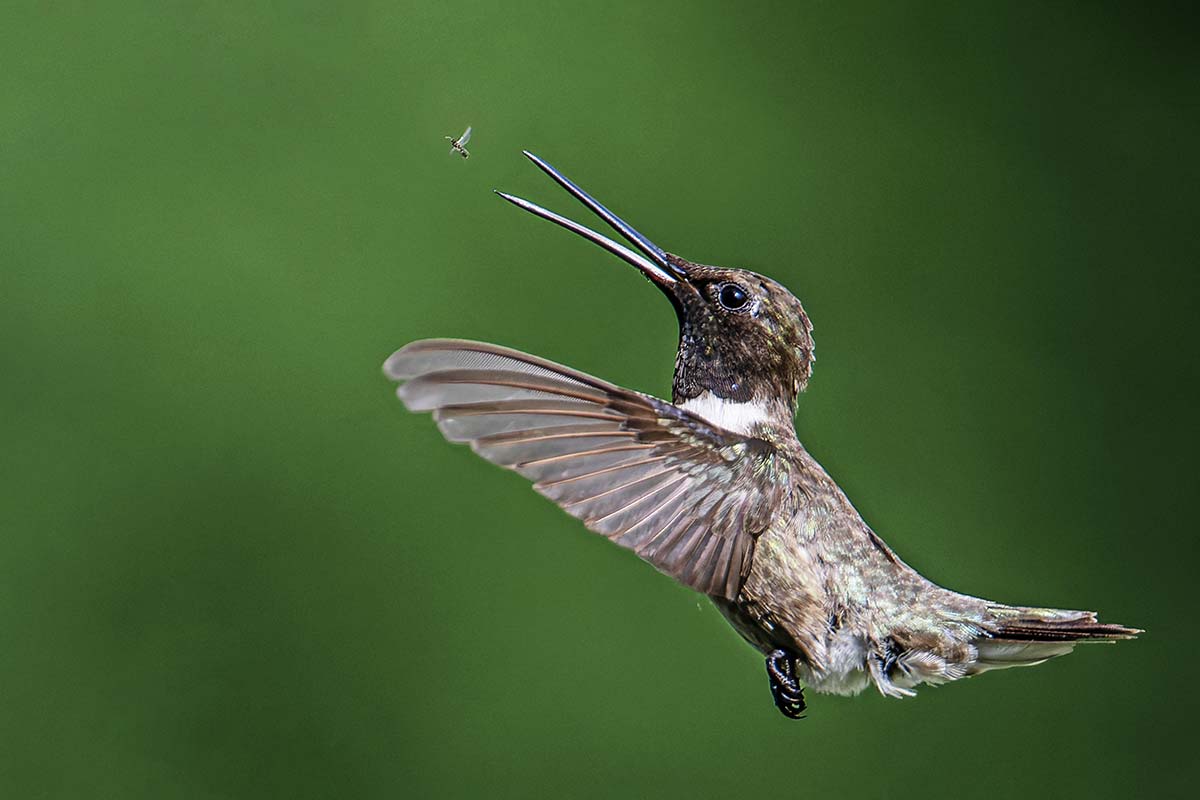
A male black-chinned hummingbird about to snap up an insect.
Laurie Lawler
Female hummers—drably feathered for camouflage—build nests and tend the young with no help from mates. Their tiny nests are made of plant materials and held together with spiderwebs. Mothers usually lay two white eggs smaller than jelly beans and feed their hatchlings regurgitated insects and nectar.
By late June and into July, males start leaving. “They’ve proven through banding that they may go out west or to the Hill Country,” Cathy says. “They take their time migrating back to southern Mexico for the winter. During that time, we may see male hummingbirds from farther north.”
From the second week in May through the end of June, “we have a constant population of hummers,” Cathy continues. “But after that, a lot of males have started to migrate. Then ruby-throated males come through. The last to leave are black-chinned females and their young ones. Our population is ever evolving.”
In late August, more ruby-throated hummingbirds than black-chinneds show up. “We’re on the western edge of ruby-throated migration, so we see a lot of those,” Cathy says. “During fall migration, you’ll see the biggest variety here, like Allen’s and rufous, but not in great numbers.”
The Browns get up from their chairs in the observation room and head off to refill sugar water feeders. “It’s like having a dairy farm,” Cathy says. “You make the circles in the morning and fill what’s empty. Then in the evening, you do it all again.”
Dan smiles. “If you love to work,” he says, “this is the place to fall in love with.”
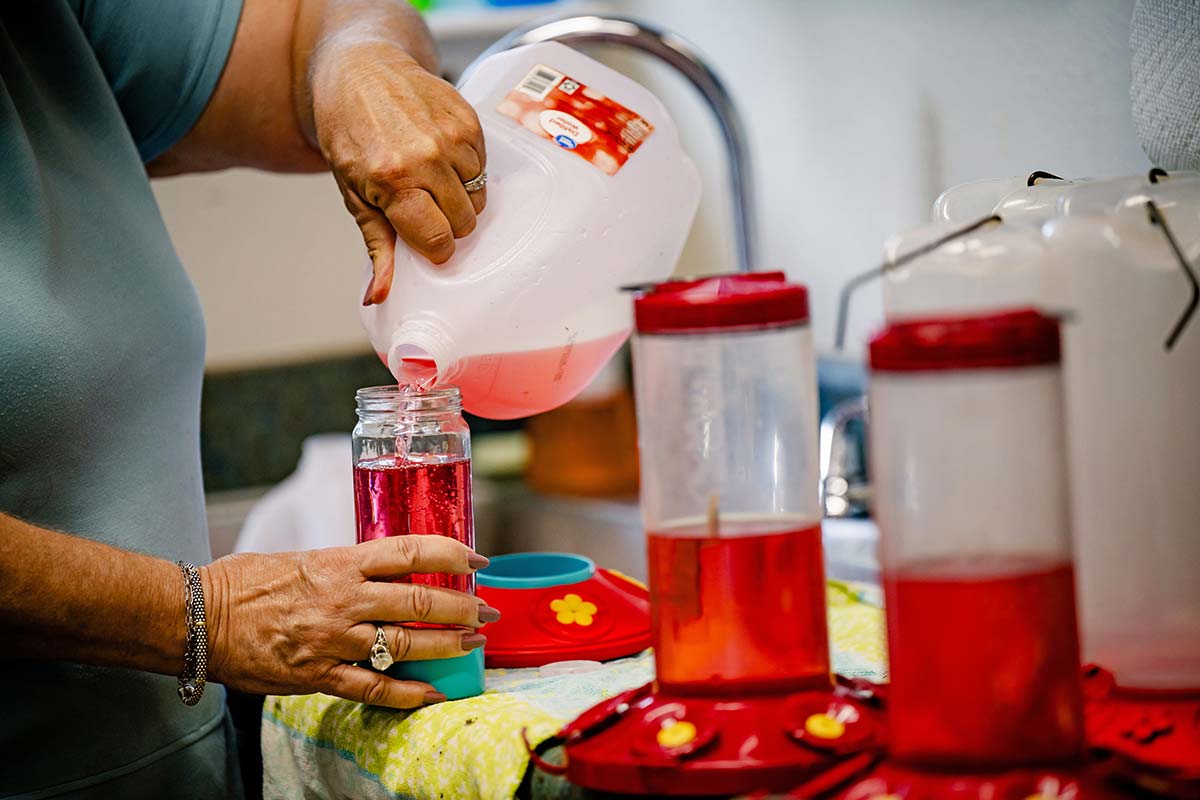
Cathy Brown refills hummingbird feeders at their ranch. Each season, the Browns use around 1,500 pounds of sugar to make nectar for their feathered residents.
Tiffany Hofeldt

The Browns with one of their feeders. “It’s like having a dairy farm,” Cathy says. “You make the circles in the morning and fill what’s empty. Then in the evening, you do it all again.”
Tiffany Hofeldt