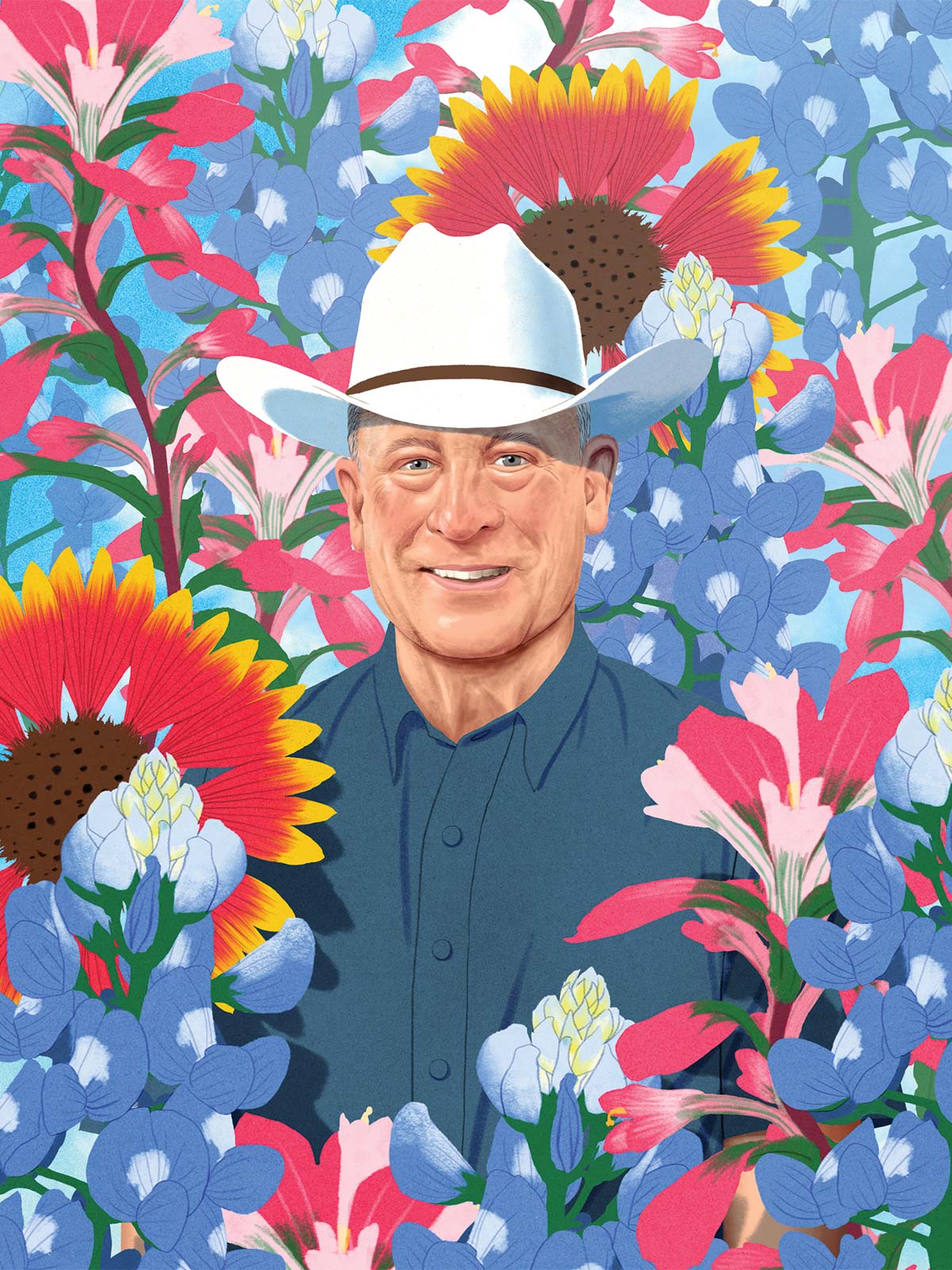
We were sitting in John R. Thomas’ big pickup overlooking about 60 acres of bluebonnets in bloom when he said something I’ll always remember. “If we could get a good rain in the next day or two,” he said, “it would be a million-dollar rain.”
I asked Thomas just how a rain could be worth $1 million. He said, “It’ll push those bluebonnets up another few inches and double their seed yield.”
Thomas owns Wildseed Farms, southeast of Fredericksburg in the Hill Country. He doesn’t grow those enormous plots of petals just for their photographic beauty. He grows them for the seeds—bluebonnet, Indian blanket, Texas paintbrush and dozens of other native varieties.
Listen as W.F. Strong Narrates This Story
Visit Texas Standard for more W.F. Strong stories (most of which are true).
The seeds are harvested with processes he pioneered and machines he invented. They’re bagged and sold in his big country store along U.S. Highway 290 then shipped to customers around the world.
Thomas grew up on a ranch near Eagle Lake, west of Houston, where he learned early that the land could break your back and your heart in the same season. He studied business at Sam Houston State University before coming home to start a grass-seeding company that restored eroded land along highways.
People began asking him for wildflower seed—especially bluebonnets—but there was no dependable source. That was all the spark he needed.
In 1981, Thomas began experimenting. He bought land, studied soil types and planted test plots. He tinkered endlessly, building equipment that didn’t exist and modifying machinery that did. He risked much and slept little. When something failed, he tried again.
He eventually had a gorgeous field of bluebonnets every spring, and he noticed people stopped in droves to photograph them. His entrepreneurial side said, “These folks need a place to get out of the sun and have a Coke and enjoy the view.” He created such a place for them.
Over the next decade, Wildseed Farms blossomed—literally and figuratively. In 1993, he moved his operation to Fredericksburg, building what would become the largest working wildflower farm in the U.S.
Visitors who come in March or April see fields so bright they seem backlit by divine intervention. People stroll among the blooms, sip a little Hill Country wine and buy packets of seeds to take a piece of Texas home with them.
Thomas designed the J-Thom 42 Wildseeder, a contraption that can sow a dozen species or more at once without damaging delicate seeds. He built a vacuum harvester that collects seeds by suction instead of by force, which preserves their fragile husks. Those inventions made large-scale wildflower farming possible.
Today, more than 20 states use Thomas’ seeds to color their highways each spring. And Wildseed, which now fills hundreds of Hill Country acres, also grows grapes and sells its own wine.
But for all his business acumen, Thomas remains a farmer at heart. His face still turns upward when he hears thunder. As we sat in his pickup that spring afternoon, he squinted toward the horizon and said, “There’s a cloud building out west. Maybe it’ll come this way.”