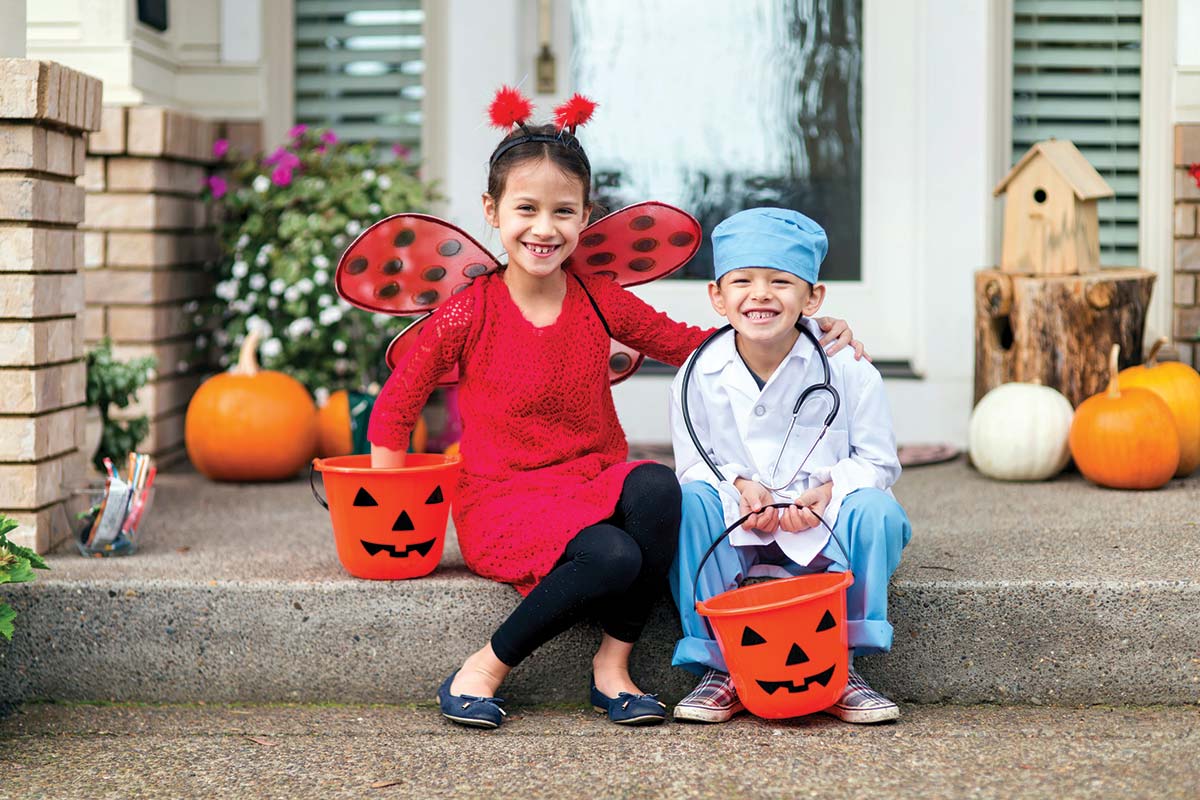
You know what happens around here October 31: Small, strange creatures dot our roads at night. They creep up to homes with large bags and dash from one place to another, often forgetting about the vehicles passing them on the road.
Halloween is one of the most fun nights of the year for kids. But in their excitement, they don’t always think about safety—which means grown-ups need to do some thinking for them.
Trick-or-Treating
Outfit your trick-or-treater with a glow stick or flashlight with fresh batteries, but make it clear to never shine the beam into the eyes of drivers. Instruct children to stay on sidewalks wherever possible and to look both ways before crossing streets.
Make sure that little revelers (and you) cross streets only at corners and never from between parked vehicles.
Choose bright, reflective costumes or add reflective tape to dark outfits. Avoid masks that obstruct vision—face paint is often a safer alternative. Ensure costumes fit properly to prevent tripping, and consider flame-resistant materials.
Children under 12 should always trick-or-treat with an adult. Older children should travel in groups and stick to familiar neighborhoods. Set specific time limits and boundaries, and make sure everyone knows the planned route. Consider having adults stationed at key intersections in busy neighborhoods.
Keep youngsters from indulging until after a trusted adult has inspected their trove of treats carefully.
Haunting the House
Never use electrical products outdoors that are marked for indoor use. You could get shocked—or worse.
Dried flowers, cornstalks, hay and crepe paper are highly flammable. Keep them away from open flames and other heat sources, including light bulbs and heaters. Always inspect each decoration before use and discard any with cracked, frayed or bare wires.
Always turn off electrical decorations and extinguish any open flames before leaving home or going to bed. Use a flashlight or battery-operated candles in jack-o’-lanterns.
Check weather forecasts and secure lightweight decorations that could become projectiles in windy conditions. Have backup indoor activities ready in case of severe weather. Keep walkways clear of wet leaves that could create slippery conditions, and consider placing nonslip mats near entrances.
Turn on your outdoor lights. Be sure paths and sidewalks are well lit. Remove obstacles from the front yard. Restrain dogs and other animals.
Offer individually wrapped pieces of candy or hand out nonfood treats like colorful stickers.
While Driving
Slow down in residential neighborhoods to at least 5 mph below the posted speed limit to give yourself extra time to react to children who may dart into the street.
Watch for children walking on roadways, medians and curbs. Look for children crossing the street; they may not be paying attention to traffic and cross the street midblock or between parked cars. Turn on your headlights to make yourself more visible—even before the sun has set.
Avoid distractions like cellphones completely during Halloween hours. Be especially cautious when backing out of driveways and parking spaces. Consider postponing nonessential trips during peak trick-or-treating hours.
Your electric cooperative reminds you to take even greater care than usual to keep Halloween a special treat for all of our small, strange creatures.