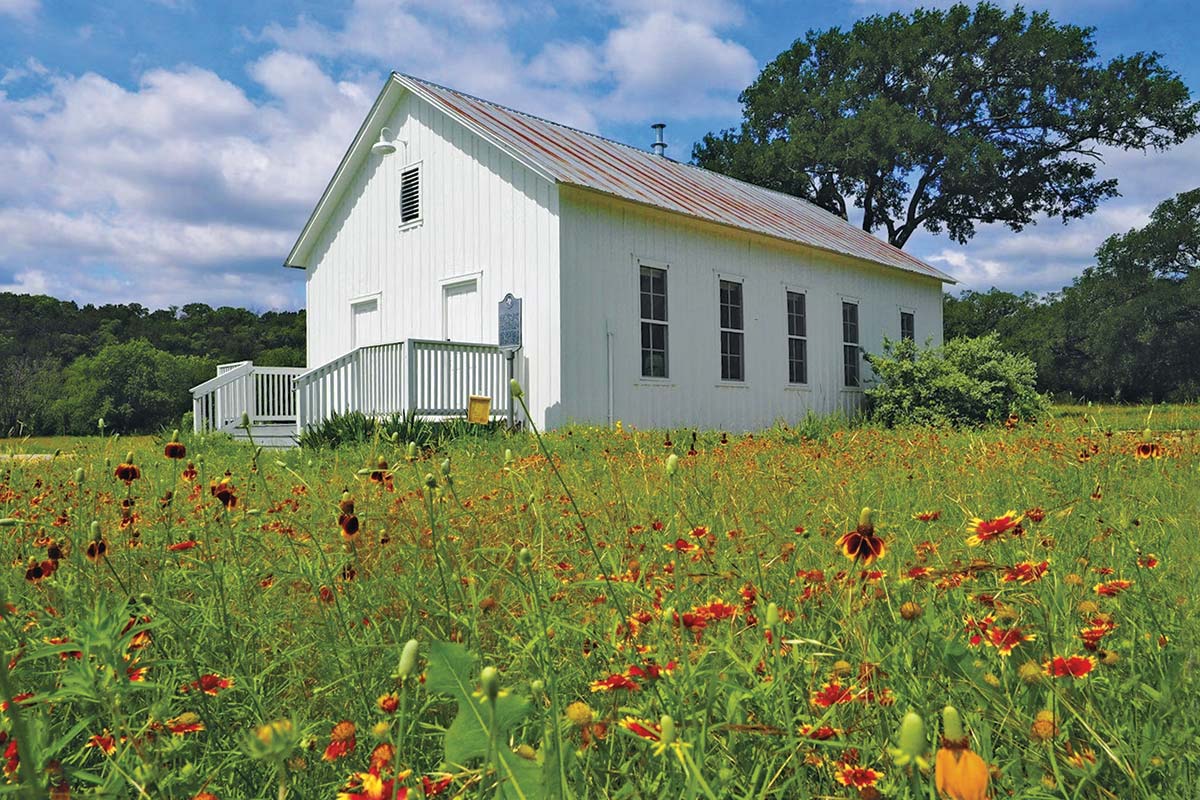
In 1880, as the story goes, a growing community northwest of Austin applied for a post office under the name of Fairview. That name was rejected by the federal government along with five subsequent applications because the names were already in use. After the sixth rejection, the disgusted townspeople replied, “Let the post office be nameless and be damned.”
That iconic line, now inscribed on the town’s historical marker, is how the community officially became Nameless (though it was often referred to as Fairview locally).
A century and a half later, few remnants of the town remain. But on April 12, nearly 300 people gathered around a 1909 one-room schoolhouse on Nameless Road in what is now Leander to celebrate the historic addition of an 1876 homestead that had been relocated to the property.
The town’s post office operated for a decade during its heyday, accompanied by a meat market, general store and the school that doubled as a church. The white board and batten Nameless School operated for 36 years, from 1909 to 1945.
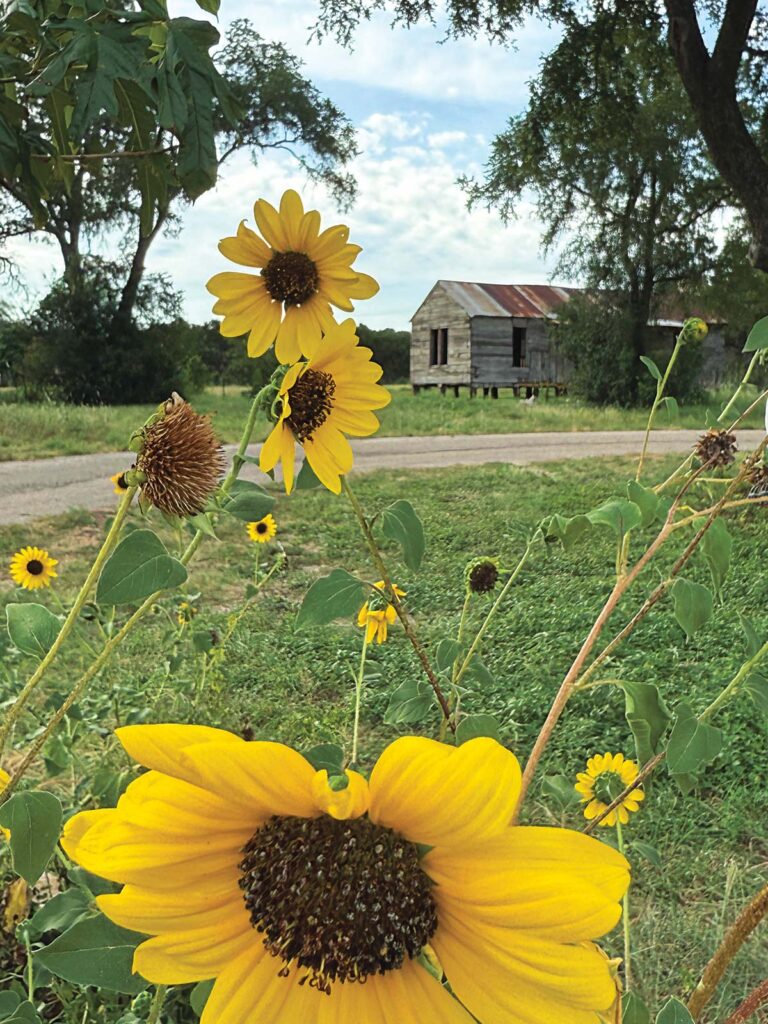
The Gray family’s ancestral house in the community of Nameless.
Courtesy Mary Cameron
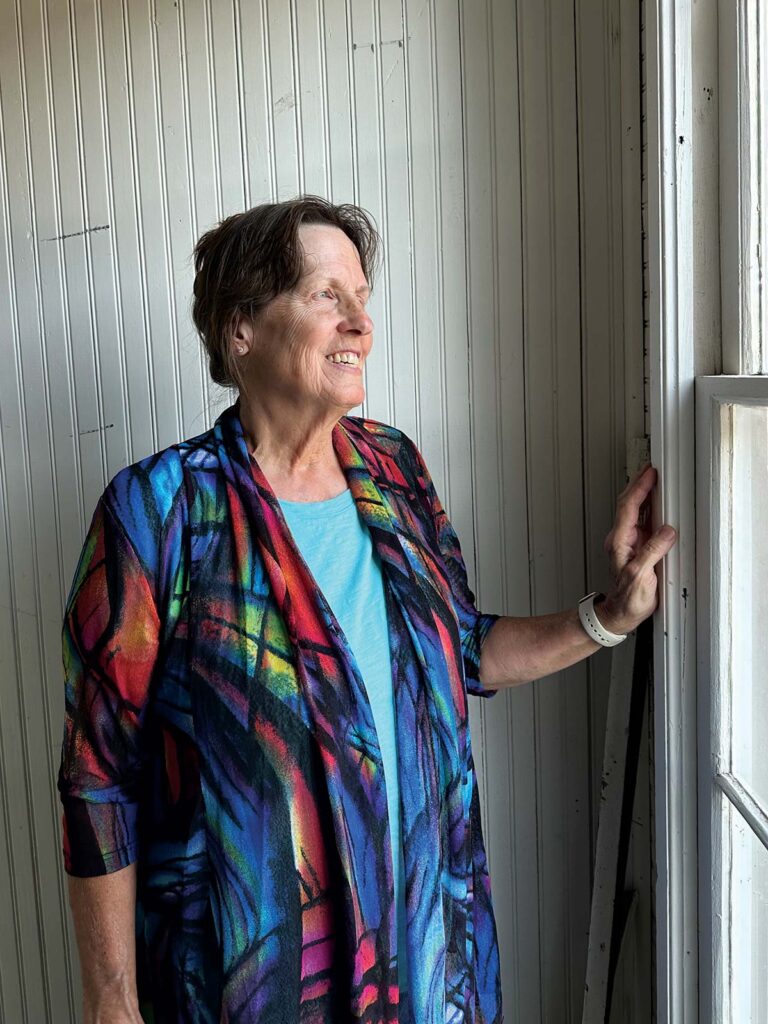
Mary Cameron has led efforts to restore Nameless’ structures.
Stacy Coale
“Anything happening was happening at the school,” says Mary Cameron, president of the nonprofit Friends of Nameless School. “It was the center of life, especially out here in the sticks.”
The school closed when the outlying individual schools consolidated into the Leander school district, says Cameron, a member of Pedernales Electric Cooperative.
She grew up in East Texas but often visited her grandfather, who lived down the street from the school. After raising her children in nearby West Lake Hills, she and her husband moved into her grandfather’s house in 2007 and later became involved in the Friends of Nameless School.
The organization started in the 1950s, a century after Nameless was originally surveyed, and became an official nonprofit in 1992 as part of an effort to restore the school, which sits on property owned by Travis County. The building’s extensive restoration, including a new concrete foundation made to resemble the original cedar poles, was completed in 2009 to celebrate the structure’s centennial.
“Every board in the floor was pulled up, sanded, scraped, reshellacked and put back down,” Cameron says. “The members were painting the inside and the outside.” Ceiling fans, heat, air conditioning and a bathroom also were added.
And with that, it seemed that the only remnant of Nameless was preserved.
But in 2023, when land across from the school was being cleared for a subdivision, two historic discoveries were made.
The first was a small wrought-iron fenced cemetery, the resting place of Eliza Gray, wife of Hubbard Gray. He was a teacher and election judge. Hubbard is believed to be buried next to her in an unmarked grave. In 2024, the site was preserved and designated as a Historic Texas Cemetery.
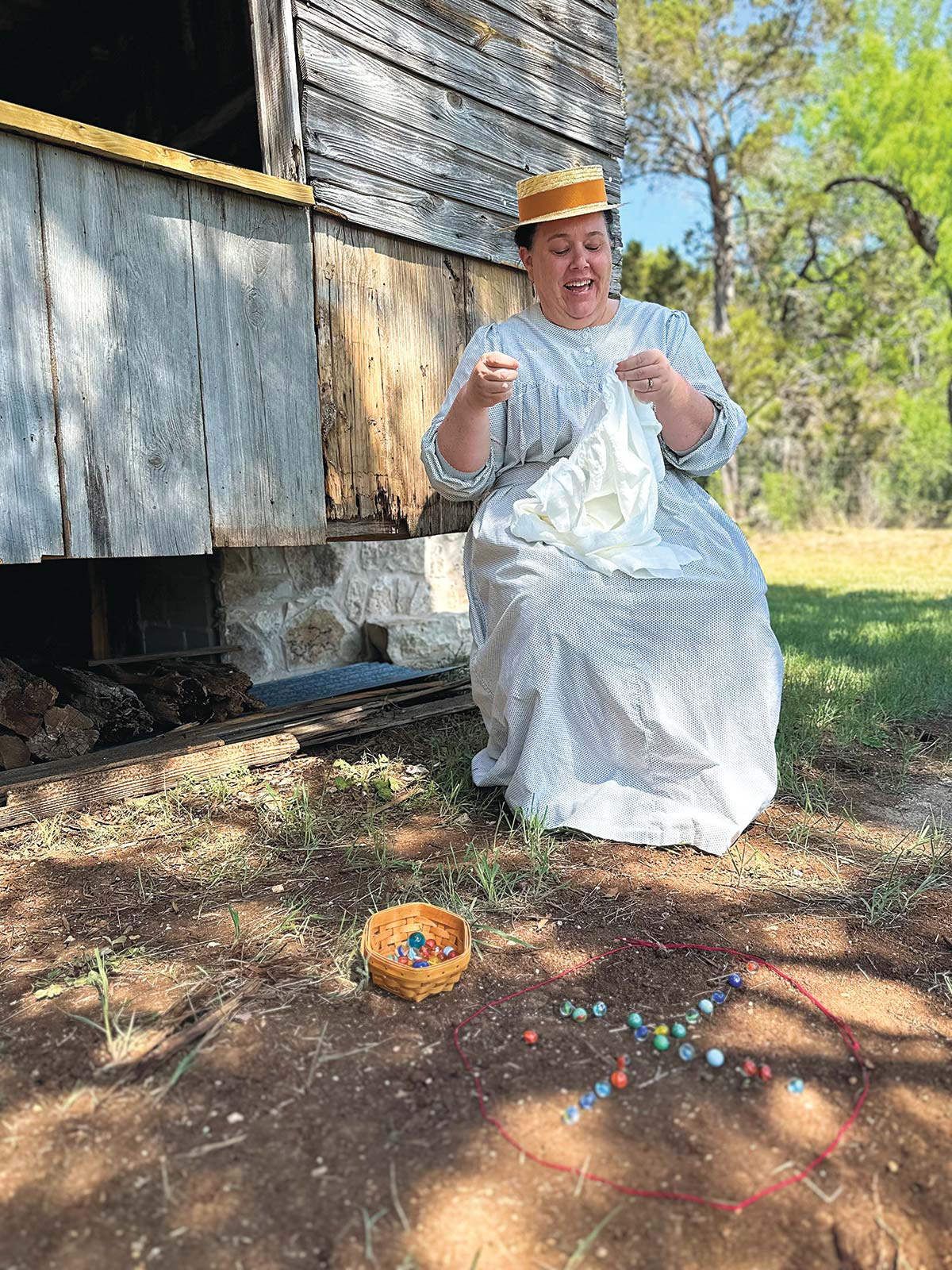
Historian and educator Chris Twing demonstrates hand-sewing and a classic marbles game.
Stacy Coale
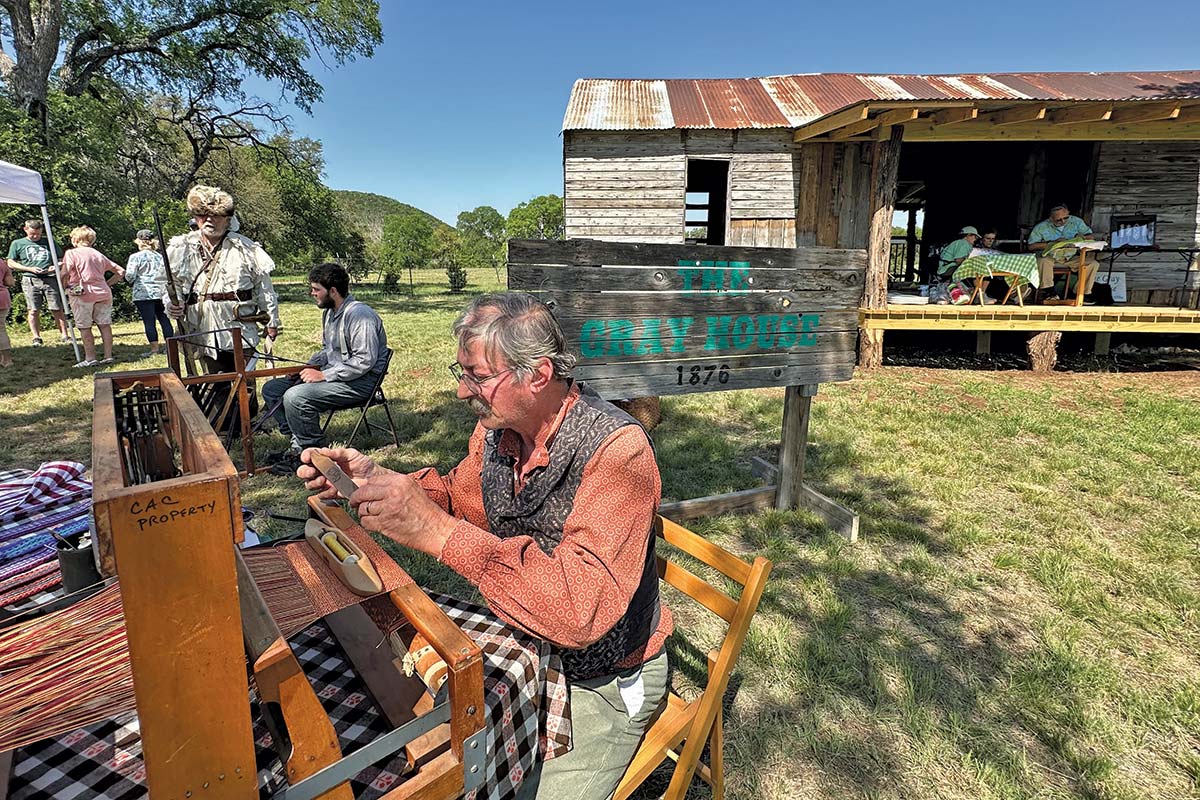
John Nabors shows weaving techniques in front of the Gray house.
Stacy Coale
Further construction efforts clearing a cedar brake revealed another surprise—the ruins of a home. “We didn’t discover it until the bulldozer had taken out a lot of the cedar trees,” Cameron says. “We never knew it was there.”
Research revealed it was the homestead of the Grays, who were among the area’s early settlers. They had donated an acre and a half of their property for a different school, believed to be the area’s first free public school.
The cedar dog-run style house has two rooms separated by a central open area. Based on lumber markings, the structure dates to 1876.
Cameron helped lead efforts to relocate the structure, moving it across the street to the Nameless School. Taylor Morrison, the homebuilder and developer who uncovered the building, donated $15,000 to help cover the cost.
Period reenactors were on hand for the Friends of the Nameless School’s April celebration of the completion of the first phase of restructuring efforts for the Gray house—including roof repairs, reconstruction of the stone fireplace and chimney, and the addition of two porches.
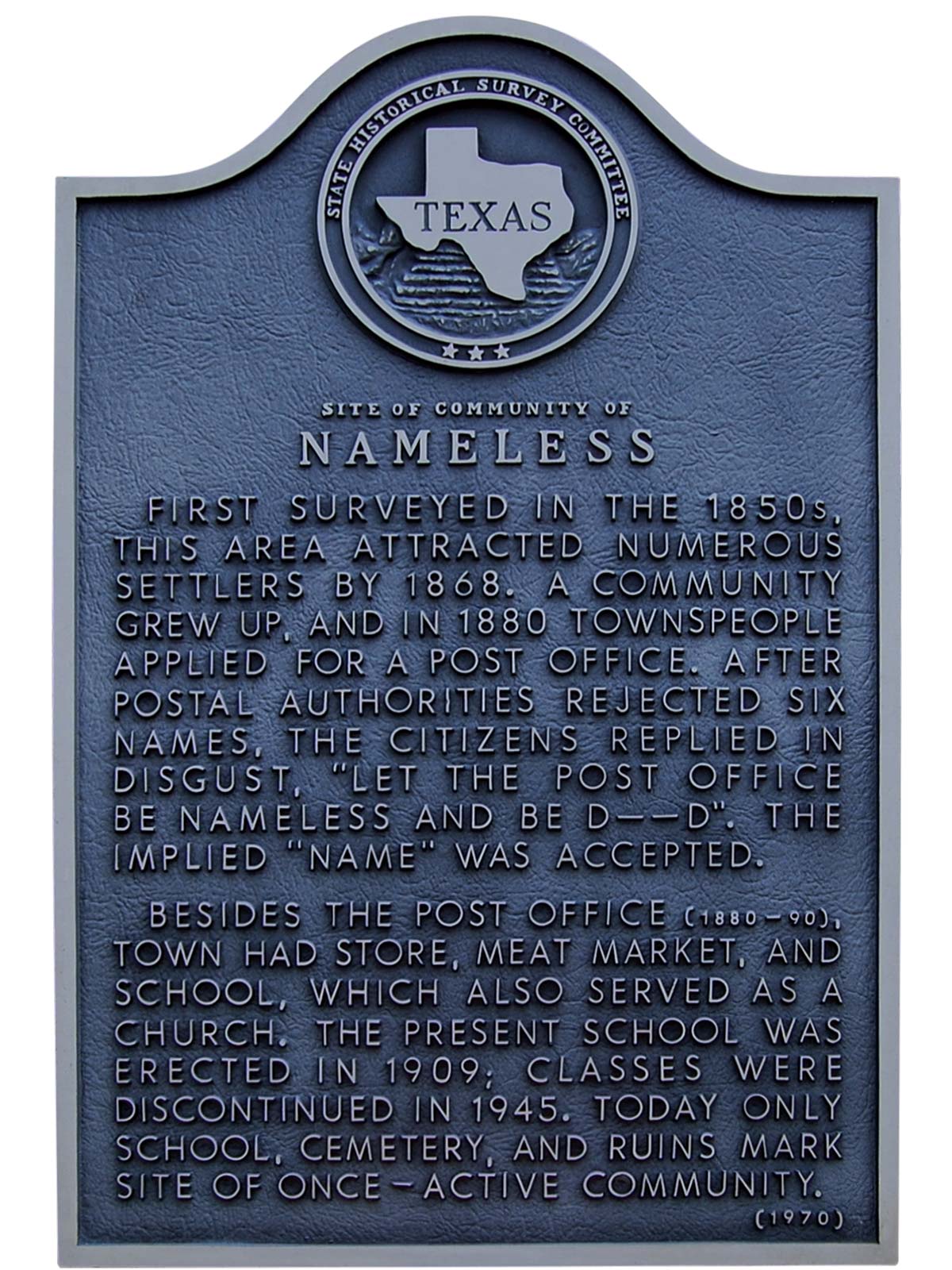
The ghost town’s historic marker.
Courtesy Friends of Nameless School
A wheelchair-accessible ramp and new windows, doors and floors are slotted for the next phase. The organization is currently raising money through grants, donations and proceeds from holiday sales. At the annual Christmas in November fundraiser at the Catholic church in nearby Lago Vista, members of the nonprofit will sell handmade crafts, jams and a forthcoming cookbook.
While Cameron worries about the site’s future and Friends members aging out, she hopes it will continue to be a gathering space. Another community celebration is scheduled for April 2026.
“So many of us are so wrapped up in schedules and deadlines [with] no time to really slow down,” Cameron says. “I would like it to continue being used by the community to take a step back in time to simpler times.”