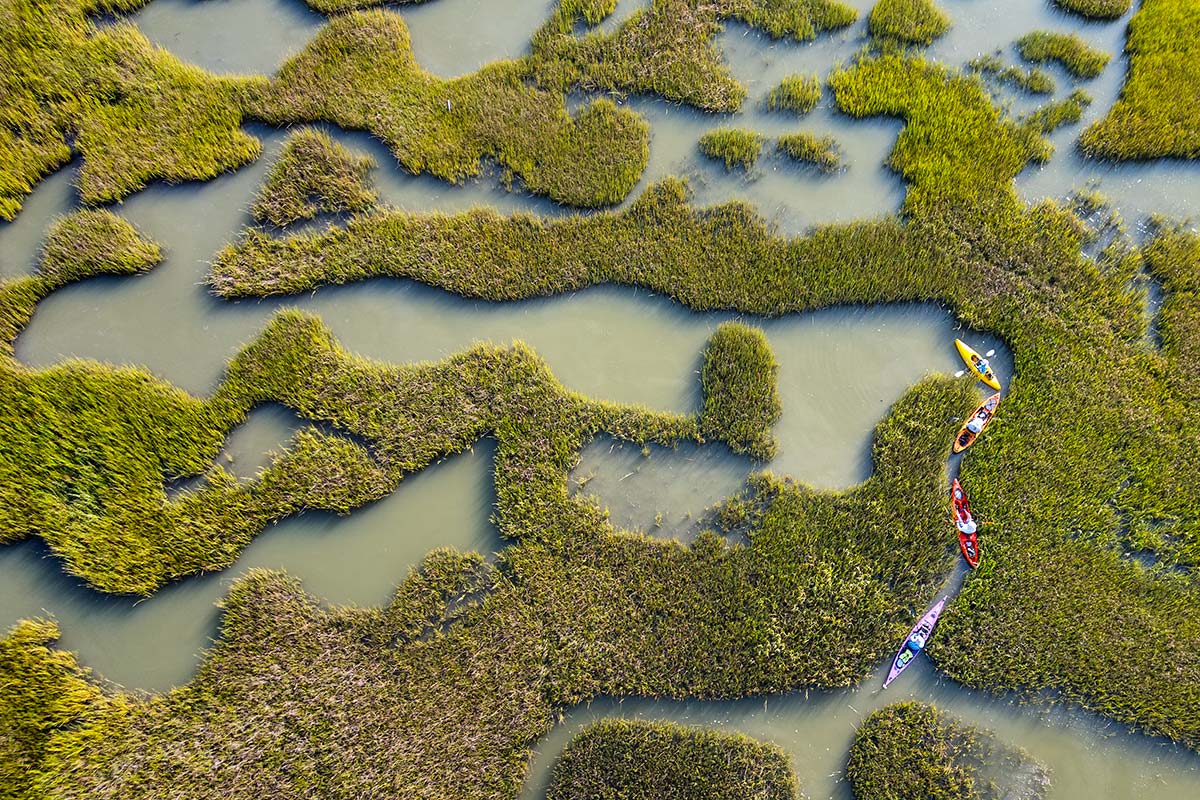
I’ve paddled my yellow plastic kayak deep into a maze of lime-colored reeds along the edge of Powderhorn Lake, a shallow estuary off Matagorda Bay on the Texas coast.
Around me, marble-sized snails shimmy up slender blades of seagrass. Somewhere out of sight, a great blue heron squawks like a kid in a playground squabble. Pelicans flap overhead, and mullet splash at the water’s surface.
I’ve come here to explore a new paddling trail that opened in 2025—one of 90 waterway trails totaling more than 700 miles that now wind through rivers, lakes and shorelines across the state.
Unlike terrestrial trails, which unfurl along visible dirt or gravel paths, these trails are harder to see. But the watery routes offer a new perspective on some of the state’s most beautiful places.
Texas State Parks officials designated a few paddling trails along the coast as one-off projects starting in 1999, hoping to help anglers find their way around marshy bays and lagoons. Soon, other communities near waterways started calling to see if they could get a trail, too.
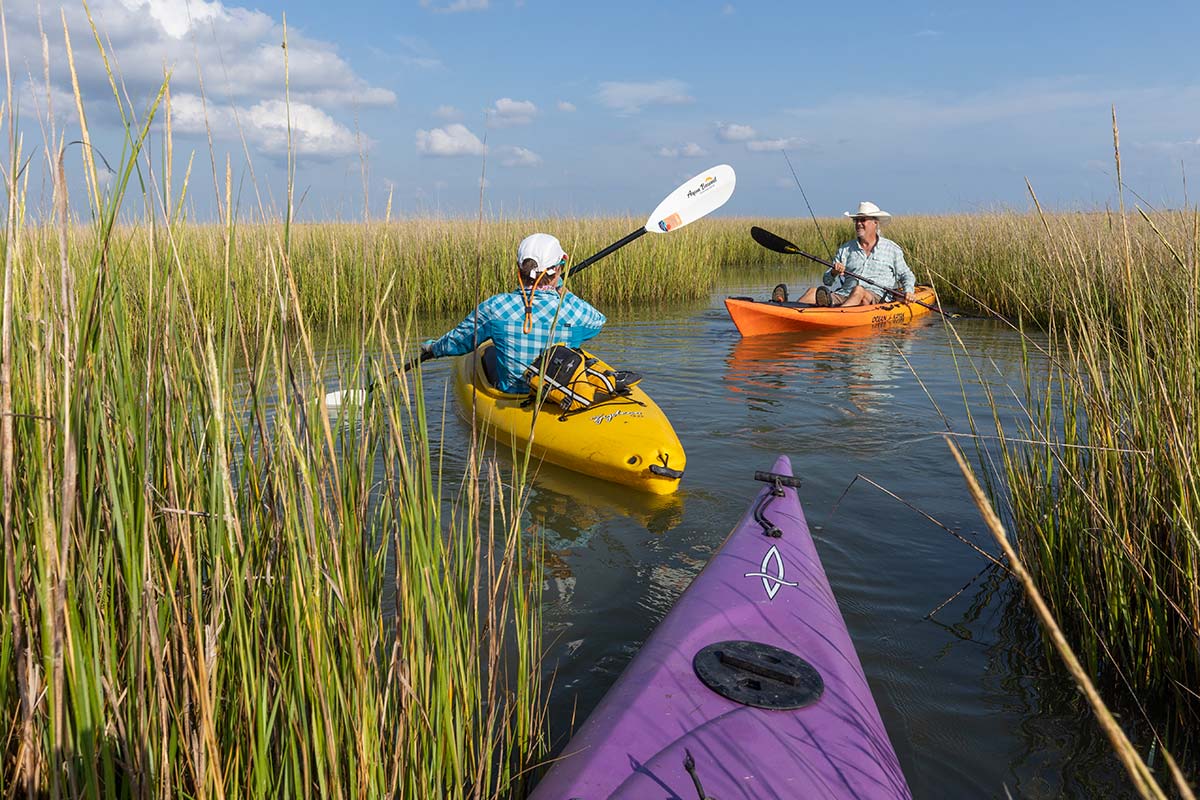
Author Pam LeBlanc and Jimmy Harvey navigate the reeds of Powderhorn Lake, site of some of the state’s newest paddling trails.
Erich Schlegel
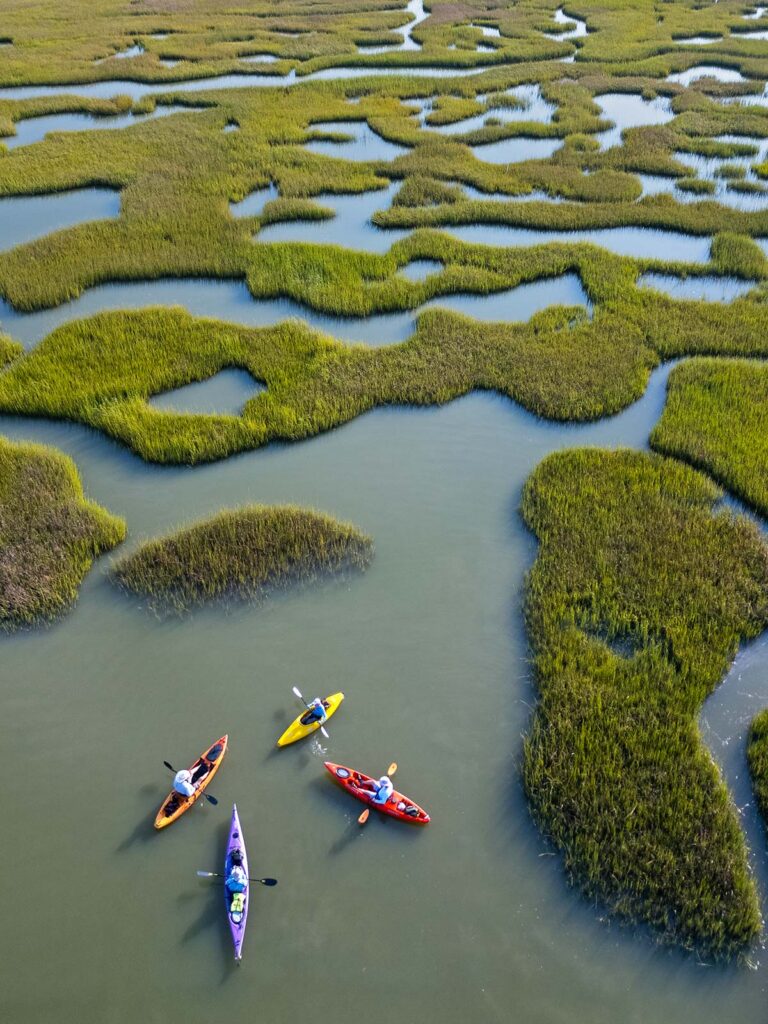
Powderhorn Lake sits along Matagorda Bay on the Texas coast.
Erich Schlegel
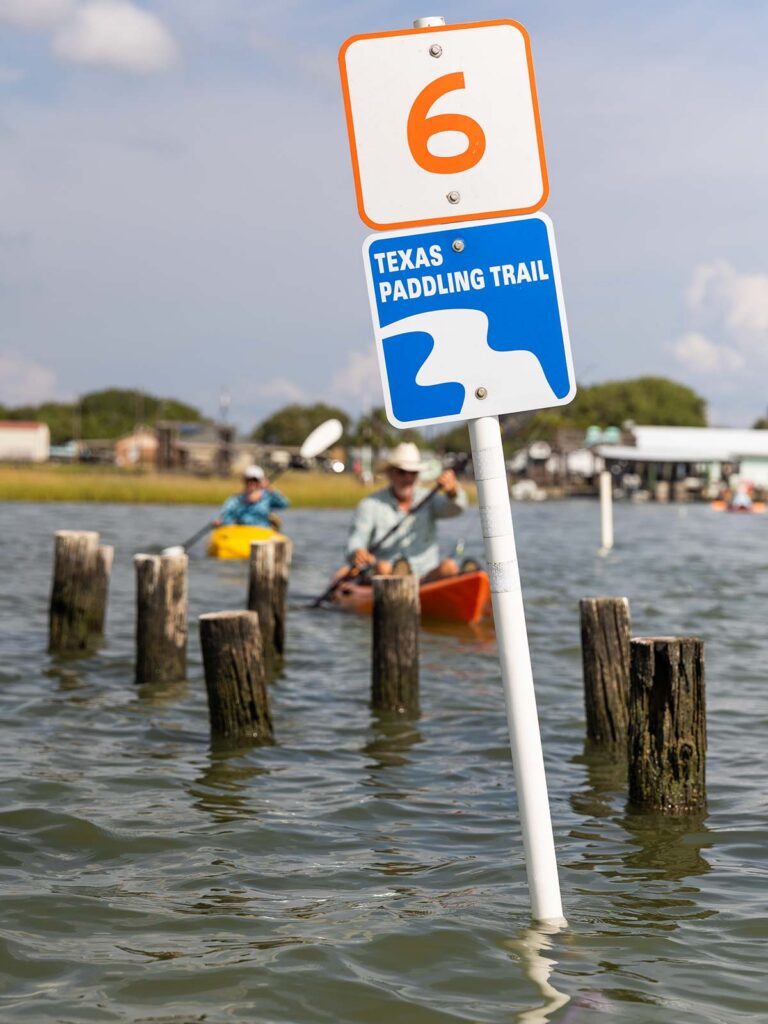
Pam LeBlanc and Harvey set off from the Powderhorn RV Park access point.
Erich Schlegel
In 2006, the Texas Parks and Wildlife Department teamed up with the city of Luling to open its first inland paddling trail—a 6-mile stretch of the San Marcos River between U.S. Highway 90 and State Highway 80. That marked the official launch of the state’s paddling trail program, which celebrates its 20th anniversary this year.
“We really wanted to take some of the mystery out of paddling and partner with communities to improve access,” says Shelly Plante, nature tourism manager for TPWD.
It doesn’t cost much to get into paddling. Outdoors stores sell basic kayaks for less than $200, but if you don’t want to buy a boat, small businesses around the state rent them by the hour or day.
Paddlers can check the TPWD website for maps and descriptions of trails. The site includes information on how long it’ll take to paddle each route, plus details about where to put in and take out. An information kiosk is posted at each trailhead, and some of the trickier-to-navigate routes are marked with signs or buoys.
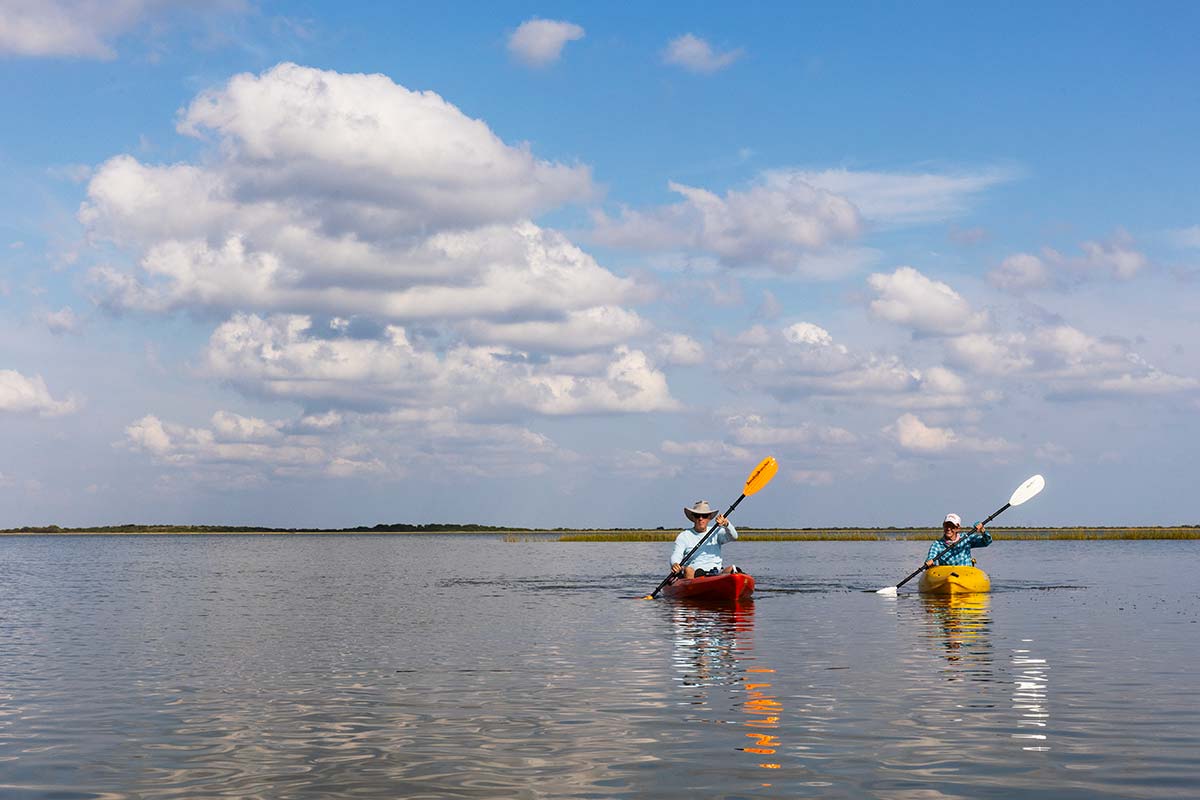
Pam LeBlanc, right, and Chris, her husband, paddle on the open water of Powderhorn Lake, where 32 miles of paddling trails opened in April 2025.
Erich Schlegel
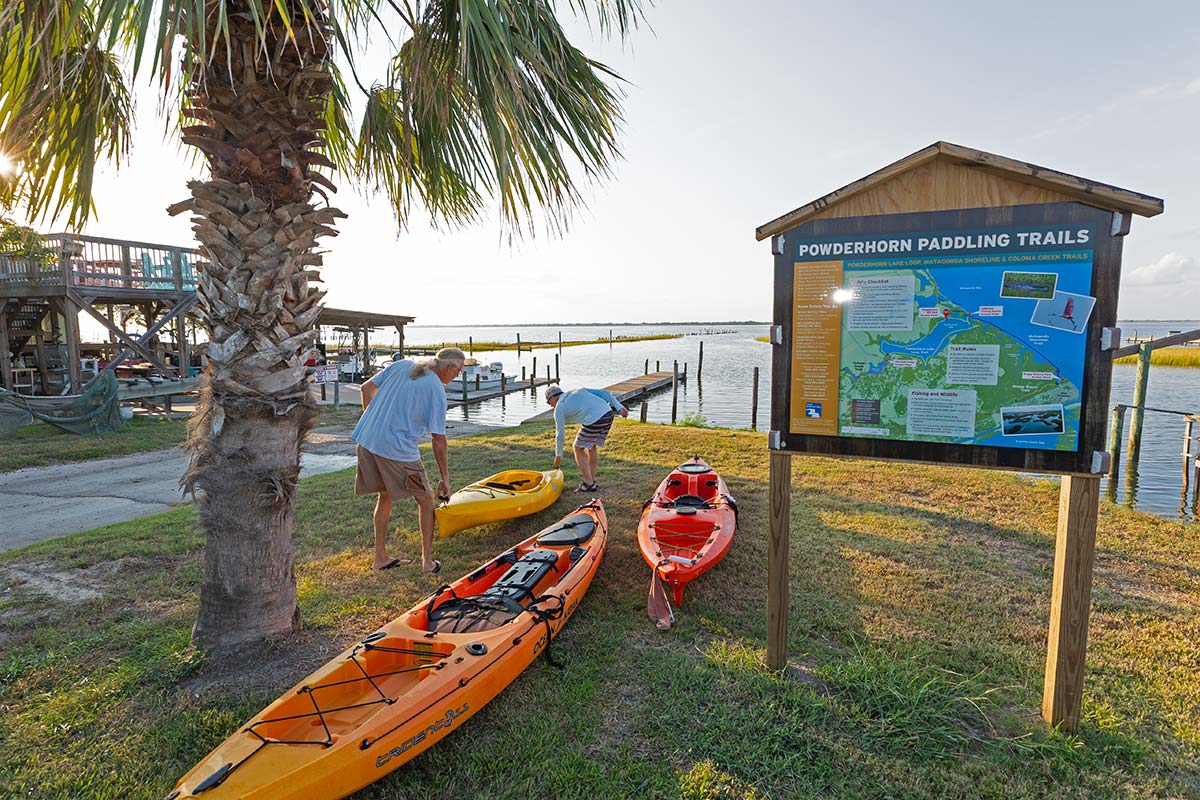
Harvey, left, and Chris LeBlanc get set to put in at the Powderhorn RV Park.
Erich Schlegel
The trails themselves are as varied as the state’s landscape.
“You have the trails in the Mission Reach in San Antonio that have chutes, then you have the Upper Guadalupe River, with its stone river bottom, riffles and rapids,” Plante says. “That’s totally different than the slow-moving Lower Guadalupe. Then there’s Caddo Lake—a mysterious, Spanish-mossy, swampy area that looks otherworldly.”
The Powderhorn Paddling Trails were officially unveiled in April 2025. The trails’ collective 32 miles are split into four routes—Boggy Bayou Trail, Matagorda Bay Shoreline Trail, Coloma Creek Trail and Powderhorn Lake Loop Trail.
My friends and I opted for the lake loop. We started by slathering on sunscreen and topping off our water containers, then shoved off from Powderhorn RV Park, one of four designated put-in points.
We glided past a row of seagulls perched on wooden posts, then paddled into the lake, which measures just 2–5 feet deep in most places. The lake is popular with anglers who come to catch redfish and trout, and minutes after my friend Jimmy Harvey cast his rod, he reeled in a speckled trout.
We meandered along the shoreline for a while, then crossed to the opposite side of the lake, near the future site of Powderhorn State Park. From there we skipped down the shoreline, passing a few old earthen jetties left over from when this land was an operating ranch, then scudded along a muddy shoreline.
When we turned into a lush, grassy inlet, we found the real magic: narrow channels and reeds over our heads. Four and a half hours after we started, we turned back to the RV park, working hard against the wind.
If you’re looking for a more protected route, consider the 5.4-mile Boggy Bayou option, where you might see roseate spoonbills and ospreys, or the Coloma Creek Trail, which starts at the west end of the lake.
The next day, we came back for more.
Unlike our first outing, when the wind had ruffled the water like batter in a mixing bowl on high speed, the lake looked like glass. A dolphin breached the silvery surface as we headed to the same thicket of seagrasses we’d found earlier.
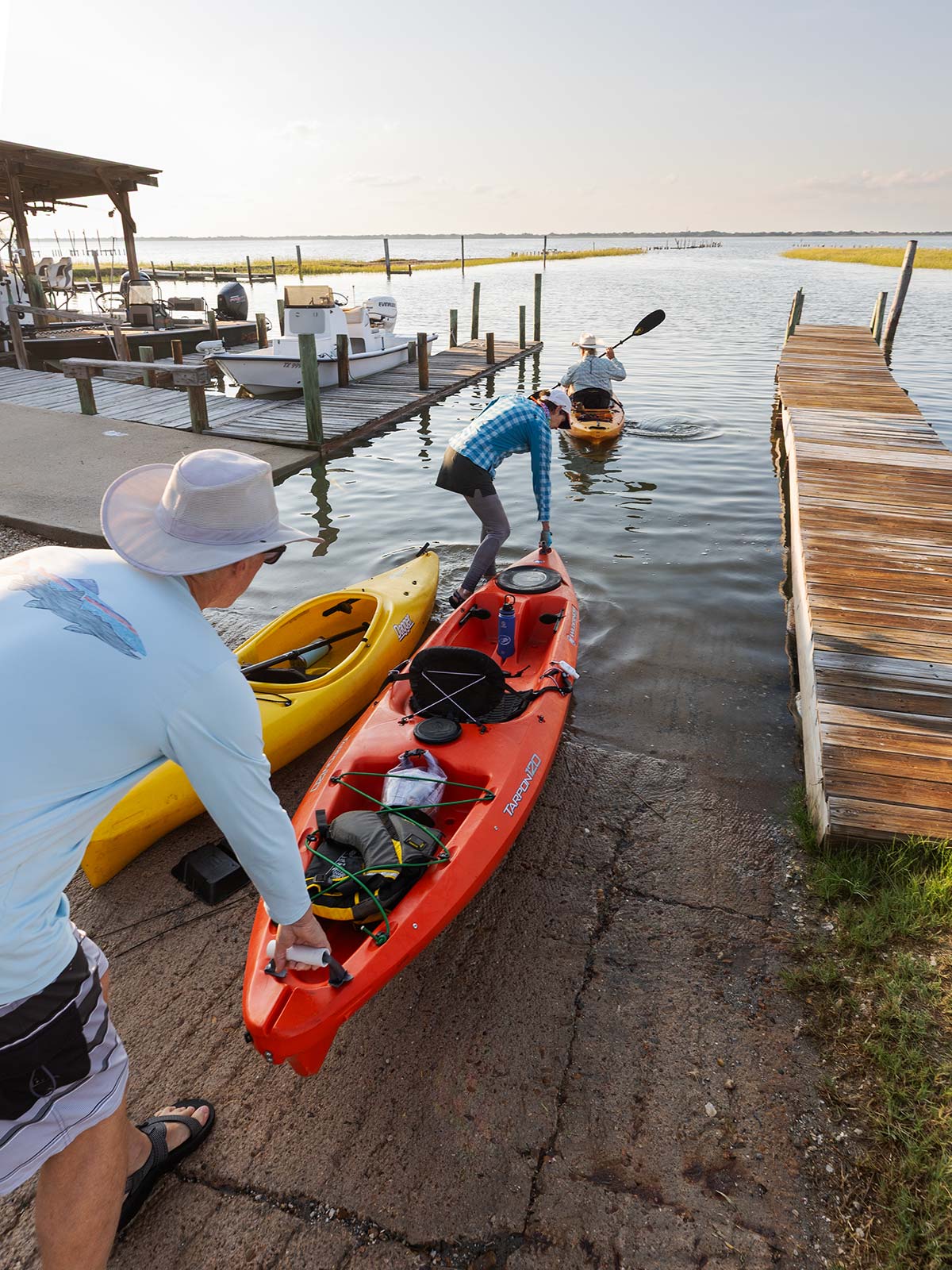
Chris LeBlanc, left, and author Pam LeBlanc work his kayak into the water.
Erich Schlegel
This time we ducked even farther into the maze, until grasses brushed against both sides of my kayak, and I wondered if I would come face to face with a toothy alligator around a bend. (I didn’t, thankfully.)
I’ve paddled rivers around the state—including the Devils, Pecos, Guadalupe and San Marcos—but this salty oasis looks and feels entirely different. And now that I’ve explored Powderhorn Lake, I’m eager to check out more trails, including the new route that opened recently on Greens Bayou in northeast Houston.
Besides making it easier for paddlers to discover natural areas in a state that’s largely privately owned, the paddling trails have shown communities that the water in their backyards can bring in tourism dollars.
“What the paddling trails do is give people access or ideas of places to go,” Harvey said. “And for me, a day on the water with my friends is better than a day anywhere else.”