Shopping “holidays” like Black Friday and Cyber Monday are great opportunities to take advantage of incentives or deals on brand-new, energy-efficient appliances after your home hosts a plethora of friends and family for Thanksgiving. Knowing more about home appliances before the mayhem begins can be useful when looking to replace that old dishwasher.
Here are some quick tips and resources to learn more about energy-efficient appliances and ways you can save money and energy and to help you decide whether you need to purchase new equipment.
Discounts and Coupons
Check out the Energy Star rebate finder tool at energystar.gov/rebate-finder. This tool allows consumers to find rebates and other incentives on Energy Star-rated appliances in their area simply by entering a ZIP code.
Dishwashers
Dishwashers handle the dirty work in your kitchen, and older ones are notorious for using lots of water and electricity.
But there’s good news! Energy Star dishwashers are required to use 3.2 gallons of water or less per cycle, rather than the 10 gallons most dishwashers used before 1994. When scanning those Black Friday deals, also consider features such as delay timers, which allow you to run your dishwasher during off-peak hours, lowering power costs and helping the grid.
Refrigerators
Your old icebox could be doing you some damage in the energy department. Do you have door seal issues? You can do a quick test with a dollar bill. Just close your refrigerator door over a dollar bill so it’s half in and half out of the refrigerator. If you can pull the bill out easily, the latch may need adjustment, the seal may need replacing or you may consider buying a new unit.
What about that extra refrigerator you never use or only use on the holidays? An old refrigerator could be costing you hundreds of dollars per year.
Recycling your old fridge not only saves money, it also ensures that the refrigerants and other components are removed and properly recycled. Your local utilities may even offer a rebate for recycling old appliances. If you’re using your second refrigerator only during the holidays or for special events, unplug it when it’s not needed.
Also, although fancy LED screens, ice makers and water dispensers seem like fantastic features now, be aware that they do use more energy. Nevertheless, manufacturers are required to keep up with government appliance standards, which have continually tightened since 1994. Refrigerators made in 2014 onward will save Americans more than $21 billion by 2043.
Washers and Dryers
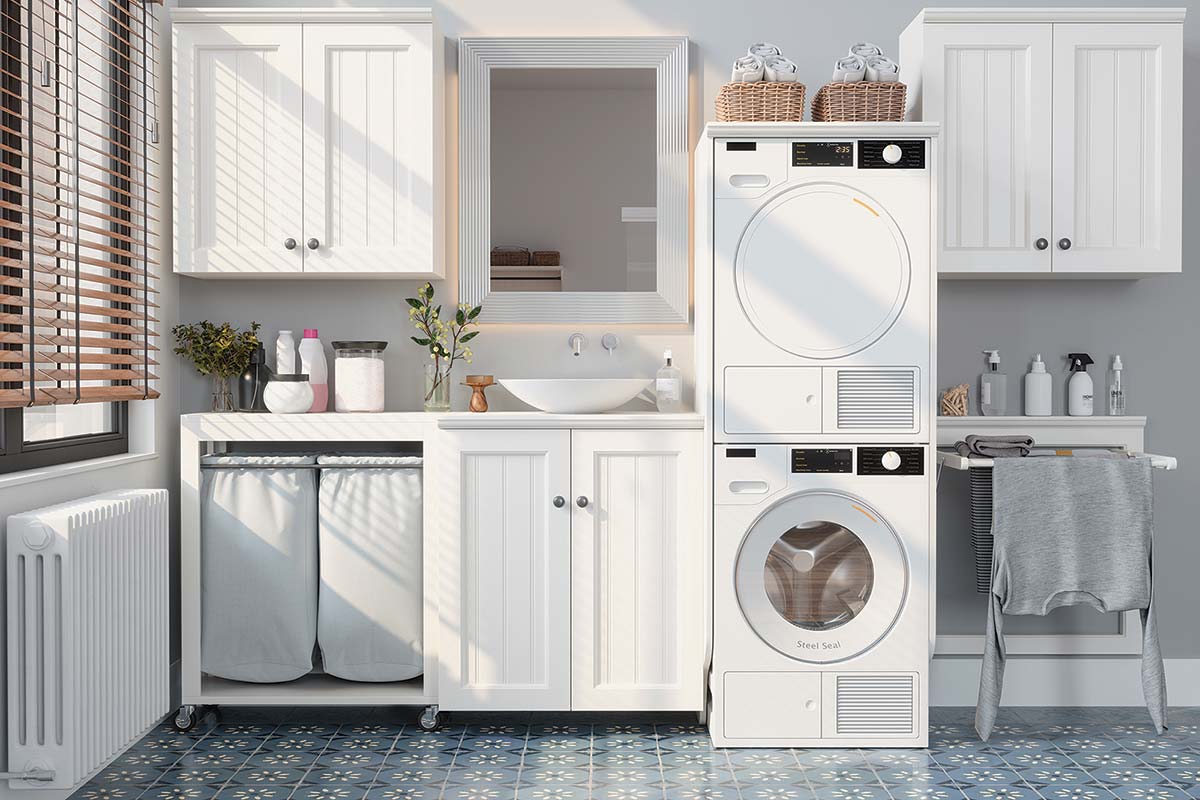
Energy Star washers clean clothes using 35% less water and 20% less energy than standard clothes washers. Energy Star clothes dryers include features such as a moisture sensor that will shut off your dryer automatically when clothes are dry. This not only saves energy but also saves the wear and tear on your clothes caused by overdrying.
Stackable machines are a great solution for homes or apartments that are tight on space, and front-load washers use less water than top-loading models.