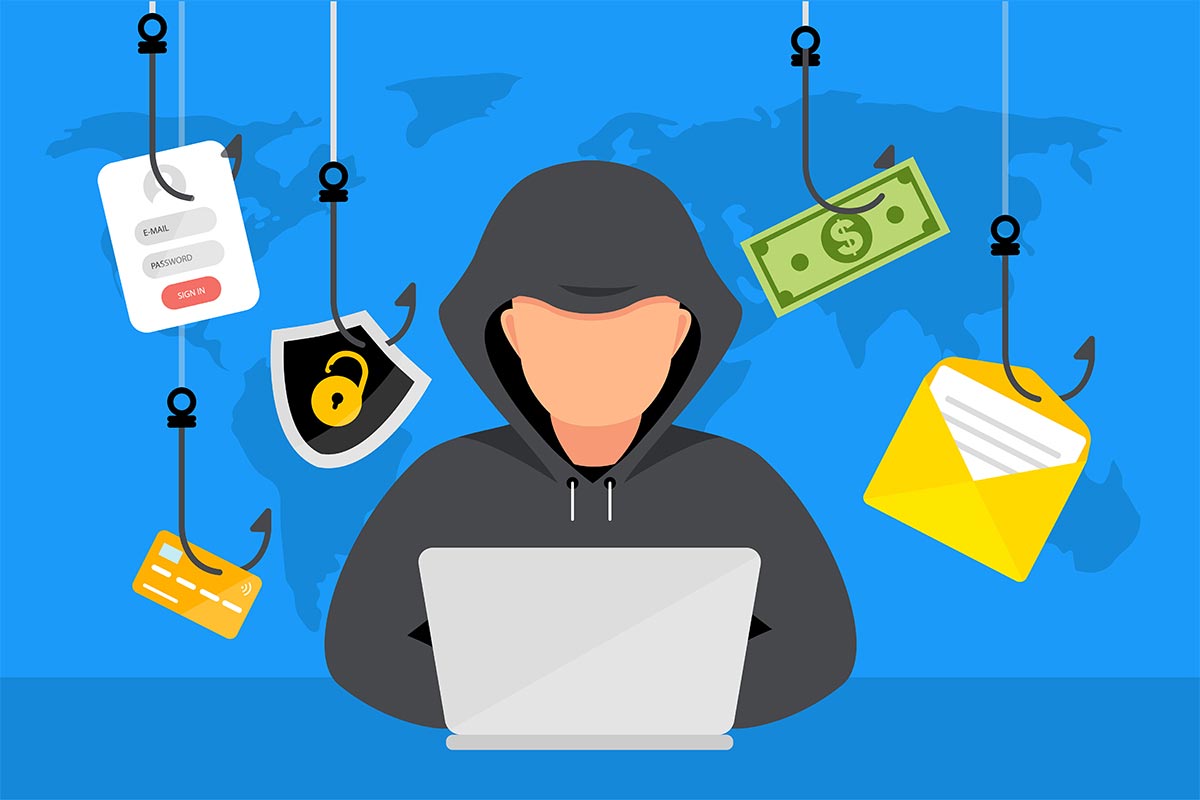
We’re not talking about baiting a hook and dropping it in the lake while you kick back with a glass of sweet iced tea—we’re talking about cybercrime and hackers trying to access your personal information.
These “phishermen” use different strategies to gain access to information including your Social Security number, passwords and bank accounts.
What Is Phishing?
Phishing occurs when cybercriminals trick users into performing an action such as clicking a malicious link or giving up personal information. Let’s discuss the most common ways you could be targeted.
Email Phishing
Amateur phishing emails have probably caught your eye in the past. But hackers are getting smarter and disguising themselves as trusted senders. By posing as your hometown bank or even a family member, thieves know you’re more likely to click links, download documents or open images containing malware.
Spelling and grammar errors: Scams often originate in other countries where English is not the first language. Seeing mistakes in an email should raise a red flag.
Illegitimate domains and email addresses: Hackers will use a similar domain to the business they are impersonating for credibility. For example, an email may come from myamazon.com instead of amazon.com. Hover your cursor over, but don’t click, links and email addresses to confirm communication originates from trusted sites.
Urgency: Hackers create a sense of urgency to cause stress and encourage quick action. Hastily clicking a link to address account breaches or payment failure is the desired outcome. If you’re suspicious, open a new browser page to access the account in question.
Voice Phishing
Also known as “vishing,” this scammer tactic attempts to steal information or money over the phone. Hackers will often target renters or homeowners, claiming to represent a utility company.
Common tactics include threatening immediate disconnection; confirming personal information, like your Social Security number; and requesting an update to credit card or banking information on file.
If the call comes from an unknown number or you don’t feel comfortable with a request, always hang up the phone and call the utility directly.
Text Phishing
Beware of scam attempts via texting, also known as “smishing.” Hackers send unsolicited texts containing links from unknown phone numbers. Avoid clicking links offering deals too good to be true or tracking information of unknown packages.
Don’t fall for shiny lures dropped by hungry phishermen. Stay safe out there!