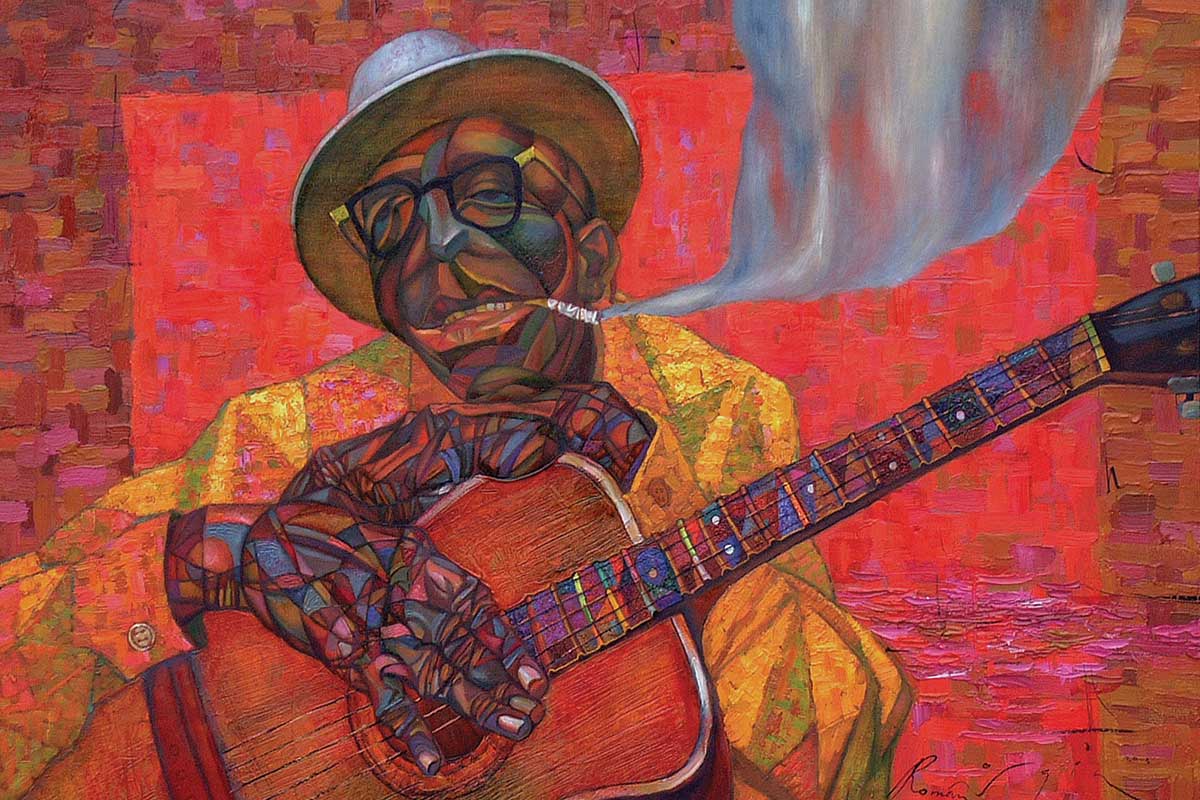
While country music might be the first thing that comes to mind when people think of Texas, East Texans have made their mark across other genres of music too.
February’s issue of Texas Co-op Power magazine featured some of the great country and western musicians with roots in East Texas, but gifted musicians in virtually every genre—including ragtime, blues, alternative and rock ’n’ roll—started their journey in the dense pine forests and vibrant culture of East Texas.
East Texas and the Blues
East Texas’ musical roots are deeply entrenched in the blues. The genre, often characterized by expressive guitar work and soulful lyrics, was popular in the region’s African American communities in the early 20th century.
Blind Lemon Jefferson was born in Coutchman in 1893 and is often hailed as the Father of Texas Blues. His innovative guitar playing and distinctive high-pitched voice influenced countless musicians and helped shape the blues genre. Jefferson’s recordings in the 1920s brought national attention to East Texas.
Around the same time, Huddie William Ledbetter, better known by the stage name Lead Belly, was a highly influential American folk and blues musician. Ledbetter was born in the late 1880s on the Jeter Plantation near Mooringsport, Louisiana, and was raised in East Texas. He was renowned for his powerful voice, mastery of the 12-string guitar and a vast repertoire of songs.
Lead Belly was exposed to music from a young age, learning to play various instruments, including the guitar, accordion and harmonica. He performed at local dances and gatherings, honing his skills and building a diverse repertoire that included blues, folk, gospel and work songs.
Lead Belly’s life was marked by periods of incarceration, including a stint at the Texas State Penitentiary in Huntsville, during which he continued to perform and compose music. While serving time at Angola Prison in Louisiana, he was discovered by folklorists John and Alan Lomax, who were recording folk songs for the Library of Congress. They were impressed by his talent and helped secure his release, bringing him to national attention.
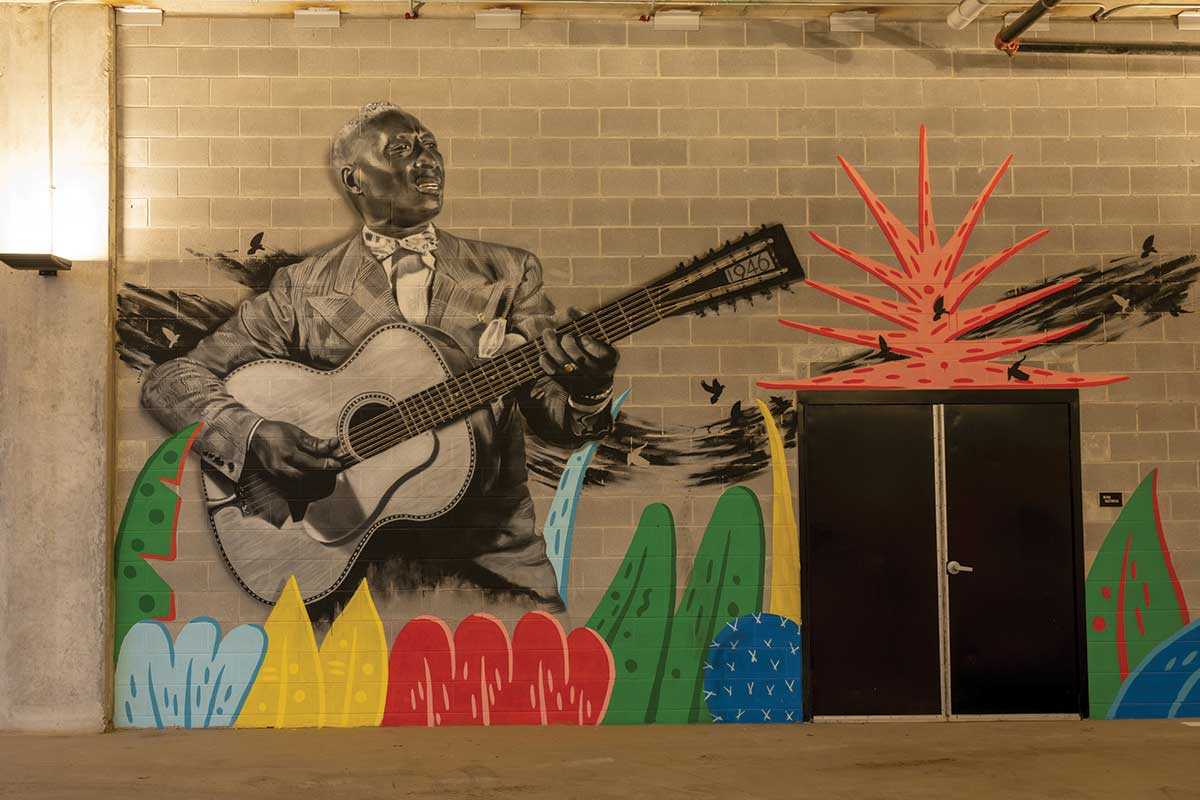
This mural of Huddie Ledbetter, known musically as Lead Belly, serves as a tribute to his East Texas roots.
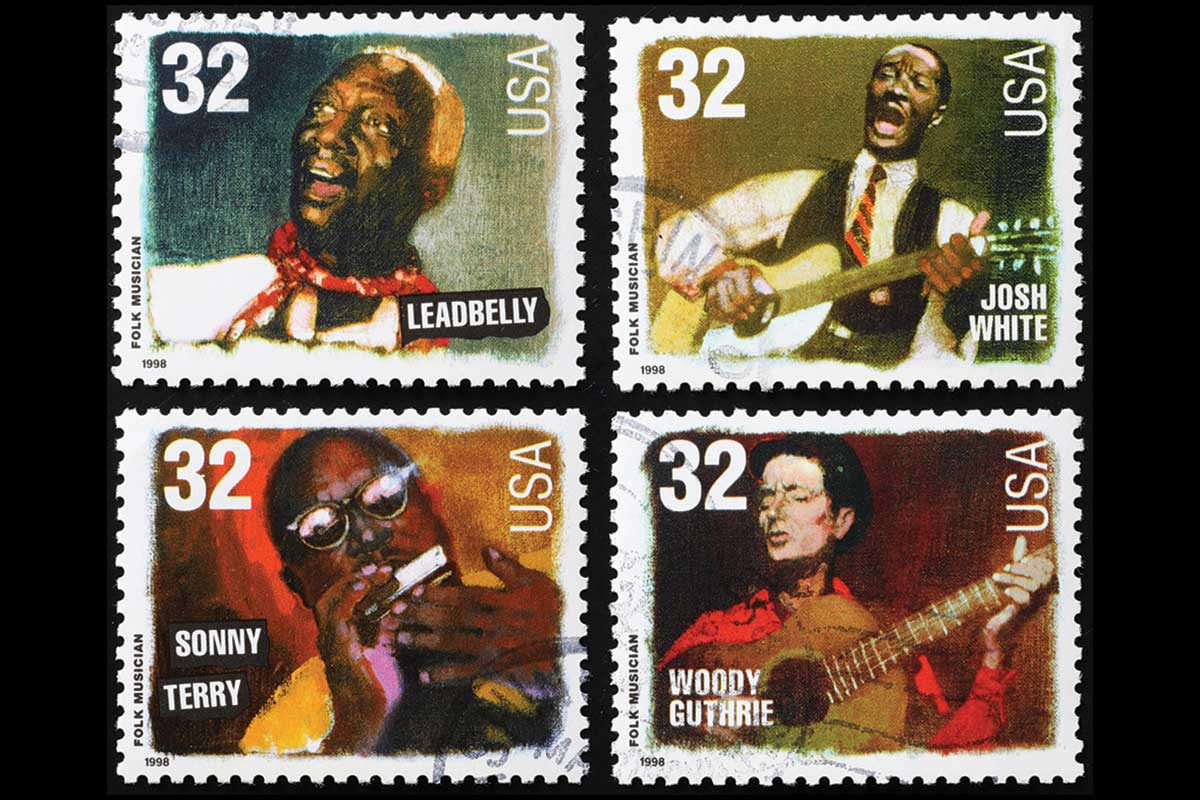
The U.S. Postal Service honored East Texas musician Lead Belly with a stamp.
Lead Belly’s extensive song repertoire included well-known songs such as Goodnight Irene, Midnight Special, Cotton Fields and Rock Island Line. His ability to perform a wide range of songs made him a versatile and influential artist, whose reach extended across multiple genres, including folk, blues and rock. Woody Guthrie, Pete Seeger, Bob Dylan and even the Beatles have cited him as a significant influence on their music.
The East Texas town of Centerville produced one of the most famous modern blues musicians, Samuel “Lightnin’ ” Hopkins. He was a highly influential blues guitarist and singer. Known for his deep, soulful voice and nimble guitar work, his hits include Mojo Hand, Bring Me My Shotgun and Baby Please Don’t Go.
Hopkins was one of the initial inductees to the Blues Hall of Fame. He died in 1982 in Houston, and the town of Crockett immortalized him with a statue in 2003.
More than a century after East Texas blues artists first gained recognition, the tradition continues today.

Kilgore’s Ally Venable has continued the Texas Blues tradition started by Lightnin’ Hopkins and Blind Lemon Jefferson.
Ally Venable, a Kilgore native, is making a name for herself in a big way. Recording her first album at just 17, she skyrocketed up the Billboard charts with her songwriting, singing and guitar playing, which has been compared in some circles to that of the late Jimi Hendrix.
Venable began singing at church at the age of 4 and picked up the guitar at age 12. Just a year later, she started her own band. With the influence of fellow Texan Stevie Ray Vaughan, she strives to capture the emotions of passion and yearning for which the blues is known.
“During the pandemic, when many other musicians were silent, I chose to release another blues album, called Heart of Fire, which made it pretty high on the Billboard charts,” she says. “This album challenged me to write not only about love but the unguarded honesty of feeling pain. On this album, I really wanted to create a tone of overcoming your struggles and persevering through them.”
Ragtime Was Born in Texas
Ragtime gets its name from the “ragged” rhythm of its syncopated melody and off-beat bass. The term “ragging” refers to the act of breaking up a simple, conventional melody without syncopation. The resulting music is then described as being in “ragged time.”
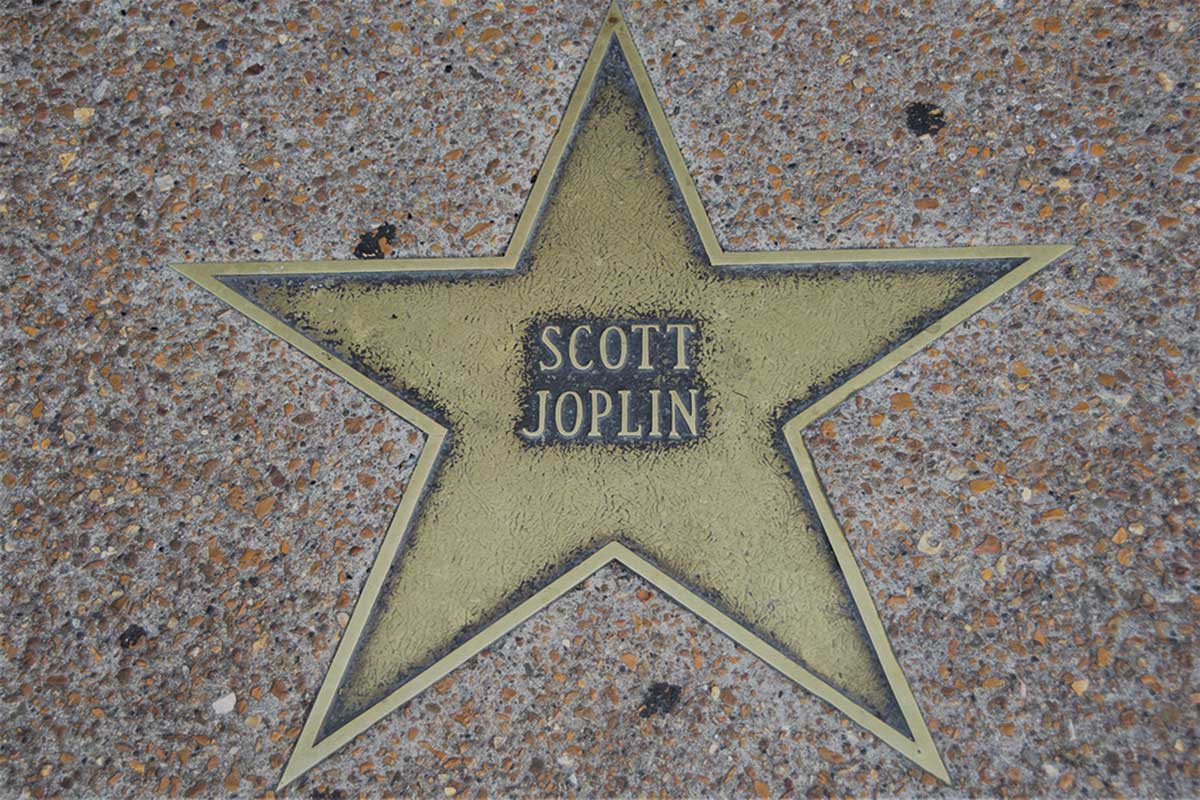
Known as the Father of Ragtime, Scott Joplin was honored posthumously with a star on Hollywood’s Walk of Fame.
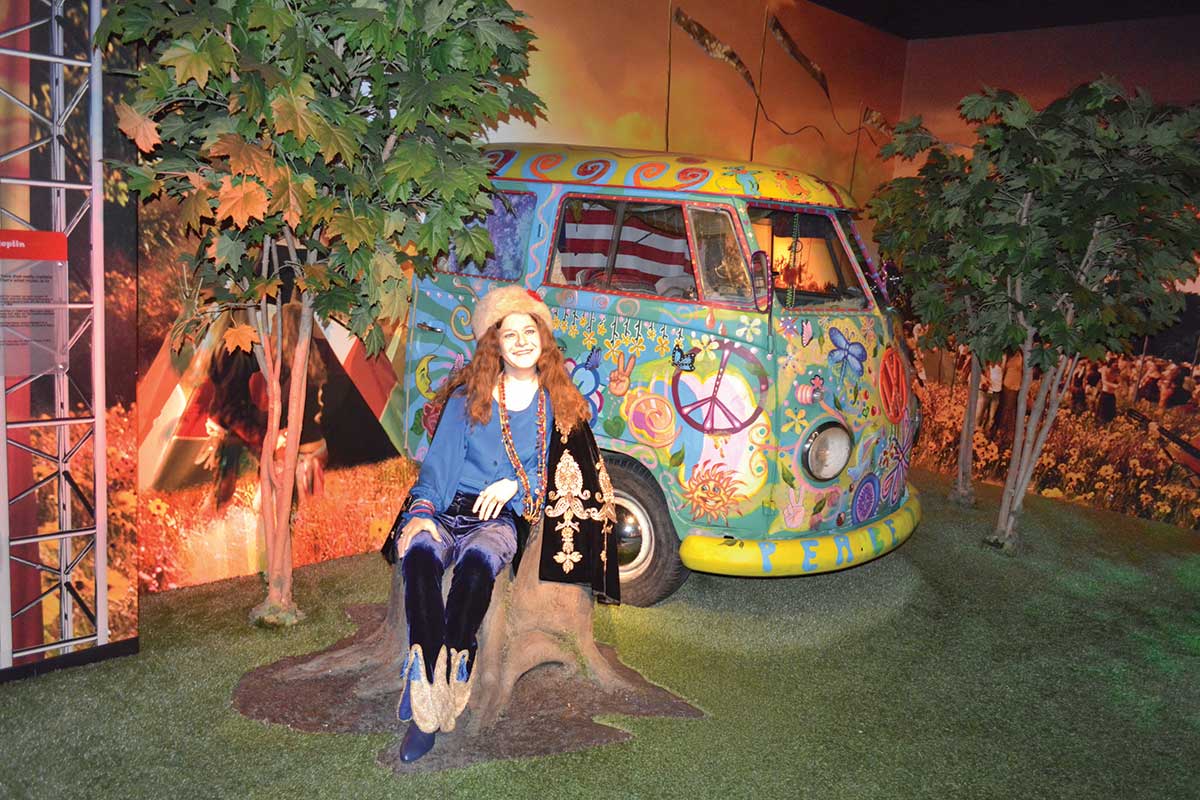
A wax figure of Port Arthur’s Joplin in Madame Tussaud’s Wax Museum in London.
Ragtime took America by storm during the late 1800s and early 1900s and gained national popularity due to one man: Scott Joplin. Joplin was born near Texarkana, around 1868. He grew up in a musical family and went on to become one of the most influential composers of ragtime music, earning the title King of Ragtime.
His works, such as Maple Leaf Rag and The Entertainer remain significant contributions to American music history. The Entertainer found a renewed popularity in the early 1970s when it was used as an ongoing theme song in the movie The Sting.
Rock ’n’ Rollers from the Pineywoods
You can’t do a story about East Texas musicians without talking about another famous Joplin—Port Arthur’s Janis Joplin.
A true rock and blues legend, Joplin was known for her powerful voice and her electric stage presence, with iconic songs like Piece of My Heart and Me and Bobby McGee. Joplin began her career with the psychedelic rock band Big Brother and the Holding Company, but left to become a solo artist in 1969.
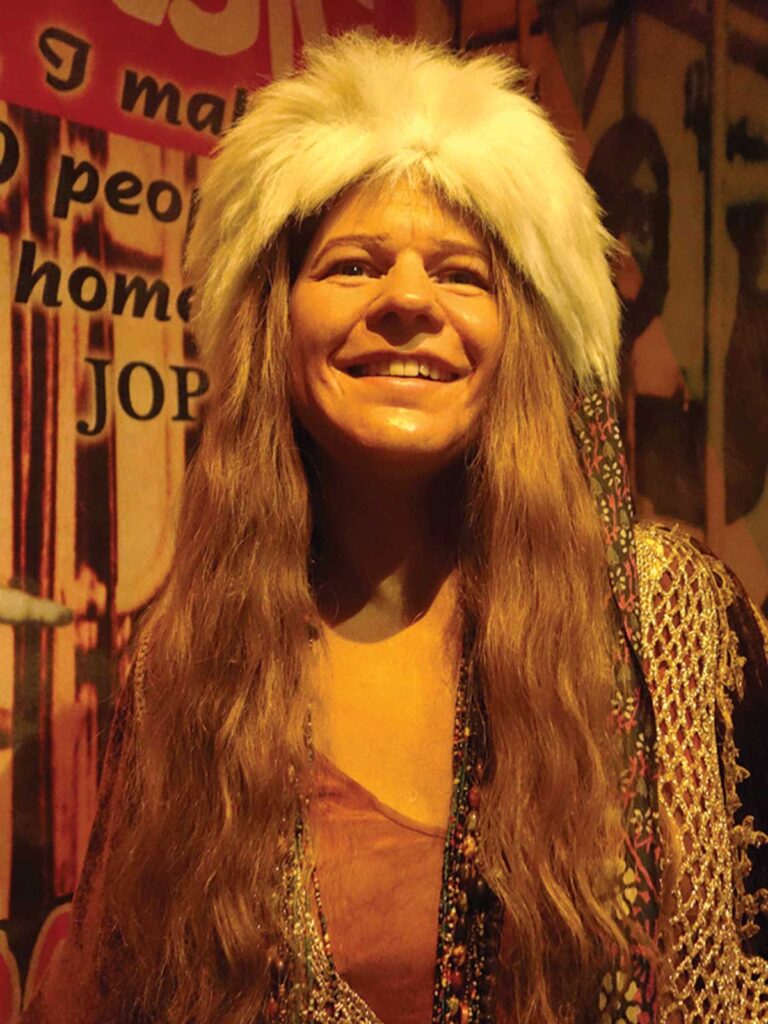
Janis Joplin was only 27 years old when she died, but she left a lifetime of great songs.
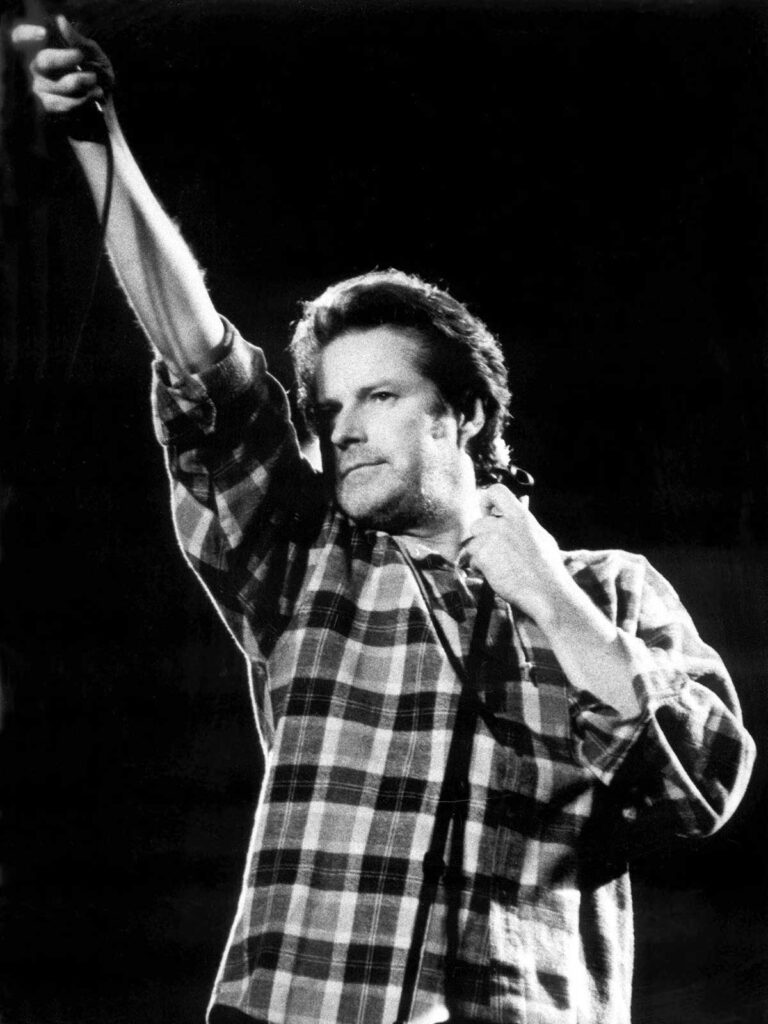
Don Henley performed at various East Texas venues before forming the Eagles.
Joplin appeared at Woodstock that summer and brought down the house. Her final recording was 1970’s Mercedes Benz, released after her death from an accidental heroin overdose at the age of 27. Just six months after her untimely death, her song Me and Bobby McGee reached No. 1 on the Billboard charts.
Two brothers also from the Golden Triangle area, Edgar and Johnny Winter, used rock influences to craft their distinctive music. Edgar Winter is known for blending rock, blues and jazz, with hits like Frankenstein and Free Ride. His innovations on the synthesizer and keyboard have been highly influential. His older brother, Johnny, also built a distinguished career playing primarily R&B and jazz, with rock influences.
One of the most prolific musicians from East Texas is Don Henley. Born in Gilmer in 1947, the Grammy-winning artist grew up in the nearby town of Linden. Henley is best known as a founding member, drummer and lead vocalist of the Eagles, one of the most celebrated rock bands in history.
He sang lead vocals on Eagle’s hits including Hotel California and Desperado and also produced hits like The Boys of Summer in his solo career as a singer-songwriter.

Henley received a star on the Walk of Fame at the Texas Theatre in Linden.
Innovation and the Indie Revolution
The rise of independent music has further diversified the East Texas soundscape. The digital age has empowered musicians to produce and distribute their work without major label backing.
Acts like the Texas Gentlemen, a band with roots in Dallas, have gained a cult following with their genre-defying sound that merges rock, soul and country.
The region’s rich musical heritage provides an inspirational foundation for innovation. Artists are increasingly blending elements from different genres to create fresh and unique sounds.
Additionally, the growing popularity of genres like Americana and roots music suggests a renewed interest in traditional sounds, albeit with a modern twist. East Texas musicians are at the forefront of this movement, drawing on the region’s deep musical roots while incorporating contemporary influences.
East Texas has long been a cradle for musical innovation, from the soulful strains of early blues pioneers to the groundbreaking sounds of today’s trailblazers. With its deep cultural roots and close-knit communities, this region has become a hub for creativity that continues to shape the music world.
Here, music isn’t just a part of life—it’s a way of moving forward, one note at a time.