Ever pretend to know what an electrician is talking about when he or she tells you what needs to be fixed? If so, or if you just want to expand your electrical vocabulary, here’s a glossary of common electrical terms.
Amperes, or amps, measure the rate of flow of electricity. It’s comparable to the flow of water through a hose. Fuses and circuit breakers are rated in amps to indicate the amount of electricity they can carry safely.
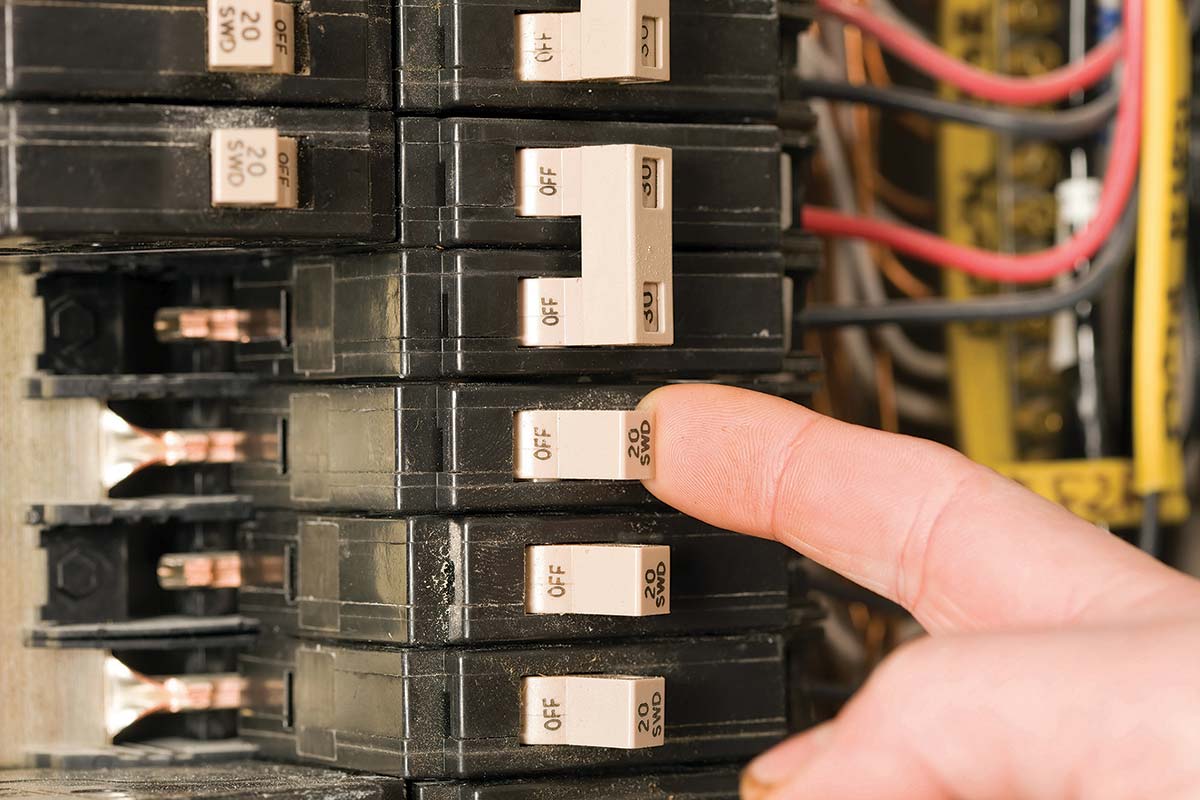
Circuit breakers and fuses are safety devices that automatically cut the flow of electricity when a circuit is overloaded.
In a fuse, an element melts when overloaded, stopping the flow. In a circuit breaker, a switch is tripped when it is overloaded. Whereas a fuse must be replaced, a circuit breaker can simply be reset after the cause of the overload has been corrected.
Circuit breakers and fuses are preset to appropriate amperage ratings, and it’s important for the safety of your home or business that the amperage ratings in the main service panel are followed.
The electrical service entrance normally consists of wires enclosed in conduit, a proper ground, your electric meter base and the main service panel—essentially the entire apparatus necessary to bring safe electricity into your home.
The main service panel (referred to as the “fuse box” in many homes) is a metal box that houses the circuit breakers or fuses. The main service panel serves as the point from which electricity is distributed to branch circuits throughout your home for appliances, equipment and lighting outlets.
Overload is when a circuit has carried a bigger flow of electricity than it can handle, so the wires get too hot and cause the circuit or breaker to trip.
Volts measure electric force. They’re the force behind the current, or amps, flowing through a wire. Just as the amp can be compared to the amount of water flowing through a hose, the volt can be compared to the amount of pressure pushing that water.
Transformers are electrical devices that can increase or decrease the voltage of electricity. Some of them are underground in big green boxes, and some are affixed to power poles.
A watt is a unit of electrical power equal to 1 amp under the pressure of 1 volt.
A watt-hour is the measurement of electrical energy used, measured as 1 watt of electricity used for one hour.
A kilowatt-hour is 1,000 watt-hours, abbreviated kWh. On electric bills, this indicates the amount of electric energy used. A 100-watt lamp operated for 10 hours (100 watts x 10 hours) uses 1,000 watt-hours or 1 kWh.
Having a grasp of your home’s electrical system isn’t just about sounding smart; it’s a key part of ensuring safety and managing your energy use efficiently.