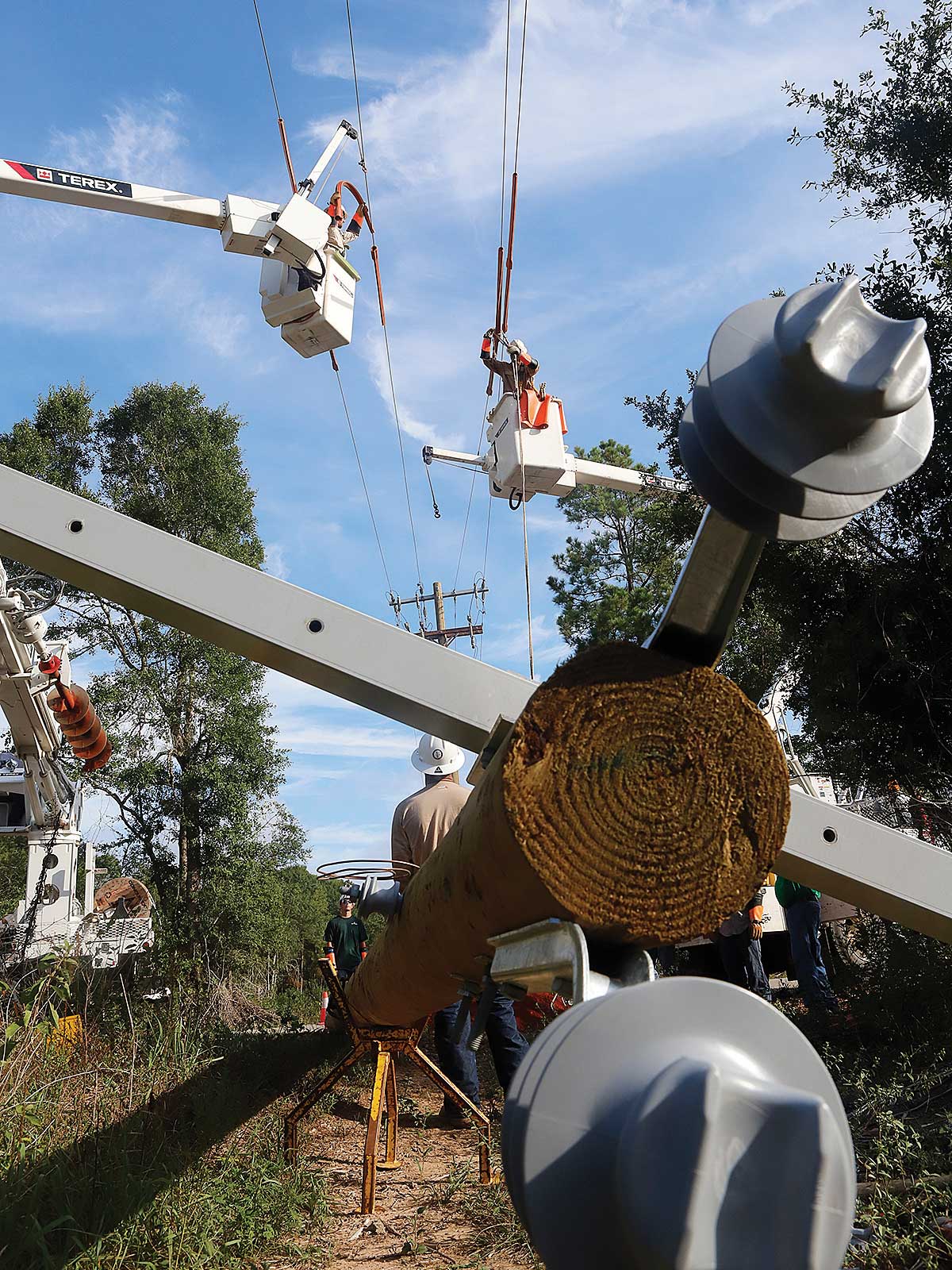
Being a consumer-member of Sam Houston Electric Cooperative means Co-op employees and the board of directors live in your community. You see them at church, school events, livestock shows, the grocery store and ballgames.
Unlike huge investor-owned energy providers, Sam Houston EC does not define a successful quarter or year by profit margins. Cooperatives are not focused on profits. Any margins accrued at the end of a year are returned to members through capital credits.
Sam Houston EC employees define successful years by providing the best service possible to the more than 70,000 members across 10 counties. Co-op employees do that one day, one phone call and even one storm restoration at a time.
The mission of Sam Houston EC is to power communities, improve lives and serve our members with excellence. That mission has not changed, nor will it ever change.
“Electricity is no longer a luxury,” said Joel Colston, chief engineer. “We know it is a necessity, and it has been for a while. We know because we live on the same lines as our members. My family and friends rely on me and the Co-op; I never want to let them down.”
The Co-op has seen remarkable growth in the number of members and meters since 2018. Experiencing 4%–5% meter growth each year is a formidable challenge that requires advanced planning. Colston and the Co-op expect the growth to continue for the foreseeable future. Colston noted that some portions of the Co-op’s service area are growing at a rate of up to 8%.
To maintain, and even improve on, excellent service, a lot of planning and the incorporation of new but established equipment and technologies is required. Several years ago, the Co-op began installing devices called trip savers to improve reliability and reduce outage times for small faults on a line.
Unlike a traditional fuse, the device can be programmed for various voltages and conditions. A very brief outage will occur to allow for a fault to be cleared and power restored. If not for the trip-saver device, a lineman would be dispatched to the site and then would search for the outage and replace the fuse to restore power.
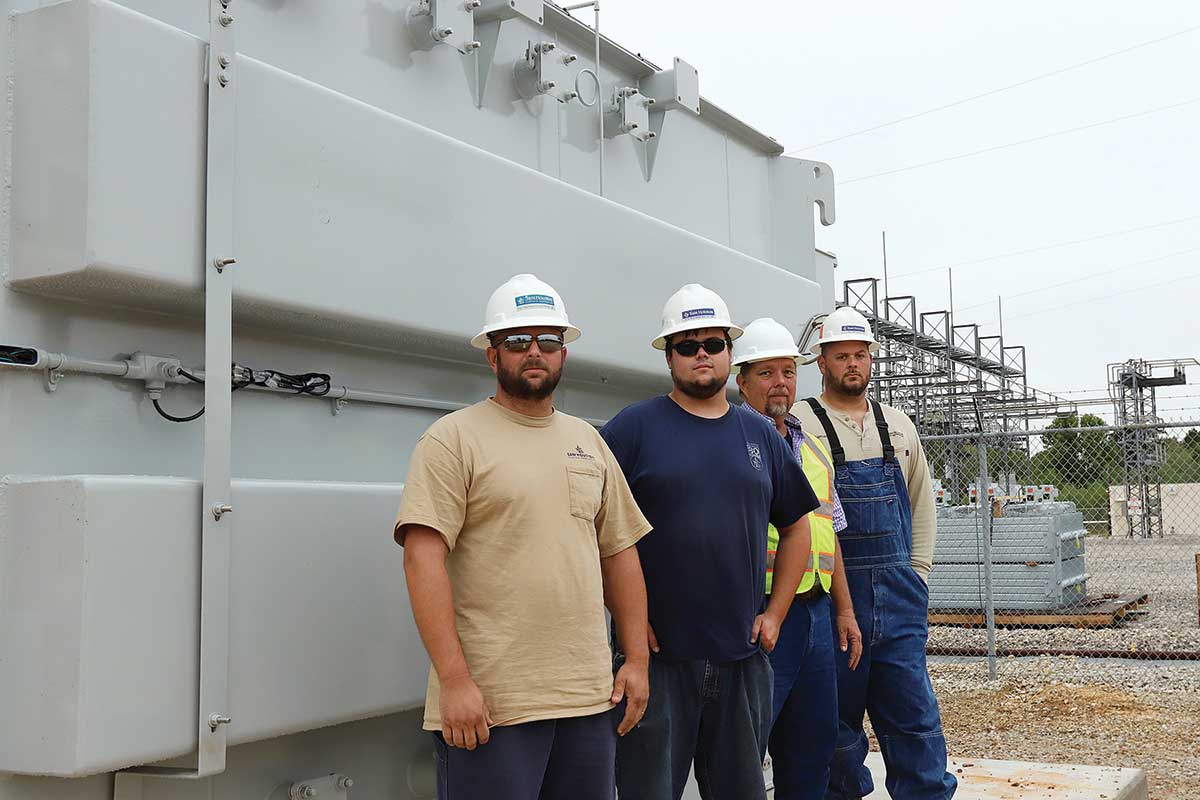
Sam Houston Electric Cooperative employees stand in front of a new substation transformer at the Long John substation in 2019.
Colston said the engineering and operations departments have improved their strategies in recent years, and the departments work closely to resolve any issues.
“We—engineers—regularly talk with linemen and their supervisors about how to solve issues on the distribution system,” Colston said. “The linemen are out there every day, and they are more familiar with portions of the system than the engineers. They are a wealth of knowledge, and the linemen are valuable partners to increasing our reliability.”
Project planning and timelines have significantly changed as well.
“Before 2018, we had about 1% growth a year,” Colston said. “We had a projects list that we could complete in about a year. Now we plan in phases and three to five years out.”
Large subdivisions continue to be built primarily in the western and southwestern portions of the service area. Developers are now consulting and sharing more information about their plans with Co-op engineers to build the most robust system possible.
Having access to the plans beyond what is currently being built is extremely valuable to the Cooperative’s engineers. It allows for several planned access points and smaller lines to be utilized during construction. This enables the Co-op to save money and increase the reliability in a subdivision.
“We like to incorporate looping in our designs, when possible,” Colston said. “Looping allows for a home or business to be fed from more than one source. It is important in underground designs because if there is a fault underground, it takes a lot longer to restore service.”
Adding a substation transformer or upgrading a transformer to a larger unit is another multiyear program. Prior to the COVID-19 pandemic in 2020, a substation transformer may have taken a year to be delivered from the date it was ordered. Since the pandemic, substation transformers are now taking more than three years to arrive on-site.
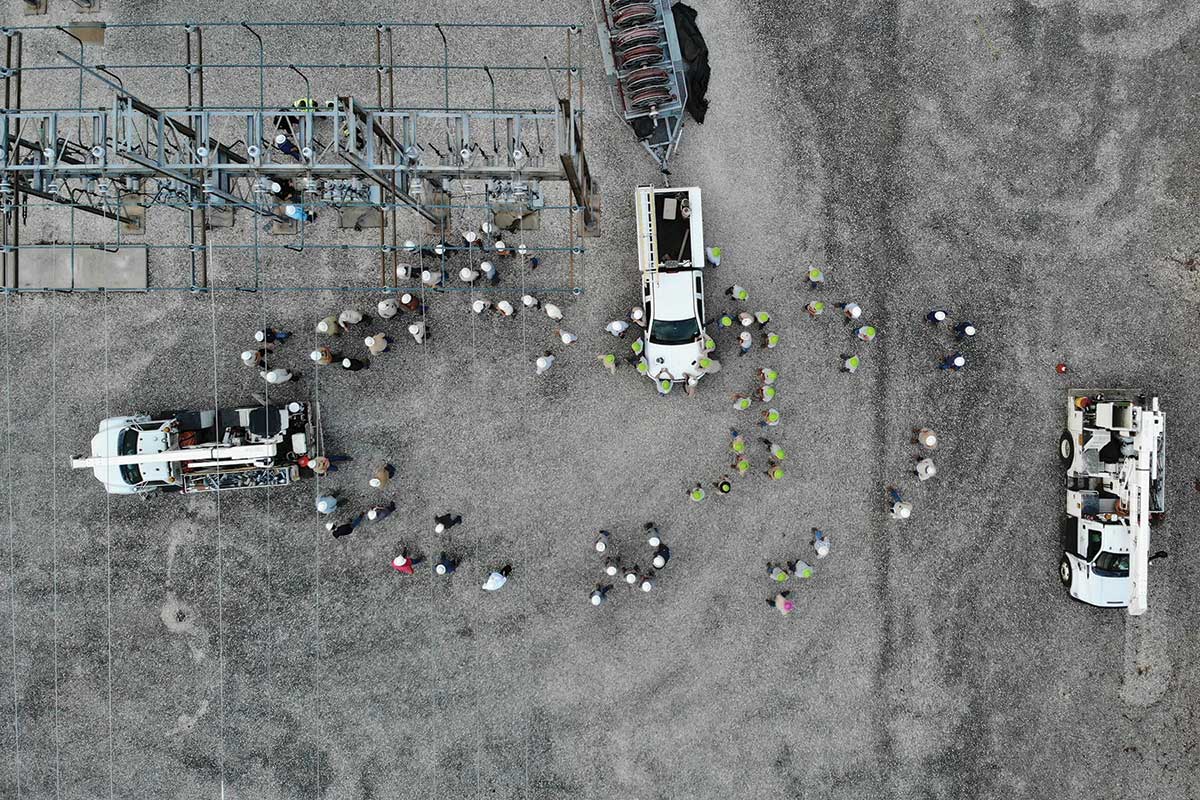
An aerial view shows nearly 100 Sam Houston EC employees and contractors before a long day of work at the Security substation during a voltage conversion project in 2023.
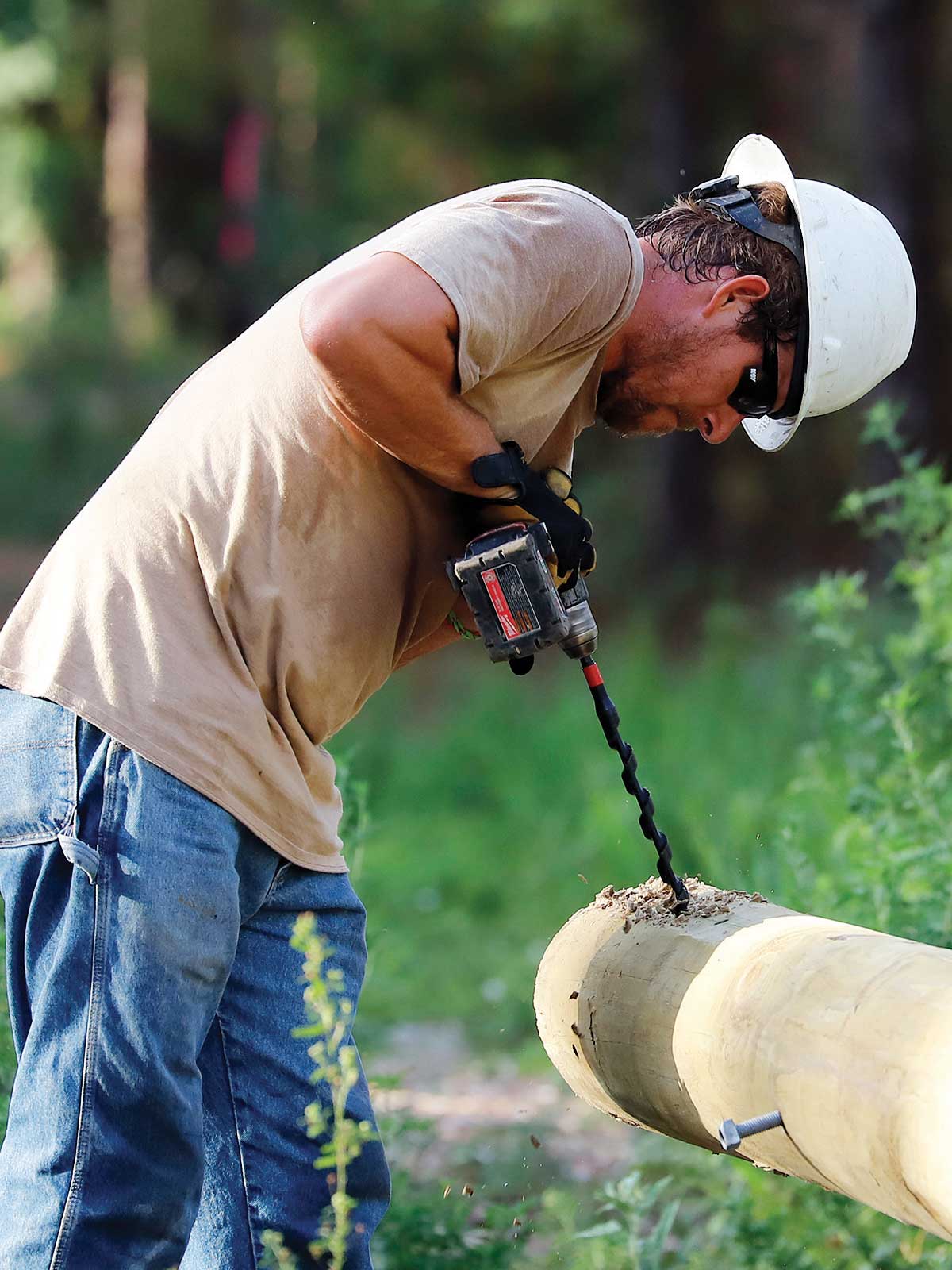
Josh Munson, a Livingston lineman, prepares a pole during a line extension project in Polk County.
“We are very particular in our choice of [transformer] manufacturers,” Colston said. “Since the pandemic, we have had to research other manufacturers, and it is still taking several years to get some large pieces of equipment.”
Significant portions of the Co-op’s service area have benefited from substation transformer upgrades followed by voltage conversions on the lines that take electricity from the substation to members’ homes.
Voltage conversions save the Co-op and members money and enable portions of the system to be tied together. As portions of the system are connected, electricity can be rerouted from another source (substation) to a line through an open point. In the past, the open points had to be manually operated by an employee physically at the location of the open point.
In 2020, Sam Houston EC started implementing computer-based Yukon Feeder Automation self-healing software. The YFA program saves members many hours of outage time as it isolates an outage with the fewest number of members losing power. The program then automatically restores power in a matter of seconds, without human intervention.
According to Ryan Brown, assistant general manager, the YFA system reduced power outages by 39,000 hours through the first six months of this year.
“A member still took an outage, but it was only for 10 seconds or a minute, not several hours,” said Merek Brister, engineer. “YFA gets the lights back on.”
The Co-op initially started the YFA system on the outer edges of the service area. It was first implemented near Huntington, east of Lufkin in Angelina County.
“We installed it in the farther areas because it takes us longer to respond to an outage because a lineman has to drive up there,” said Colston. “After hours, it can take a lineman up to two hours to get there.”
Striking a balance between reliability and cost is always a primary goal for Sam Houston EC. Investor-owned utilities may place profits over reliability, but the Co-op places the priority on reliability for members.
The Cooperative also recently added the Plum Grove substation. The surrounding area in Liberty County is expected to continue growing, and the new substation can accommodate two additional transformers at the existing location.
The substation is close to the members it serves, and it’s connected to the Long John substation just north of Dayton for additional reliability. The connection serves as alternate power sources for both communities in the event of an outage.
Fred and Ivanhoe substations in Tyler County are new substations that will come online when the Fred transmission line is completed. The new transmission line and substations will greatly improve reliability in the surrounding communities.
YFA, trip savers and other technologies have substantially reduced power interruptions, and Sam Houston EC members are now experiencing the most reliable service in our 85-year history.
“It makes me feel great just knowing that we’re going to do what’s best for our members,” Colston said. “Our main focus is to provide reliable service to our members and to have the best system we can possibly have.”