Did you know the programmable thermostat is more than 100 years old? Honeywell introduced the first one in 1906, naming it the Jewell. It was a simple, clock-powered product that allowed users to set times for the temperature to adjust. While its engineering was crude by today’s standards, it was truly a pioneering commodity.
Today’s most basic programmable thermostat offers four programming periods: wake, leave, return and sleep. You set the time of day and target temperature for each period. Other programmable thermostats let you control the settings with your smartphone to further customize your energy-saving settings in real time.
The Department of Energy has established recommendations for programming that can save you as much as 10% and help ease stress on the grid. Simply turn your thermostat back 7–10 degrees from its normal setting for at least eight hours a day. You can do this on weekdays while the family is out of the house or at night while everyone is asleep. Try different settings to see what works best for your air conditioning system and family comfort.
Some programmable thermostats are preset with a maximum heating temperature of 68 degrees and a cooling minimum of 78 degrees for those times when you’re home. You can override these settings, but they make for an easy setup.
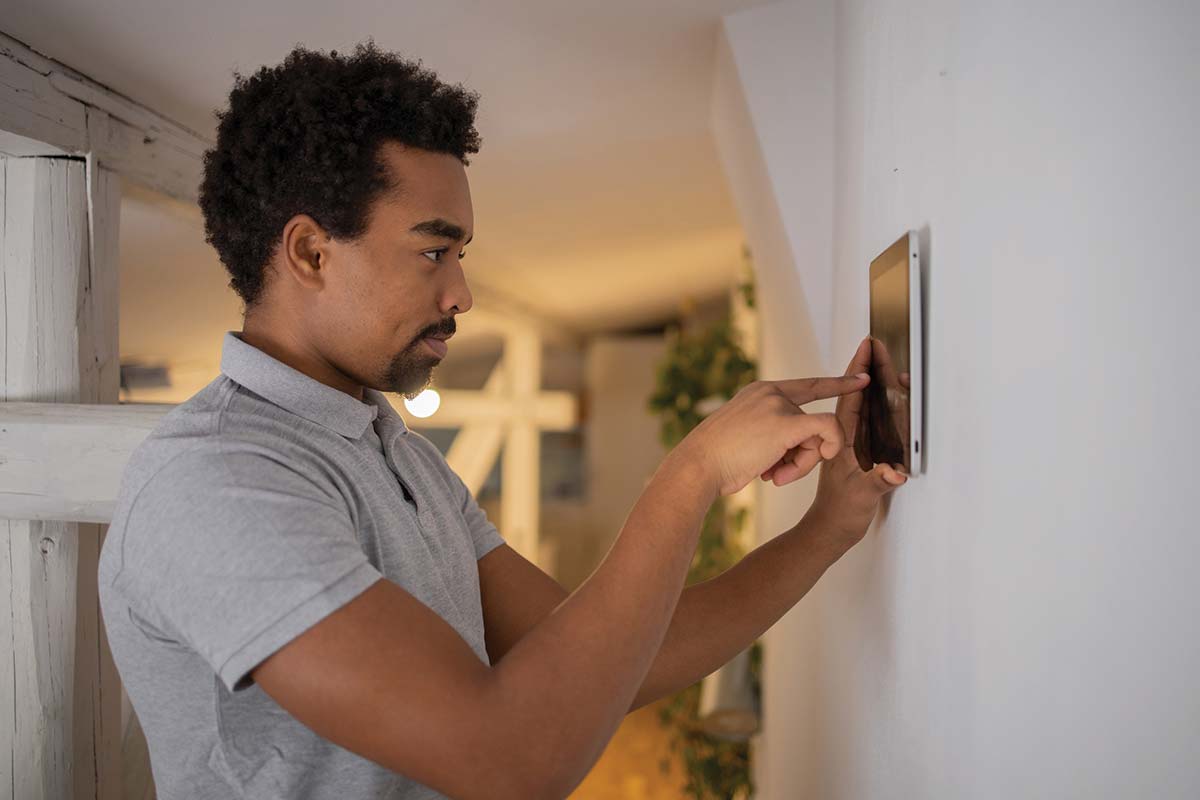
No discussion of programmable thermostats is complete without talking about their “smart” relatives. Smart thermostats are Wi-Fi-enabled devices that automatically adjust temperature settings for optimal performance. You can set and forget them, and let the software build a program around the way you live. You also can control your smart thermostat remotely through a smartphone app.
Finally, there are important placement considerations for your thermostat, regardless of how smart it is. The DOE recommends placing a thermostat on an interior wall away from direct sunlight, drafts, doorways, skylights and windows so it gets an accurate reading of the ambient air temperature. Don’t place furniture too close to it, to ensure natural air movement, and place it in a location easily accessible for monitoring and programming.
Experimentation will help you determine the best solution for your home, as each is unique due to variables in insulation, weather sealing, system efficiencies and operation. Still, a programmable thermostat will likely save you money.