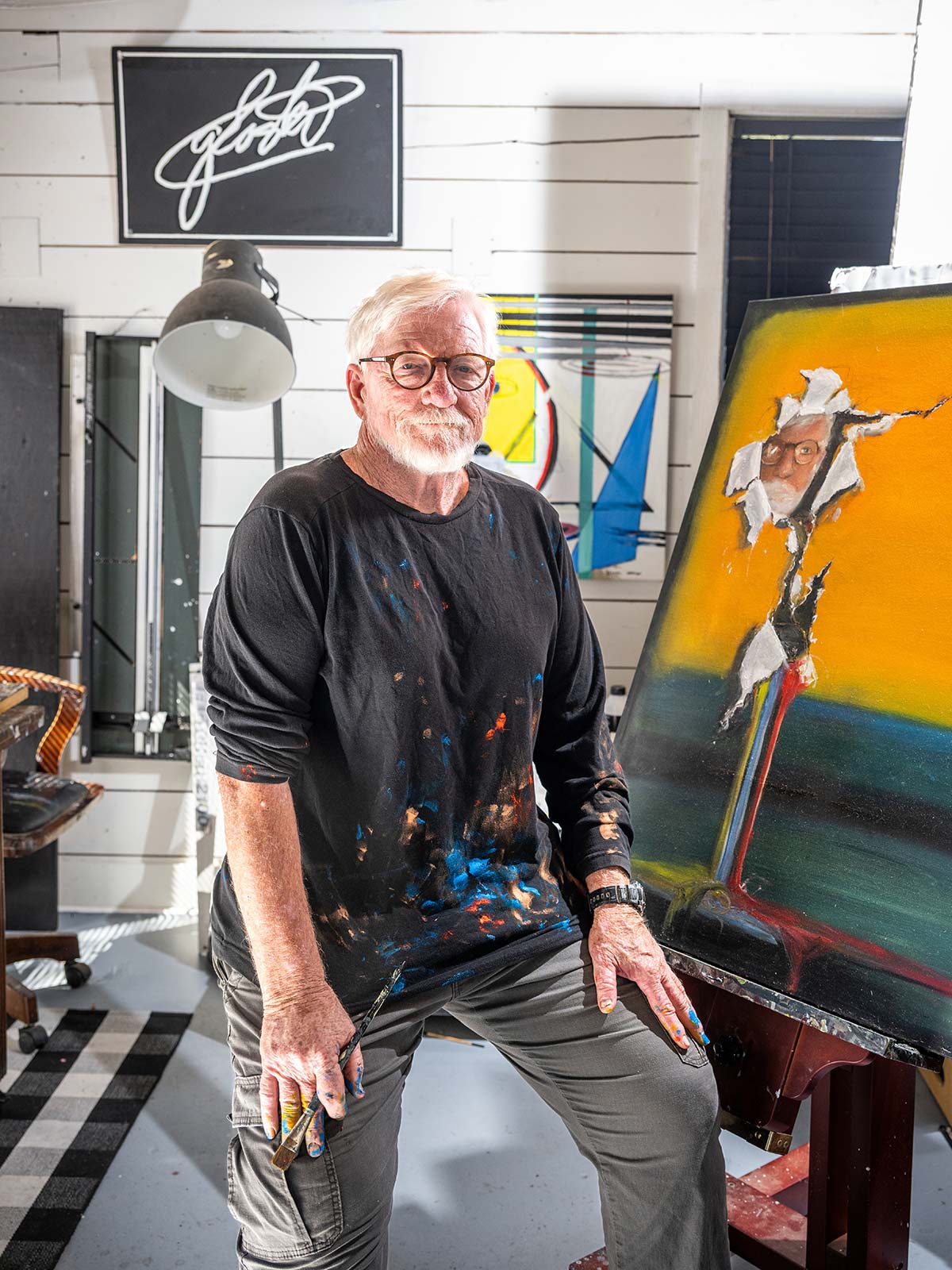
Greg Doster points to his artwork and says, “Let me show you some stories.”
His paintings adorn every wall of the North Texas home in Kaufman he shares with his wife, Venetia, and are stacked in corners in the bedrooms. He estimates he has created 3,000–4,000 watercolors, oils and acrylics in the 50-plus years he has been honing his craft, although he has painted full time only since his retirement in 2017.
He is very particular about what he calls this endeavor.
“Art is my passion,” Doster declares. “Not a hobby.” But for him, art isn’t just about aesthetics; it’s a vehicle for storytelling.
A native of North Louisiana, Doster began painting soon after high school. He earned a degree in architecture from Louisiana Tech University. From there, his varied career included a city planning office, 10 years at the Federal Reserve, head of land maintenance at the planned Superconducting Super Collider near Waxahachie and director of real estate for Verizon.
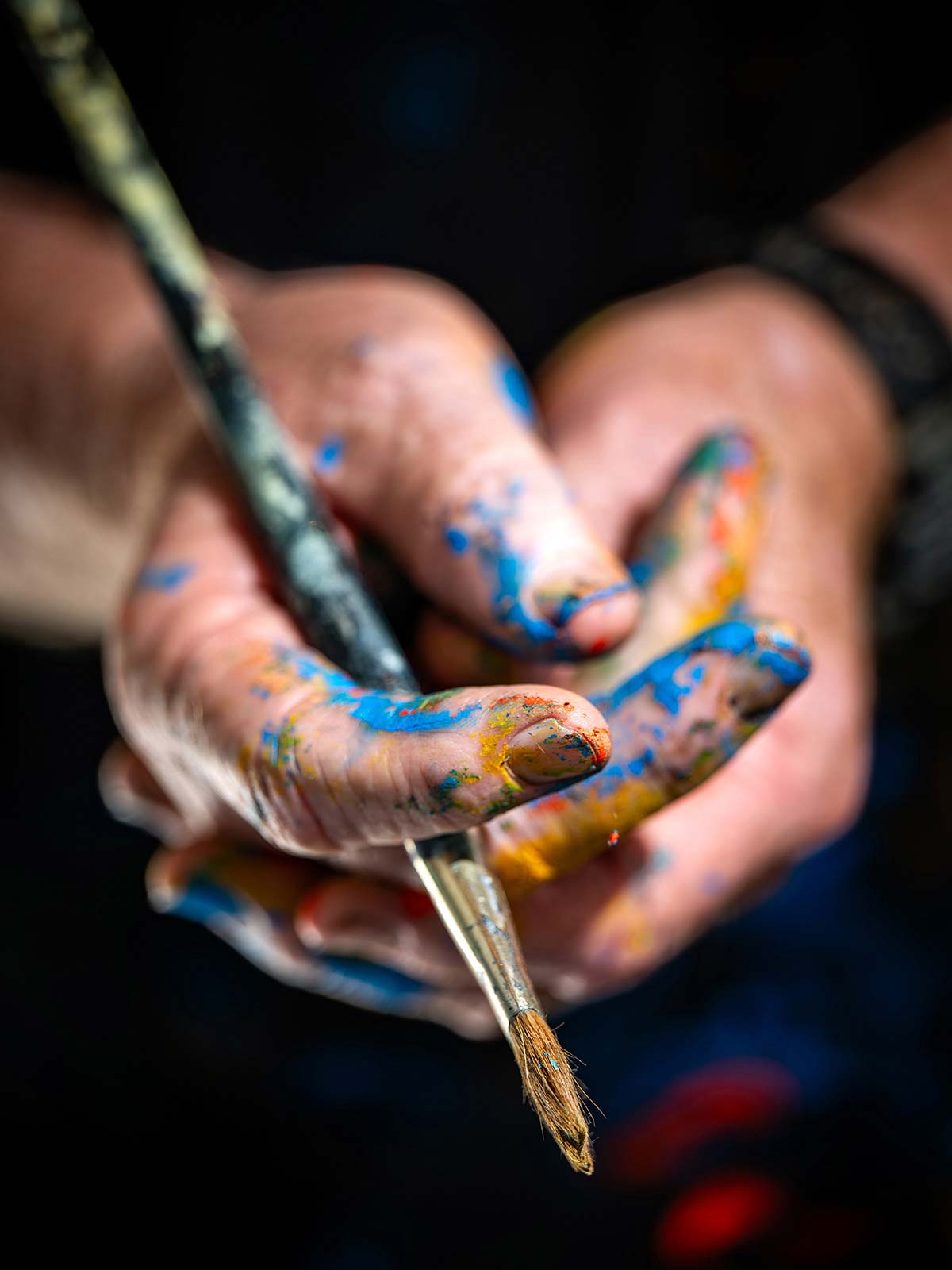
Doster’s hands have created 3,000–4,000 watercolors, oils and acrylics in the 50-plus years he has been painting.
R.J. Hinkle
Doster dismisses all of this labor with a wave of a hand. “Different story, different world.” During those years, Doster refined his painting skills in the evenings and on weekends, taking lessons from artists Jerry Nelson Haynes and Bud Biggs.
Perhaps his greatest influence, however, is Zoltan Szabo, a Canadian watercolor artist. Doster studied Szabo’s work intensely, and a row of books by the artist lines a shelf in Doster’s studio.
Doster’s work encompasses a variety of styles, but he considers Kentucky Derby 2018—Justify at the End his signature piece. Currently on display at Lone Star Park, a racetrack in Grand Prairie, the oil painting illustrates the finish of the race with Justify ahead by a nose.
From left to right, the image moves from abstract to concrete, from black and white to color.
“I had this idea of capturing a scene within a painting that generally defines the word ‘clarity’ in a sports realm,” Doster says. “This happens when hard work, talent, discipline and some luck come together at the same moment.”
Each horse in the painting represents a specific, real-life thoroughbred. Doster studied more than 150 images of racing champions and took three years to create the 4-by-8-foot masterpiece.
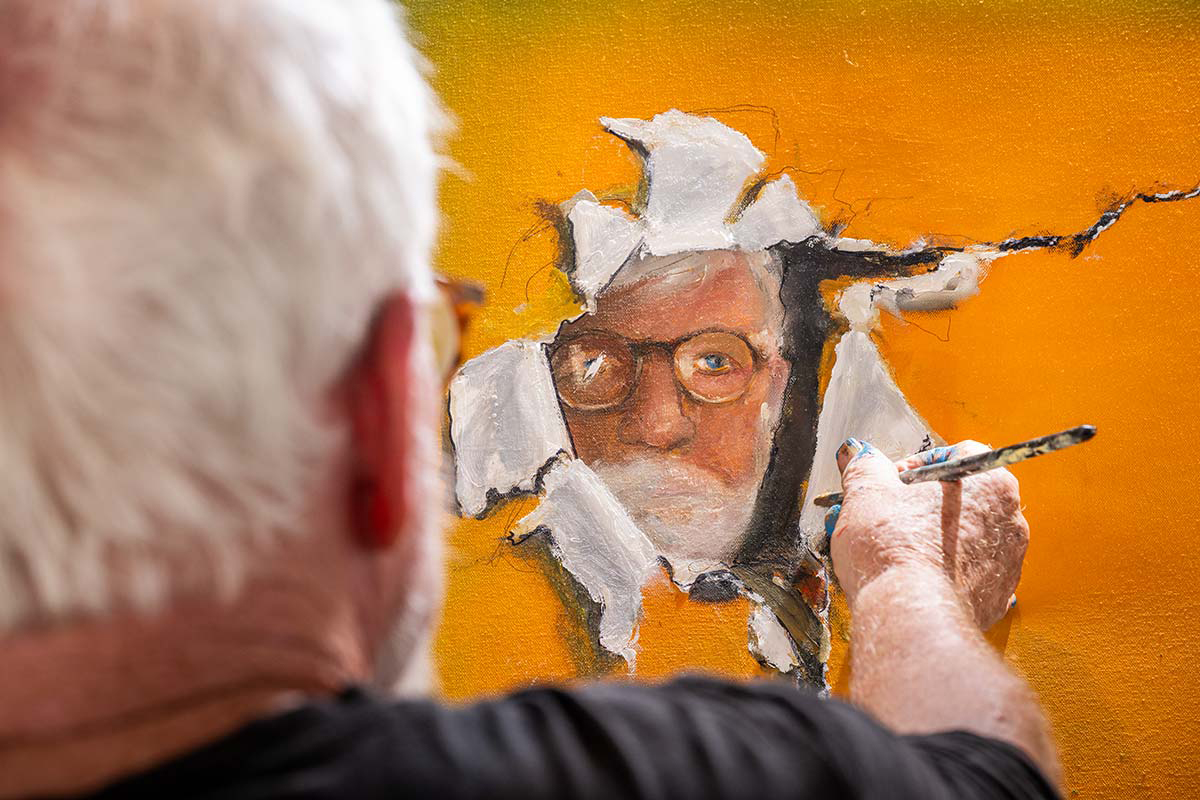
A Greg Doster self-portrait in a torn canvas titled, A Torn Reality. “This artwork is a take on minimalistic art that are good works but not overwhelming to be a wow,” Doster says.
R.J. Hinkle
One painting, A Beautiful Walk, tells part of Doster’s own story.
In 1993, Doster, Venetia and their two small children were driving to a birthday party when a young motorist crossed the center line and hit them head-on. The motorist was killed, and Doster suffered 15 broken bones, including a leg, both hips and both arms.
The accident thrust Doster into “a lot of troubling times.” While still trying to climb out of the emotional depths, he learned that a distant relative had died in a farming accident. Though he didn’t know the man well, he still felt the loss and created the painting, which features a path through the fall woods.
Longtime friend Pam Rogers, who has purchased several prints, was particularly moved by this piece. “His paintings are so beautiful and have so much meaning for anybody that takes the time to let them resonate,” she says.
The accident also inspired the painting Fireman’s Touch. A volunteer fire chief was the first on the scene that fateful day in 1993. To thank the emergency personnel, Doster created the painting, which features a firefighter reaching toward a young girl, a representation of community and innocence.
More recently, Doster lost his brother to cancer. To work through his feelings, he rendered An Empty Chair. Prominently displayed in this acrylic painting is a wooden chair, illuminated by light streaming through an open window. A pair of tennis shoes sits at the base of the chair.
“His earthly spirit within me had to leave, so I opened the window, which left an empty chair,” Doster says. “Those shoes will be hard to fill.”
At 75, Doster keeps “the lever on full blast.” He still paints and still shows his work.
“You can have somebody else mow your grass and move this, do that,” he says, but then, “you have convinced yourself that you’re old. I just have to say I’ve been in a process. I haven’t arrived yet. If I’ve got another opportunity to create some more work, that’s what I’m going to do.”
There are more stories to paint.
“But it’s not my story, it’s your story. I want the painting I do to make you remember something about who you are,” he says. “And I just pray to God to give me something else to paint.”