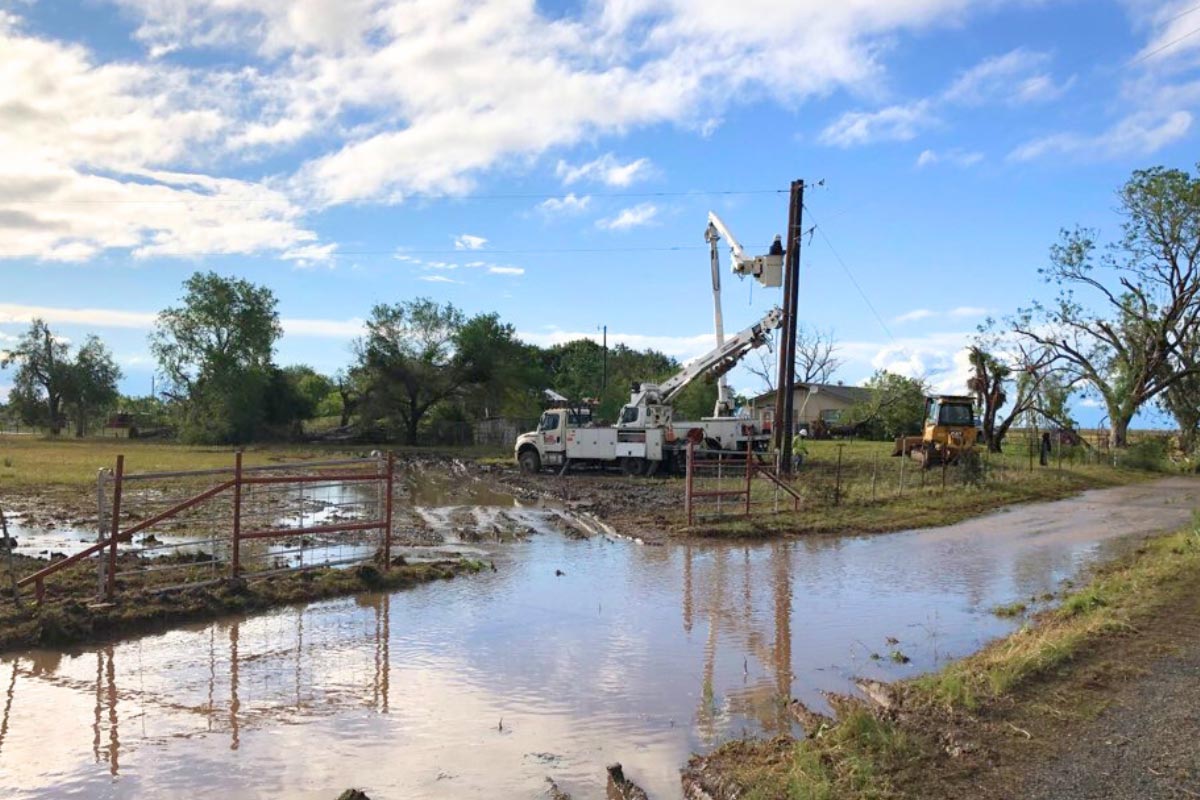
Preparation for violent and unpredictable storms, including tornadoes, can be a matter of survival in Texas.
Tornado season is generally in the spring, with spinning storms more prevalent from April through July—and May and June being the peak months. But tornadoes can form any time of the year and occur in every state in the country.
Be Prepared
One of the most alarming aspects of tornadoes is their unpredictability. There’s no formula to predict whose home a tornado will miss and whose it will hit. Your best defense is to be alert and prepared—and the time to begin preparing is now.
- Pay attention to local weather reports. You can get reliable information from broadcasts on a National Oceanic and Atmospheric Administration weather radio and via free alerts provided by apps on your phone or other devices. Make sure you have a fully charged portable charger for your cellphone in case the power goes out.
- Develop a family emergency plan. Ensure everyone in the family knows where to go in case a tornado warning is issued while they’re in the house, at school or work, or on the road.
- Assemble a family emergency supply kit. Make certain everything you need is in one specific, easy-to-access location. Perishable items should be changed or replaced as needed. More information on making a kit can be found at fema.gov.
- During any emergency, pay attention to the instructions issued by local emergency management officials. Take time before bad weather hits to learn about emergency plans.
Stay Alert Afterward
In the aftermath of a tornado, potential hazards must be considered during response and recovery efforts. Keep yourself and your family members alert with these general precautions.
- Continue to monitor local radio or TV stations for emergency information and the potential of additional storms.
- Be aware of possible structural, electrical or gas leak hazards in and around recovery sites. If you see these hazards, report them to the proper authorities and utilities.
- Do not touch downed power lines or objects that are in contact with downed power lines.
- Wear proper clothing, including boots and gloves, when walking on or near debris.
- Be careful around sharp objects, including nails and broken glass.
- Use proper safety precautions when operating generators, chain saws or other power tools. Generators must only be used outside, well away from windows and doors.
- Take steps to prevent heat illnesses and dehydration in yourself and others.
Resources
The following websites and apps can help you stay informed, connected and prepared before, during and after a tornado.
- National Weather Service: nssl.noaa.gov/education/svrwx101/tornadoes
- FEMA: Ready.gov/Tornadoes
- American Red Cross: RedCross.org/Prepare/Disaster/Tornado or download the ARC’s apps:
- Emergency: Severe Weather app offers step-by-step instructions on how to prepare for and recover from a tornado (and other weather emergencies). It provides live tornado warnings and a map, and an “I’m Safe” button for those affected by recent tornadoes to notify family and friends.
- First Aid app offers safety tips specifically for bad weather and natural disasters, including tornadoes. All information is downloaded within the app so an internet connection is not required, and a 911 integration feature allows emergency phone calls to be made directly from the app.