An unexpected sound interrupts the morning routine in the remote small town of Yalicar, Guatemala, on November 6, 2025. Between the usual rooster crows, the guttural calls of howler monkeys and rumbling motorbikes, someone shouts “Headache!” in plain English.
Then, around a corner, another warning: “Headache!” as bits of wire clatter to the ground at the feet of electrical lineworkers and onlookers gathered around a power pole along a dirt road.
This is the sound of history.
More than 115 families live in Yalicar, about a mile from Mexico, along the Río Chixoy in northern Guatemala. Twenty-five years ago, this patch of rolling tropical lowlands was a rubber farm. After the farm shut down, around the year 2000, many workers stayed behind. They built homes, churches, a school—a community—without electricity. Until last November.
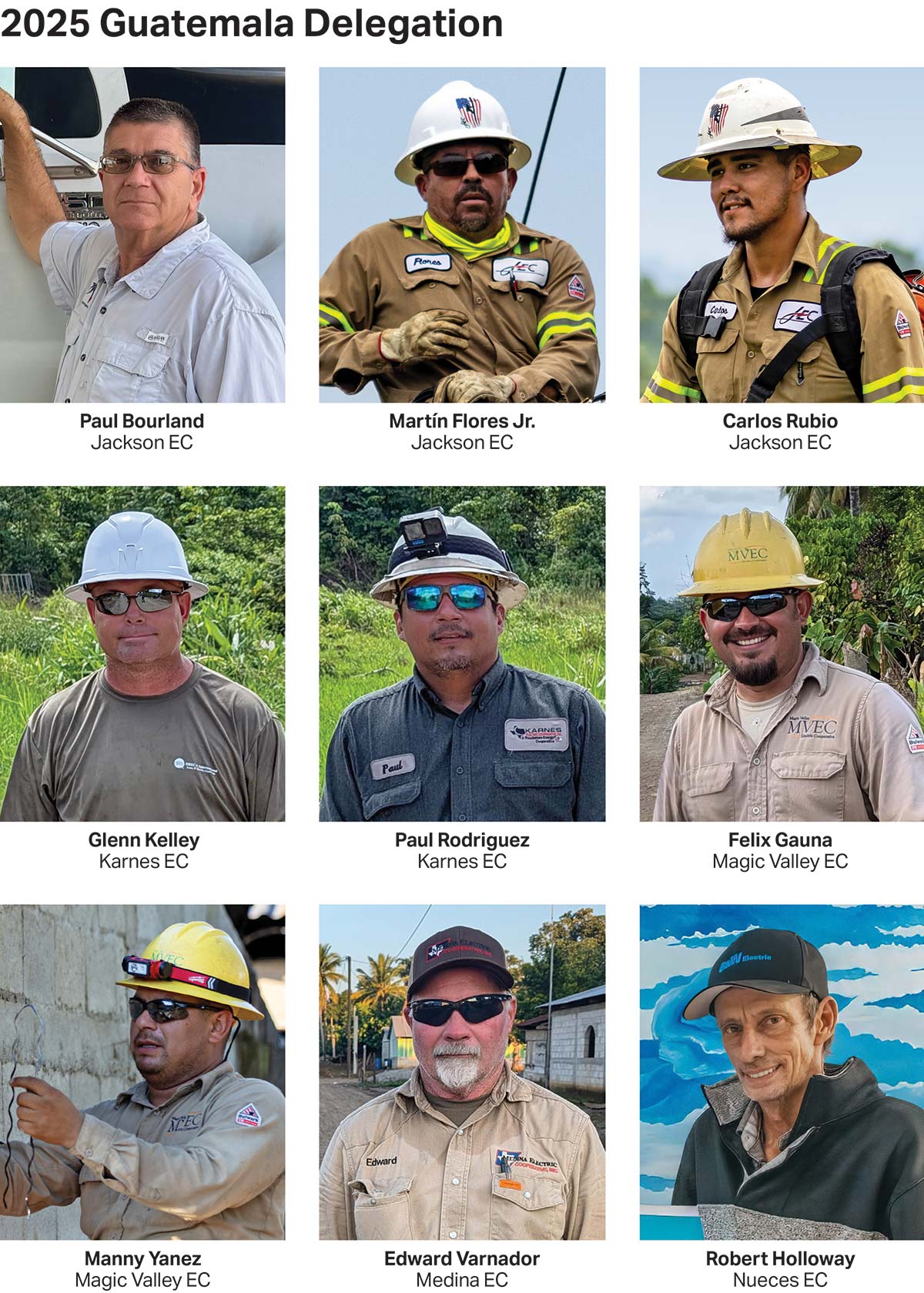
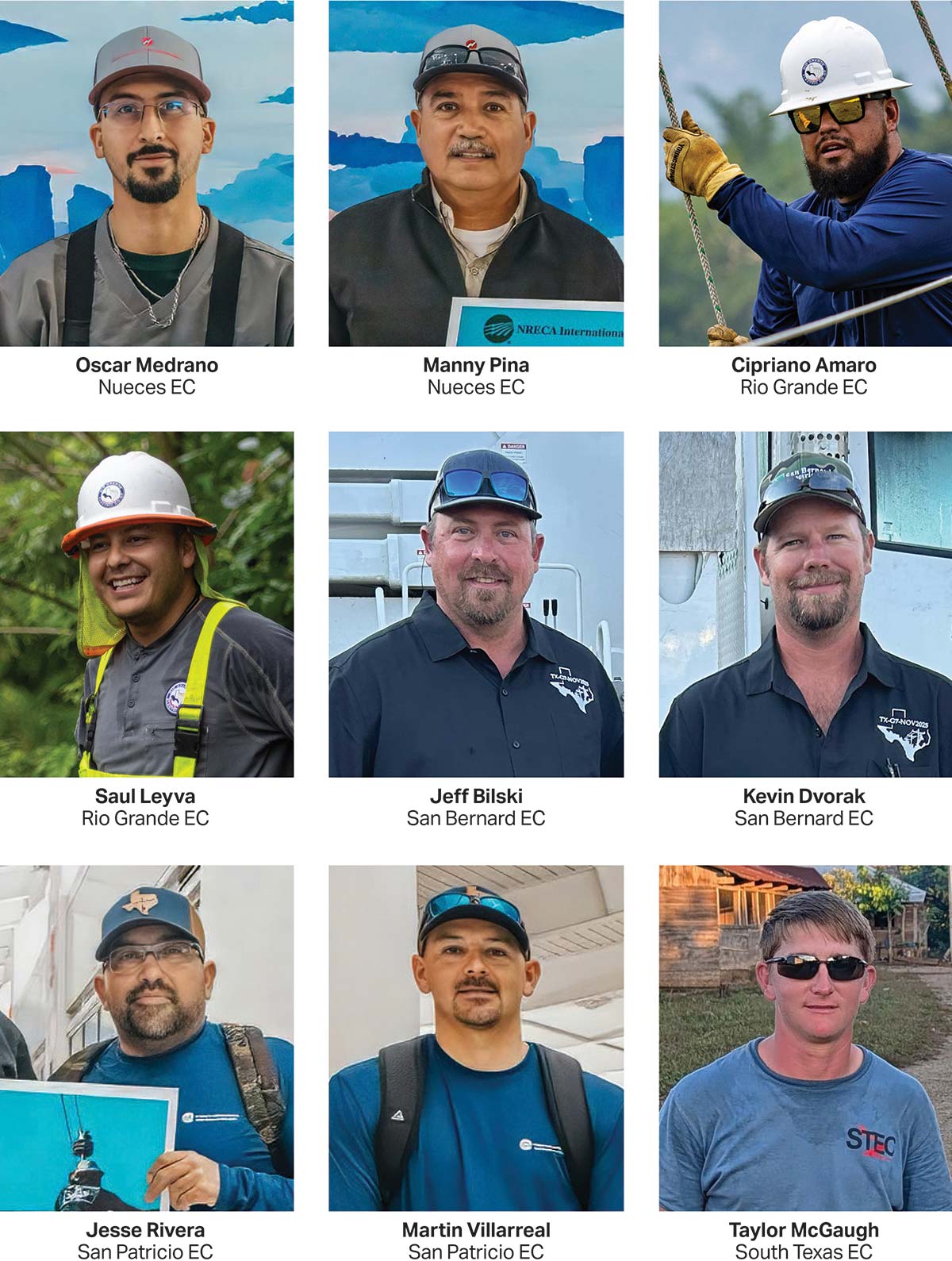
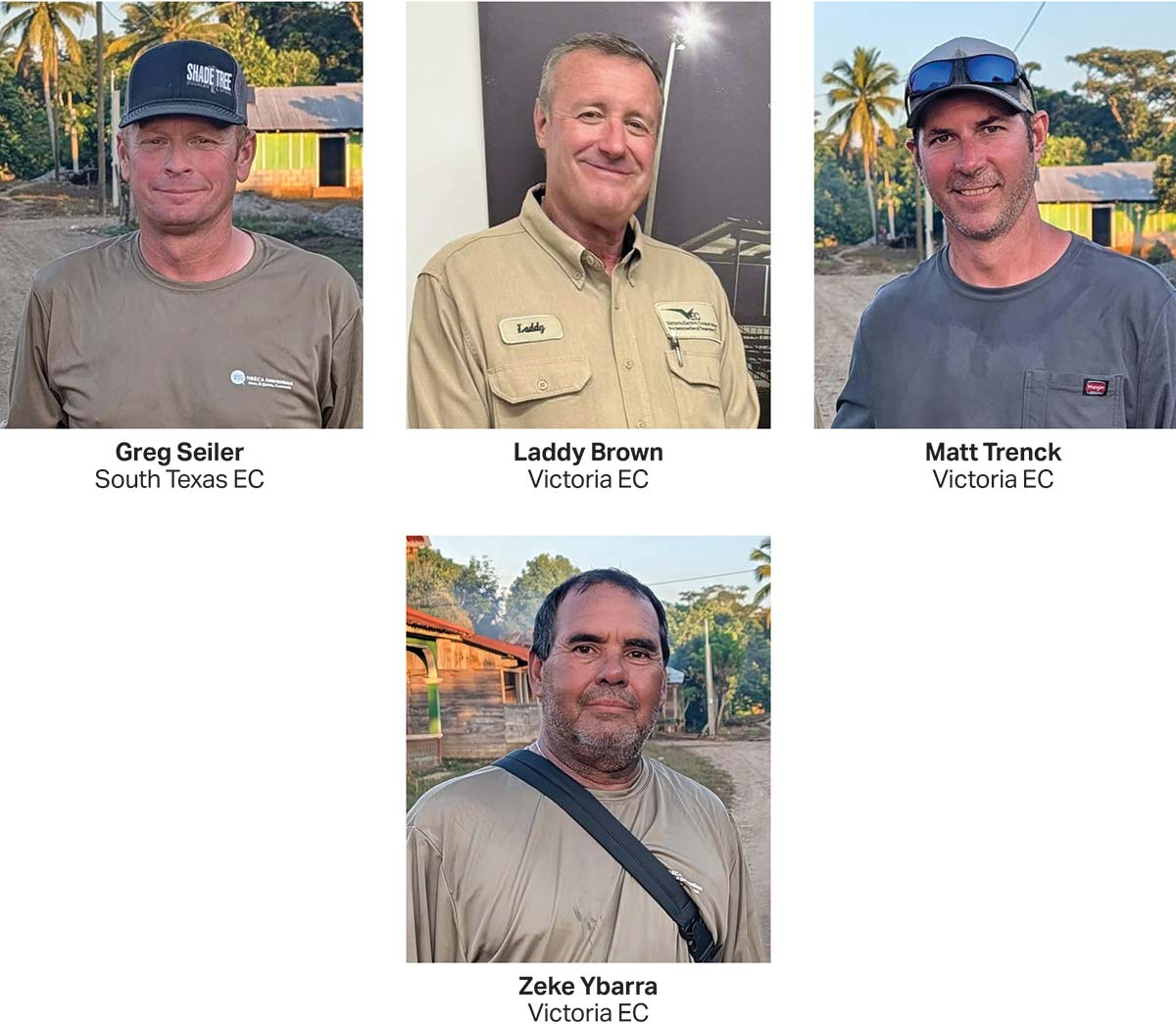
That’s when a group of 22 lineworkers from 10 electric cooperatives in South Texas traveled hundreds of miles, by air and treacherous roads, to this remote corner of Central America, where they rendezvoused with more than $270,000 worth of donated materials for a life-changing construction project. With the help of the local electric utility and engineers from the National Rural Electric Cooperative Association, the Texans built a power grid and wired 135 homes in 20 days.
As a man named Santiago watches workers wire the home where he lives with his wife and five kids, he says, “Pienso que lo cambia todo (I think it changes everything).”
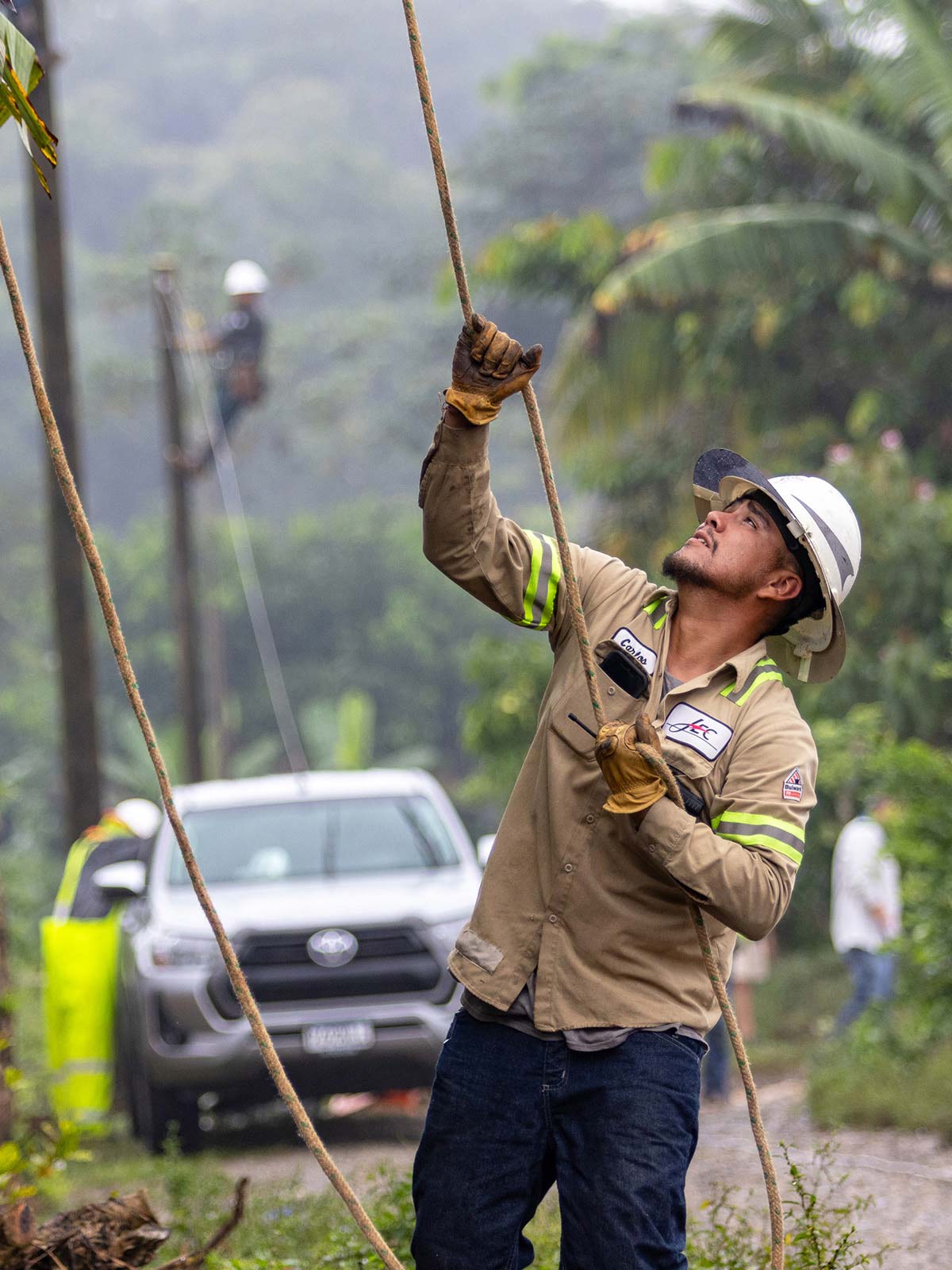
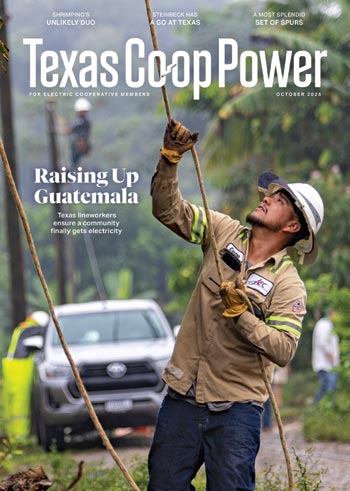
Lineworker Carlos Rubio works in Yalicar, Guatemala, about a thousand miles from home.
Chris Burrows | Texas Electric Cooperatives
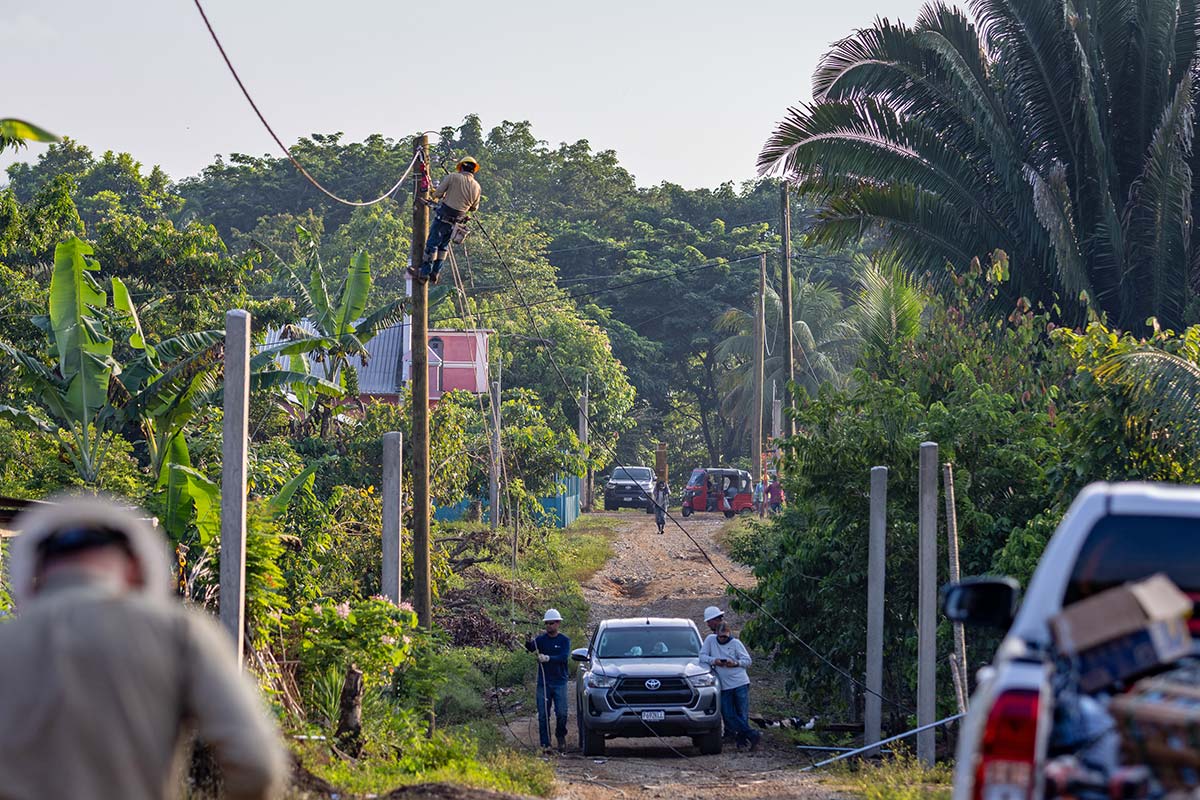
Texans work to deliver electricity to a remote Guatemalan village. “It’s a lot more than turning wrenches,” says co-op worker Oscar Medrano. “It’s changing lives.”
Chris Burrows | Texas Electric Cooperatives
Making Connections
On the first day of work in Yalicar, the Texans split into groups: construction and house wiring. The construction team climbs poles, mounts hardware, and raises lines and transformers. The other crew goes house by house, installing light bulbs, switches and power outlets.
They are welcomed into small, ramshackle homes where families sleep in hammocks and small beds in one or two rooms.
“I’ve never been somewhere where the people have dirt floors and thatched roofs and no insulation in their houses,” lineworker Greg Seiler says. “It puts a lot of things in perspective.”
Residents, who have little means, show their gratitude however they can.
“We were wiring a house, and this older gentlemen brought all of us a cup of Coke,” Seiler says. “It wasn’t cold, but we drank it. And I thought, this is pretty neat. He doesn’t have much to give, but he’s trying to be hospitable and show us his appreciation.”
The lineworkers support local businesses, buying and munching on sweet, fresh rambutan, a fruit grown in Guatemala, and sourcing fresh socks. Saul Leyva needs a pair after he succumbs to a hidden stream. Unbowed by his wet pants and boots as he drives to the next pole, he says, “I still can’t believe I’m actually here.”
In addition to lineworkers from the local utility, Empresa Municipal Rural de Electricidad, the Texans are helped along by men in the village and eager and curious kids.
“I was up on the pole, and somebody was handing me up material that I asked for,” Taylor McGaugh says. “I look down, and there’s about five kids working the handline, which I was not expecting.”
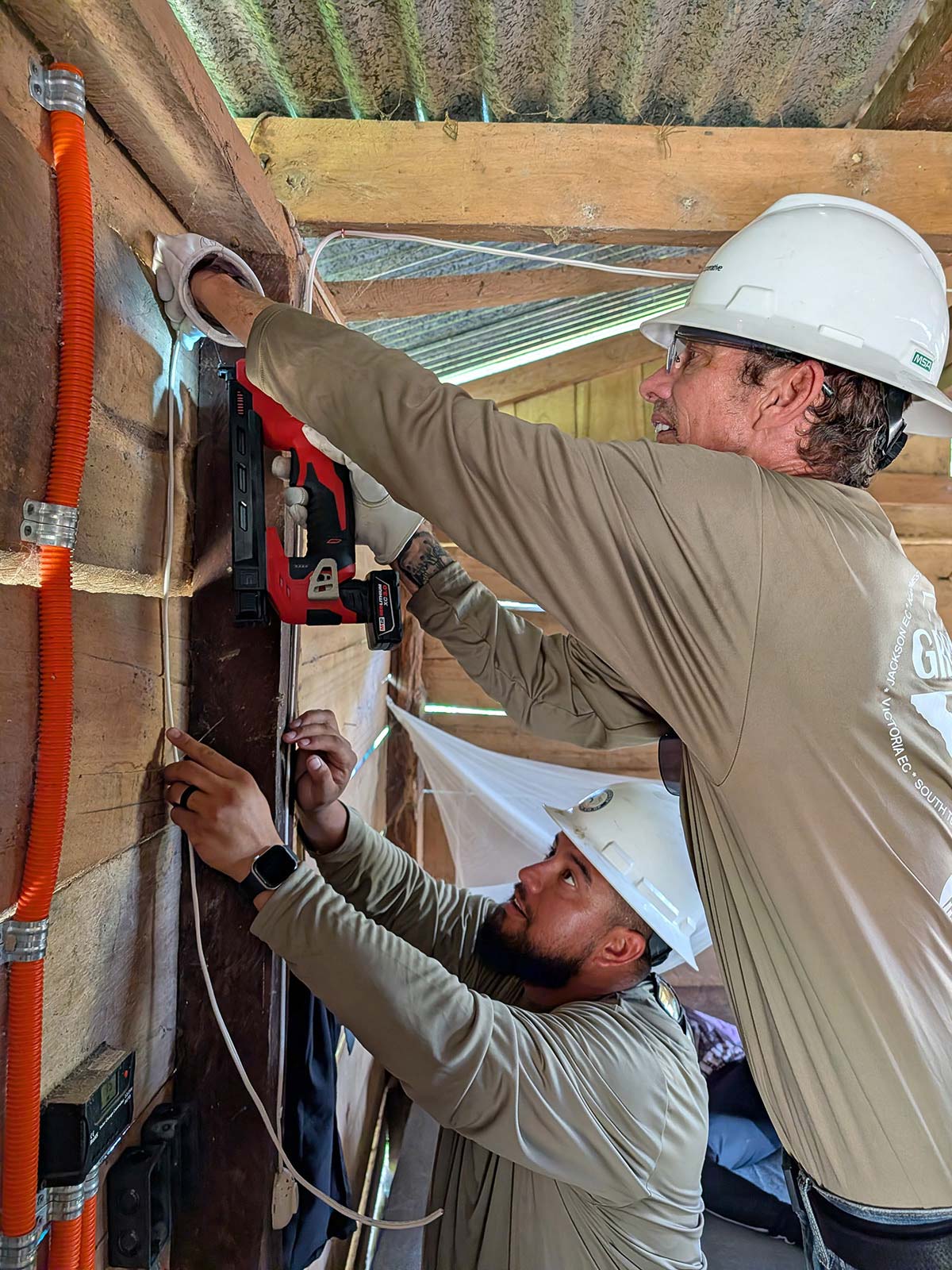
Lineworkers Cipriano Amaro, below, and Robert Holloway wire a home.
Chris Burrows | Texas Electric Cooperatives
The Co-op Way
While the South Texans may feel at home in these warm surrounds, where cattle graze, pigs and chickens run wild, a Texas flag is raised alongside those of EMRE and Guatemala, and the chorus to Take Me Home, Country Roads is belted out from pole tops—they are hundreds of miles away and 90 years in the past.
In 1930s Texas, when investor-owned utilities refused to build lines to rural areas, farmers, ranchers and their families banded together and, with help from the newly formed federal Rural Electrification Administration, created electric cooperatives that now serve millions of Texans connected by more than 340,000 miles of power lines. This project in Central America came about because of a similar kind of cooperation.
“It’s really an eye-opener to know that literally a mile from this village, people have had electricity for years and years,” says Paul Bourland, a line superintendent, “and it’s just because that’s a private investor that refuses to build because there’s no money out there.
“It’s kind of like the reason co-ops exist.”
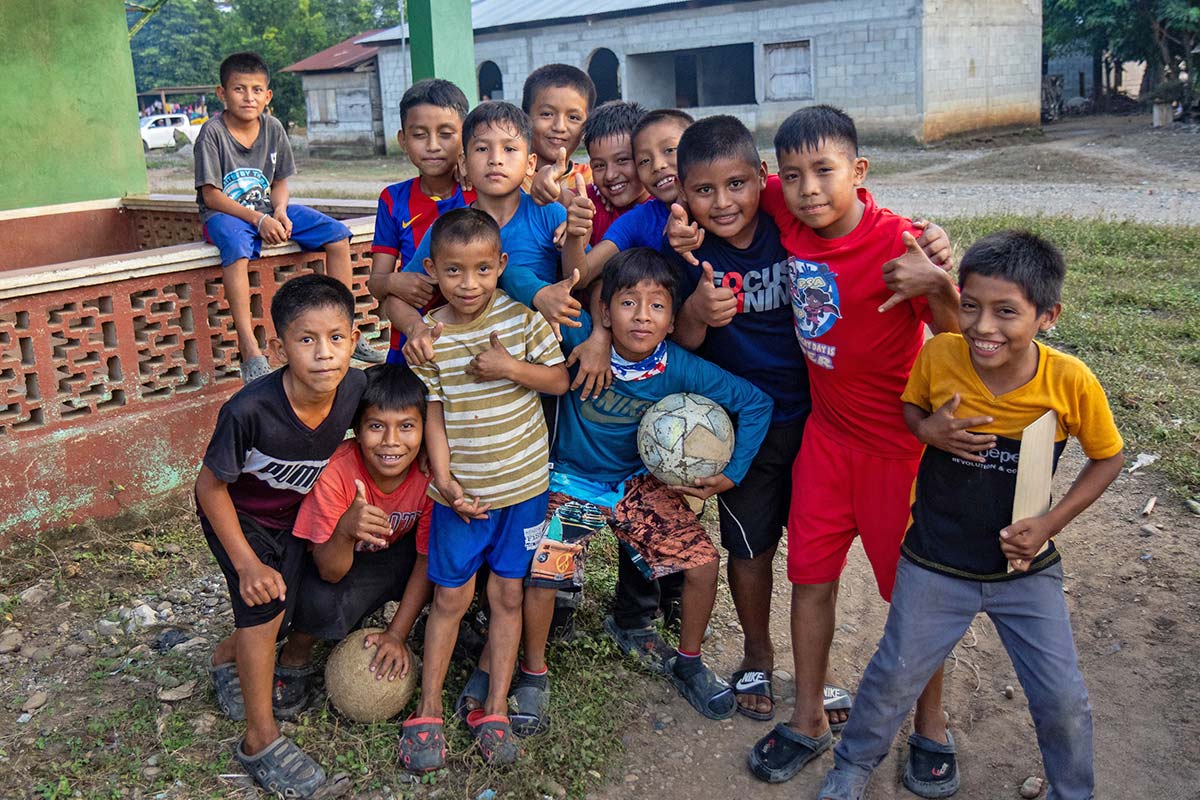
“It will benefit the children because they have the chance to study at night. In the past that was impossible,” says a pastor named Alberto, whose last name can’t be written in English.
Chris Burrows | Texas Electric Cooperatives
For a lot of the lineworkers, it’s a hard reality.
“Your emotions kind of got to you when you realized what you’re actually doing for these people. Everything that they had in their house, I could put in the back of my pickup truck,” Jeff Bilski says. “You see these people every day. The language barrier was difficult, but you could tell they were happy to see you. It was incredible.
“Sometimes at night, laying in bed, it would bring tears to my eyes.”
Some of the families used jury-rigged solar systems or batteries to power small electronics or even charge cellphones, but for the most part, when the sun set, schoolwork, soccer and life stopped. Food was prepared over fires.
A man named Marcelino, whose native last name cannot be spelled out in English, is the elected leader for Yalicar. Like most natives of the area, he speaks Q’eqchi’, a Mayan language.
“We never thought something like this could happen,” he says through a translator. “But now I see the people working on the poles, I see the people working around us, and I’m really grateful and I’m really excited.”
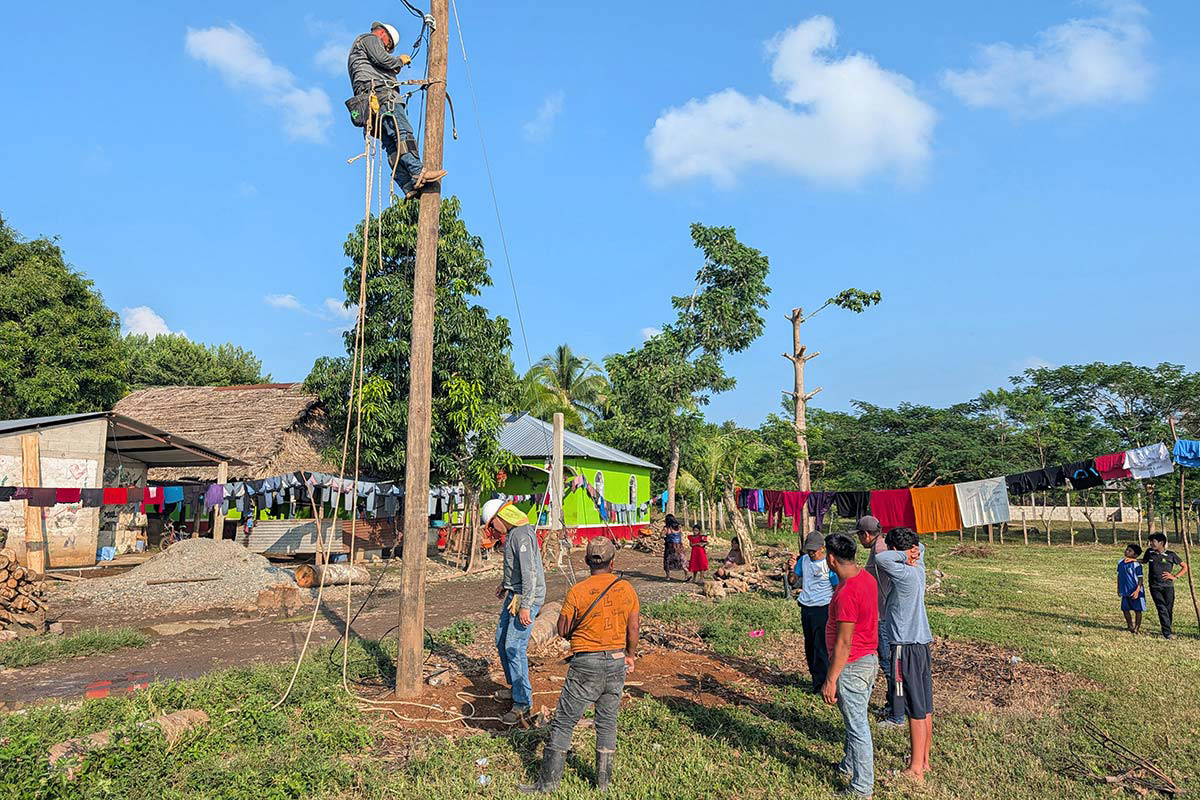
Locals watched the Texas crew’s progress over the three weeks they worked in Yalicar.
Chris Burrows | Texas Electric Cooperatives
He has a message for the Texans in his town.
“From the bottom of my heart, I would like to say ‘Thank you,’ ” he says. “Unfortunately we don’t speak the same language, so we can’t have a conversation, but I would like to thank them.
“They left their families, and they are giving their time to help us.”
A New Era
Jesse Rivera isn’t sure what to think one morning when he pulls up to a jobsite adjacent to the village’s soccer field.
The Texan is used to being greeted by a gaggle of curious kids. But this morning, one of the older children, named Randy, is sweaty and wiped out.
“In Spanish, I’m like, ‘¿Qué pasó que tienes? (What’s wrong?),’ ” Rivera says. “And he’s like, ‘Jugué fútbol toda la noche.’ They played soccer all night long. He gave me a hug, and he thanked me for it.”
In ways big and small, life is changing in Yalicar.
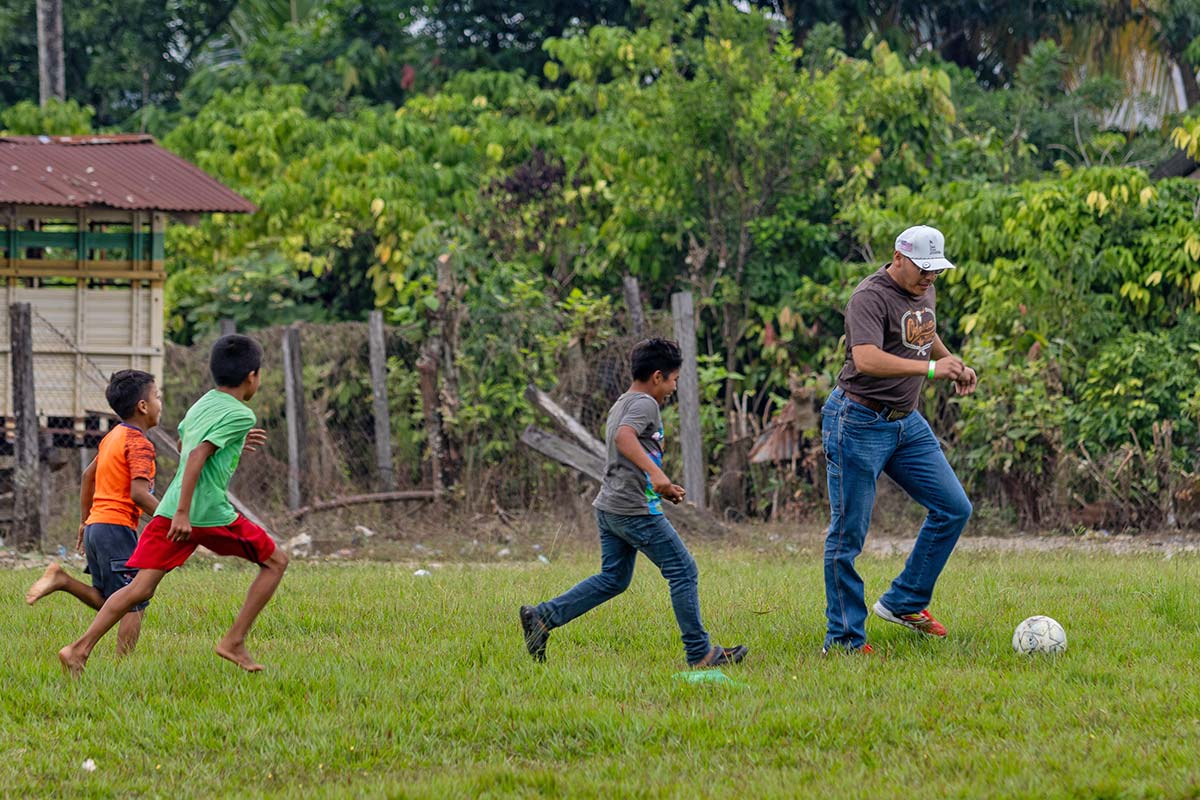
Saul Leyva of Rio Grande Electric Cooperative joins local kids in their favorite game.
Chris Burrows | Texas Electric Cooperatives
“Most linemen never get an opportunity like this,” Rivera says as he suits up to climb a pole in a marshy field far from modern comforts but perilously close to venomous pit vipers and tarantulas. “This is what we live for.”
Texas is one of 19 states that have sent co-op crews to Guatemala and Bolivia since 2012 through NRECA International. All told, over the course of the past 14 years, more than 600 American lineworkers have built 155 miles of line in 40 communities as part of a commitment to the co-op principle of Concern for Community.
All told, this Texas crew outfits 87 poles, strings 5 miles of power lines and hangs six transformers—working sunup to sunset without bucket trucks or many of their usual tools—to bring power to 135 homes, a school, and a handful of churches and stores across the villages of Yalicar and neighboring Entre Ríos.
Toward the end of the trip, as they prepare to connect the newly built lines to the existing grid, lineworkers scatter around the village to watch for signs of trouble. EMRE workers insert a fuse, and popping noises ring out.
A frantic search confirms: It’s just fireworks—the start of festivities.
“Every house was a celebration,” Rivera says. “They were full of joy.”
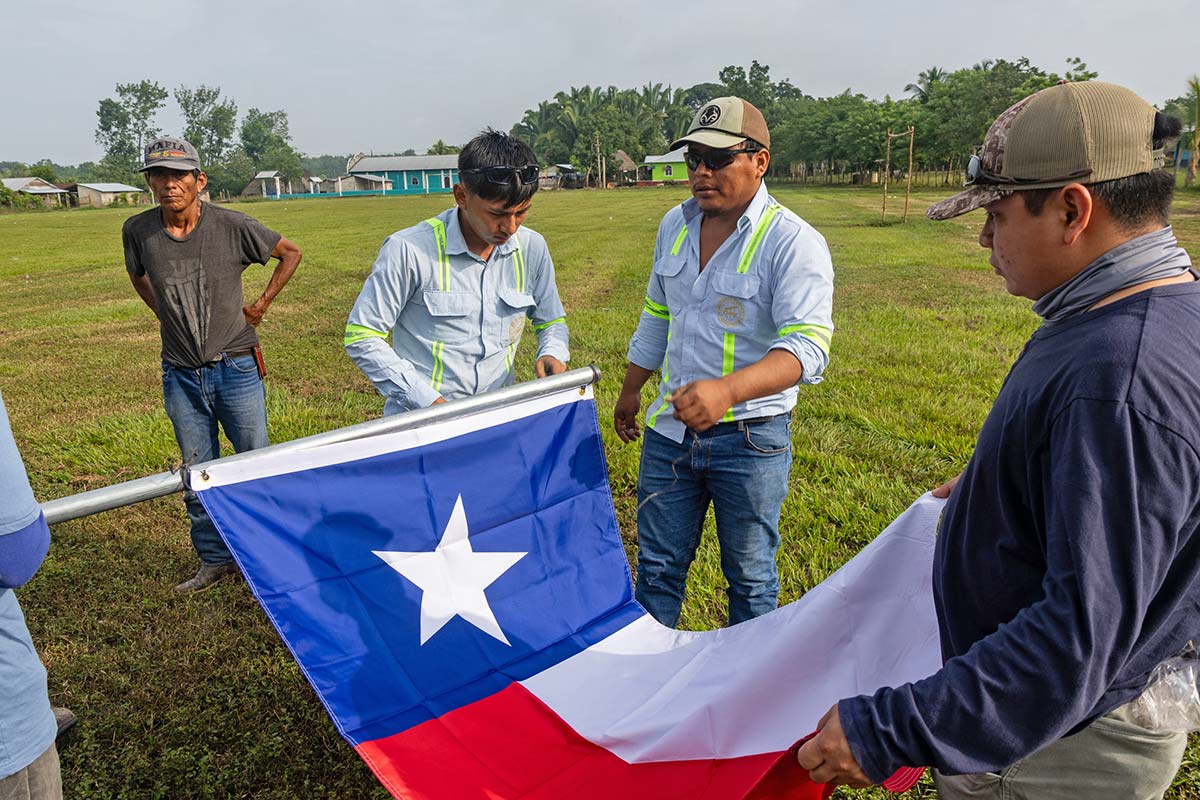
A crew from the local utility, Empresa Municipal Rural de Electricidad, prepare to raise a Texas flag, which Martín Flores of Jackson Electric Cooperative brought with him from home. The Texans missed this moment because they were transfixed with learning how to climb poles with ropes, the way the Guatemalan lineworkers do.
Chris Burrows | Texas Electric Cooperatives
A new age has dawned in Yalicar, and hundreds of grateful Guatemalans enter the 21st century.
“I look over, and there’s an iPhone plugged in, charging,” lineworker Glenn Kelley says. “And then the very next neighbor, I go over there, and there’s a kid sitting there, and a man’s giving him a haircut with a pair of clippers plugged in.”
The work has been grueling, but this moment is uniquely gratifying.
“Anytime you get the chance to help somebody out—that’s kind of what we do in this industry,” lineworker Matt Trenck says. “It’s kind of a calling— overseas or next door, that’s what we do.”
Before the lineworkers leave town for the two-day trek back to Texas, they are invited to play in a village-wide soccer tournament. Ringing out when a rogue pass sails toward onlookers: “Headache!”