Throughout the Pineywoods, youth rodeo feels just like the lines of the song Garth Brooks made unforgettable, “and they call the thing rodeo.” The riders are kids, the stakes are deeply personal and every ride is backed by parents, neighbors and a community that treats each fall and each victory as its own.
Some children start with mutton bustin’—or sheep riding—just after they learn to walk. From there, they can progress in the sport from elementary school through high school, turning it into a pathway to friendships, college opportunities or even a career.
Colt Fletcher of Leggett is just 6 years old, but he got his start on a sheep when he was still in diapers, at age 1.
“He could barely walk; it was more like a wobble,” said his mother, Chelsea Fletcher. “He was hesitant at first, but by the time he was 2 years old, he loved riding.”
Tanner Fletcher, Colt’s father, also participated in youth rodeo as a child growing up in Leggett. He sees the eagerness Colt has for the sport and the value of youth rodeo for his son.
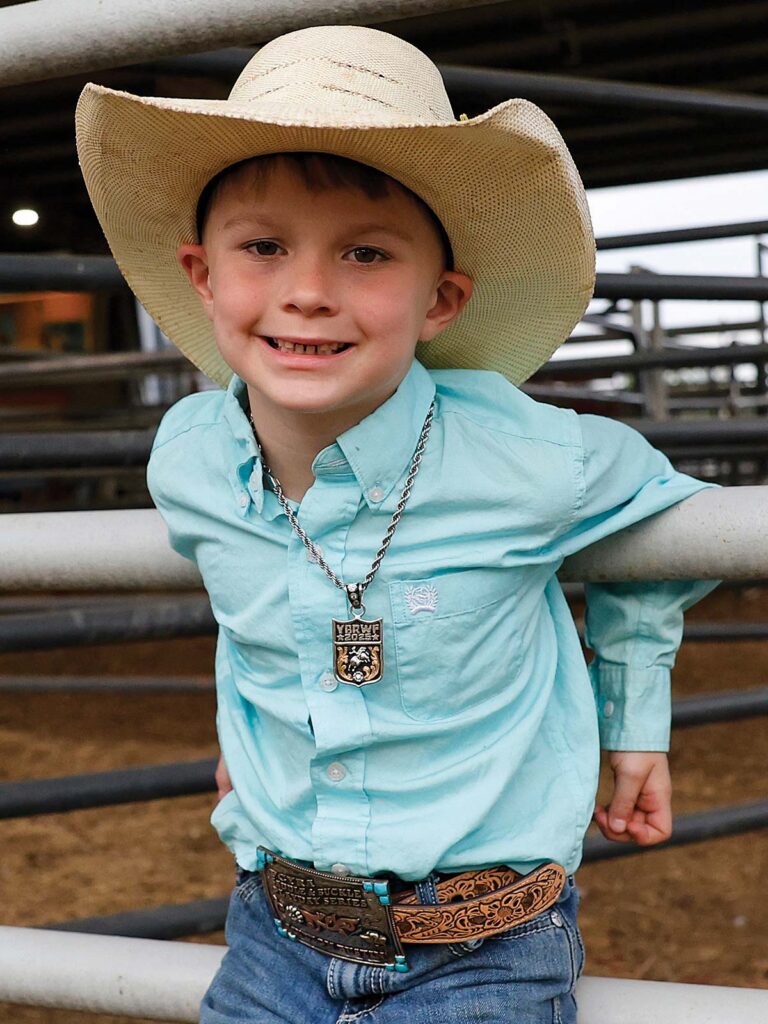
Colt Fletcher poses for a photo proudly displaying his 2025 YBRWF medallion after a ride in Livingston.
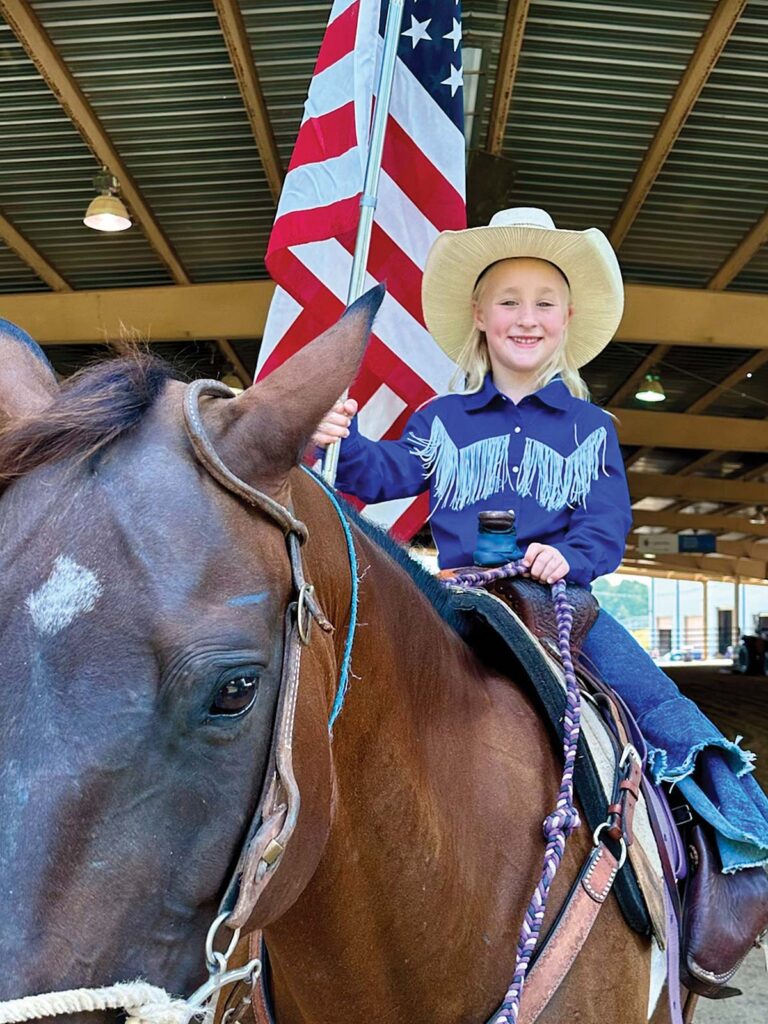
Jentry Jones, an incoming third grader at Big Sandy Elementary School, rides with the American flag during a youth rodeo in Crockett.
“I think it teaches self-discipline and self-reliance at a young age,” Tanner said. “In bull riding, you can’t blame anyone but yourself. Colt is dedicated; he watches his rides on his own and he practices on his own. We don’t have to tell him; he just does it so he can get better. And he loves it.”
Youth rodeo can teach young riders to admire others without envy and to believe in themselves.
“When people ask him what cowboy he wants to be, Colt says he ‘wants to be himself,’ ” Chelsea said.
Colt’s drive, practice and determination paid off when he placed in the top 10 at the 18th Annual Youth Bull Riders World Finals last year in Abilene. The young local cowboy competed against riders from as far away as Australia and Thailand. Just a few months into the youth rodeo season, Colt has already qualified for a return trip to the YBR finals later this month.
By the time young cowboys and cowgirls reach middle school, they’ve graduated from mutton bustin’ to other age-appropriate events, progressing much like their peers in baseball, softball, basketball and football. All the while growing up in a tradition deeply tied to ranching and horsemanship.
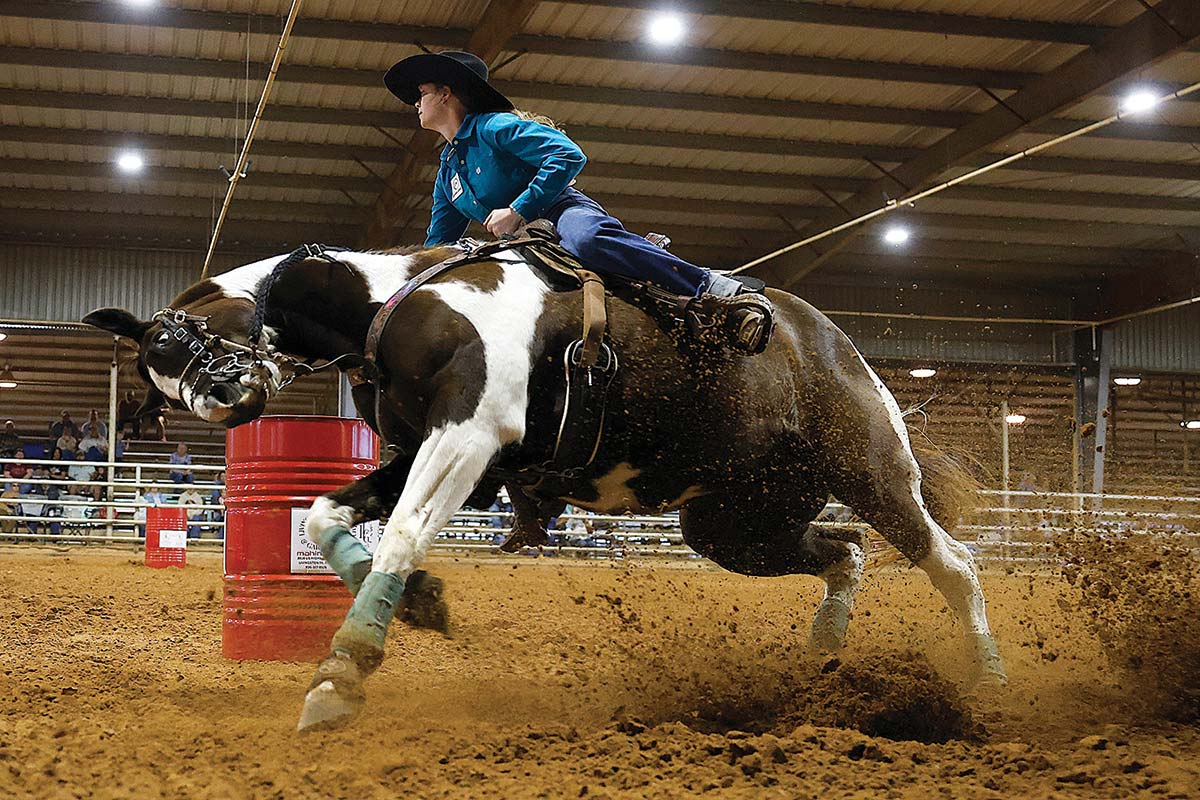
Girls develop confidence on horseback early, guiding horses through pole bending and barrel racing before many teenagers even earn a driver’s license.
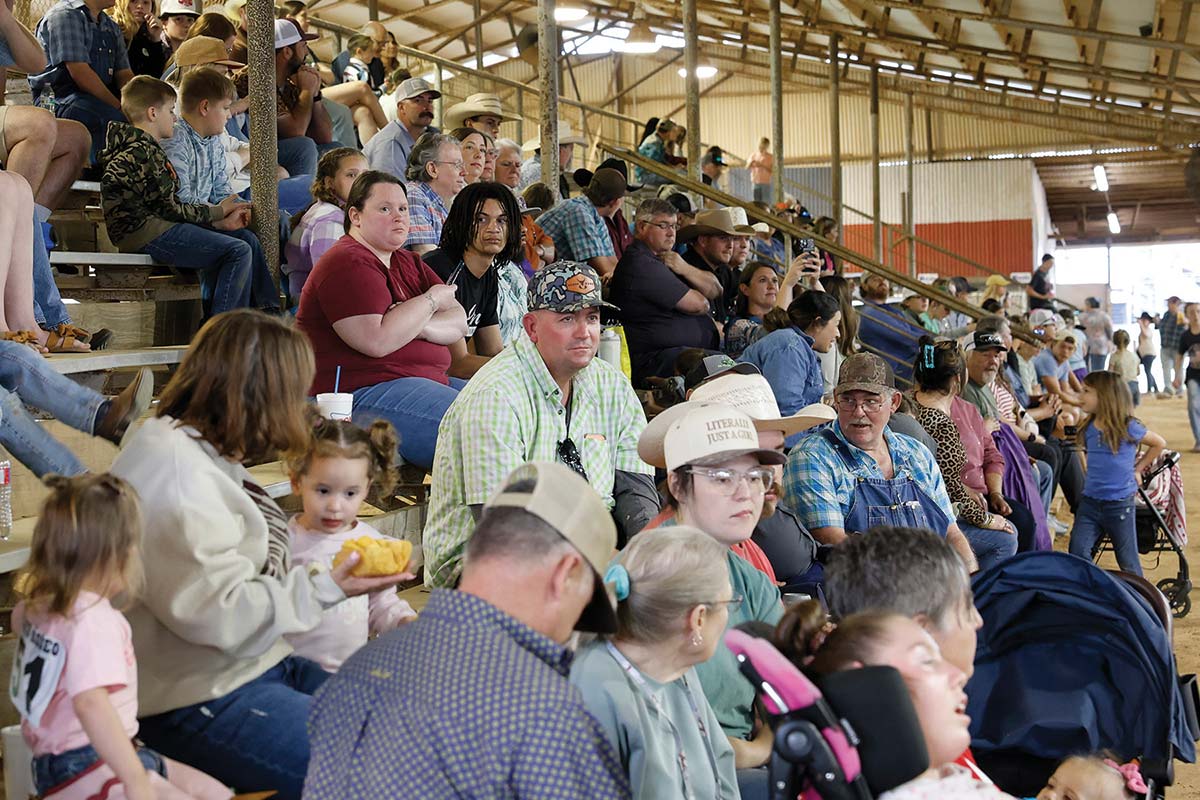
Fans watch the youth rodeo at the Trinity-Neches Livestock Show in Livingston, cheering all competitors—not just the ones they know.
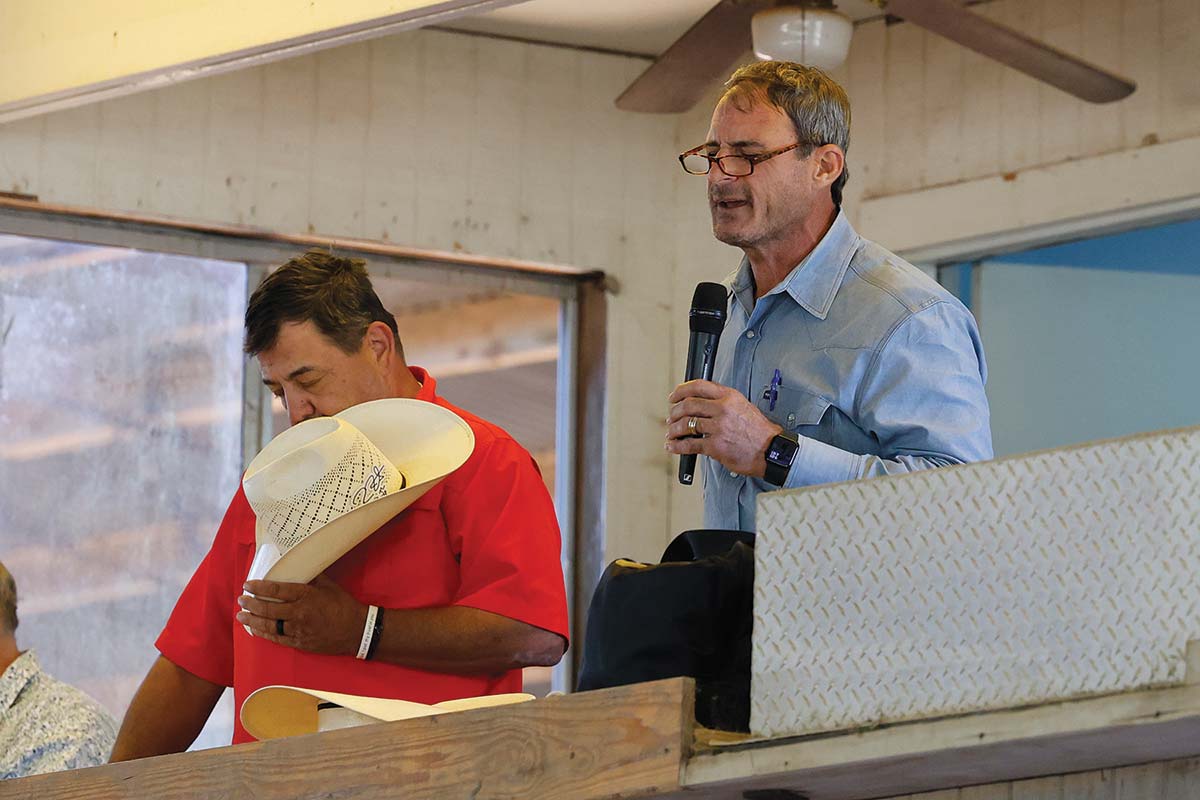
An announcer reflects during a devotional before a youth rodeo. Prayers and devotionals are enjoyed at youth rodeos across East Texas.
Anyone who has attended a youth rodeo in Crockett, Livingston, Coldspring, Hull or even Humble knows it’s no surprise these athletes go on to win state titles. A notable number even become junior world champions and can hold their own against college or professional riders.
The youth rodeo community is about more than competition. It’s about families coming together and supporting every child in the arena. Parents, cousins and grandparents cheer for each competitor, not just the cowboy or cowgirl they know.
At 8 years old, Jentry Jones is proving that rodeo isn’t just for boys. The sport has strengthened her bond with her older brother, Kanin, 10 years her senior and an accomplished former rodeo competitor.
“(Jentry)’s won two saddles in the East Texas Youth Rodeo Association,” said her mother, Janay Jones. “At first, she didn’t really want to do mutton bustin’, but she knew she needed the points to win the saddle. It helped that Kanin was in the chute to put her on the sheep.”
For Jentry, the saddles and buckles are rewarding, but what she loves most is how the sport makes her feel.
“It keeps me healthy and in good shape,” she said. “You have to be strong to ride, to feed the horses and to saddle them. It takes a lot of muscles.”
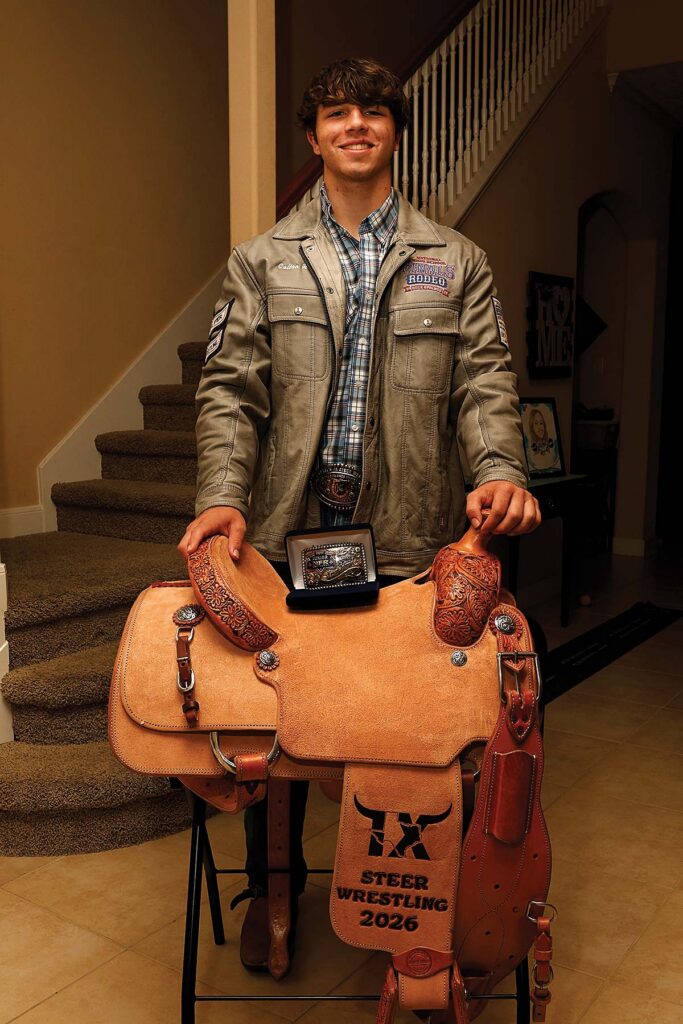
Colton Heron, a youth world champion steer wrestler and an incoming senior at Kingwood High School, stands behind a saddle he won. Heron started rodeo when he was in middle school.
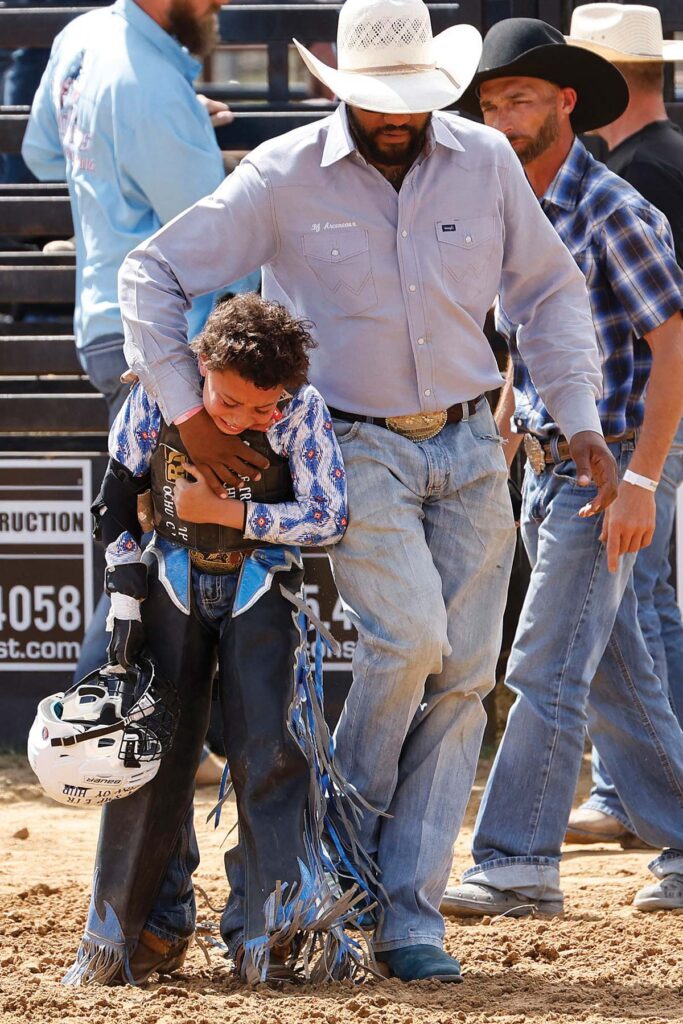
B.J. Arceneaux places his arm around a young bull rider after a run in Hull. Arceneaux is one of many fathers who help run youth rodeos.
Jentry now showcases her skills by carrying the American flag during grand entry at some rodeos, a role that requires confidence and control.
“I was surprised, but she can ride my horse now, and he’s huge,” Janay said. “He’s 16 hands and weighs more than 1,800 pounds. I was so proud of her. I wasn’t sure she’d ever be able to handle him.”
While rodeo is primarily an individual sport, it thrives on shared knowledge and mutual support. Many competitors become lifelong friends and routinely offer advice, equipment and encouragement to help one another succeed.
That tradition is passed down from one age group to the next.
Young competitors like Brently Hartinger of Tarkington, the 2024 Junior National Finals Rodeo World Champion Bull Rider, can often be seen sharing tips about a particular steer or bull with fellow riders at events such as the rodeo in New Caney. Gear is frequently loaned or donated with no expectation of anything in return.
“We want to see our children succeed, but I don’t want my daughter to win because there wasn’t competition,” Janay said. “When she wins something, I want it to be worth winning.”
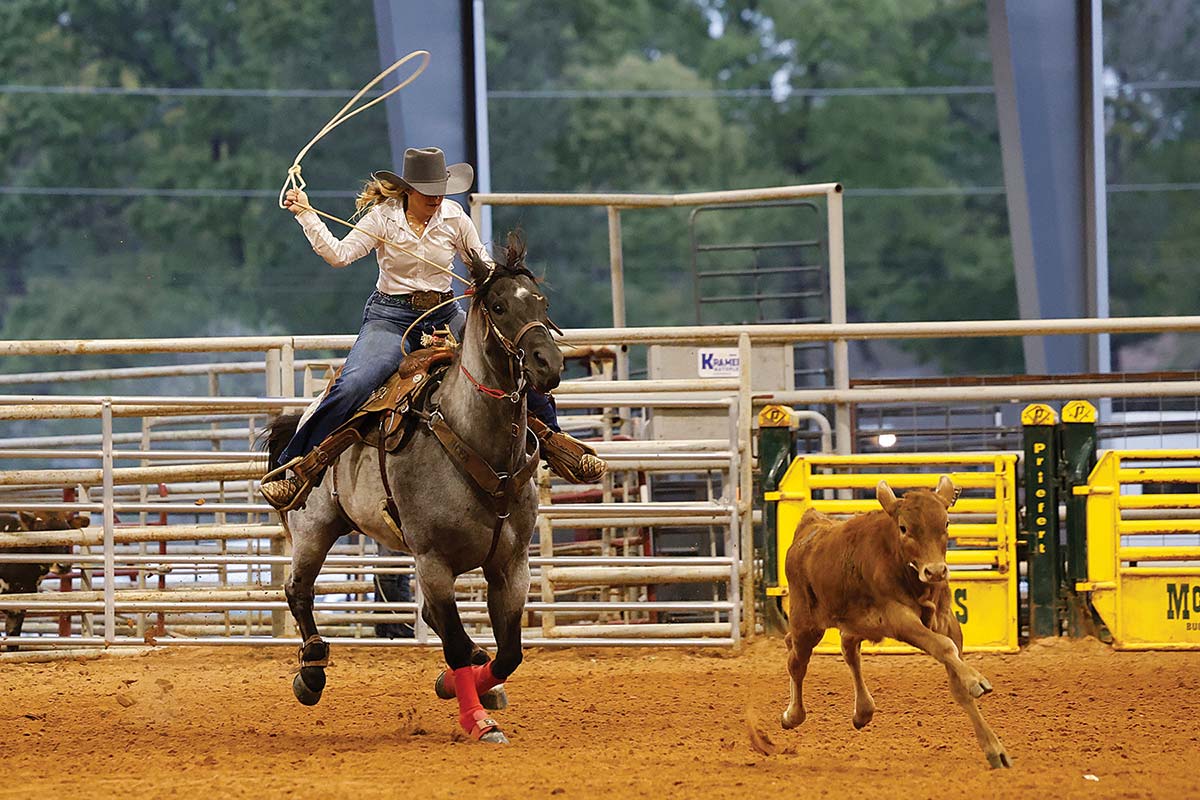
A high school girl competes in the breakaway roping competition at the Trinity-Neches Livestock Show in Livingston.
Youth rodeo may carry the “youth” label, but that doesn’t prevent collegiate or professional cowboys from seeking advice from its top competitors.
Colton Heron, a junior steer wrestling world champion and incoming senior at Kingwood High School, recalls receiving calls from professional steer wrestlers asking for tips.
“At first, I was really nervous. I would stumble over my words,” Heron said. “Now, I’m not surprised when someone calls for advice. That’s just the way the sport is. It doesn’t matter how old you are.”
Unlike Colt, Jentry and Hartinger, Heron didn’t start rodeo until he was 13. Growing up in Kingwood, he discovered the sport after watching a cousin compete as a bull rider.
He comes from an athletic family. His mother played college tennis, and his older sister is a college cheerleader. He even participated in gymnastics for a few years, among other sports. Now Heron splits his time between rodeo and football, where he plays defensive line for Kingwood High School and faces some of the best high school offensive linemen in the state.
“Our coaches understand if I miss some spring football practice for steer wrestling,” Heron said. “They know I’m not taking time off—I’m still working out.”
Among teammates and coaches, Heron is simply known as “Cowboy.” His rodeo success sometimes leads to lighthearted ribbing from coaches who wonder how he can wrestle an 800-pound steer but still get blocked by an offensive lineman.
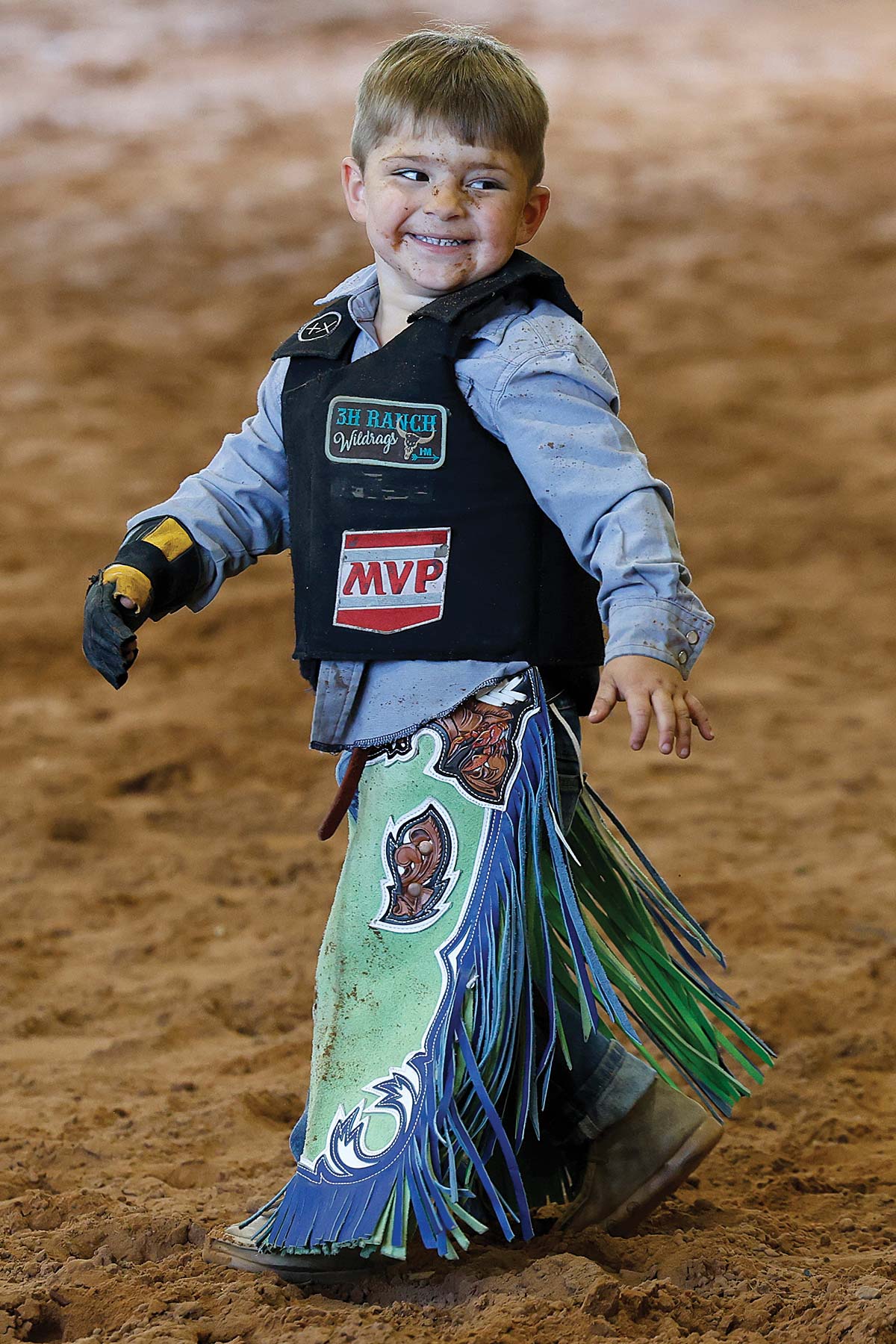
A young mutton bustin’ competitor is all smiles following his ride in Livingston.
Amber Heron, Colton’s mother, said the youth rodeo community has embraced their family. While fathers often help in the arena, mothers share travel tips, schedule updates and information about livestock to help everyone perform at their best.
With Colton Heron’s success at the youth and high school levels, he plans to continue steer wrestling in college, but he remembers what it felt like to be new to the rodeo community.
“The first time I tried chute dogging, the introduction to steer wrestling, I tore my labrum,” he said. “But I was all in. That first day was also my first time on a horse. I had no idea what was going on. People were grabbing the horse, it was going crazy, and I nodded to go. It was a complete wipeout.
“But it didn’t hurt as much as I expected, and I thought it was cool, so I kept going.”
That willingness to push through adversity is common among young competitors. Many are drawn to rodeo not just
for the excitement but for the grit and resilience it demands. Practices, setbacks, injuries and long days in the arena often shape a deeper sense of purpose and strengthen bonds within the community.
Faith is also woven into the fabric of youth rodeo, as much a part of the experience as dust and mud, the gold of championship buckles, and chute gates. Before competition begins, it’s common to see riders and families bow their heads in prayer. The arena becomes not just a place to test skill but a place for reflection.
Whether through organized devotionals or quiet moments before an event, faith helps ground the athletes, reminding them that success is measured not only by results but by character, perseverance and the way they support others.
“We pray together and support each other here,” Chelsea Fletcher said. “It would be hypocritical to turn around and act differently a few minutes later. It helps instill morals in our children.”
Cowboy churches also play a growing role in the community, offering both spiritual guidance and practical opportunities to improve in the sport.
“You can use the arena or rope for free at a cowboy church, as long as you stay and listen to the message,” Janay said. “It’s their form of outreach, and I think it’s great for our kids.”
For Tanner Fletcher, the value of youth rodeo goes far beyond competition.
“This is our youth. They’re going to be adults one day,” he said. “It’s our responsibility to help guide them, and the cowboy way is a good way to do it.”