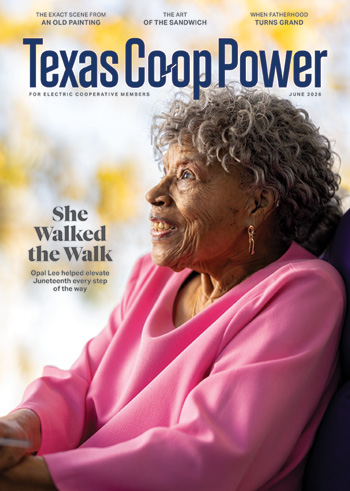
Opal Lee says she was the “little ol’ lady in tennis shoes getting into everybody else’s business” when, in 2016, at age 89 and buoyed by her faith, she embarked on an ambitious campaign to make Juneteenth a national holiday by walking from her home in Fort Worth to Washington, D.C. Ten years later, the holiday is official, she is celebrated as the Grandmother of Juneteenth and her well-worn tennis shoes are getting a long-deserved rest.
That doesn’t mean the contemporary folk hero is finally settling into idleness—even as she approaches centenarian status (she turns 100 on October 7). And once you get a sense of her life, you realize inactivity is not a concept she embraces. Retirement?
“You’ve got to be kidding!” she quickly retorts, flashing her wide, congenial smile. “People who are old can’t sit in a rocking chair and wait for the Lord to come and get them. There’s still plenty of work to be done, and I’ll do what I can as long as I can.”
She speaks with an eloquent urgency and passion about her work over many decades as a civil rights and community activist who advocated for the homeless, jobless and hungry; for education; and for Juneteenth recognition—all of which she connects to being free. She says she fully intends to continue her work through her belief that “we are our brother’s keeper, and we’d better act like it”—but at a slower pace.
For sure, there will be no more extended walking campaigns. An illness last summer was a setback, and though she’s recovered, the episode supported growing suggestions from her family, which includes 15 grandchildren and 40 great-grandchildren, that it was time to step back a bit.
“It’s been great to see her dream come true, something she’s been after most of her life,” says Promise Roland, one of Lee’s granddaughters and a Fort Worth real estate agent. “It’s been overwhelming, but we’re delighted. She’s been asked to slow down, but that’s not her.
“With her tenacity, she’s going to keep at it; she doesn’t take no for an answer.”
Lee, a 1943 graduate, at age 16, of Fort Worth’s I.M. Terrell High School, has maximized her century on this planet with service to family, church and community. She raised her four children as a young single mother, got a bachelor’s degree in education from Wiley College in Marshall, earned a master’s degree in counseling and guidance in 1963 from North Texas State University (now the University of North Texas), and taught third grade for 15 years at Amanda McCoy Elementary School, her alma mater.
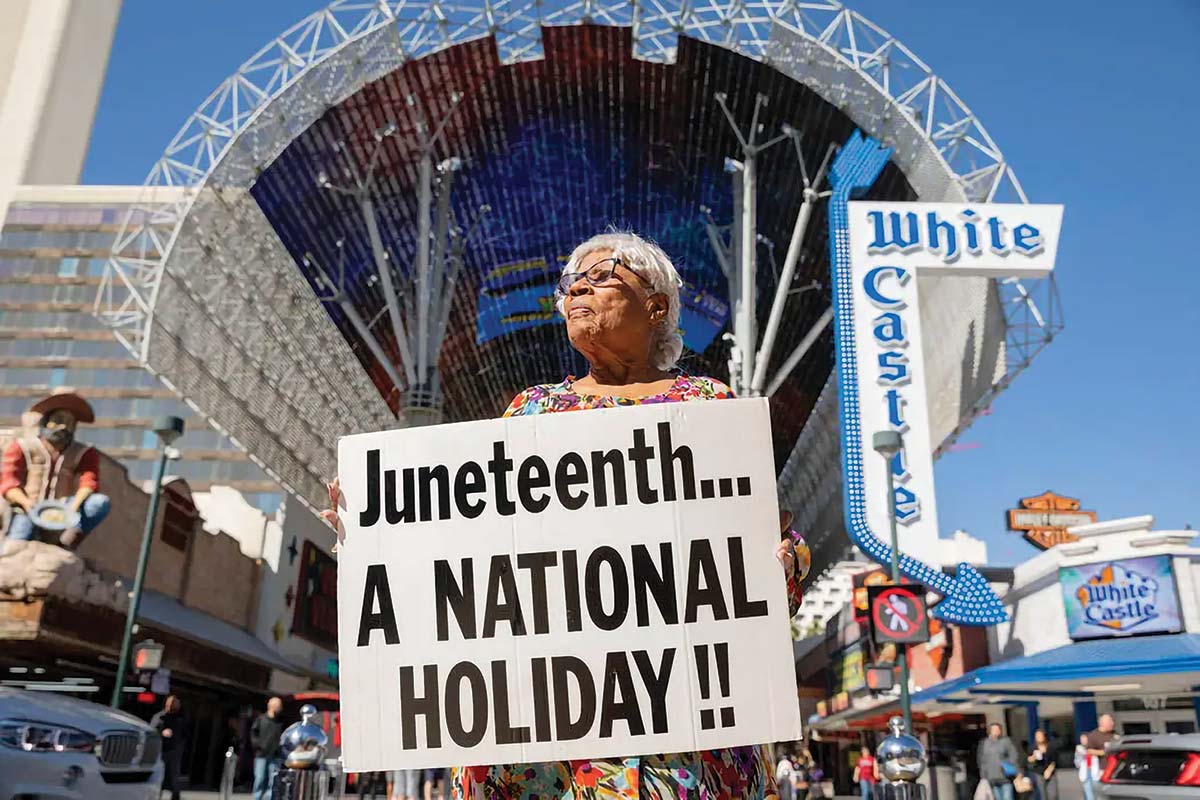
Lee walks for her cause in February 2020 in Las Vegas.
Courtesy Opal’s Walk 2 DC Team
She helped start a food bank by contributing fresh produce grown in her 5-acre urban farm that also helps address Tarrant County food deserts.
She is an iconic, revered change agent, so getting into everybody else’s business—good trouble—teaching and helping others is what she does, and she does it very well. She’s received eight honorary doctorates, was named 2021 Texan of the Year by The Dallas Morning News, was a Nobel Peace Prize nominee and received the Presidential Medal of Freedom. In 2023, her portrait was placed in the Texas Senate Chamber, making her only the second Black person (after U.S. Rep. Barbara Jordan) so honored. In January, Mattel introduced the “Opal Barbie.”
Despite it all, Lee lives in a modest new house on Fort Worth’s East Annie Street—on the same corner lot where, in 1939, her family’s home was burned down by a mob of 500 angry would-be neighbors who objected to the family integrating the neighborhood. It happened on Juneteenth.
Her new house was a gift from Trinity Habitat for Humanity in 2024 as a tribute to Lee, one of the nonprofit’s founding board members.
The Marshall native was a child when she first learned about the date June 19, 1865, when Union Gen. Gordon Granger arrived in Galveston to make the first notifications that enslaved Texans were free—two and a half years after President Abraham Lincoln signed the Emancipation Proclamation. She joined family and friends annually to celebrate the day with “plenty of food, food and more food.”
Lee was a co-founder in 1977 of the Tarrant County Black Historical and Genealogical Society, through which she organized Fort Worth’s Juneteenth events, including walks, for 40 years. But she felt there was more she could do.
A quest was born: Make Juneteenth a national holiday.
Her plan was to walk to D.C. and present a signed petition to Congress as a symbol of nationwide support for passage of the Juneteenth National Independence Day Act. Forty-seven states, including Texas, had already established state holidays or observances.
The octogenarian took to the road, her T-shirt emblazoned with “Opal’s Walk for Freedom,” and was joined by thousands of diverse supporters, many carrying homemade signs of support (“Go, Ms. Opal!”) and walking with her in festive, joyous parades.

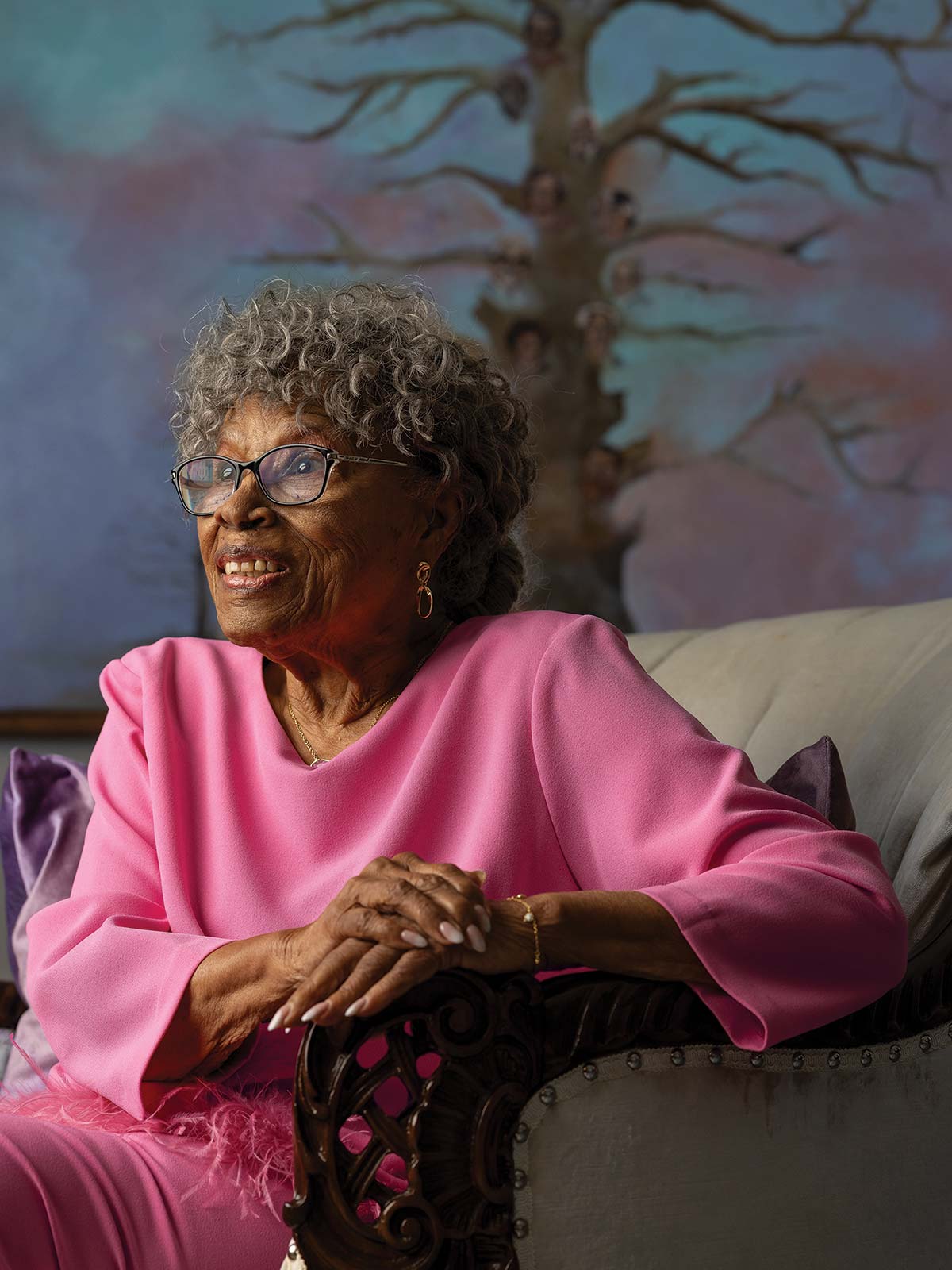
Opal Lee at her home on East Annie Street in the Historic Southside neighborhood of Fort Worth.
Robert Seale
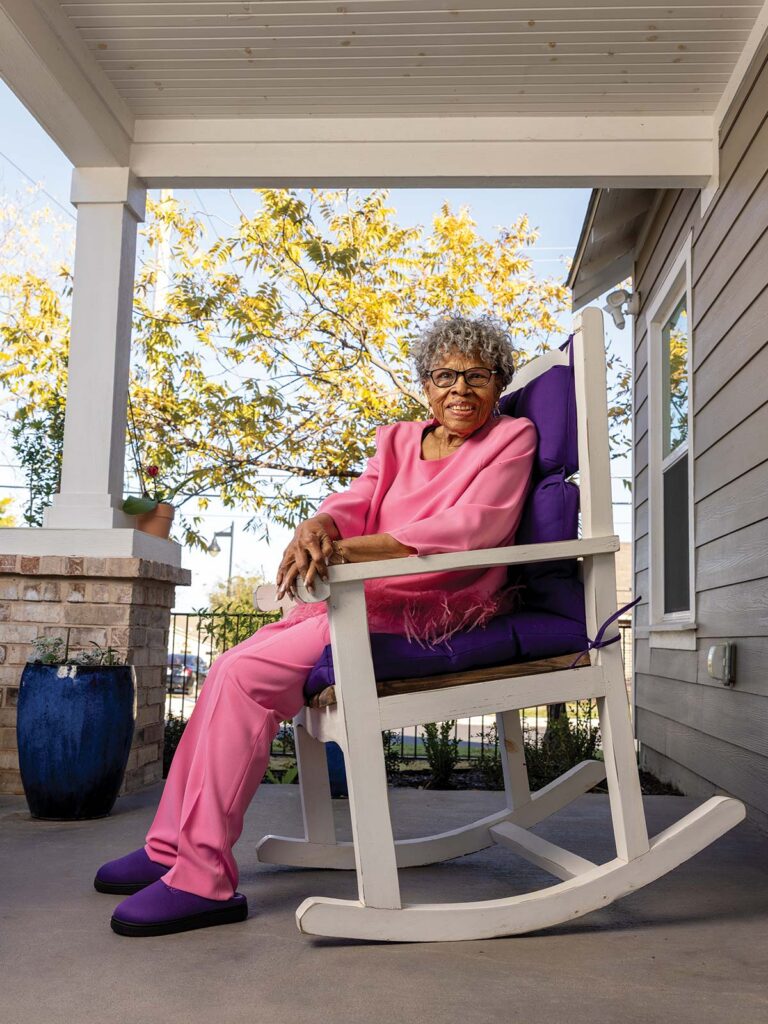
Lee, on her porch in November 2025, lives on the same Forth Worth plot where, in 1939, a mob burned down her family’s home.
Robert Seale
“I just started walking, and people started participating, coming to join me, finding a place for me to stay,” she said. “I got 1.5 million signatures. I met all kinds of people, not just those in power. People who were beginning to understand what the day was all about. Not just red soda water and barbecue, but there was meaning to it. People embraced Juneteenth.”
The distance between Fort Worth and D.C. is a little over 1,200 miles as the crow flies. Lee took the scenic route, walking a symbolic 2.5 miles (for the two and a half years it took for news of emancipation to reach Texas) in 20 cities that supported her movement and invited her to walk, including Shreveport, Louisiana; Atlanta; Milwaukee, Wisconsin; Pueblo, Colorado; Chicago; and Philadelphia.
She began the walks in September 2016 and four months later was in Washington with the completed petition. Almost five years later, the act passed and was signed into law by President Joe Biden on June 17, 2021.
“I was so happy, I could have done a holy dance!” Lee says.
The crown jewel for her work is the $70 million state-of-the-art National Juneteenth Museum slated to break ground in Fort Worth later this year. The 50,000-square-foot cultural center is billed as “the epicenter for the preservation of Juneteenth history.”
“Dr. Lee’s advocacy is the foundation on which the museum was established,” says Jarred Howard, the museum’s CEO. “We’re thrilled to collaborate with Dr. Lee and are committed to expanding her extraordinary legacy through the creation of a world-class learning center.”
Though she isn’t moving quite as much now, Lee’s family is gladly taking the baton to keep her legacy going. Her granddaughters are active board members for Lee’s nonprofit foundation, Citizens Concerned with Human Dignity. The organization assists marginalized families in need of shelter, food, employment, healthcare and education.
“It’ll take more than one person to fill her shoes,” Roland says, “so it will truly be a family effort. She still has a lot of fire, but it’s time for us to do the heavy lifting.”
Lee’s fire has always been about teaching and the fertile minds of young folks, and that flame burns as brightly as ever, sparked by her successful Juneteenth campaigns.
“I want the young people to realize how important Black history is and for them to embrace it, know their history and pass it on,” she says. “The road to true freedom is long, but I’ve walked it my whole life.”