Anne Murray’s mother thought she’d eventually grow out of it.
“Nobody in our family had horses, and my mom thought my interest in them was a passing phase,” Murray says.
She kept asking for a horse anyway and squirreled away all of her Christmas and birthday gift money, finally buying her first horse, a paint, when she was 15. “When I had almost enough money, the Christmas before I bought him, all I asked for was horse items.”
Decades later, Murray can say for sure that it wasn’t a phase. Horses have become central to her life, and she’s found purpose in preserving one of the rarest breeds: the American cream draft horse—the only breed of draft horse that originated in the U.S.
The Livestock Conservancy tracks rare breeds of horses, cattle, chickens, pigs and other kinds of livestock. The organization lists the American cream draft horse as critically endangered, a label reserved for livestock breeds with fewer than 200 annual registrations in the U.S. and an estimated global population of fewer than 500.
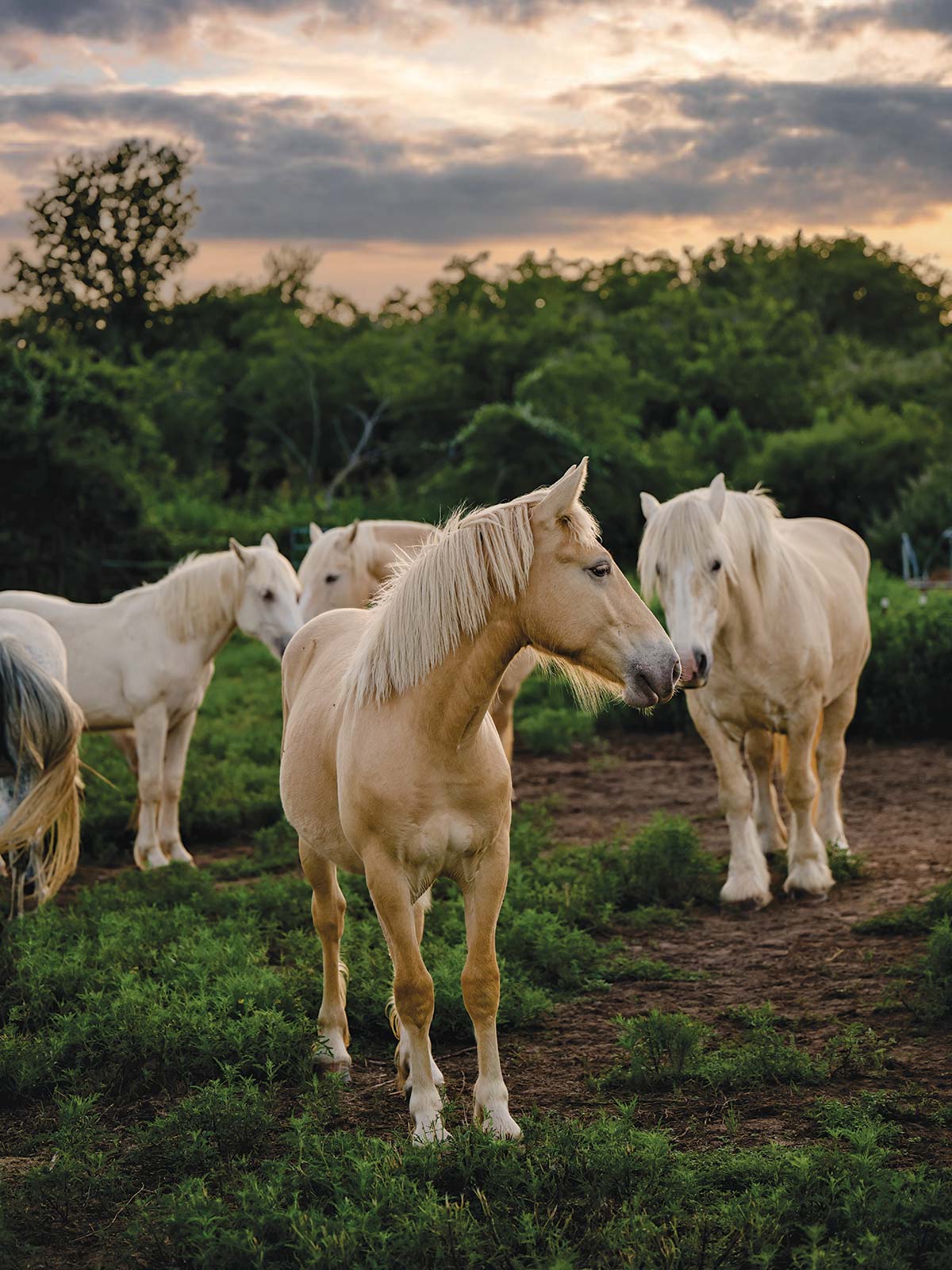
The American cream breed was established in 1944.
Tiffany Hofeldt
Murray, who lives in Boyd, north of Fort Worth, is a member of the American Cream Draft Horse Association board. She says that the association’s registry lists fewer than 400 horses. For comparison, the American Quarter Horse Association’s 2024 annual report counts 2.7 million of the most popular equine breed in the U.S. among the more than 7 million total horses.
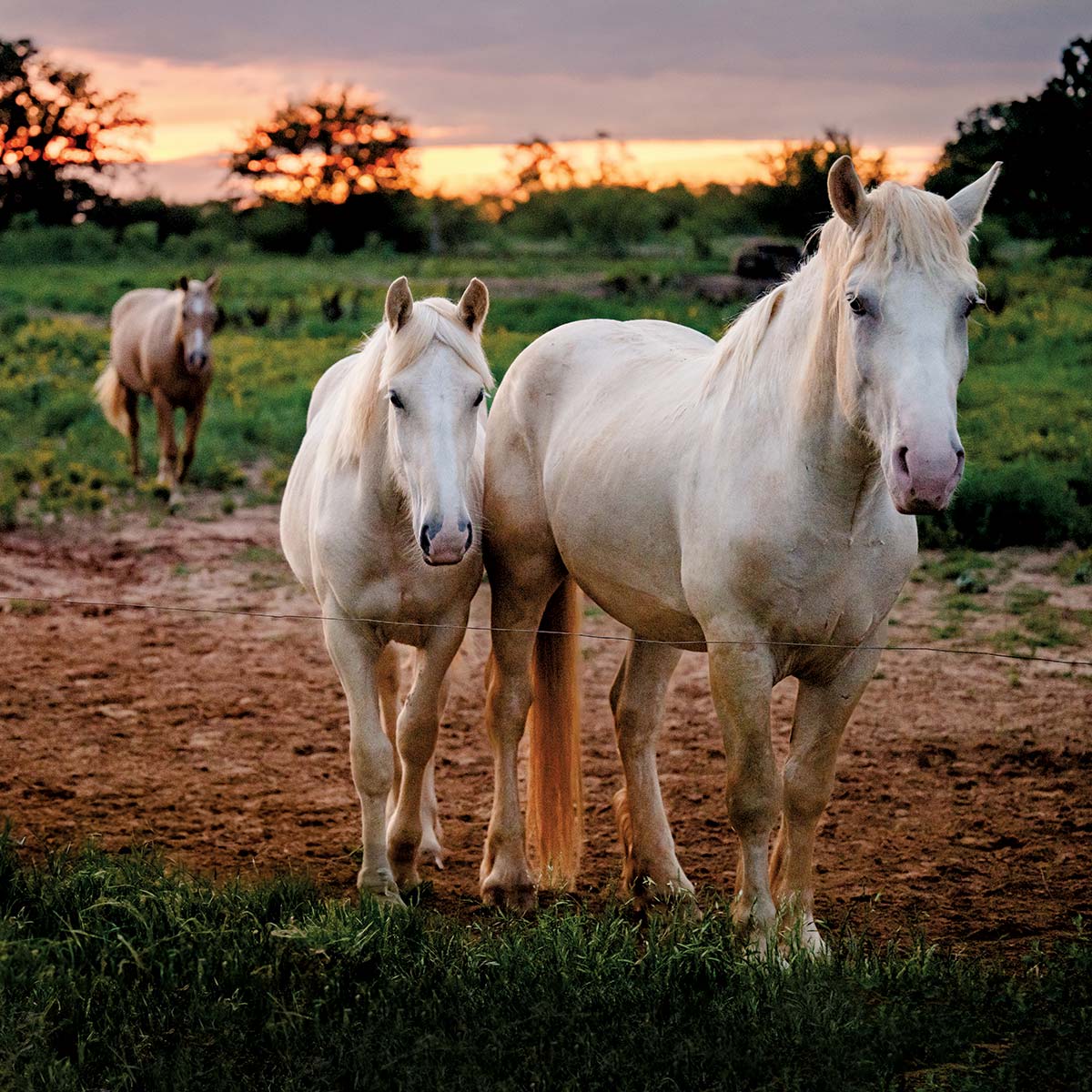
As their name implies, American cream draft horses are cream colored, but they actually come in two shades. Darker American creams have brown eyes, and lighter-colored horses have amber eyes and pink skin.
Draft horses are large, heavy breeds originally developed for driving and pulling, farm work, and industry. American creams are typically a bit smaller than other draft horse breeds.
“They’re a handy size to hitch up for farm work,” Murray says.
Like Clydesdales, Belgians and other draft breeds, American creams are versatile and gentle horses. They’re used for farming, logging, pulling carriages or funeral caissons, the equine sport of driving, and riding.
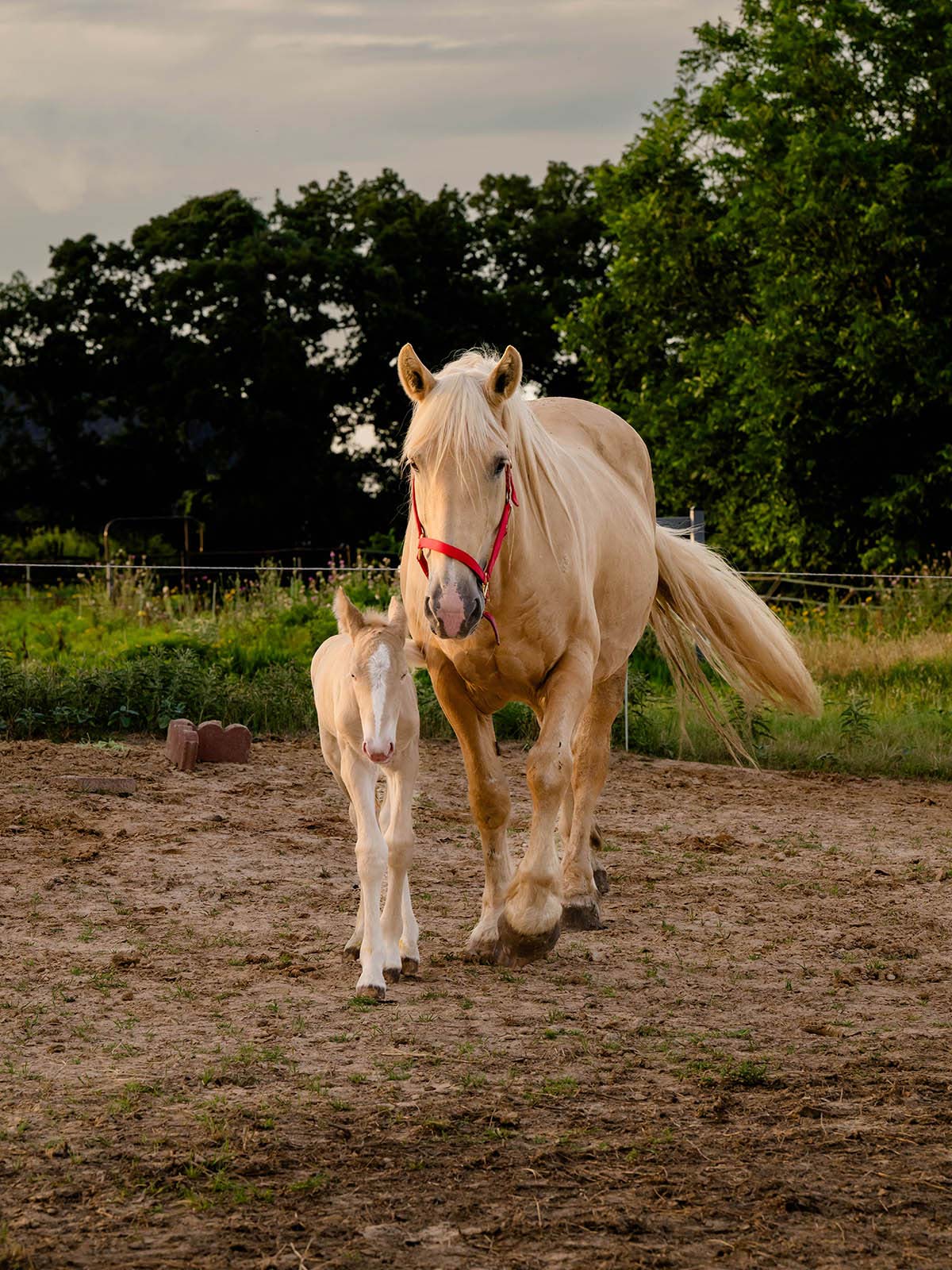
A 1-day-old foal at Workhorse Ranch, where two or three are born each spring.
Tiffany Hofeldt
Their sturdy build makes them ideal for mounted police units. One of the Murrays’ horses works with the Austin Police Department, where he’ll serve for 10–20 years. Then he will return to the Murrays or go home with his handler.
The Murrays own Workhorse Ranch in Boyd, where they breed and raise American creams. They have more than a dozen, and two or three are born each spring.
Members of Wise Electric Cooperative, the Murrays have always had horses. One day when Anne saw an ad for an American cream for sale, she decided to buy it before someone else did.
That mare, Dolly, was 5 years old when Anne bought her in 2009. Dolly, whom Murray affectionately refers to as Old Granny, in reference to the breed’s foundation horse, is still with the Murrays and doing well.
The original Old Granny was owned by an Iowa farmer in the early 1900s. Other farmers who admired her beautiful cream coat bred their stallions to her, hoping the foals would look like her. Some of the resulting foals did.
Breeding records weren’t carefully kept in those days, and national or international registries didn’t yet exist for most breeds. Remarkably, a veterinarian who had seen some of the horses declared that he thought they were a separate, distinct draft breed.
However, just as the American cream breed was being established, in 1944, the demand for all draft horses plummeted as more and more farmers began using tractors and other machinery instead of horses. The breed fell close to extinction.
But a handful of American cream breeders kept that from happening. As more people saw the horses at shows and fairs, the demand for them grew.
Along with raising American creams, the Murrays have been driving horses since 1986, when they participated in the Texas sesquicentennial wagon train.
These days, the Murrays provide horse-drawn carriages and wagons for weddings, parties, corporate events, funerals and parades in North Texas.
When they take their horses to an event, people sometimes ask if the horses are real and then if they can touch them. Anne says people who have had horses in the past will hug the horses, breathe deeply and tell her they have missed that sweet smell. It’s not a phase.
Being around horses “is more fun for me than being anywhere else,” Anne says. “They’re calming. With them I can escape from the hassles of real life.”