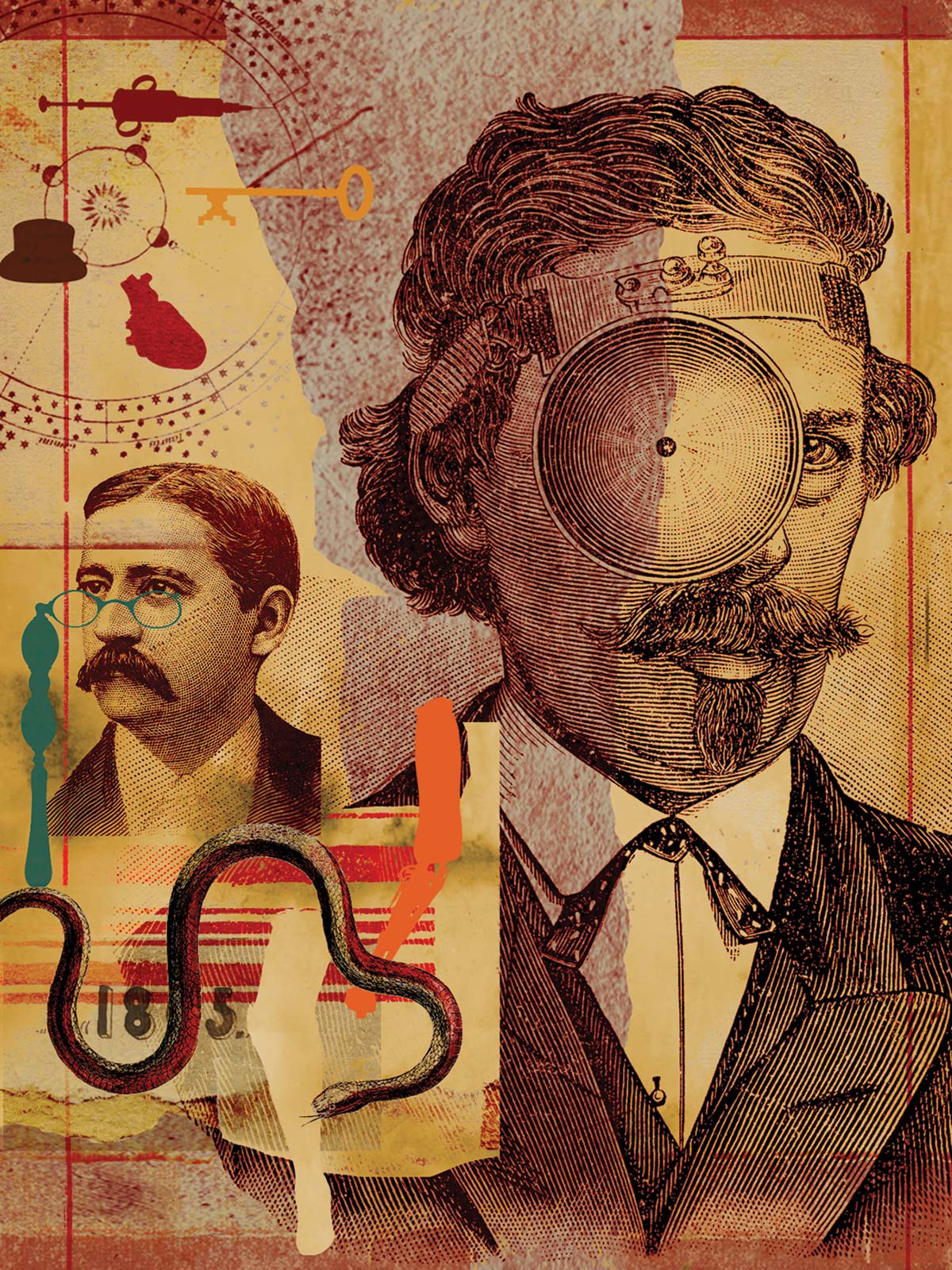
Becoming a doctor was a lot simpler in frontier times, when you didn’t have to go to school for a long time or even know much about medicine. You could just call yourself a doctor. And if your first consideration was to cause no harm and you were blessed with at least a modicum of common sense, other people would call you a doctor too.
“Dr.” John F. Webber is a case in point. Born in Vermont and a veteran of the War of 1812, Webber settled in Stephen F. Austin’s colony, in what was then Mexico, by 1824.
Along with Texas chronicler Noah Smithwick and two other men, Webber took part in a tobacco-smuggling operation farther south in Mexico. Webber wasn’t a trained doctor, but he played one to avoid answering a bunch of annoying questions about the nature of his visit. Posing as a doctor was easier than explaining 1,000 pounds of leaf tobacco to the authorities.
In one town Webber advertised his services as a physician. Smithwick was fairly fluent in Spanish, so he accompanied the “doctor” as he tended to patients. “With an air of importance that would have done credit to a professional, Webber noted the symptoms, shaking his head, knitting his brows, and otherwise impressing the patient with the seriousness of his condition,” Smithwick later wrote.
Smithwick and Webber had a sampling of medicines, mostly quinine, calomel and tartar emetic, a poisonous compound that some brave souls took to induce vomiting; it made Webber’s patients feel different, if not better. “The doctor’s fame went abroad, and he soon had a large practice, same as imposters of the present day,” Smithwick wrote.
Smithwick also knew the inventor Gail Borden Jr. before Borden patented the process for making condensed milk and became known as Dairyman to the World. They knew each other first in San Felipe and later in Burnet County, where Smithwick operated a mill.
Borden was looking for gold on Sandy Creek and also advertising himself as a doctor when he stayed a few days with Smithwick and described to his host how he practiced medicine. “It is no use to be a doctor unless you put on the airs of one,” he said. “Nine times out of 10 sickness is caused by overeating, or eating unwholesome food, but a patient gets angry if you tell him so; you must humor him.”
Borden humored his patients by administering tiny bits of calomel with enough starch to turn it into a pellet. He glazed the pellets with sugar to make the medicine taste more like a doughnut. Borden said most people who abstained from “hurtful articles of food” felt better as a result.
Unlike Borden or Webber, Dr. Johnson Calhoun Hunter, a native of South Carolina and one of the Old Three Hundred colonists, received a diploma in medicine around 1805, when he was just 18. He was in Texas, in what is now Harris County, by the early 1820s with his wife and the first five of their eventual 11 children. He did a lot more than doctoring when he got here.
Historian Mike Cox wrote that Hunter “could deliver a baby, ride a plow, go hungry, trade with the Indians, run a traverse, pilot a scow, adjudicate a case … cut a bull, teach a school … and deliver mail.”
They don’t make general practitioners like that anymore.