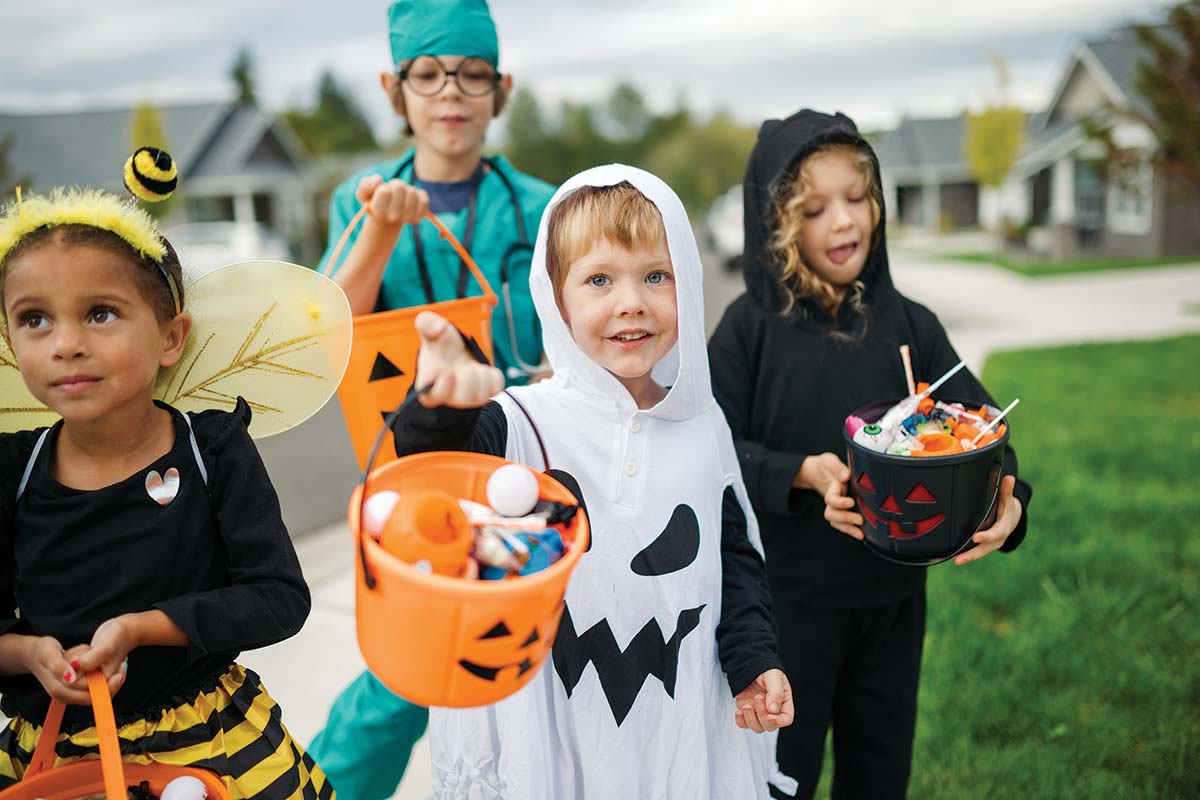
No other holiday matches the sheer fun of Halloween’s costume parties and trick-or-treating. However, the season also brings the potential for distinct hazards, including food-related illnesses and allergic reactions as well as serious tragedies like child pedestrian fatalities.
To keep the holiday safe and enjoyable, follow these essential health and safety guidelines from the U.S. Food and Drug Administration and safety advocates.
Before Heading Out
Preparation is your best defense against hunger and accidents. When choosing clothes, accessories and makeup, take these precautions.
Fit and visibility: Wear costumes that are fireproof and include reflectors and bright colors. Avoid trips and falls by making sure costumes and shoes fit well and that accessories like swords and knives are soft and won’t drag on the ground.
Ditch the masks: Opt for makeup over masks, which can obscure vision. But test makeup in a small area first to monitor the skin’s reaction, and be sure to remove it before bed to prevent irritation from developing overnight.
Pre-trick-or-treat snack: Give children a light meal or snack before they leave the house; don’t send them out on an empty stomach. Urge kids to wait until they get home and to let you inspect their treats before they eat any of them.
On the Treat Trail
Halloween and New Year’s Day are the deadliest days of the year for child pedestrians, according to the Children’s Safety Network. Use extra caution as you go door to door.
Street smarts: Cross streets at intersections with traffic signals, where possible, and crosswalks. Look left, right, then left again when crossing the street, and make eye contact with drivers to make sure they see you. Beware of cars backing out of driveways.
Group safety: Have an adult accompany children, especially those under 12. Take flashlights or glow sticks.
Curbside logic: Only visit well-lit homes. A home with the lights off is an indication that the resident does not want trick-or-treaters.
Sorting and Safety
Whether inspecting the goody bag or hosting a party at home, don’t let bacteria or other food safety hazards ruin the fun.
Safe treats: Tell children not to accept—and especially not to eat—anything that isn’t commercially wrapped. Inspect all treats for signs of tampering, such as an unusual appearance, coloration, tiny pinholes or tears in wrappers. Throw away anything that looks suspicious.
Allergies and choking: If your child has a food allergy, check the label of each treat to ensure the allergen isn’t present. Don’t allow children to eat any home-baked goods they receive. If you have very young children, be sure to remove any choking hazards such as gum, nuts, hard candies and small toys.
Kitchen cautions: “Scare” bacteria away by keeping all perishable foods chilled until serving time. Bacteria will creep up on you if you let foods sit out too long. Don’t leave perishable goodies out of the fridge for more than two hours.
Party staples: Beware of cider! Unpasteurized juice and cider can contain harmful bacteria such as salmonella. To stay safe, always serve pasteurized products. And no matter how tempting, don’t taste raw cookie dough or cake batter that contains uncooked eggs.