Crowded around solitary drums in the four corners of the sacred dance floor are men who are about to play a song they’ve never heard before.
Standing with the requisite stillness of stalking a deer, a dozen dancers await the first beat. They are in full regalia, some in earth tones and dabbed with war paint, some in neon trim or modern sports team logos, their feet clad in meticulously stitched and beaded moccasins.
They all have a story to tell. They don’t yet know how they will tell it. They will cede to the beat how they tell it and where their spirit guides them.
Around them are three judges, armed with small clipboards and discerning eyes. They can’t say what exactly they want from the dancers, just that they will know it when they see it.
Up on the stage overlooking the spectacle, master of ceremonies Marty Thurman succinctly describes what is about to unfold: “Organized chaos,” he says with a smile.
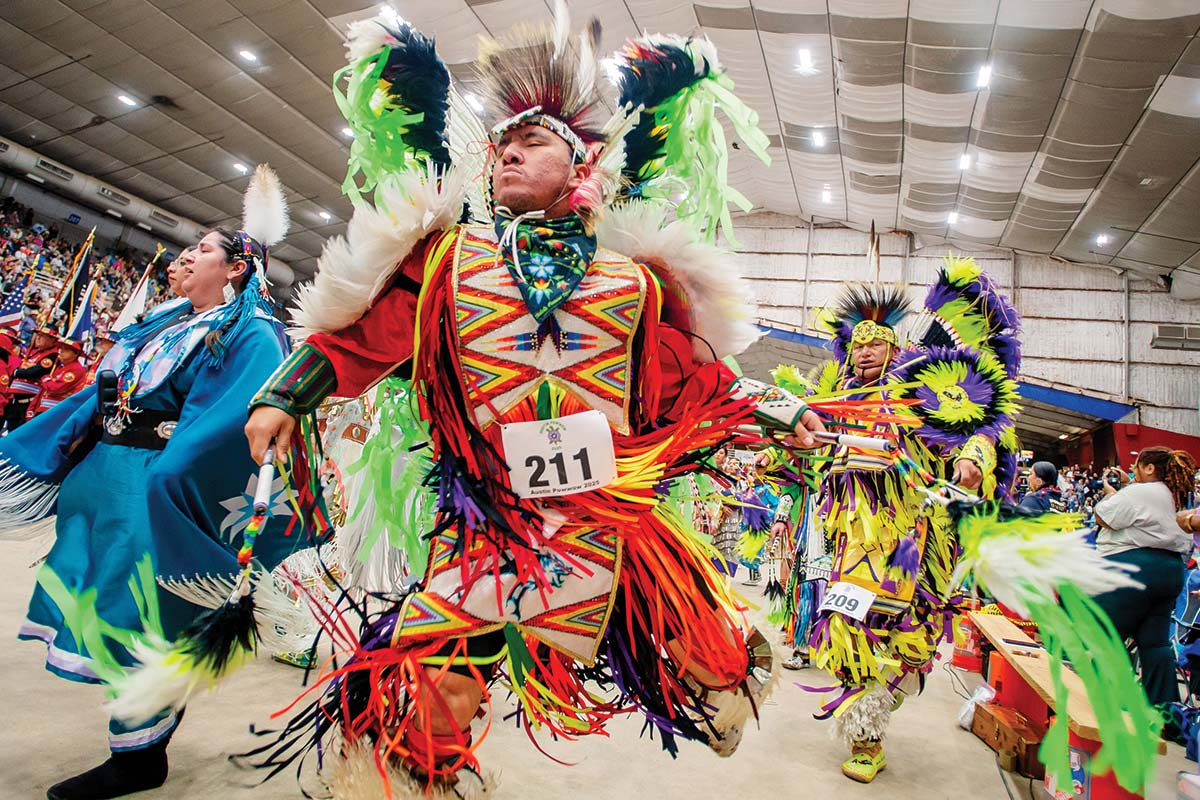
Fancy bustle dancers perform.
Tiffany Hofeldt
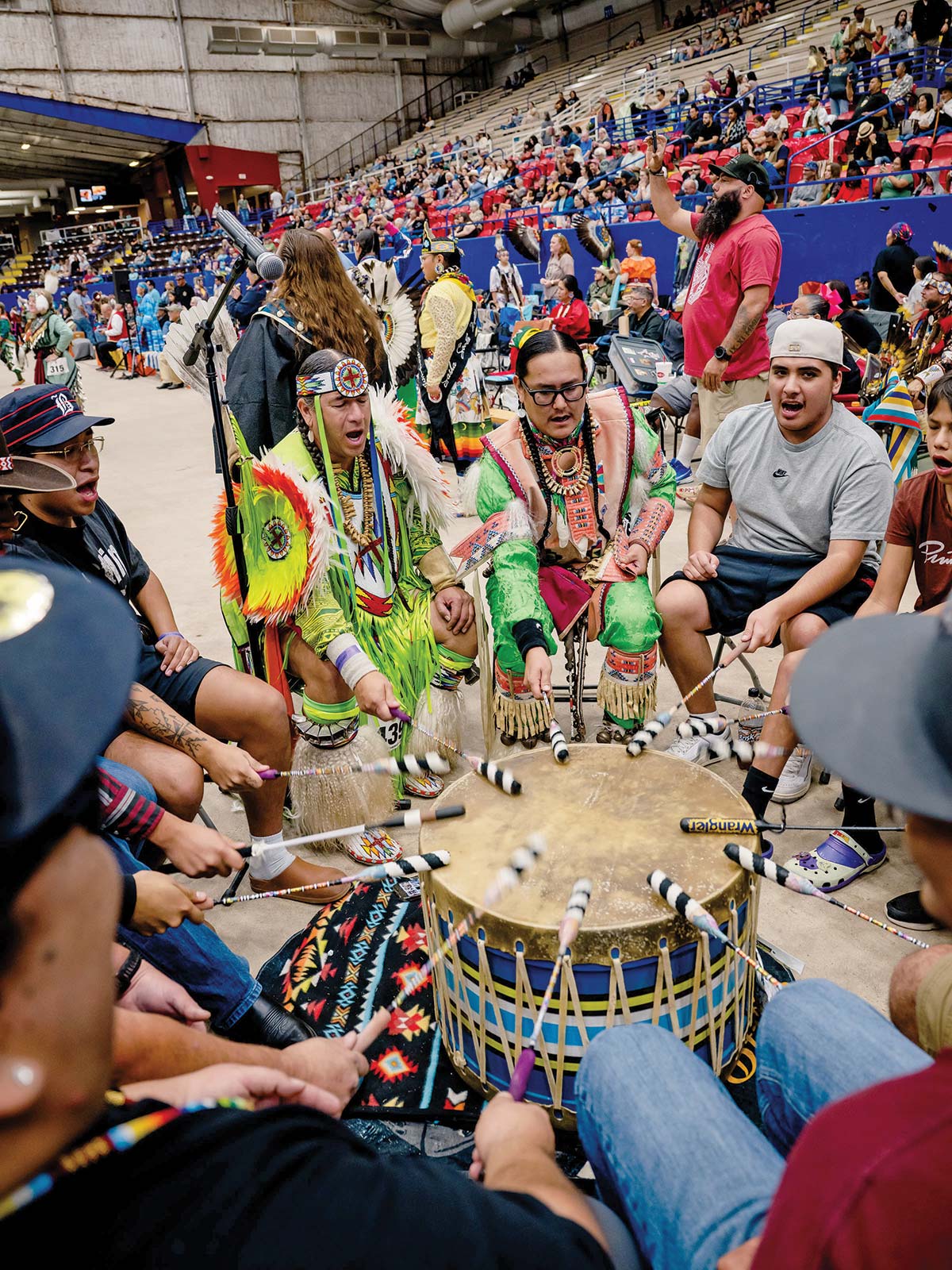
The Fort Peck Sioux drum group from Montana at the Austin Powwow, a festival of Native American crafts, culture, food and community at the Travis County Expo Center.
Tiffany Hofeldt
This is an outsider’s introduction to powwow competitions, where Native American performers who have “followed the trail”—remained true to their bloodlines—let centuries of tradition, very little of which has been written down, inspire their sense of belonging.
One Saturday every November—for the last 32 years—the Travis County Expo Center hosts the Austin Powwow, a festival of Native American crafts, culture, food and community. There’s handcrafted jewelry and hula dancing, a nod to the event’s focus on dance and multicultural appeal. And in the expansive food trailer court, don’t skip the Navajo tacos, a culinary delight on Native American fry bread.
The main event is the powwow itself. Derived from the Algonquian pau wau, a word for a medicine man or shaman, modern powwows have evolved as an expression of spiritual identity as tribes were continuously driven from their ancestral lands and pressured by cultural assimilation.
“It’s the largest one-day powwow in Texas,” says Nan Blassingame, arena coordinator and a member of the Cheyenne and Arapaho Tribes who moved to Austin in 2003. “Everyone wants to see all the dancers come in at once at noon. Some will go out and go shopping in the market, get in the Indian taco line. Some stay inside and watch the powwow. So, it’s just so much to see. It’s really like three days of powwow rolled into one day.”
Over the course of 12 hours, beginning with the gourd dance, which honors elders, at 10:30 a.m., the floor is in almost constant motion, with dancers of all ages, from tiny tots to juniors to adults to golden age divisions. Twirling to the beat and native lyrics sung by a group of eight to 12 drummers, they compete for prestige and prize money, wearing the markings of their tribes—be it Alabama-Coushatta or Dallas Cowboys.
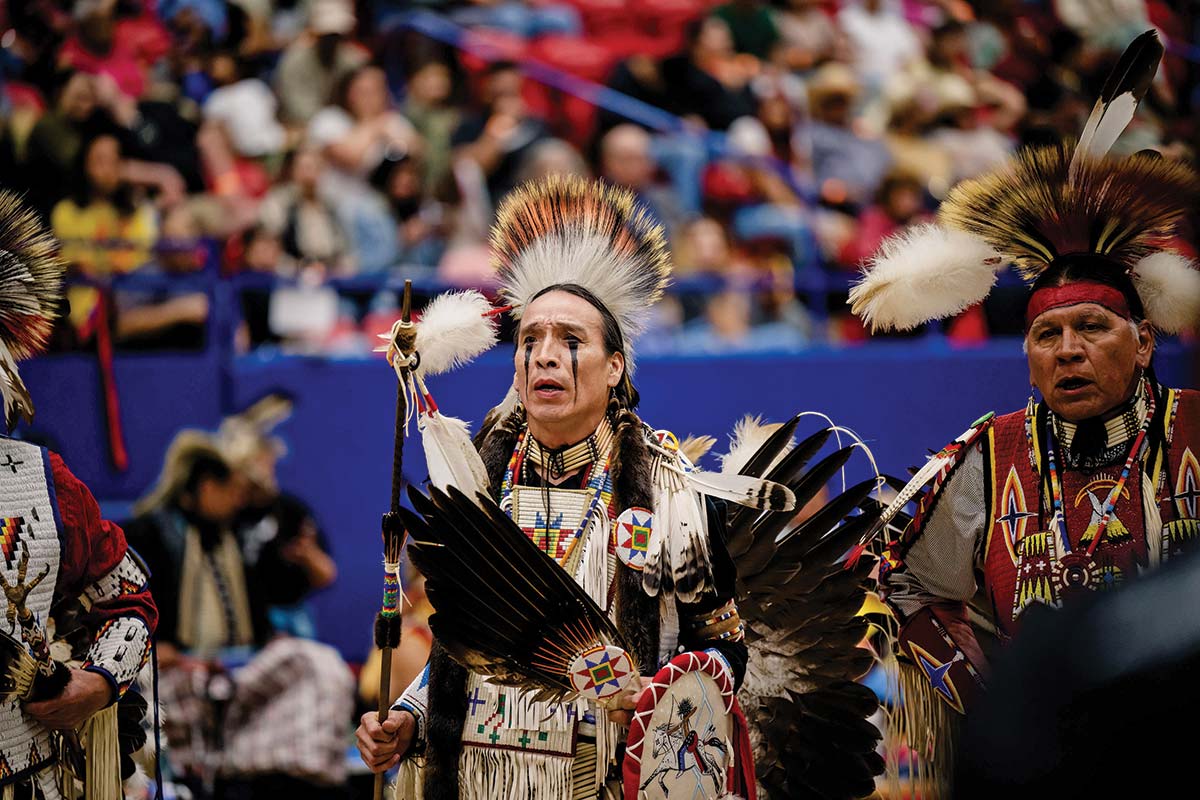
Adrian Redbird performs his dance in the arena. He was one of more than 100 competitors at the powwow.
Tiffany Hofeldt
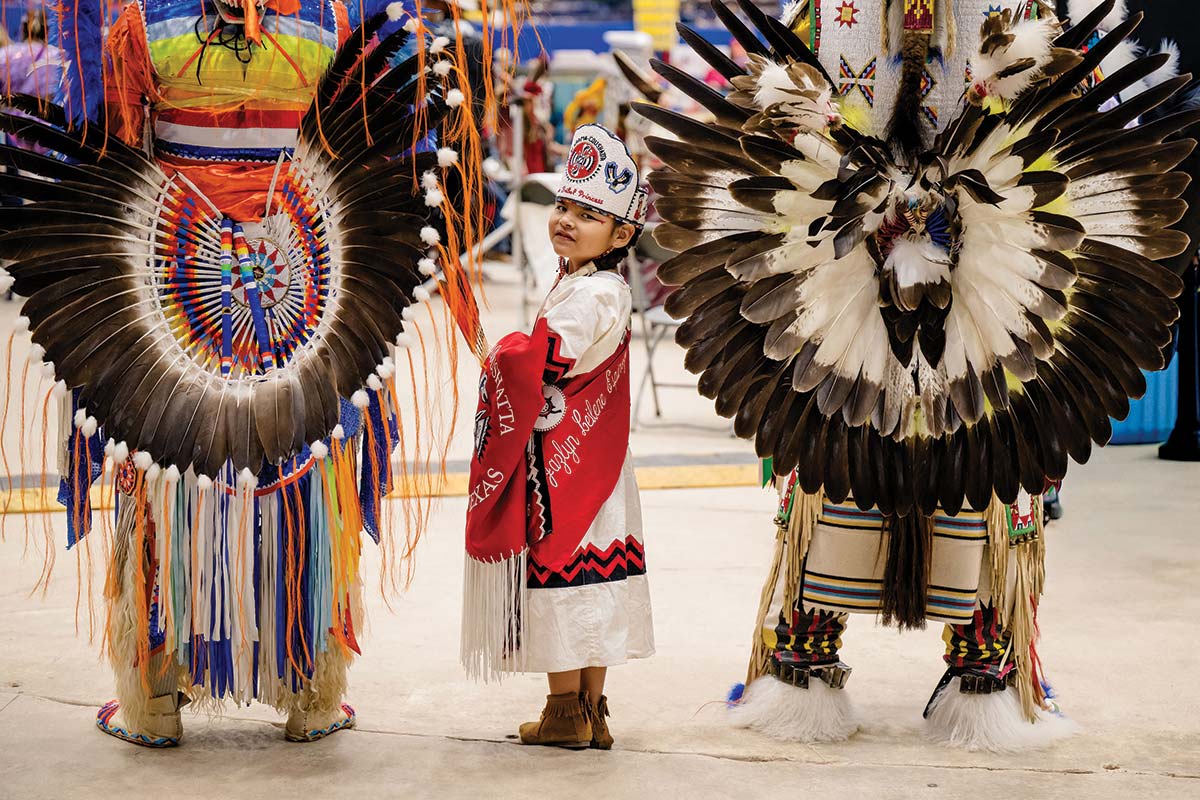
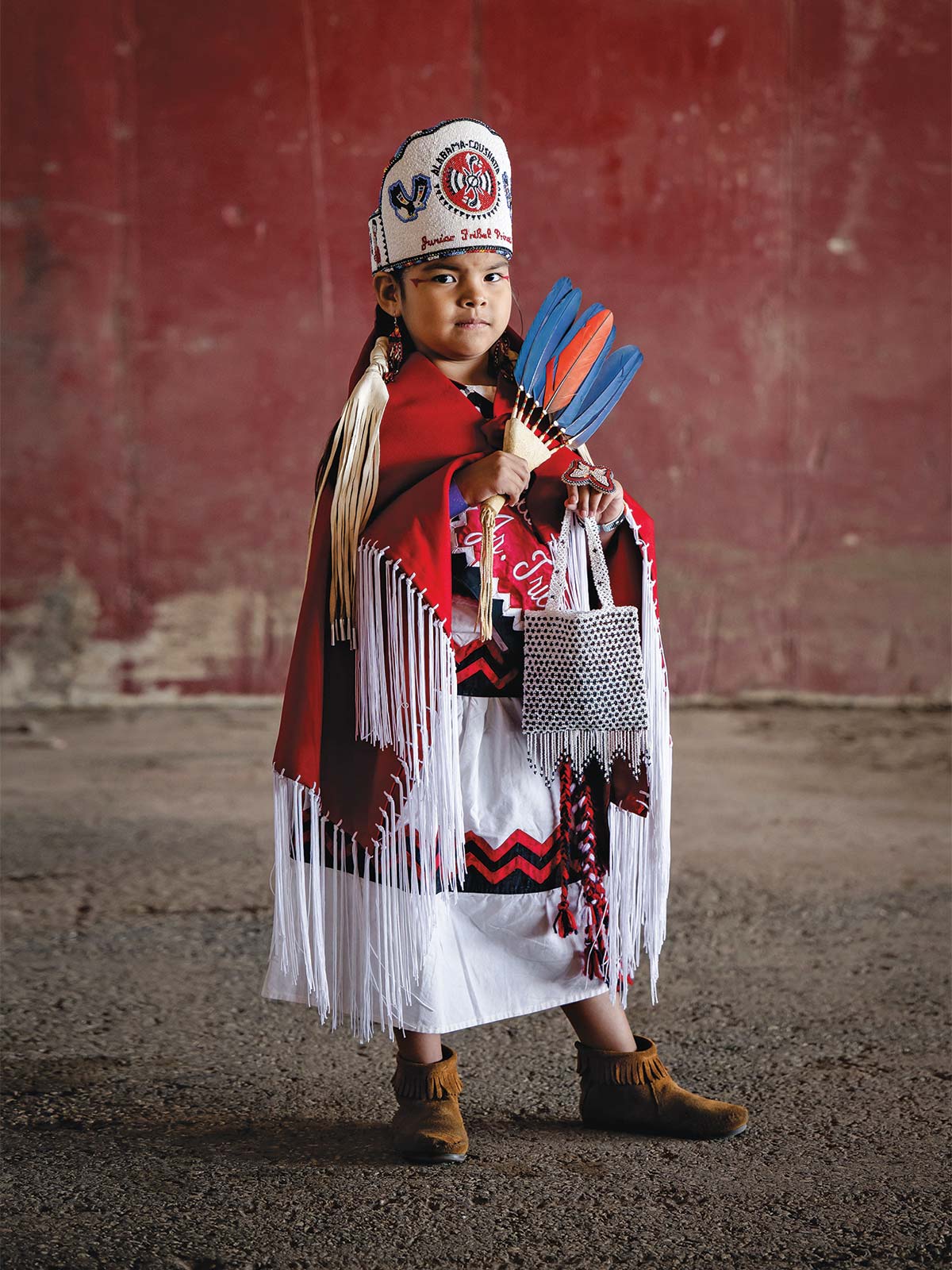
Jazlyn Espinoza is the 2025–26 junior tribal princess for the Alabama-Coushatta Tribe of Texas. She is flanked by two tribal dancers.
Tiffany Hofeldt
Head judge Sophia Thurman, Marty’s wife, selects the judges, based on knowledge, dedication, lack of conflicted interest—and the trust that they know it when they see it.
“Something about the dance catches your eye,” she explains. “Something about it makes you think it’s the best dance.”
Whether it’s a strict cultural interpretation or an iconic hodgepodge, the dancers consider their regalia a sacred representation of themselves. It’s not a costume.
“A costume is what you pretend to be,” says Marty Thurman, of Sac and Fox Nation heritage. “This is who we are.”
Steven Toya Jr., from Burleson by way of Zia Pueblo, New Mexico, has danced and sung in almost every state wearing the “Mother Earth colors,” accented by the four sacred Pecos colors: red, white, yellow and black.
Bare-chested except for a bone breastplate and wearing pigtails, a silver double-cross and buckskin leggings, the industrial tire salesman strives to resemble his great-great-great-grandfather—the last president of the Pecos Tribe.
“We live in a society where we’re not just Native, but we also live in the white Western world. So it’s two worlds coming together—duality,” Toya says. “We practice our traditional custom and culture. And then there’s some of us that still go to church on Sundays, still practice religion, whatever you know your calling is. It’s always still having that tie back to our traditional culture.
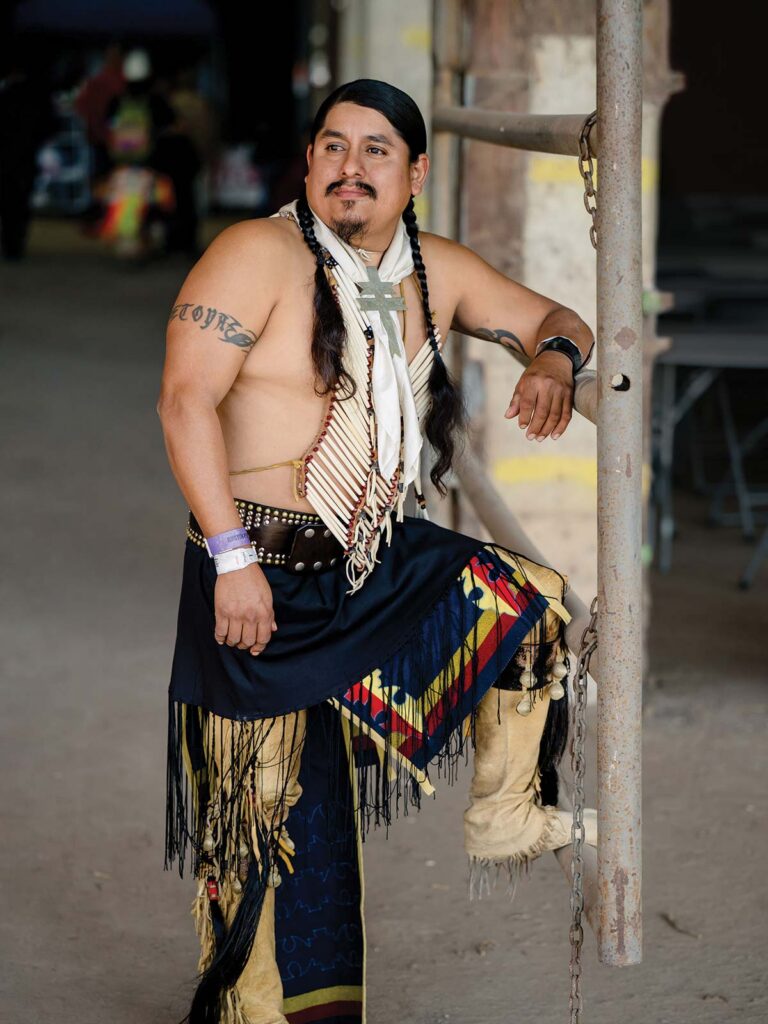
Steven Toya Jr. of Burleson wears the “Mother Earth colors,” accented by the four sacred Pecos colors: red, white, yellow and black.
Tiffany Hofeldt
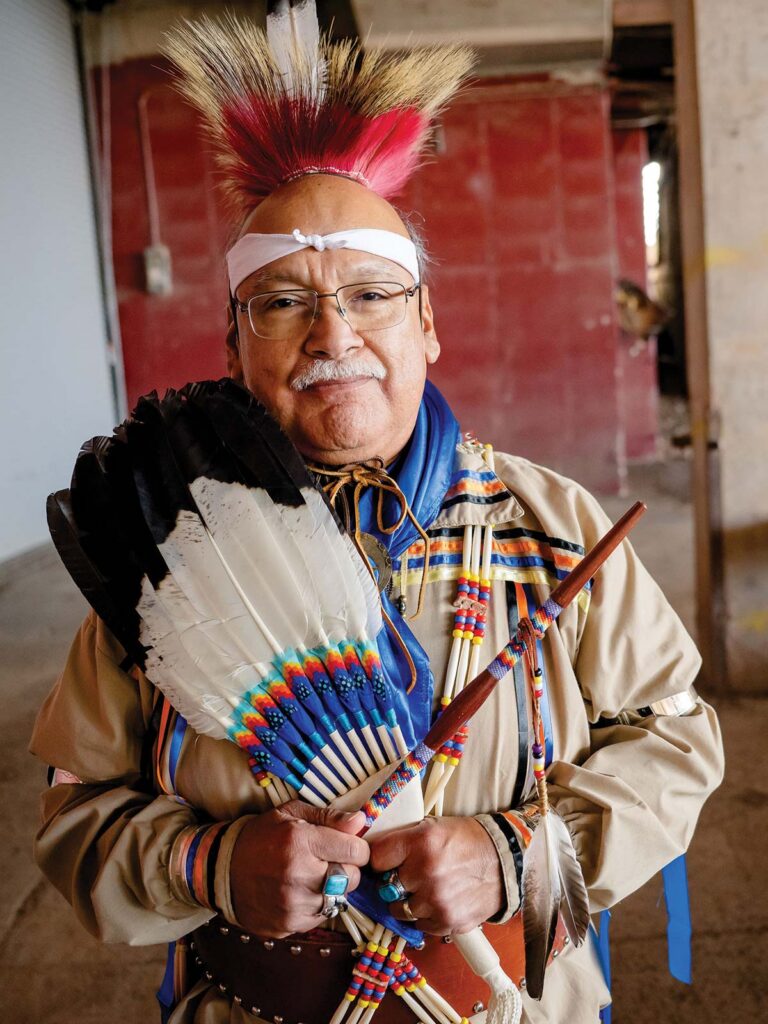
Daniel “Dio” Mireles grew up in Austin believing he was Hispanic, but he later learned he’s about three-quarters Native American, a culture he loves celebrating because it “makes you feel good inside of your heart, your soul, your mind.”
Tiffany Hofeldt
“For us as Native Americans, we always have a protocol, you know, a rite of passage.” In other words, he says, to dance a certain way or style, one has to experience initiation into those respective societies.
Sometimes that initiation goes unfulfilled.
Ralph Pacheco grew up thinking he was Hispanic. Or white. Or South Texas missions Indian (the product of Spanish missionaries’ attempts to assimilate Native Americans
centuries ago). Or whatever society said he was at the time.
“I wasn’t Mexican, and I wasn’t white. So at that point, I walked away thinking I was nothing—nothing. I don’t have an identity,” says Pacheco, who sold jewelry at the powwow. “Then later, my elders came and said, ‘We’re the Indians that come from the mission.’ And so it was like a dirty secret. We just don’t talk about it.”
Inspired, Pacheco did more than talk about it. He traced his lineage back to the 1700s, through connections with the Alamo and the Texas Revolution. Now he serves as de facto historian for the Native American Cultural Center in Austin.
Sometimes that initiation comes early. And sometimes it must wait.
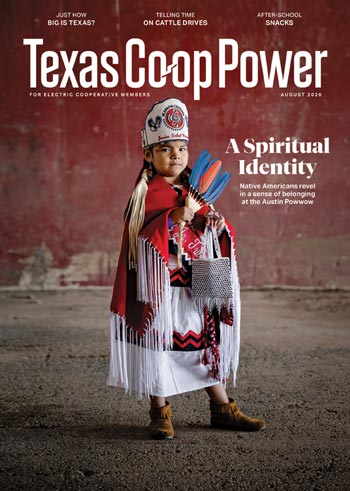
Jazlyn Espinoza, 7, is the 2025–26 junior tribal princess for the Alabama-Coushatta Tribe of Texas, based in Livingston.
“I enjoy the dancing and being a princess for my tribe,” she says.
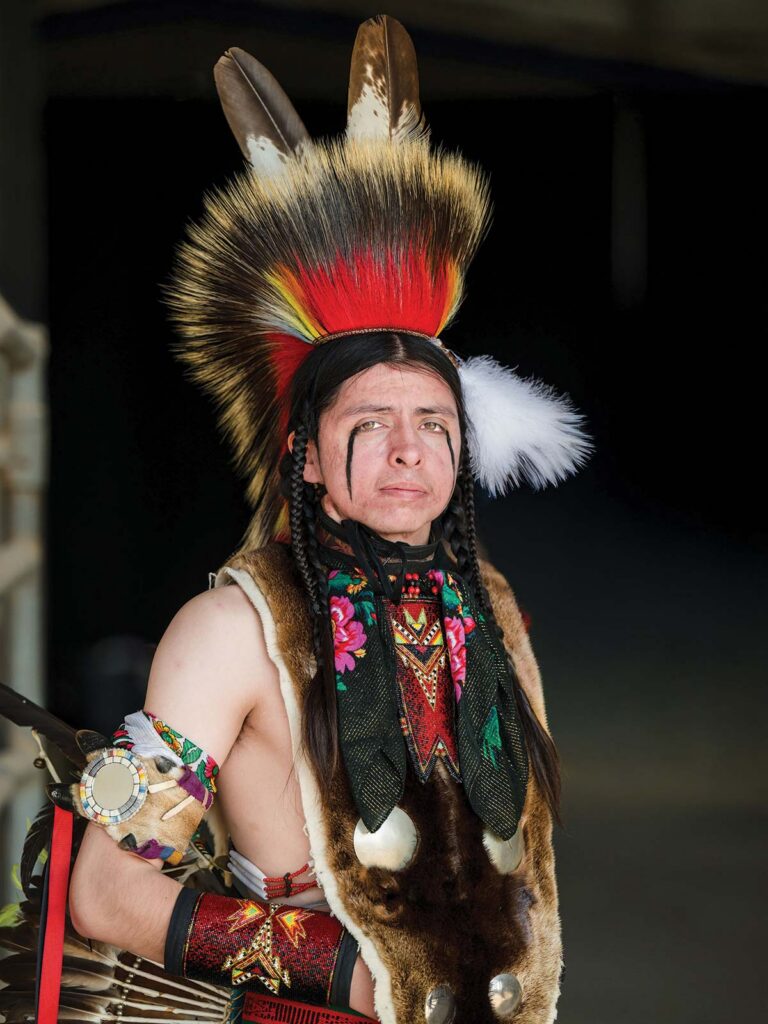
Sage Casas of the Mandan, Hidatsa and Arikara Nation.
Tiffany Hofeldt
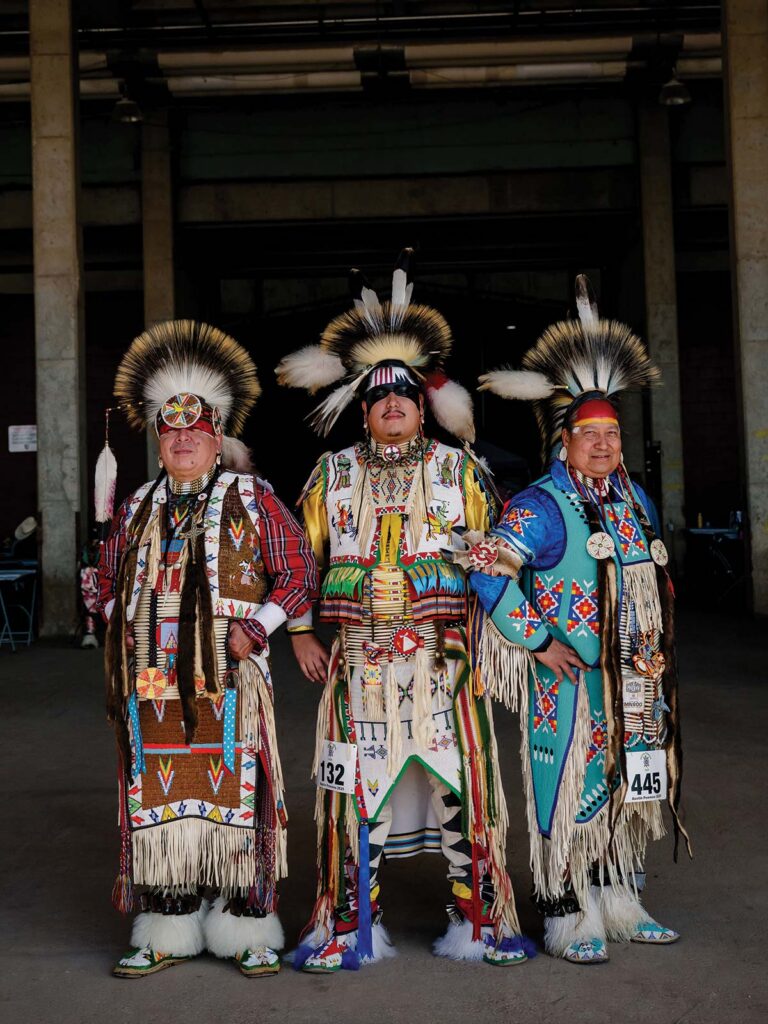
From left, BJ Haury, Donovan Haury and Tony Waweheotten.
Tiffany Hofeldt
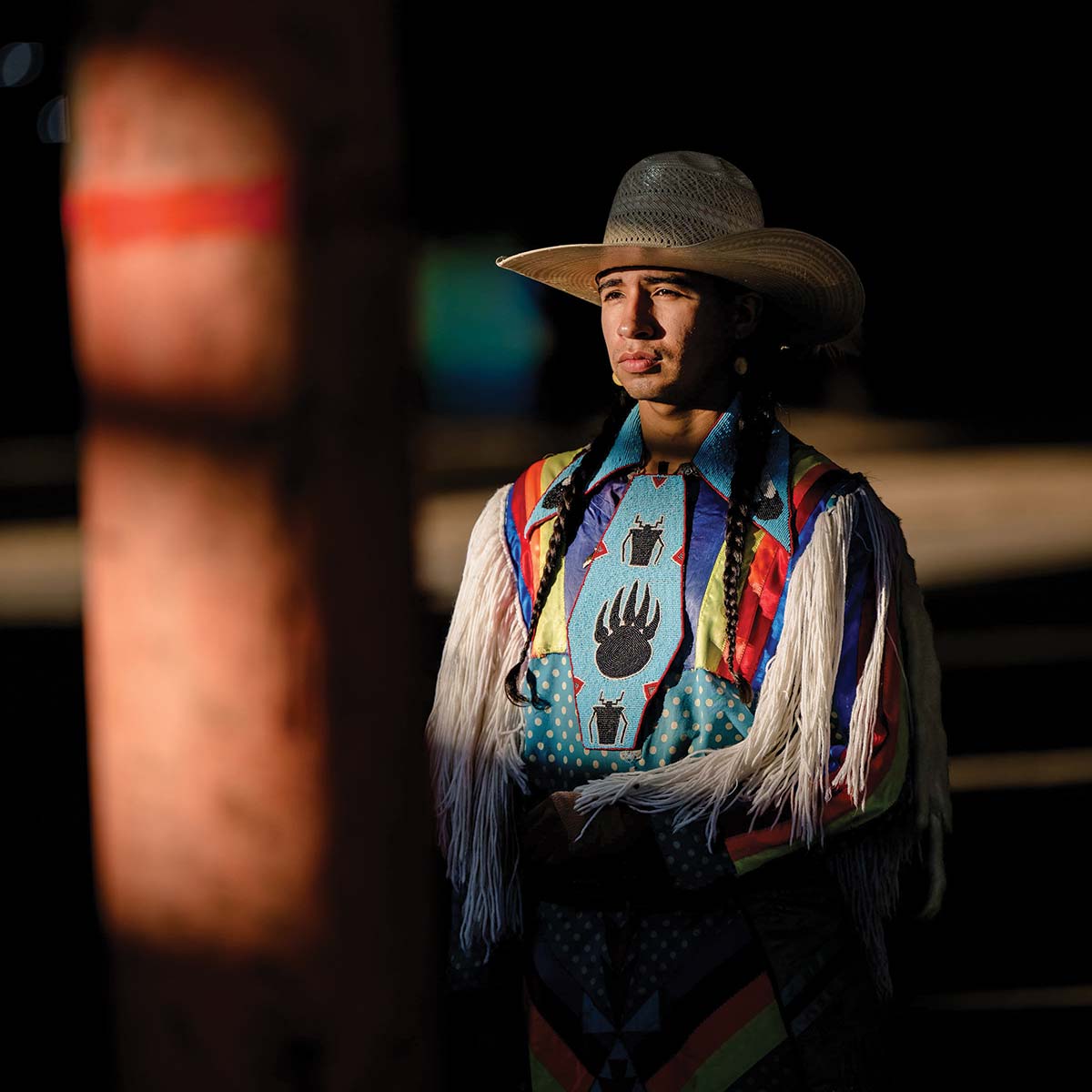
Dustin Langley, who competes in the grass dance category.
Tiffany Hofeldt
Her parents travel with her and maintain her Instagram account. Mom Kristina Abbey was raised on tribal land.
“I was surrounded by my Native American heritage but never took advantage of the teachings until now,” Kristina says. “I am learning alongside my daughter.”
Sometimes the initiation is hidden in plain sight.
Daniel “Dio” Mireles’ parents were Hispanic, so he grew up in East Austin believing he was Hispanic.
When he was 12, some cousins mentioned he was adopted. He dismissed it at the time as adolescent teasing but heard the same message about six years ago from another relative.
Neither his father, who had died, nor his mother, then in her 90s, had ever said a word about it. Intrigued and remembering how his birth certificate has his father’s signature in place of the obstetrician’s, he had his DNA tested. The results confirmed what his relatives said but also gave him an answer he wasn’t seeking—he was overwhelmingly Native American.
“I kind of suspected I might be because I was always enjoying going to these powwow festivities,” Mireles says.
He pieced together, from records and chats with his family, that he was born in Austin and adopted from a Catholic orphanage in San Antonio and that he might be from the Kickapoo tribe.
Sharon, his wife who is of British descent, says, “He spent his whole life thinking he knew who he was and then realizing he didn’t and liking who he might be.
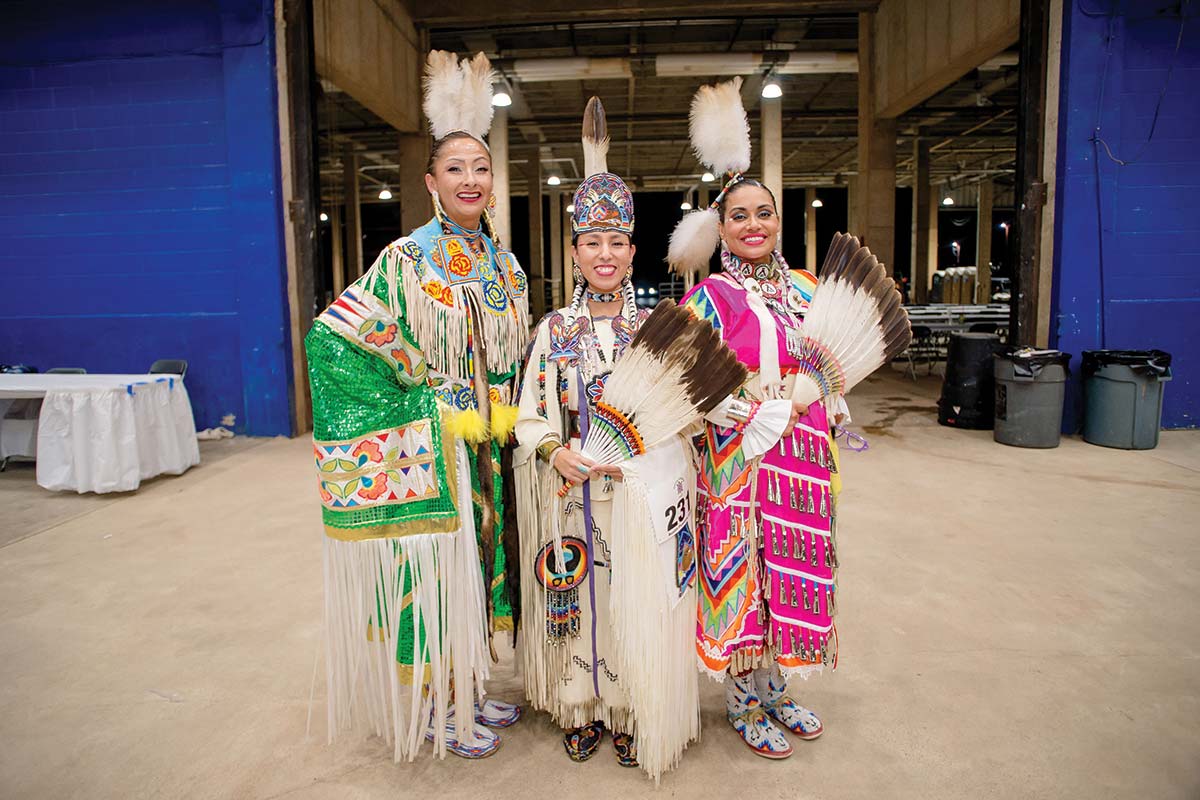
Starlitt Alley, center, with her aunts Carol Melting, left, and Verna Street.
Tiffany Hofeldt
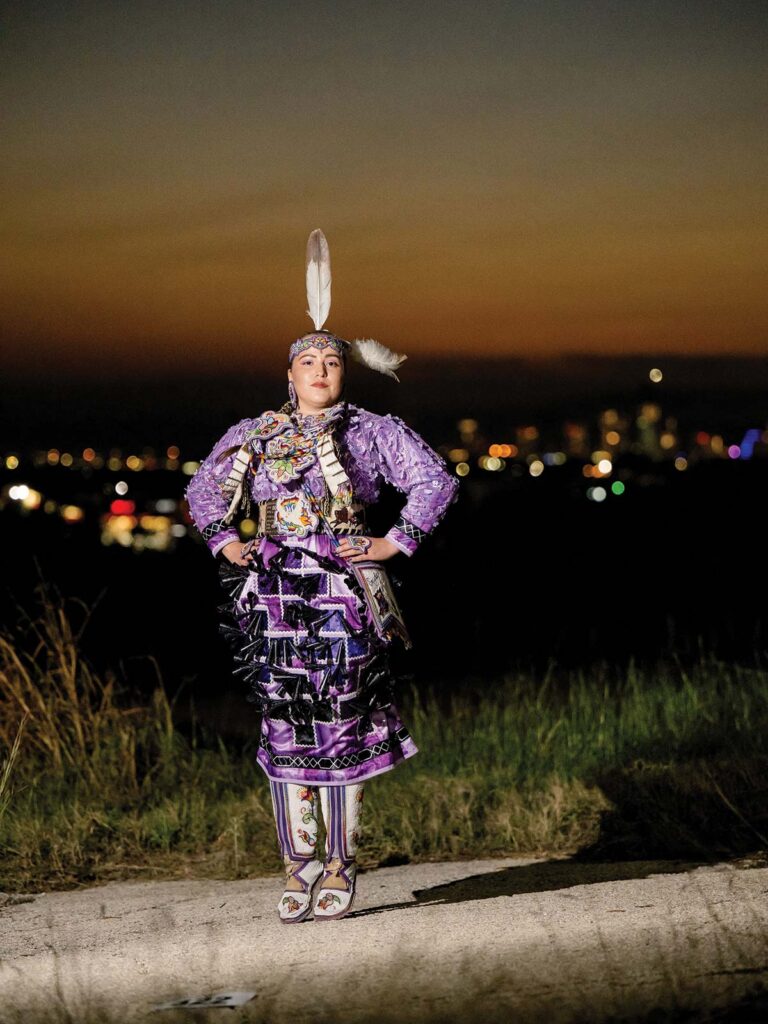
Shaina Snyder is Diné (Navajo) and Southern Ute.
Tiffany Hofeldt
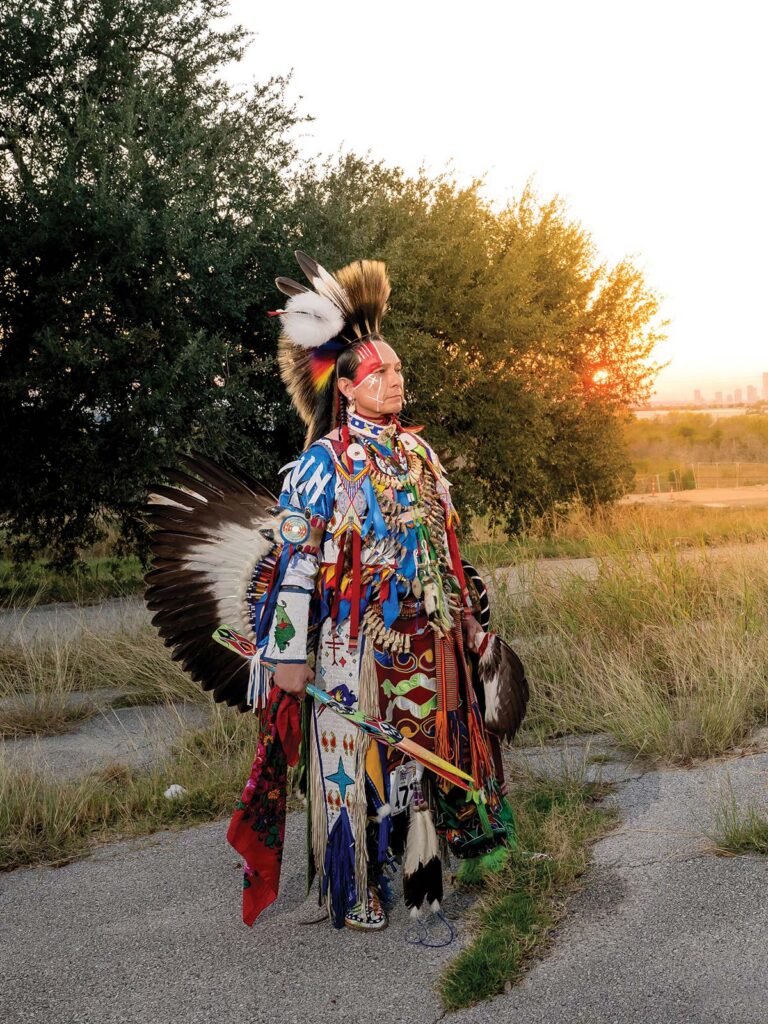
Lonny Street is a champion dancer. He’s associated with the Meskwaki Nation and is known for his expertise in traditional powwow dance, often teaching, participating in and judging competitions.
Tiffany Hofeldt
“It’s a puzzle with a lot of missing pieces.”
Among them are specifics. DNA can legally set paternity or condemn a murderer, but it cannot confirm what Mireles knows unequivocally. For that reason, he is legally barred from wearing an eagle feather in his headdress. He has Native American blood—73% of it—but he can’t be recognized under the auspices of the federal Bald and Golden Eagle Protection Act, which says only Native Americans who can document their bloodline can legally possess plumage from the revered avians.
His birth certificate is devoid of information about his birth parents.
So he had an artist make a replica of an eagle feather from a turkey feather.
That he dances with a replica in a dance that reveres tradition is not lost on him. Yet it’s that escape from individuality to community—from conformity to consciousness—that identifies the only prey he’s pursuing on the trail of his true identity.
“You feel the energy, the sound of the healing, the singing,” Mireles says. “It just releases what you know, makes you feel good inside of your heart, your soul, your mind—brings you all together.”
What’s at the end of the trail is for you to decide.
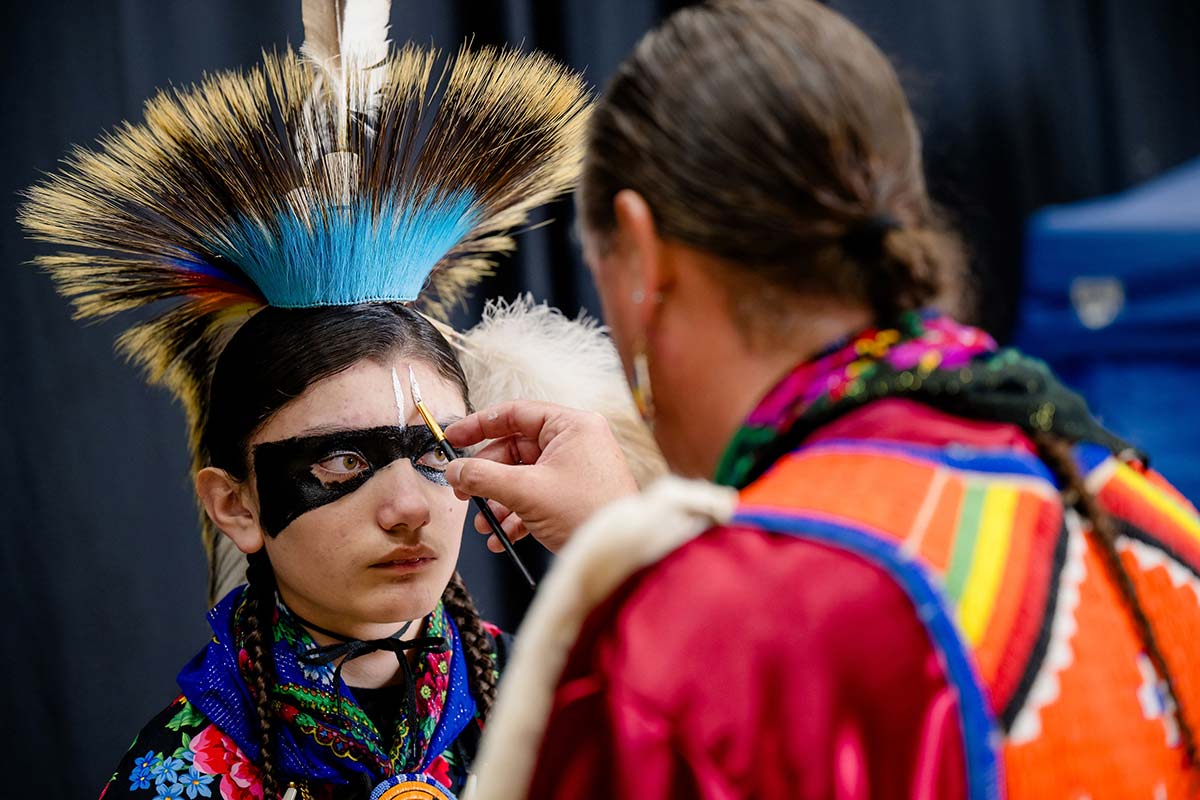
Cody Blassingame paints the face of his son Toby.
Tiffany Hofeldt
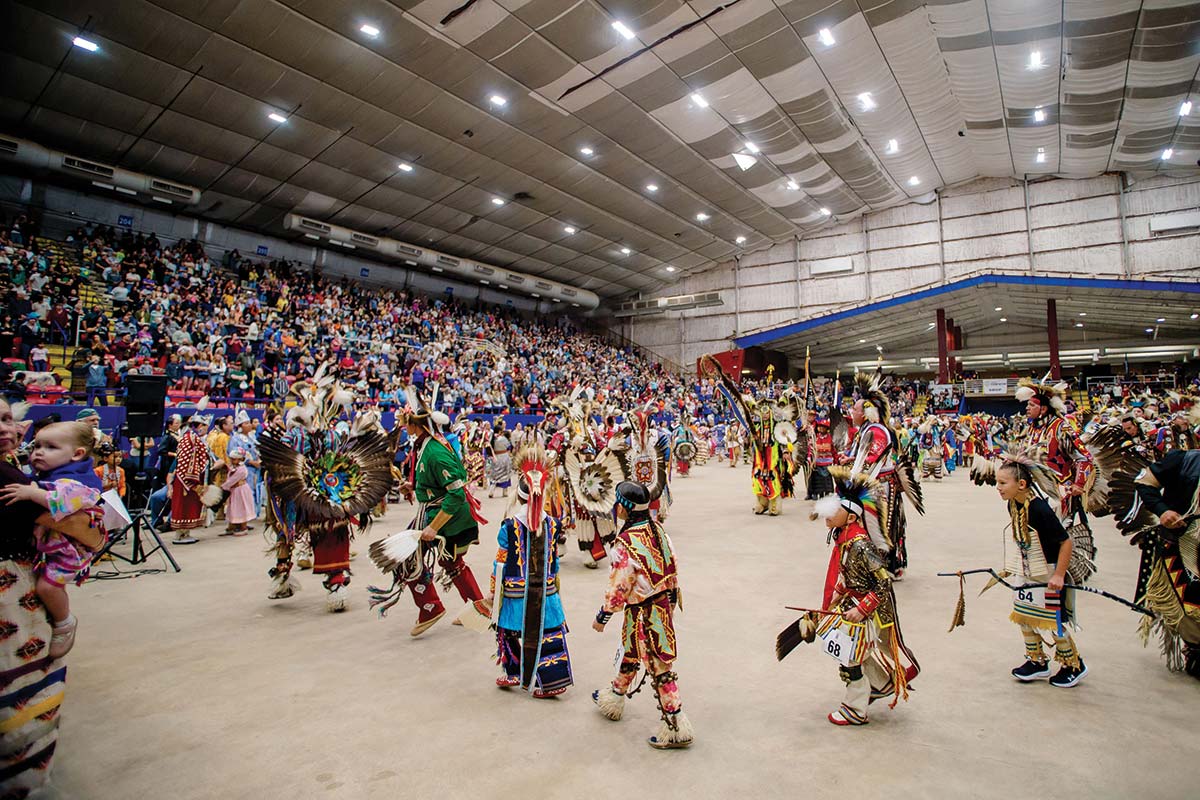
The grand entry at the 2025 Austin Powwow in November.
Tiffany Hofeldt
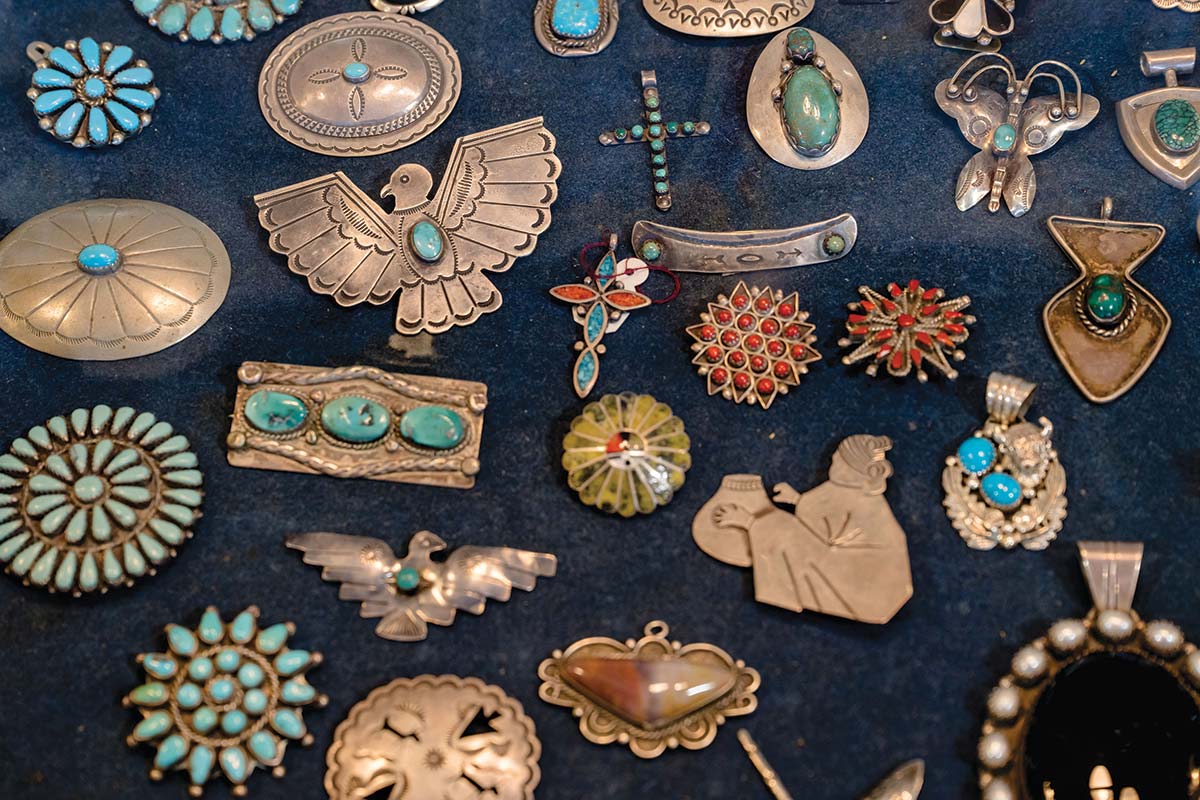
Artisans sell handcrafted Native American jewelry at the powwow.
Tiffany Hofeldt