Brenda Hammit Bradley weaves between tables at the MidPoint Cafe, coffeepot in hand, laughing and talking with diners and, when there’s a language barrier, gesturing and pointing.
When she reaches his table, Juan José Sillas Blanco from Spain, dressed in an AC/DC T-shirt, points at his 5-euro bill and then the wall, and Bradley knows what he means. She grabs tape and a stepladder so he can add it to the collection of currency and license plates from around the world lining the upper walls, creating a visual guest book.
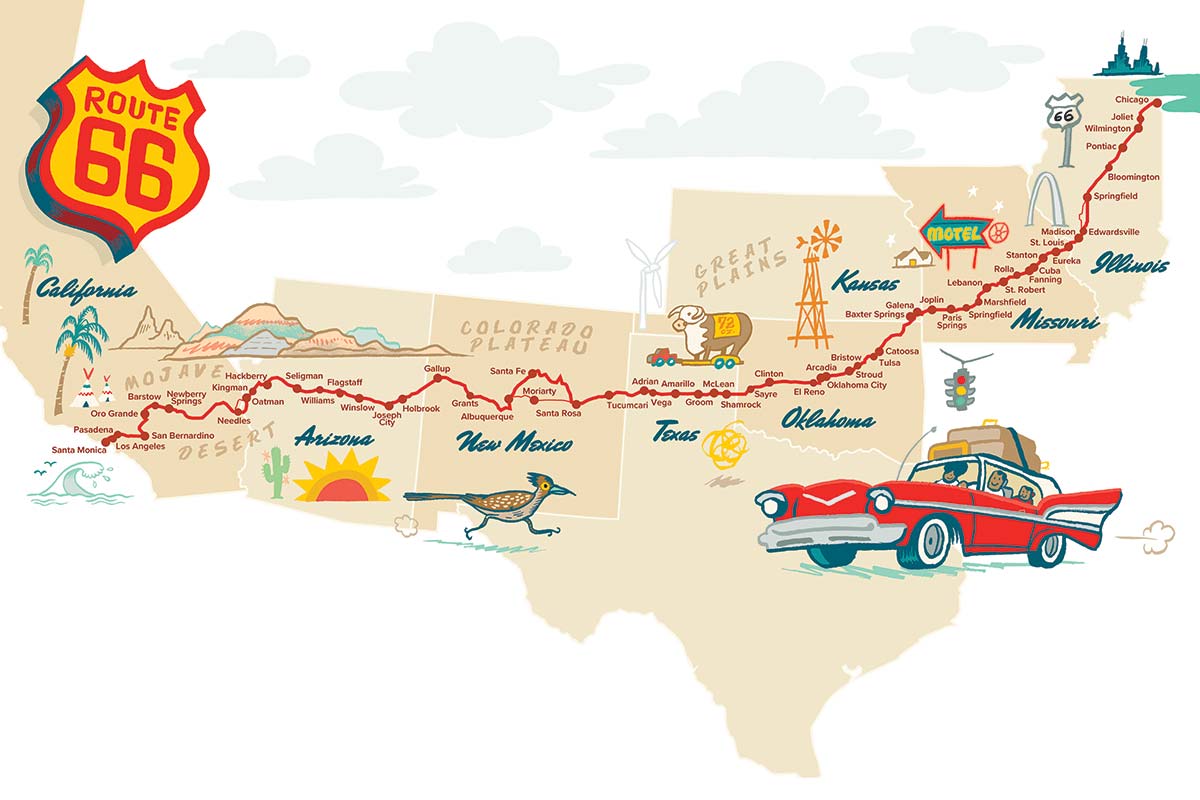
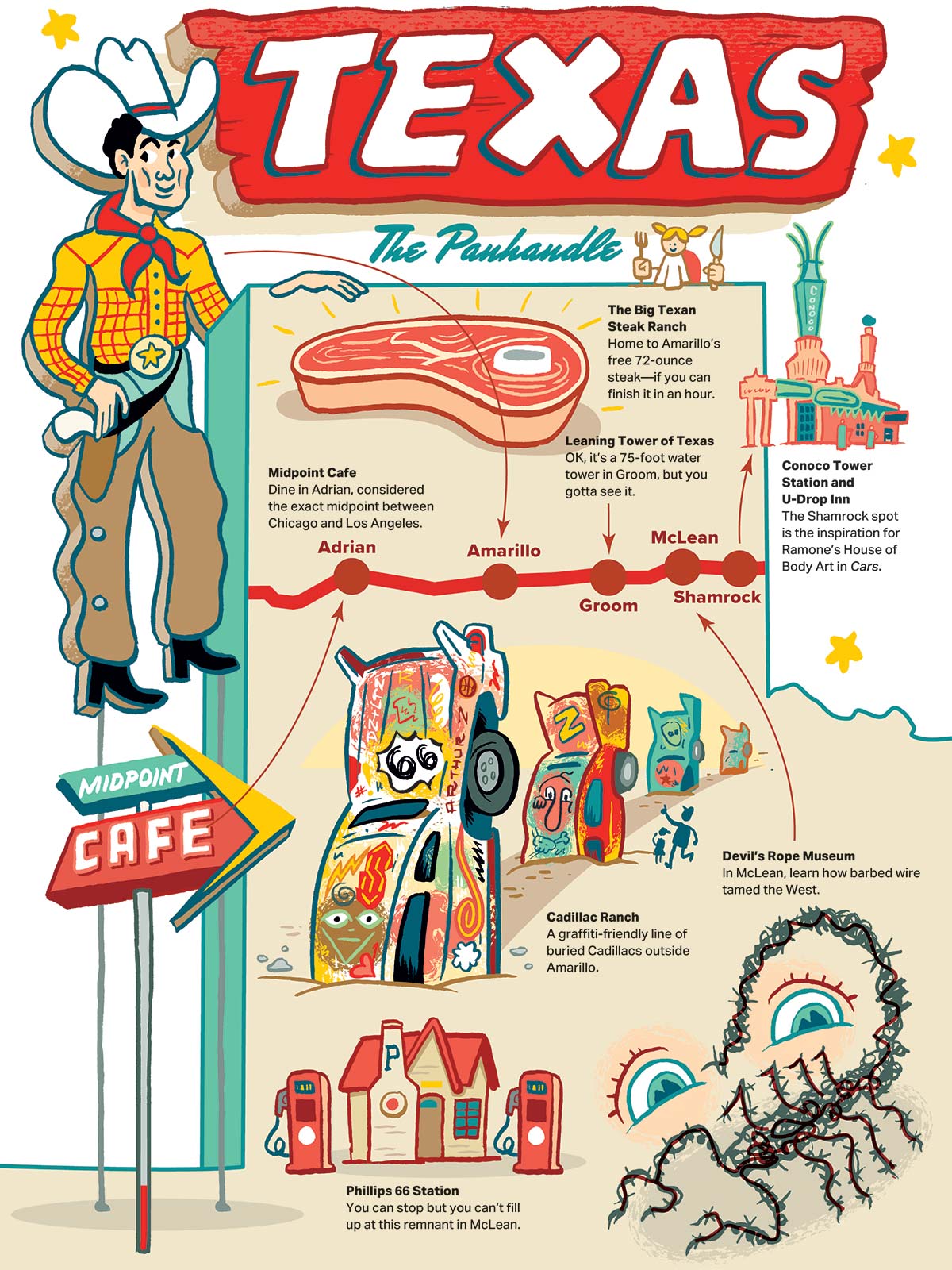
For travelers making the journey down Route 66, the café in Adrian, west of Amarillo, is a respite from the road and an important mile-marker—1,139 miles, to be exact—halfway between Chicago and Los Angeles. Across the Panhandle, 178 of those miles are in Texas.
“I could have 10 different countries in here at the same time,” Bradley says. “I’m grateful for all the business I get, but most of it comes from overseas—and that’s a blast.”
Dan Zettwoch
Blue Miller from England browses the café’s gift shop.
She has traveled the entirety of Route 66 nine times but says she’s “done thousands of shorter trips” and has written two books about the Mother Road.
“In Europe, Route 66 is kind of an encapsulation of the America that people grew up with—it’s the diners, it’s the cars, it’s the small towns,” she said. “And everybody’s looking for what they saw in the movies.”
Scenes like this play out every day along the remains of the most famous highway in the world. It originally traversed eight states along 2,448 miles, stretching from downtown Chicago to a pier at the Pacific Ocean in Santa Monica, California. Its official name is Route 66, and it’s been busier in 2026 than any year since it was decommissioned in 1985.
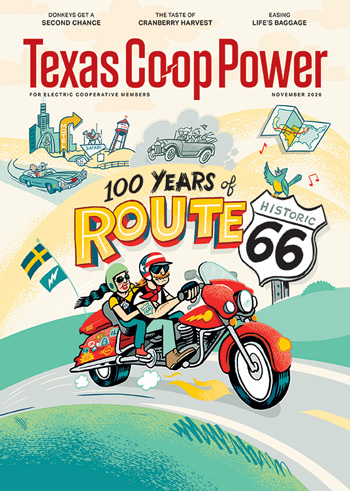
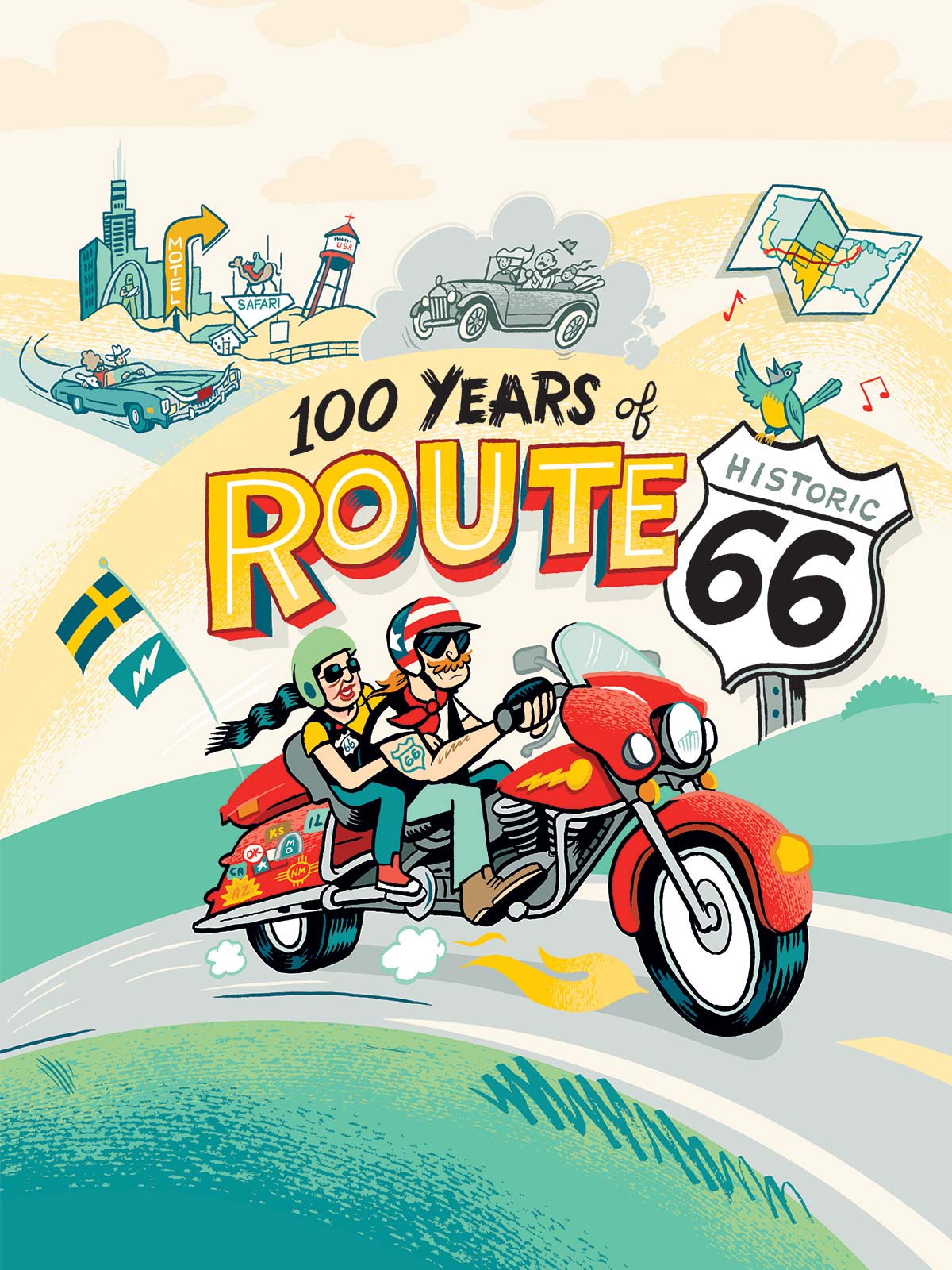
This year Route 66 fans from around the world have been looking for new kicks as the celebrated road turns 100 years old. Larger cities along the road, including Amarillo; Joliet, Illinois; and Springfield, Missouri, hosted big celebrations earlier in the year.
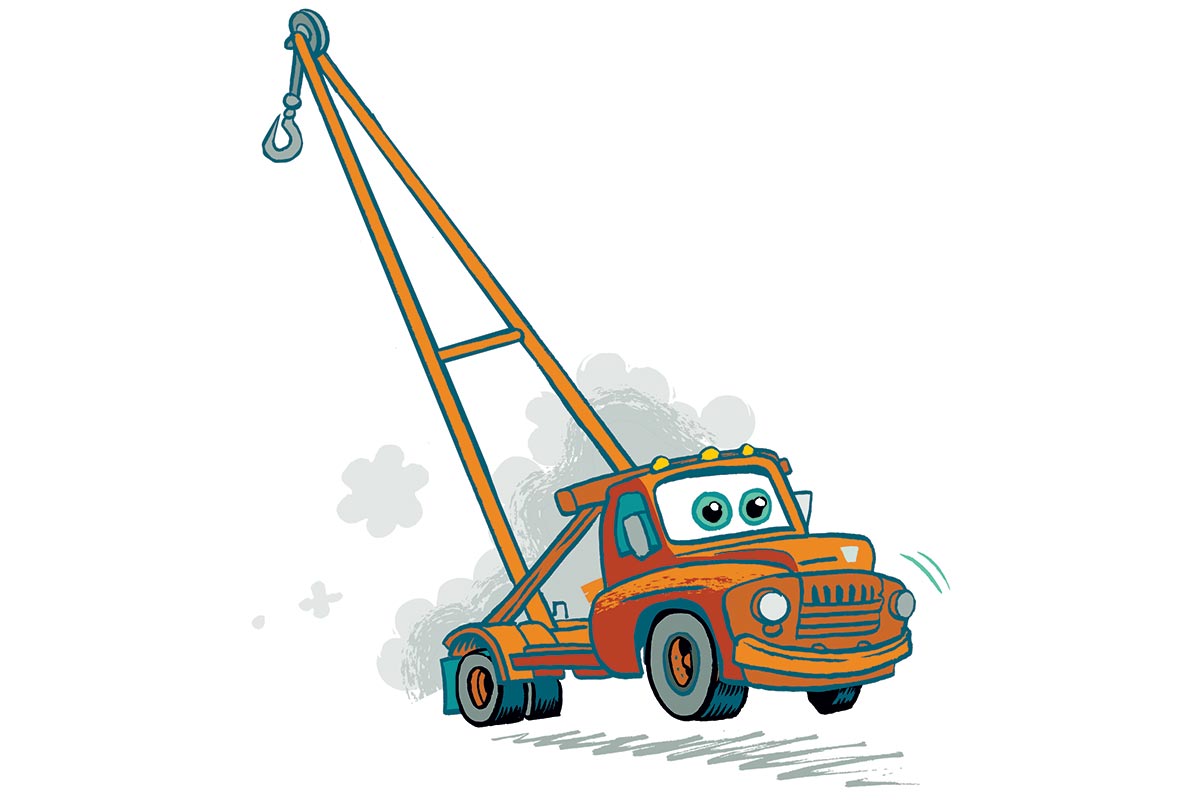
Galena, Kansas, is home to the inspiration for Tow Mater from Pixar’s Cars movies.
Dan Zettwoch
Springfield earned the honor of hosting the national kickoff event through a competitive process but also due to its status as the birthplace of Route 66. It was there in 1926 that a telegram was sent by John Woodruff, a Missouri businessman, to Washington, D.C., asking that the new road be named Route 66 (he claimed it sounded catchier than the alternative, Route 62). The idea for the road—officially commissioned November 11, 1926—didn’t originate in Missouri, but its iconic name did.
In anticipation of the centennial, communities all along the route spruced up their landmarks, planned events, relit neon and geared up for a major influx of visitors this year.
“I struggle to make a specific prediction, and part of that is because it’s really hard to track specific routes,” says Rhys Martin, president of the Oklahoma Route 66 Association, “but I would be surprised if traffic didn’t double just because of the attention and the people planning their trips.”
Gary Daggett, who manages the MidPoint gift shop and is president of the Route 66 Association of Texas, has seen a big increase in traffic at the shop.
“I’d say at least three times the normal, and our numbers are showing that in our guest book, sales, everything,” he says. “We’ve been very busy so far this year.”
Daggett first traveled Route 66 when he was 20 and says he wants to see the route preserved for future generations to enjoy. He and his wife planned to make their 30th trip this year, and he says they have friends who they now consider family all along the route.
“It’s the people that make Route 66,” he says. “A lot of people come to find that out. It’s one thing to see it, but once you stop at little restaurants like this and the mom-and-pop gift shops, you get to know the people.”
While Missouri can claim its birthplace, an Oklahoma man is known as the Father of Route 66. Cyrus Avery, a Tulsa realtor who owned a coal company, saw the need for a roadway from the Midwest to the West, connecting small towns and cities along the way. Appointed to the Joint Board on Interstate Highways in 1925, Avery managed to steer the route south from Illinois through Missouri, Kansas, Oklahoma, Texas, New Mexico, Arizona and California instead of a more northern route through Las Vegas.
He also helped launch the U.S. Highway 66 Association in 1927 to encourage use of the new roadway. In the beginning, the route joined various existing state roads, with many of them still gravel. Besides paving the highway, the association’s leaders also saw the need to encourage drivers to choose Route 66 over other transcontinental routes.
Dan Zettwoch
One of the first efforts to popularize the road was an epic footrace that followed Route 66 from its start in Santa Monica to Chicago, then on to New York City. The distance was 3,400 miles over just three months. It started with 275 runners, but 77 dropped out on the first day. Only 55 runners finished the race, with 20-year-old Andy Payne from Claremore, Oklahoma, the winner.
Through publicity like this, the nation learned of the new route, and traffic grew exponentially. Truckers favored its flat terrain, with elevations measured in hundreds of feet instead of thousands crossing the Rocky Mountains.
In the 1930s it became the road of migration as the Great Depression and the Dust Bowl displaced Midwesterners who sought a new life in California.
When World War II gripped the nation, it became a strategic route for moving men and materials to support the war effort. This led to a major effort to rebuild the roadway for Fort Leonard Wood, an Army base in Missouri.
The highway was no match for the heavy trucks supplying the base, so a four-lane “superhighway” was planned with a deep cut near Devils Elbow that became the deepest highway excavation in the nation to date, and the four-lane, divided highway was the first of its kind. Ironically, it was completed in September 1945, the same month the war ended.
Other improvements included a reroute around a series of dangerous hairpin curves in western Arizona dubbed the Sidewinder. This 8-mile section has 191 curves with no guardrails and 12% grades.
By the 1950s, Route 66 was the thruway for a nation in love with the automobile. Cabins, motels, restaurants, roadhouses and all manner of highway kitsch sprang up to lure motorists off the pavement.
The road came to represent everything Americans hold near and dear: freedom, adventure, nostalgia and small-town values. Those themes were shared in the 1960s TV series Route 66, which helped fuel today’s nostalgia for the road.
Championed in songs such as Bobby Troup’s (Get Your Kicks on) Route 66 and the Eagles’ Take It Easy, immortalized by John Steinbeck’s The Grapes of Wrath, and introduced to a new generation through Pixar’s Cars movies, the Mother Road continues to fascinate those who prefer life in the slow lane.
Folks like Dale and Lesley Finigan from Key West, Florida, who got in their RV and picked up the road in St. Louis. They stopped in Adrian for lunch.
“We both retired a couple of years ago, and it was on our bucket list of things to do,” Dale says.
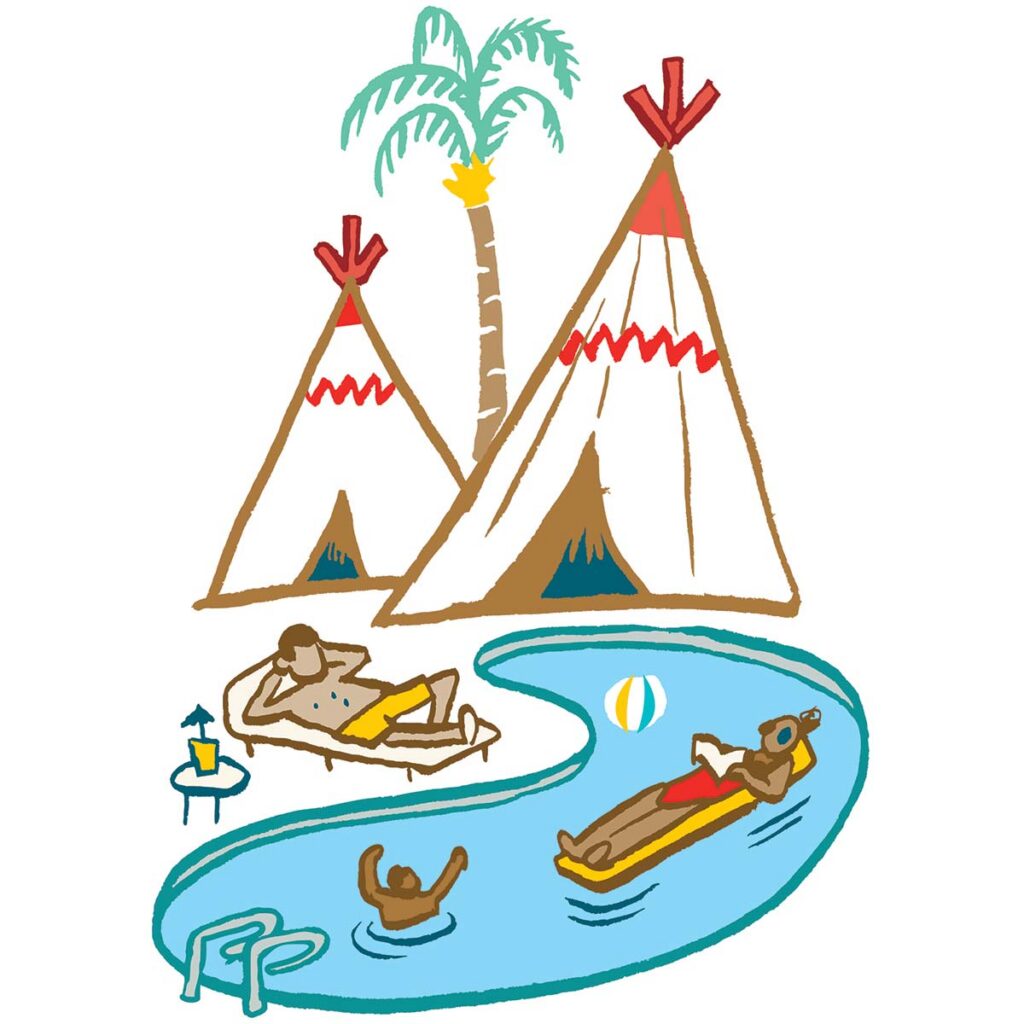
Wigwam Motel is a historic landmark in San Bernardino, California, featuring 19 individual 30-foot-tall tipi-shaped concrete and wood cabins.
Dan Zettwoch
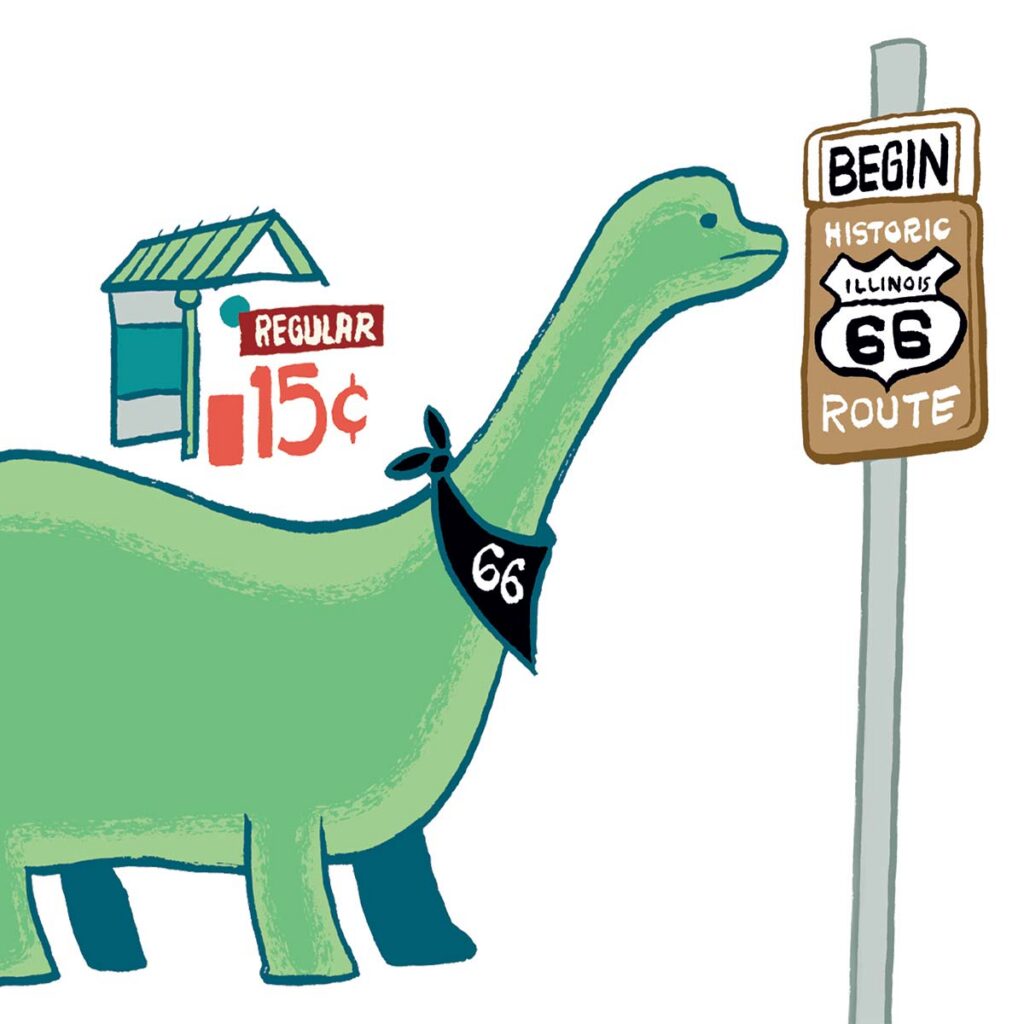
The Route 66 starting point was at Adams Street and Michigan Avenue in Chicago until the city declared it to be closer to Lake Michigan this summer. Gary’s Gay Parita is a replica of a 1930 Sinclair gas station near Paris Springs, Missouri.
Dan Zettwoch
The road’s demise came when the interstate highway system replaced it. Suddenly, small towns where Route 66 was the Main Street were bypassed, and many businesses couldn’t survive as traffic moved away.
Mother Nature and the wrecking ball have taken their toll, but if you know where to look, you can still find the remains of the old route. Newer businesses, like the Devil’s Rope Museum, have sprung from the ashes of those long-gone oases.
Travelers from California, Pennsylvania, Germany and Australia have signed the visitors log at the museum, which resides in what used to be a brassiere factory in McClean, east of Amarillo. Anita Day worked in the building when it was a factory and now works the front desk of the museum dedicated to barbed wire.
The museum’s exhibits explain the history and role of barbed wire in conquering the West and include a collection of barbed wire sculptures and plenty of Route 66 memorabilia, including old newspaper clippings, road and business signs, and a re-creation of a classic café.
“When it opened, I thought ‘Who would want to go?’ ” Day says. “Barbed wire is all you see along the highway. But here it is 35 years later.”