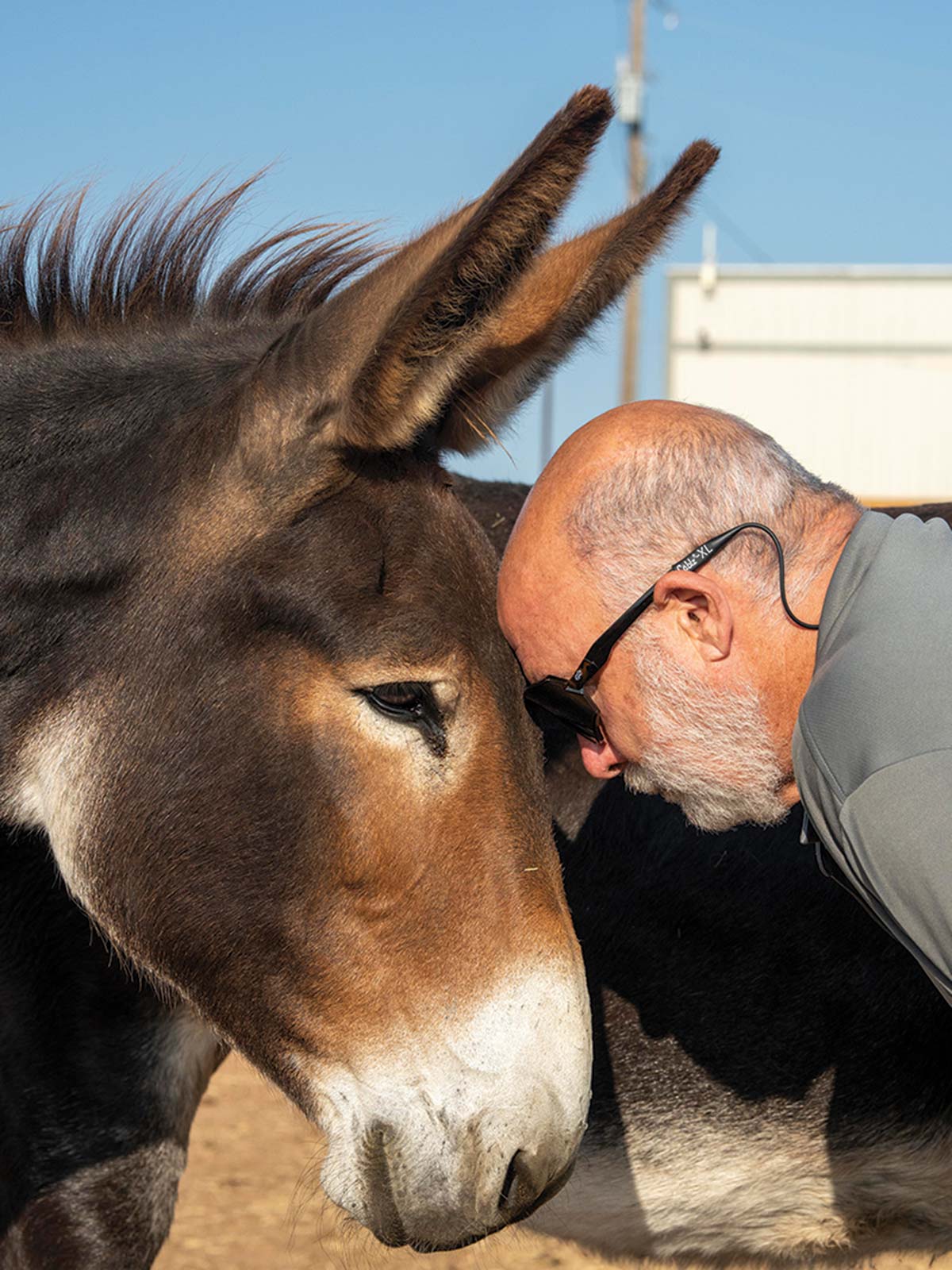
On a sunny West Texas afternoon, a 1-year-old donkey with gray-brown fur nuzzles my thigh and gently nips at my jeans.
“That’s how she says, ‘Come pet me please,’ ” says Kim Elger, chief operating officer at Peaceful Valley Donkey Rescue—one of the world’s largest.
With a little help from Elger and general manager Jacob Caniglia, Mexia stands upright, which might seem unremarkable. But months earlier, a family in the Rio Grande Valley contacted the rescue to surrender the foal, which they’d found alone in the wild with hind legs made essentially useless by a toxin or vitamin deficiency.
Bereft, Mexia tried for months to rejoin her donkey family, which roamed just across the fenceline from where Mexia’s human fosters cared for her. To donkeys, “family is everything,” says Elger, a member of Concho Valley Electric Cooperative.
Once she got to Peaceful Valley, Mexia walked with the help of staff and a system of slings and straps until the rescue’s chief veterinary tech had a game-changing idea. She customized a wheelchair intended for a Great Dane, adding bigger wheels and extenders to increase its height. “It’s kind of a Frankenstein-type situation,” Elger says.
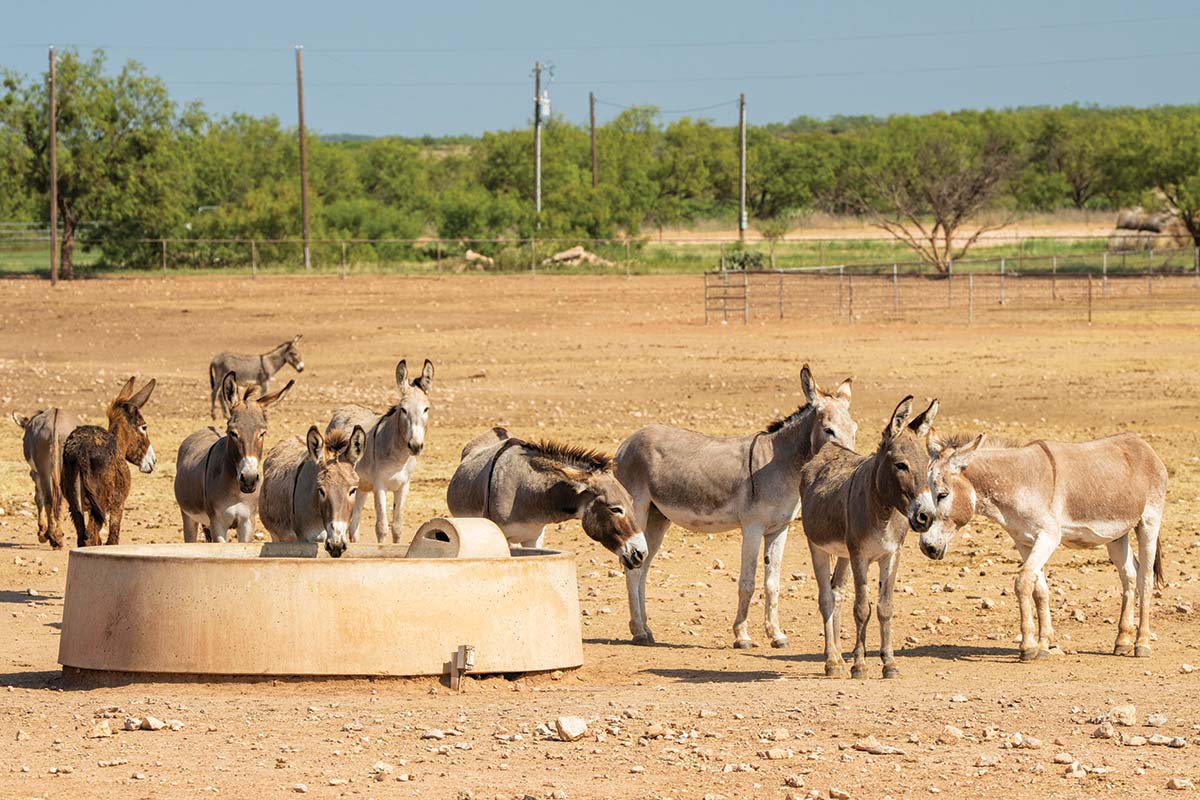
Donkeys in need of care get loving attention and 172 acres of ranchland at Peaceful Valley Donkey Rescue.
Anna Mazurek
The makeshift mobility aid enabled Mexia to rehabilitate her leg muscles to the extent that she hardly needs the device anymore, Caniglia says.
Stories as dramatic as Mexia’s are atypical of most arrivals, he says. More often staff, which includes ranch hands, trainers and vet techs, welcomes donkeys to the facility outside San Angelo in a state of general ill health. The 172-acre ranch—PVDR’s flagship facility and home to an average of 1,000 donkeys—serves as a stopover haven for abused, abandoned and neglected domestic donkeys. Once rescues are friendly toward humans and meet socialization milestones, including lifting each foot for a farrier, they graduate to one of Peaceful Valley’s adoption centers across the U.S. or find respite in sanctuaries in Louisiana, Oklahoma and Texas.
Patron saint of the punch line, donkeys get a second chance at Peaceful Valley—a reprieve from toiling under the burden of human misapprehensions and ignorance. “You’ve been told all your life that donkeys are stubborn,” Elger says. “You call someone a jackass when they mess up—they’re always the butt of the joke.” It’s a casual bit of cruelty and caricature the rescue works to dispel and amend.
Outcomes ordained by a lack of research (“donkeys are the forgotten equine,” Elger says), conflation of donkey and horse care techniques, and ignorance of the animals’ deep need for socialization and bonding converge at PVDR’s intake facility, where arrivals receive vaccines, deworming, hoof trimming and a test for infectious equine anemia.
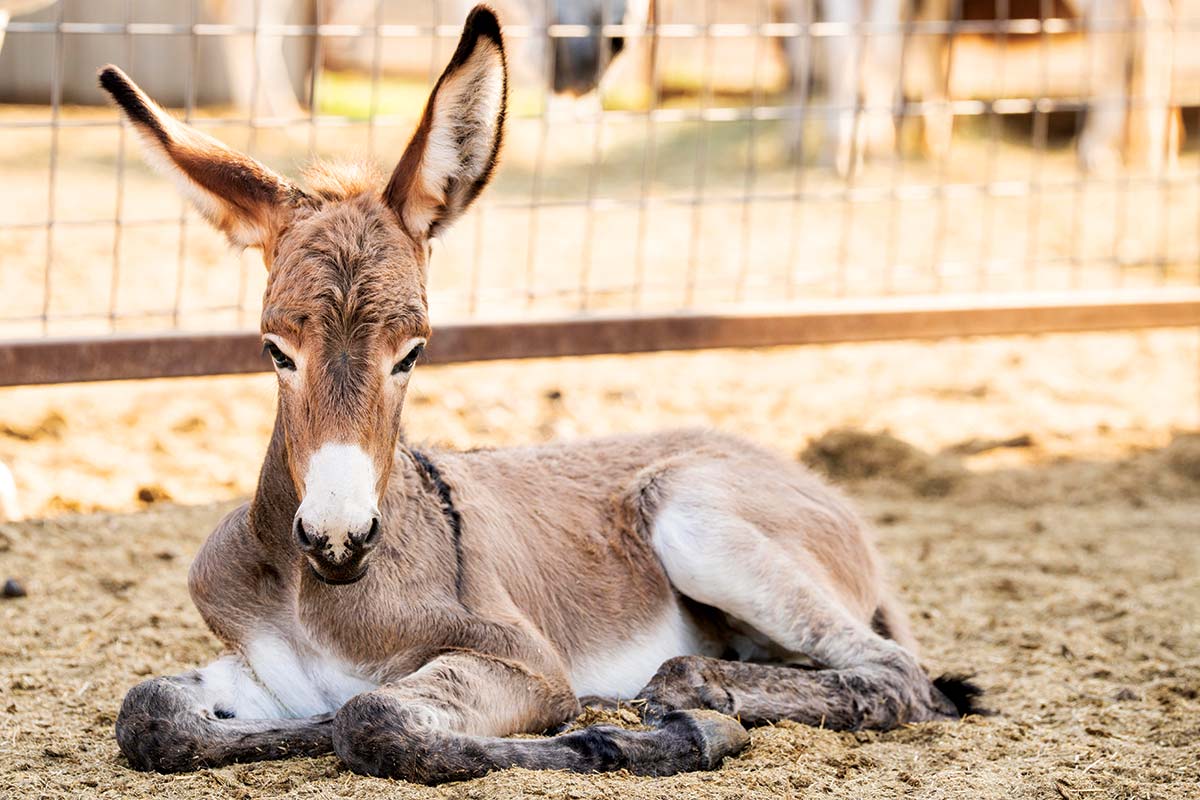
Misa rests in the nursery.
Anna Mazurek
“They all come in needing something from us,” Elger says. “There’s no shortage of mistreated, abused or just neglected donkeys.”
Peaceful Valley’s off-site sanctuaries, which operate akin to grazing leases, each provide homes for 20–150 donkeys. That’s also where the nonprofit rehomes burros (wild donkeys) from federal lands, where populations are closely managed.
“In the national parks, they’re not protected,” Caniglia says. “So we’re their best bet. And so we take them out of that wide-open space—freedom—and we bring them here. And then we turn them out onto another wide-open space. That is meaningful to me.”
Irrespective of a donkey’s trajectory toward adoption or sanctuary, a baseline metric applies. “It’s important that their first interaction at this facility, and then from every interaction on, is one of kindness,” Elger says.
That ethos is evident to visitors who tour the rescue, alighting from golf carts at various enclosures and bays that dot the sprawling former dairy. Unfamiliar humans are regarded cautiously and quietly while tour guides introduce individual donkeys and share some of their idiosyncrasies, medical challenges and backstories. My guide recognizes one resident by his bray before we even pull up to greet him.
Several donkeys indulge my attempts to pet them, including Shasta, who basks beneath a tree that shades her pen. I also meet Casey, who was found running loose in a Kaufman County neighborhood in North Texas with a rope around his neck and a painfully damaged, unsalvageable hoof.
Despite that ordeal, Casey swiftly allowed PVDR staff to help him. “Usually it takes them a while, donkeys that are new to us and intake, to trust us and see what we’re all about,” Elger says. As soon as Casey arrived, he jumped into a trailer and allowed a farrier he’d never seen to lift and examine his injured leg and hoof, Caniglia says.
“Equine amputations are not typically a thing that you’re going to do,” Elger says. “But Casey, like Mexia, was such a sweetheart. He had such a will to live.” After a two-month postoperative stint at a veterinary clinic and a few more weeks to heal and adjust, Casey scratched his ear with his new prosthetic, affirming his adaptation.
Casey and Mexia’s sweetness and grit aren’t uncommon among donkeys. Just widely unsung. And awe-inspiring.
“These animals are not what we’ve made them out to be,” Elger says. “I had no idea that donkeys were so loyal. I had no idea that they were so social. I had no idea that they were so resilient.
“To be able to go from some of these situations that they come out of, where you would never blame them for not ever trusting a single even human-shaped object ever again, and they can bring themselves to a place where they open themselves up, and they can develop trust again … that they can make that choice.”
Maybe that impulse is rooted in resilience. Or maybe it’s a bit of grace donkeys extend to us, again and again.
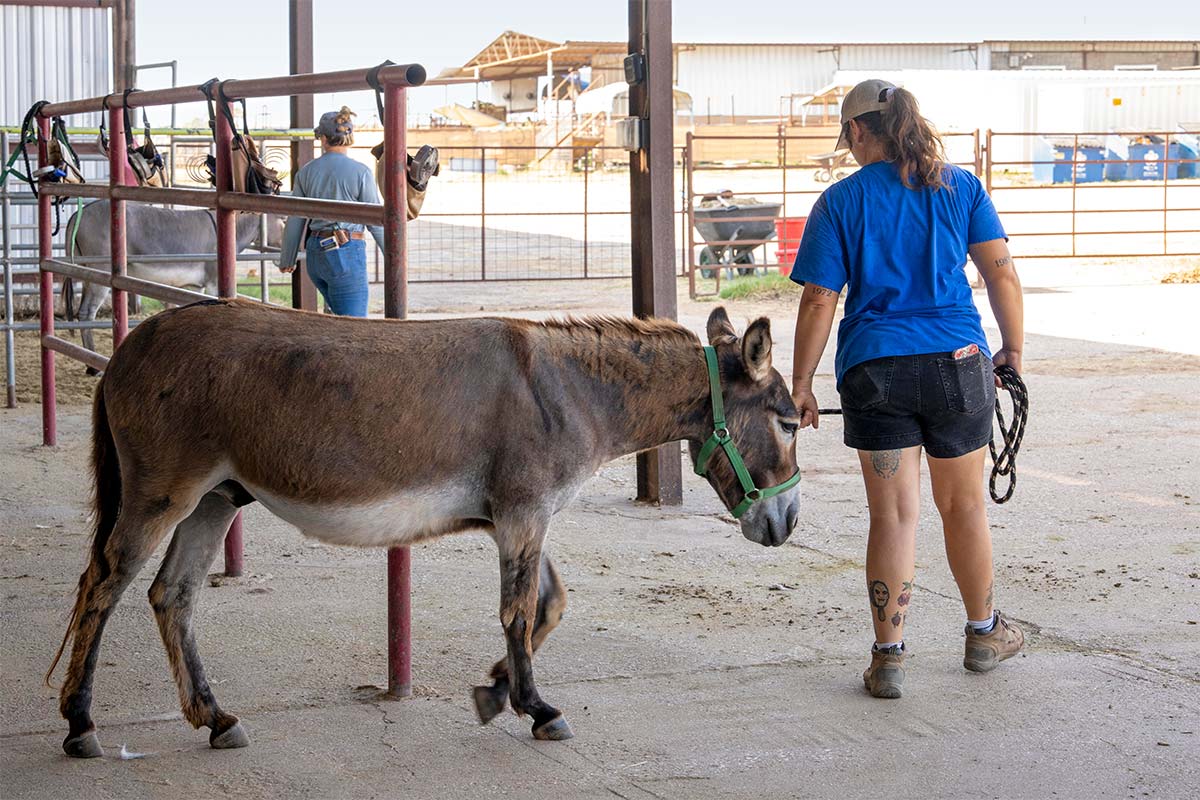
Trainer Reyna Gonzales works with Mater.
Anna Mazurek
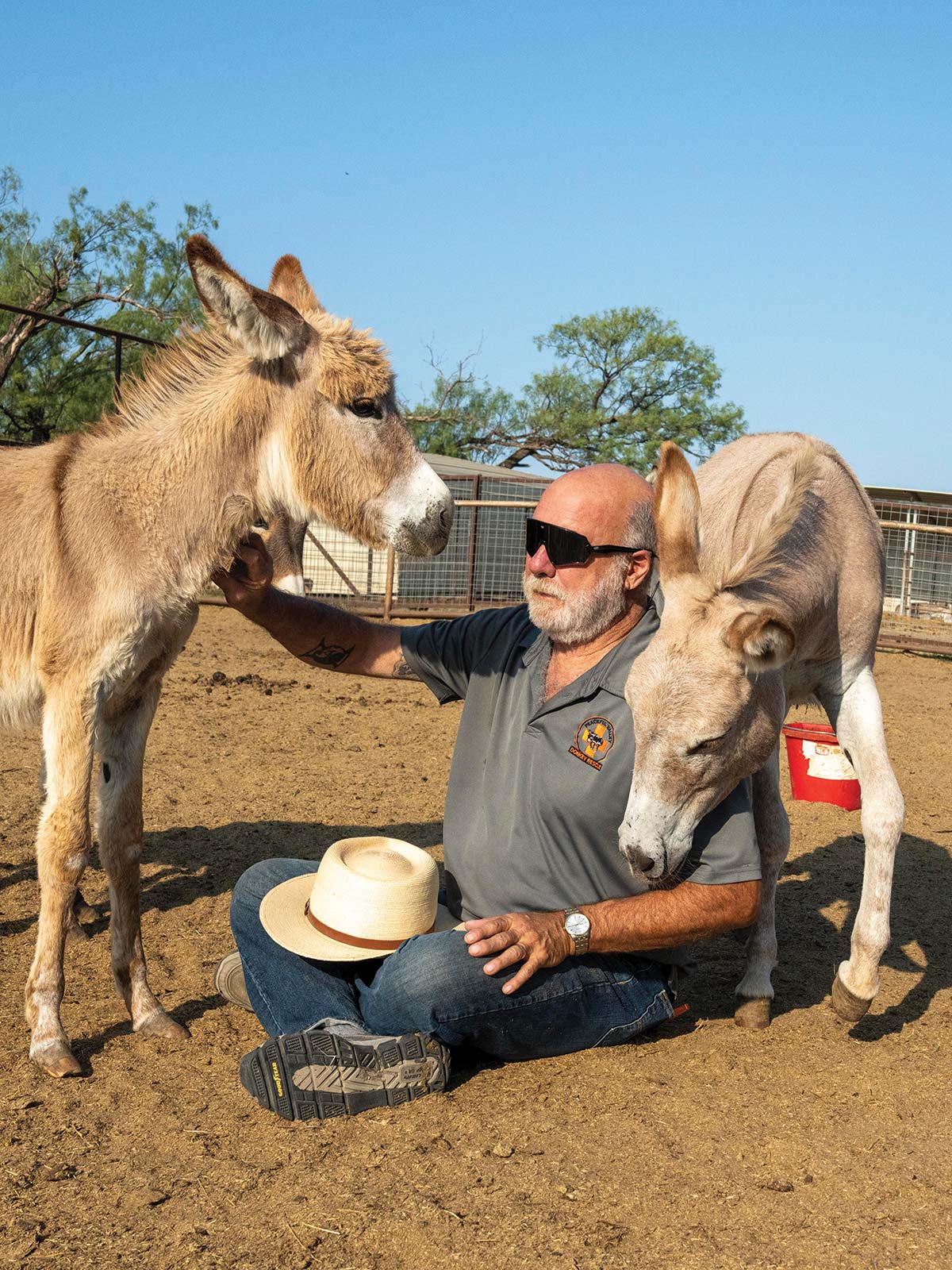
Meyers with his gentle friends at the donkey rescue.
Anna Mazurek