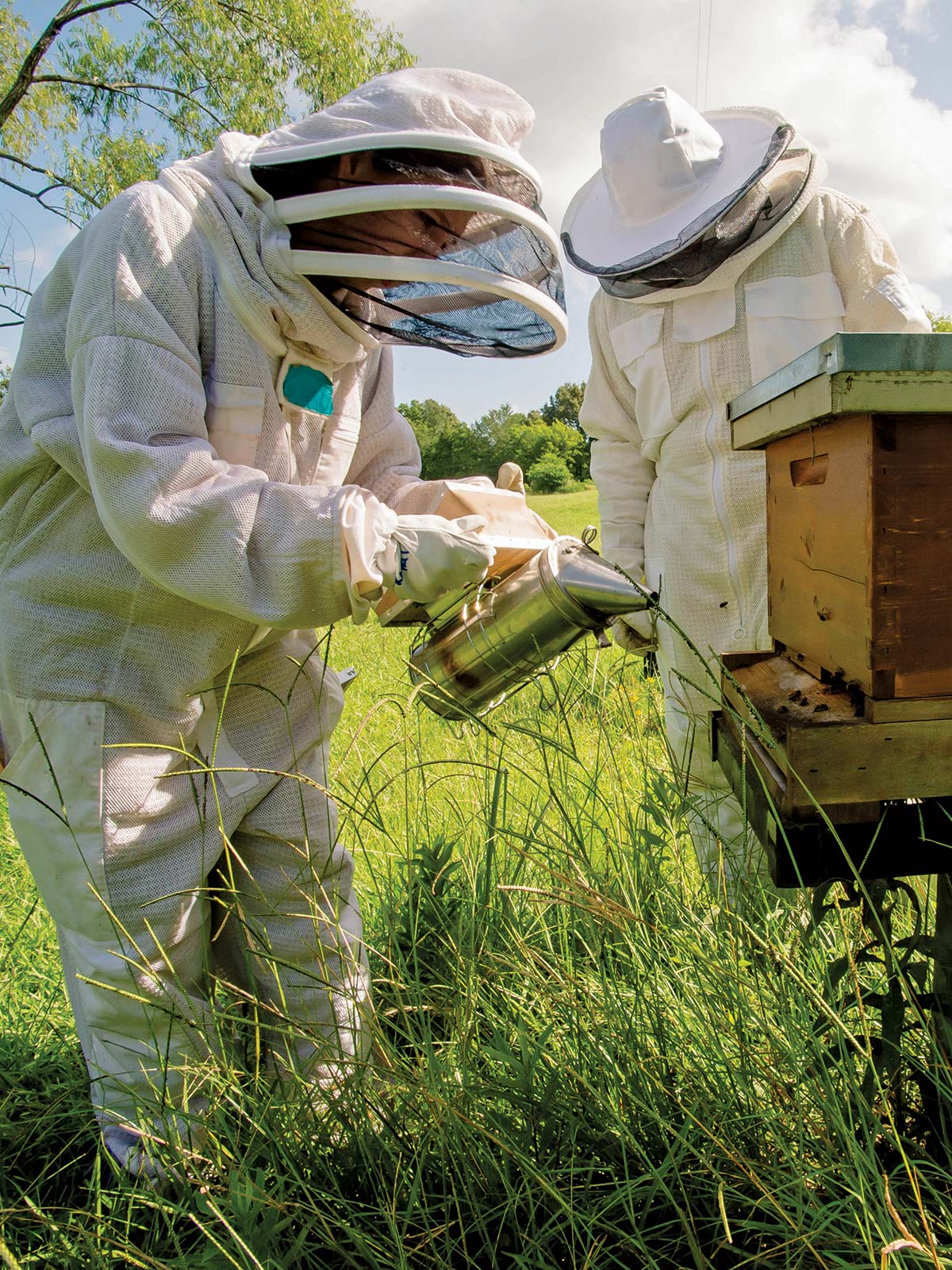
When a swarm of honeybees went looking for a new home in 2019, they landed on a problematic location: the loading dock of the Ozarka water bottling facility near Hawkins. What started as a nuisance for employees at the massive East Texas facility quickly became a safety issue.
A bee consultant suggested trapping and relocating the bees far away, but Cheryl Conaway, a quality manager at the plant, wanted to rehome the hive somewhere on the facility’s 3,000 pesticide-free acres. The bottling plant’s grounds provided endless possibilities.
Conaway, a former substitute teacher at Hawkins High School, was familiar with FFA and came up with a novel idea benefiting the bees, students and Ozarka. “I felt bees could be considered livestock and thought this would be a great project for our local students,” Conaway says.
She contacted Matt Byrd, director of the agriculture program at Hawkins Independent School District, and asked if he and his students would be interested in the challenge of relocating and caring for the pesky pollinators.
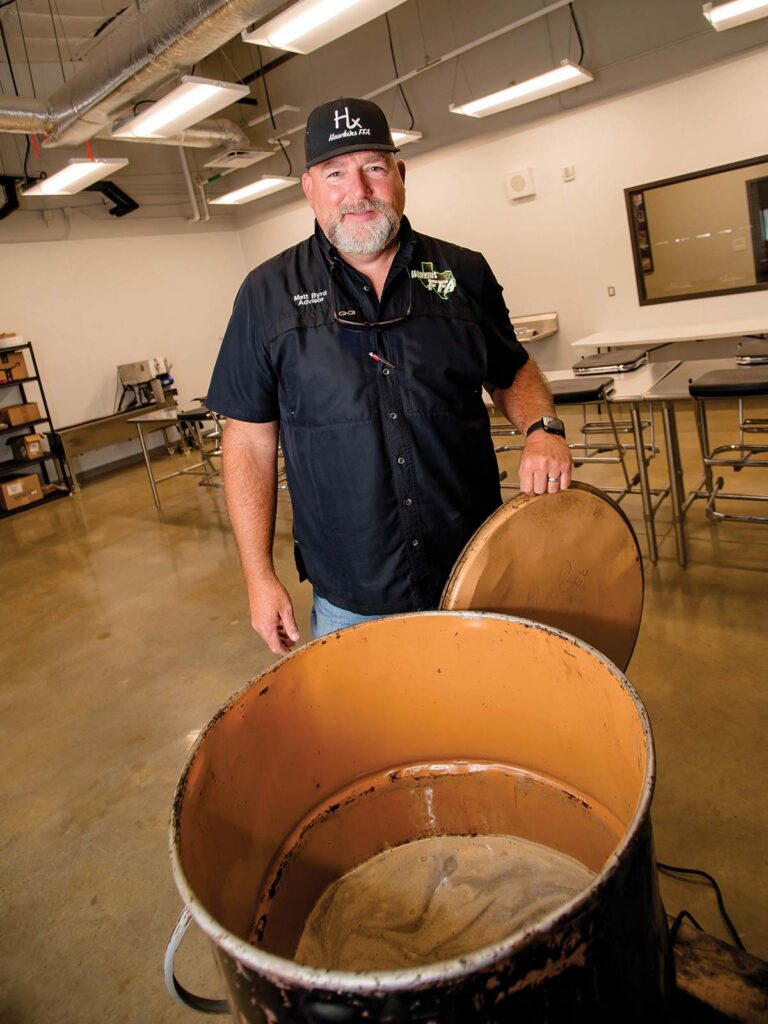
Matt Byrd, director of the Hawkins ag program, with a vat of honey in the school’s state-of-the-art facility.
Tiffany Hofeldt
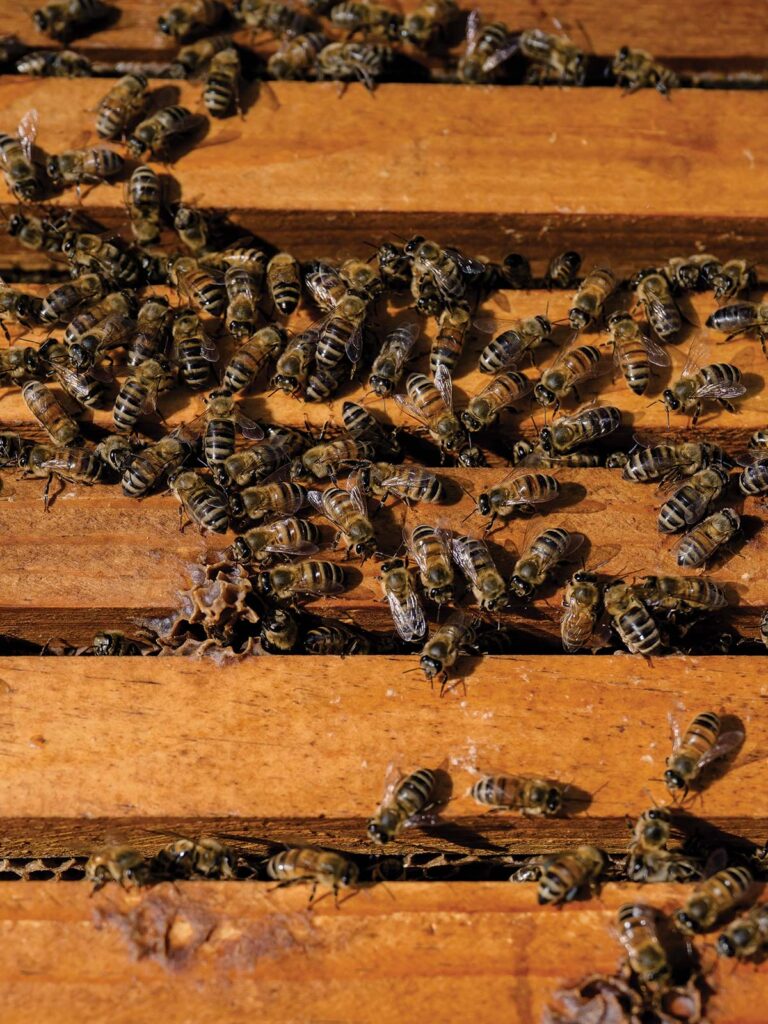
Bees outside the hive.
Tiffany Hofeldt
Although he was then clueless about bees, hives and honey production, Byrd’s interest was piqued. “It was certainly something new and different,” he says. “I had no experience, but I did know the importance of bees and thought it would be a unique opportunity. And it sounded like a good partnership.”
Once the decision was made, Byrd recruited four FFA members to become beekeepers: Brook Goddard, Jessica Henneous, Rachel Parish and Mackenzie Rutherford. Excited with their new project, the girls worked diligently and daily—even through summer. They took required Ozarka courses to gain contractor status at the plant, and a bee expert taught them how to set up swarm traps and how to build hives and do honey extraction, production and bottling.
Eventually the swarm was trapped and transferred to a former 50-acre hayfield landscaped with wildflowers. The girls placed their hand-built hives among the flowery fields. “It was a wild idea, but it worked,” Byrd says.
It not only worked but was highly successful. Initially, the girls’ dedication paid off handsomely when they entered their apiculture project, complete with the hives they constructed, in the Houston Livestock Show in 2019. Among nearly 500 entries, it won the reserve championship in showmanship.
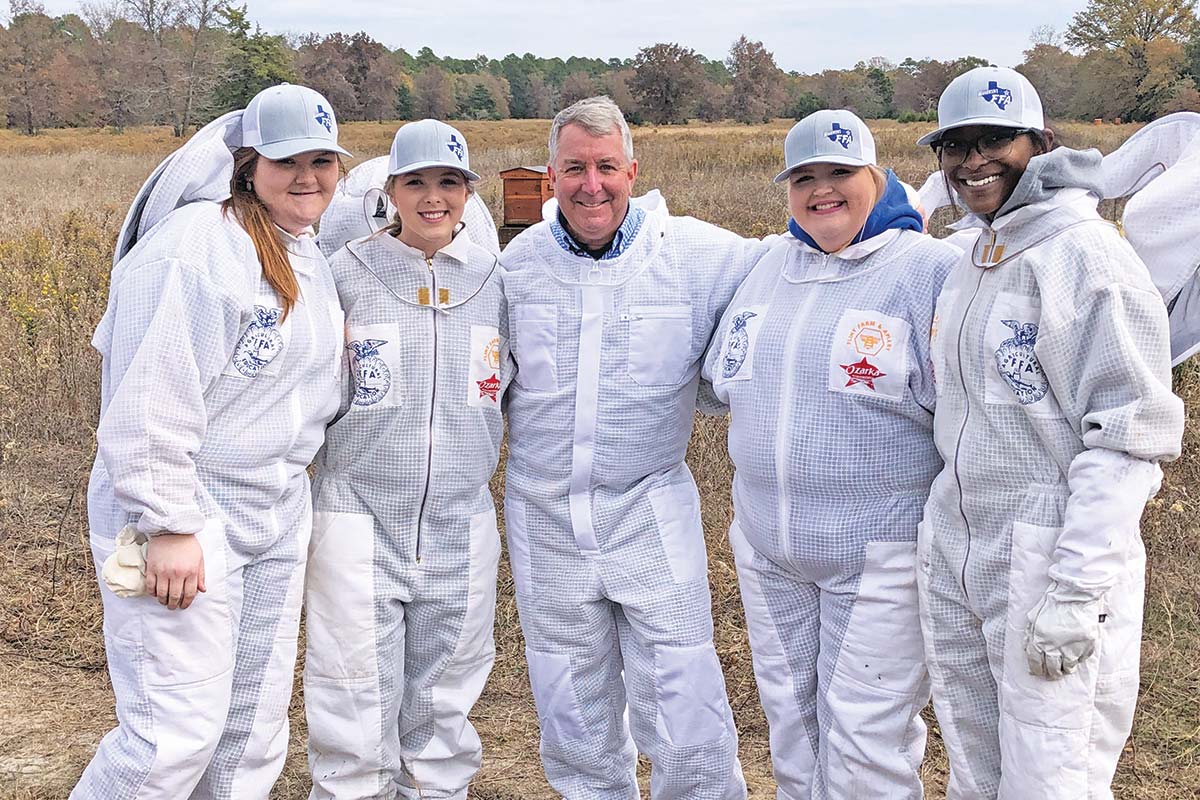
Kerry Sanders of The Today Show, center, stands with the original Hawkins beekeepers, from left, Brook Goddard, Rachel Parish, Jessica Henneous and Mackenzie Rutherford.
Courtesy Hawkins FFA
The program’s success got even sweeter as their apiary caught the attention of other ag program directors. Demand was so high that Byrd helped write the first beekeeping and honey production curriculum for the Texas Education Agency. After the program was assessed and approved, ag programs throughout Texas began offering beekeeping.
All the while, the girls were busy harvesting, processing and bottling their honey for retail sale, labeled under the name 4G—as in four girls. Locals heard about the honey, and sales took off. Ozarka offered to market 4G Honey, and word got out—way out.
NBC’s The Today Show sent a TV crew to Hawkins to interview participants. The segment ended with Conaway, on behalf of Nestlé, then Ozarka’s parent company, presenting each of the girls with a $5,000 college scholarship and an additional $10,000 grant to fund the school’s program.
Demand for 4G Honey suddenly surged. “We immediately started getting calls and orders from all over the country, and it overwhelmed staff,” Byrd says. “For three days solid we boxed and mailed honey to 42 states.”
In 2021, Hawkins ISD voters approved an $11 million-plus bond package that included construction funding for a multimillion-dollar ag facility complete with a food-grade, state-of-the-art lab for processing, filtering and bottling 4G Honey. Every year, proceeds not only are poured back into apiculture but fund scholarships for the “bee kids,” as Byrd calls them.
The four girls have long since graduated high school, but their apiaries continue to be successful, seven years later. And Rutherford used her beekeeping knowledge to establish hives at her family’s farm, which increased watermelon production.
“When it all began, we had no idea anyone would know or care what we were doing, and how it would blow up,” Byrd says. “The program has benefited this school district and others, Texas students, the community, and agriculture too.”
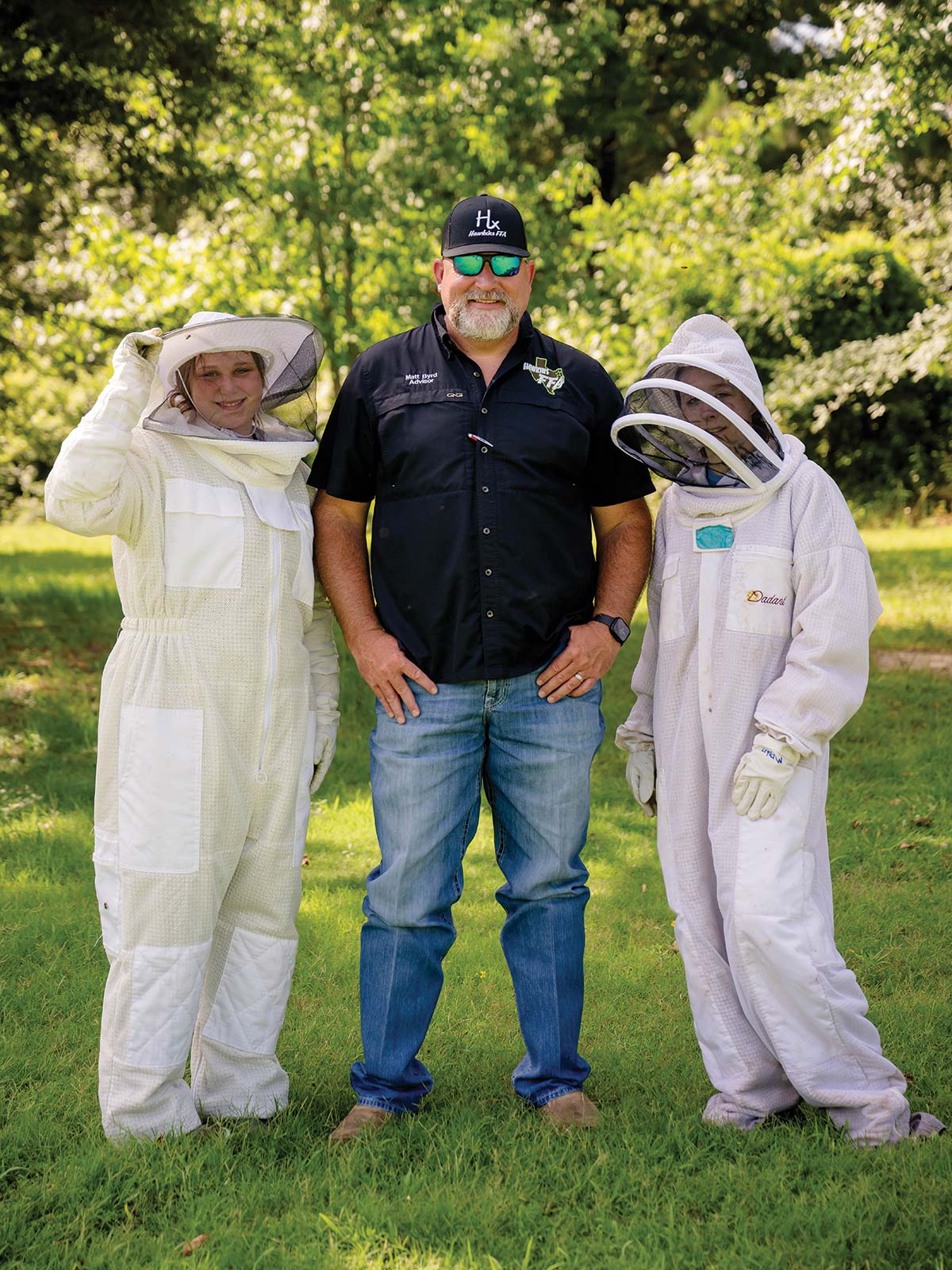
Left to right: Kennedy, Byrd and Berry. Berry graduated in the spring, and Kennedy is a senior.
Tiffany Hofeldt
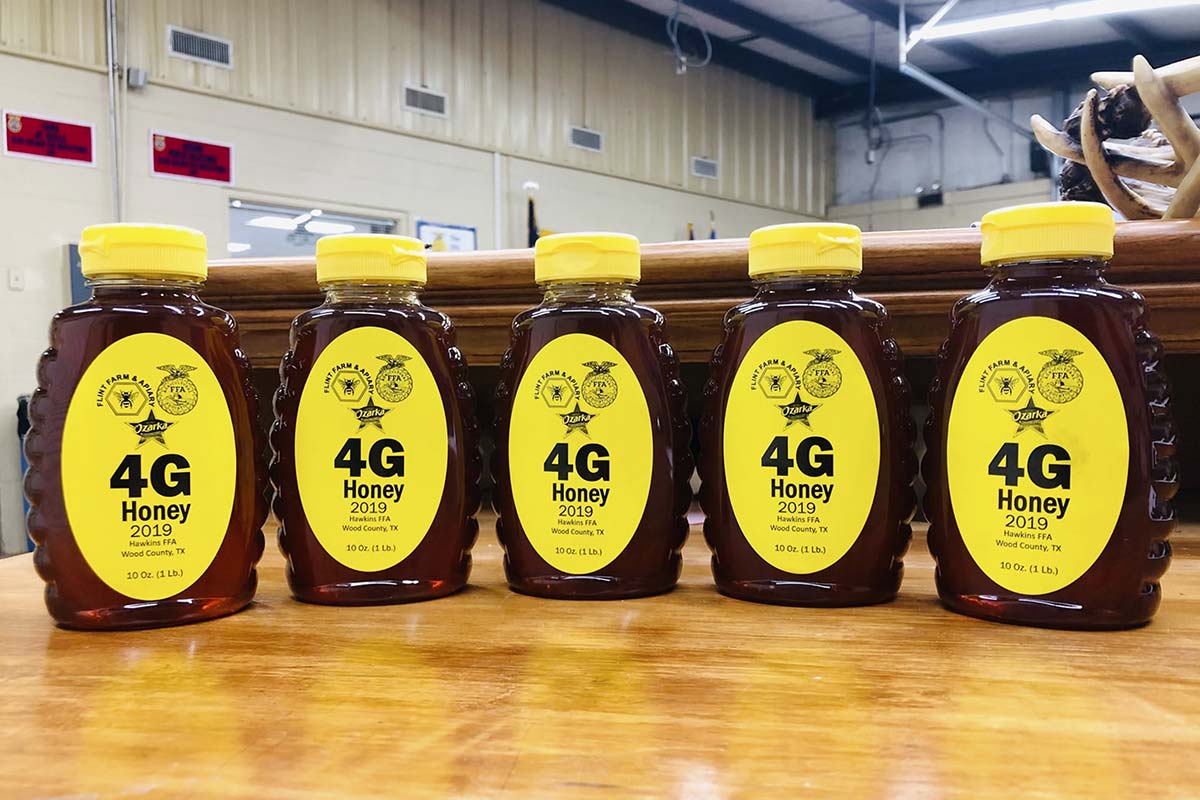
4G honey, named for the four girls who started the business, bottled and ready for sale.
Tiffany Hofeldt



Get the Newsletters
The best of Texas delivered to your inbox every month