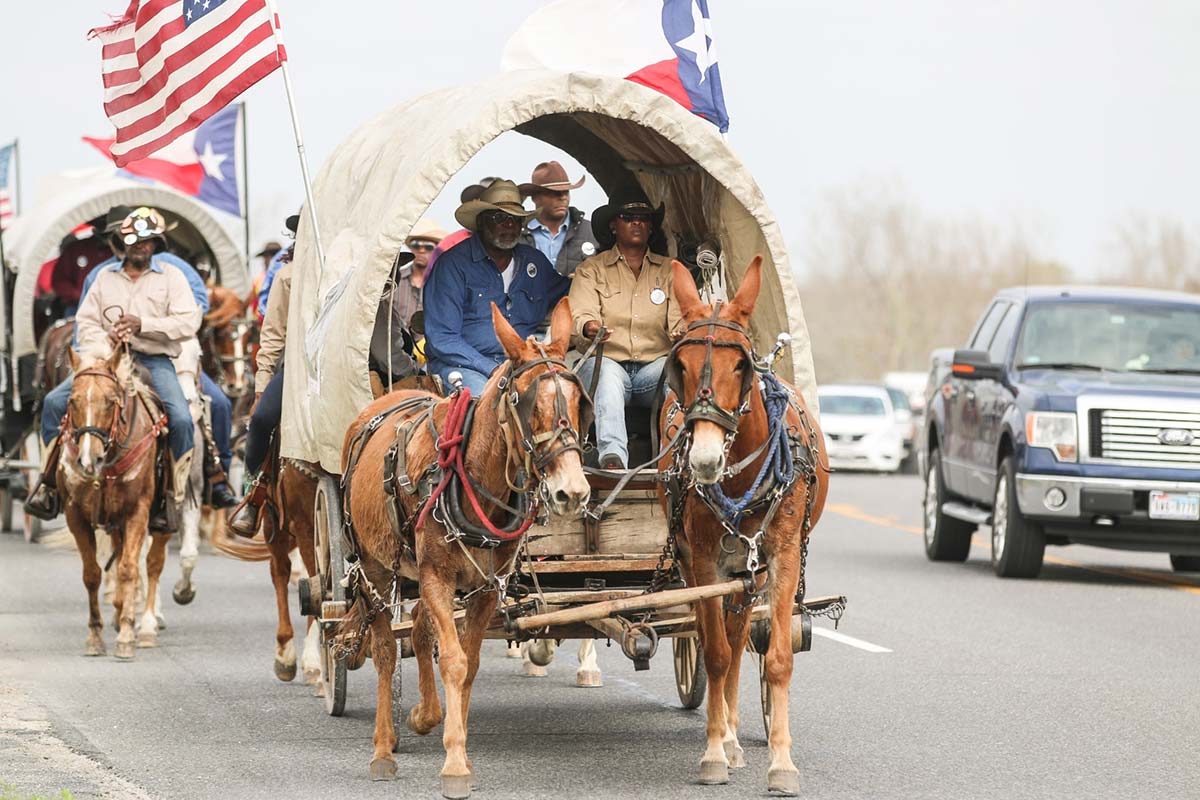
Before modern roads, trails crisscrossed the ever-changing terrain of Texas, and horses and mules were the only way to travel through the state’s unpredictable weather. As demand for beef grew in the eastern U.S., Texans undertook long, grueling cattle drives to deliver their livestock to railroad hubs.
Today, thousands of riders journey hundreds of miles on horseback—or in wagons pulled by horses or mules—to the annual Houston Livestock Show and Rodeo. Trail riding isn’t just a throwback to Texas history. It’s a way to build community and pass down traditions to future generations.
Northeastern Trail Ride
For Anthony Bruno, trail boss of the Northeastern Trail Ride, trail riding is a way to connect with his ancestors. Founded in 1982, the group recognizes the rich African American influence on Western heritage.
“On our trip, we teach so much history that it becomes a spiritual journey because you get to really feel your ancestors travel the way they had to travel and the sacrifice they made for us to be who we are, where we are today,” Bruno said.
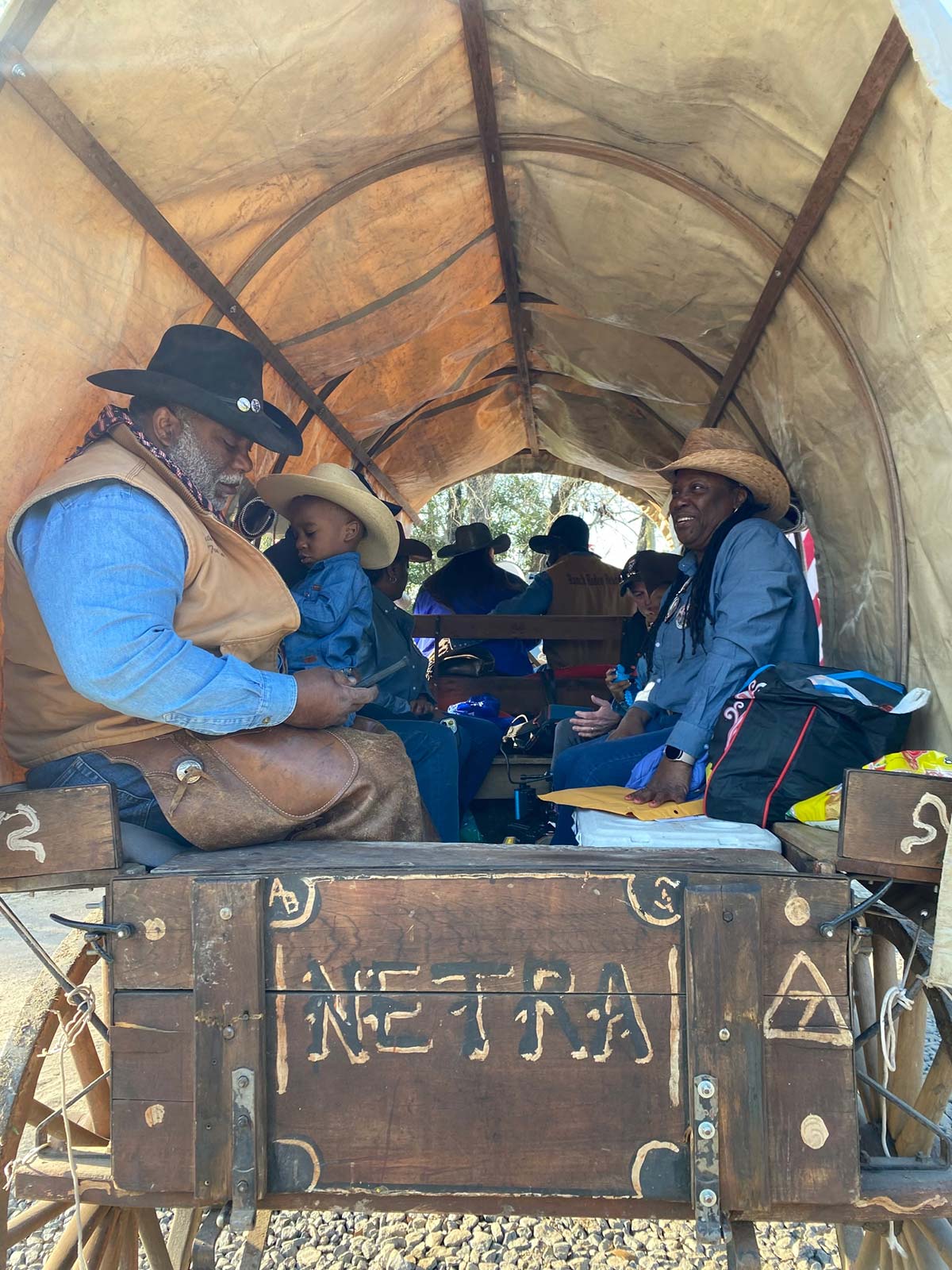
The Northeastern Trail Ride carries on the tradition of Black cowboys and Buffalo Soldiers by riding on horseback and in wagons.
Photo Courtesy Antonya and Anthony Bruno
His great-grandfather, who was enslaved, was a stable hand. “On both sides of my family, there were farmers, ranchers, cowboys and field hands,” he said.
Following the Civil War, Black cowboys became an integral part of the fabric of the American West. They sought a better life, riding cattle trails and breaking horses. Some estimates suggest that 1 in 4 cowboys of that era were Black.
Being around the horses makes Bruno feel grounded and in touch with God. “It’s just something about completing that process of taking a wild animal and turning it into a usable thing that God designed him for,” he said.
Nat Love was an enslaved man who became a prominent cattle-trail rider. He was also an exceptional sharpshooter and storyteller. Bose Ikard, a legend on the Goodnight-Loving Trail, inspired the character Joshua Deets in Lonesome Dove.
Western heritage wouldn’t be what it is today without Black cowboys.
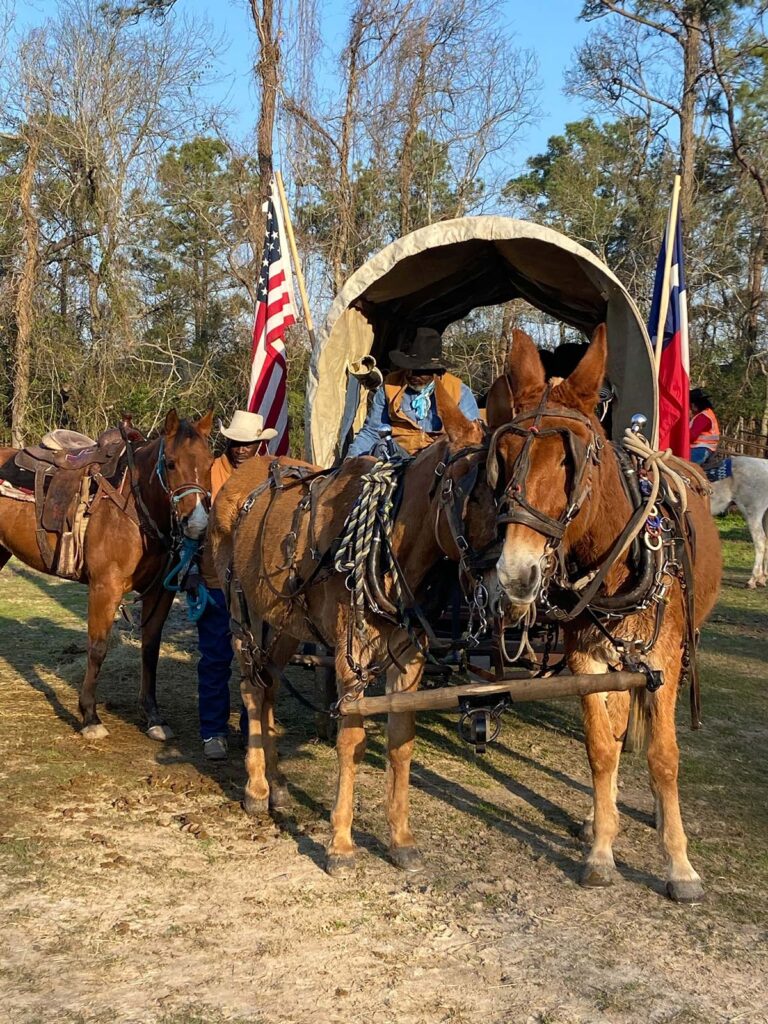
Anthony Bruno has been trail riding for 50 years. He says being on a horse makes him feel connected to God.
Photo Courtesy Antonya and Anthony Bruno
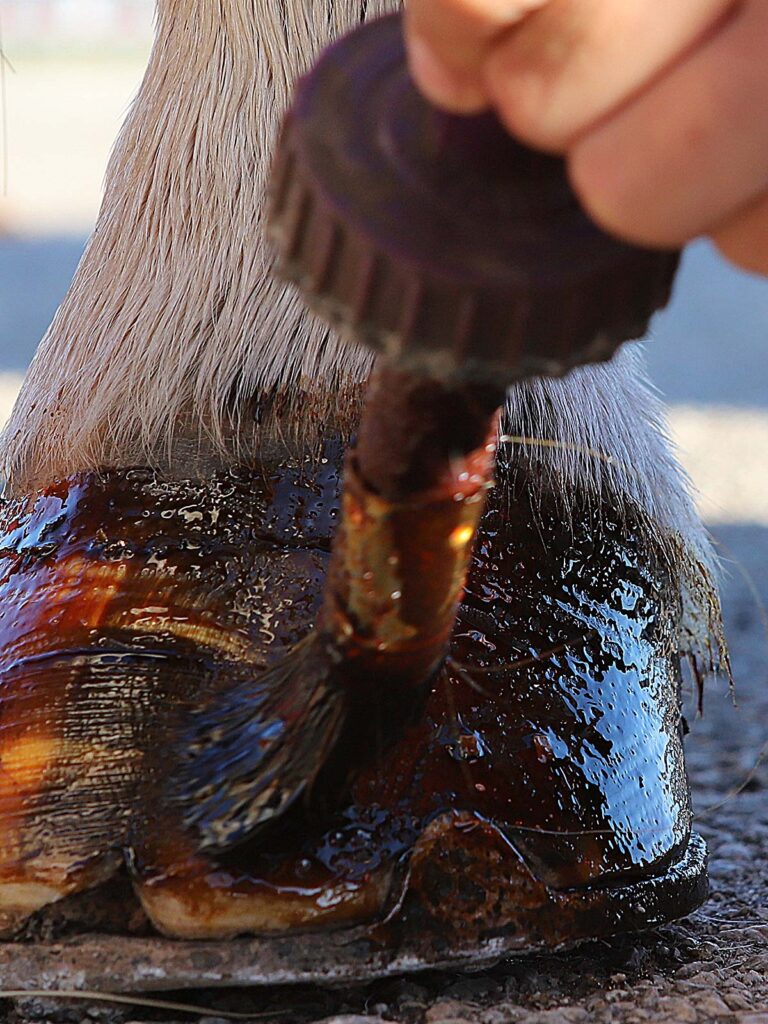
Almost like a pedicure, a rider applies hoof polish during an overnight stop. The polish protects the hooves and enhances a horse’s appearance.
Photo Courtesy Sam Houston EC
“I have a team of scouts—they’re the Buffalo Soldiers of today,” Bruno said. “They’re the guys who are the barriers between us and the traffic and the danger.”
The Buffalo Soldiers were U.S. Army regiments comprised of Black men who served on the American frontier during the 19th century. Known for their bravery and determination, they escorted wagon trains across the frontier, forming a defensive circle around the group at night.
Now, the Northeastern Trail Ride circles the wagons symbolically to honor the Buffalo Soldiers. Instead of defending against wolves and other attacks, Bruno said their ring of defense, accompanied by prayer, serves “to protect our families against illiteracy, alcoholism, drug abuse and things like that.”
The Northeastern Trail Ride begins in the Cheek community, a few miles southwest of Beaumont, and travels 110 miles to the Houston Livestock Show and Rodeo through rain, sleet or snow. No matter the weather conditions—barring lightning—the group rides 15–20 miles a day for seven days. They use the ride as an opportunity to preserve their Creole culture, as many of the riders have roots in Louisiana. The group cooks a meal and listens to music to celebrate reaching their trail-ride goal each day. Bruno will also host up-and-coming zydeco bands or DJs.
When off the trail, the group aspires to keep young people involved in agriculture by awarding scholarships. “My dad was a stickler for education,” Bruno said. “He wanted to make sure that we kept kids in agribusiness because without agribusiness, we don’t eat.”
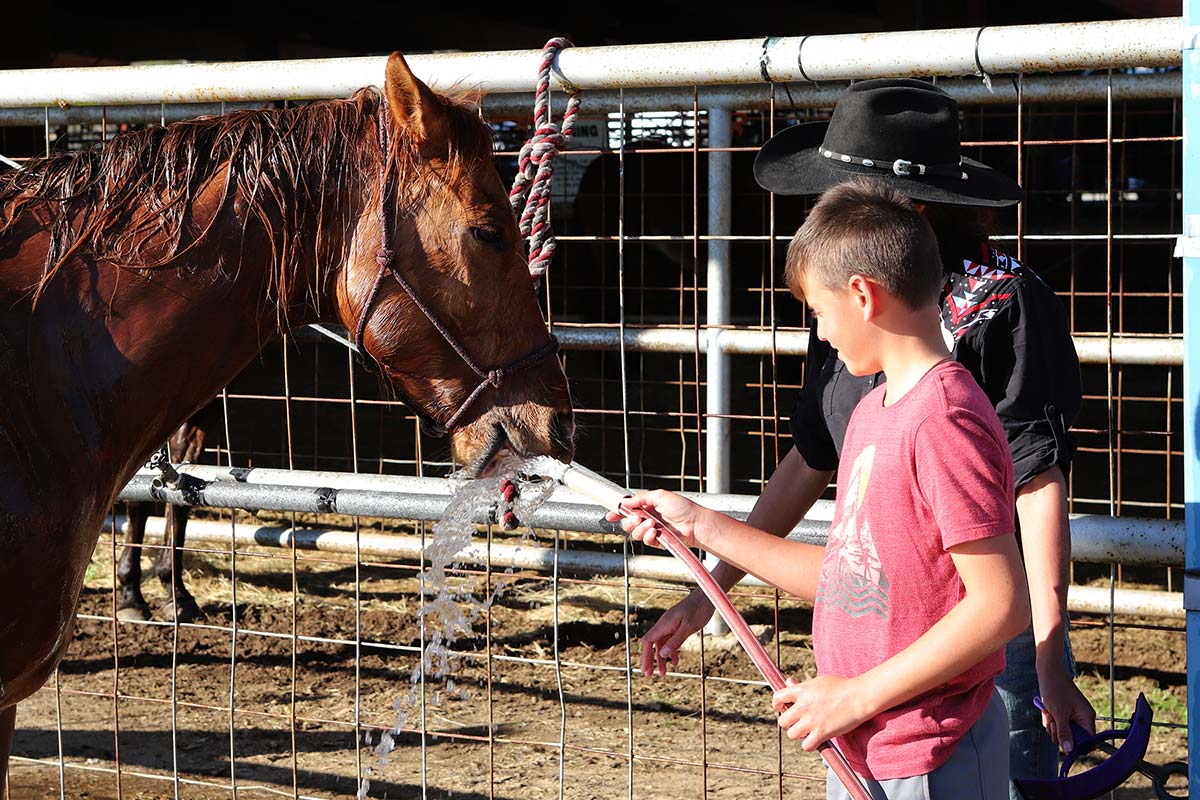
A boy waters a horse following a day of trail riding. Riders must water, feed and care for the horses to make the journey.
Photo Courtesy Sam Houston EC
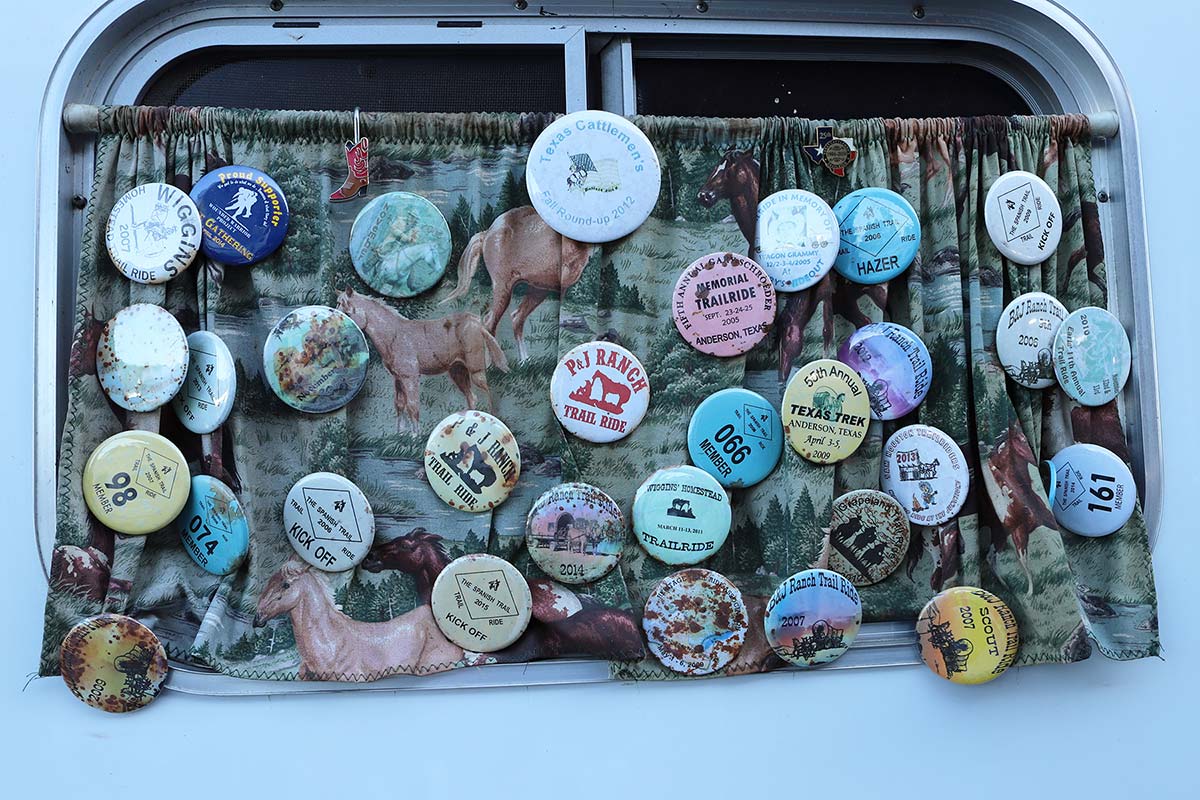
Trail riders participate in more than the Houston Livestock Show and Rodeo trail ride. Many collect buttons to show their participation in other rides.
Photo Courtesy Sam Houston EC
Bruno served in the U.S. Army, and his military service proves invaluable in getting everyone to Houston efficiently and safely each year.
“From the outside, some people might balk at the idea of riding in a wagon or on horseback for days at a time,” Bruno said. “We only do it just because we love to do it. Our ancestors did it because they had to. We want to honor that—honor that history and that sacrifice and that tenacity of our ancestors every time we do this.”
Spanish Trail Ride
For Larry Cantrell, trail boss of the Spanish Trail Ride, the journey from Shepherd to the Houston Livestock Show and Rodeo is a family tradition.
“My dad started riding with the Spanish Trail in 1972-ish, and then he took over the ride in 1978 and became trail boss,” Cantrell said. “So, it’s always been in our family.”
Cantrell’s father, Joe, passed away in 2022, just two weeks before their annual ride. A year later, the trail riders honored Joe’s wishes by scattering his ashes along the trail. “We scattered the ashes from the time we left Shepherd all the way down through Houston and then to Memorial Park,” Cantrell said. The park is where Joe spent one of his coldest nights, in 1973, in the back of a two-horse trailer in a sleeping bag.
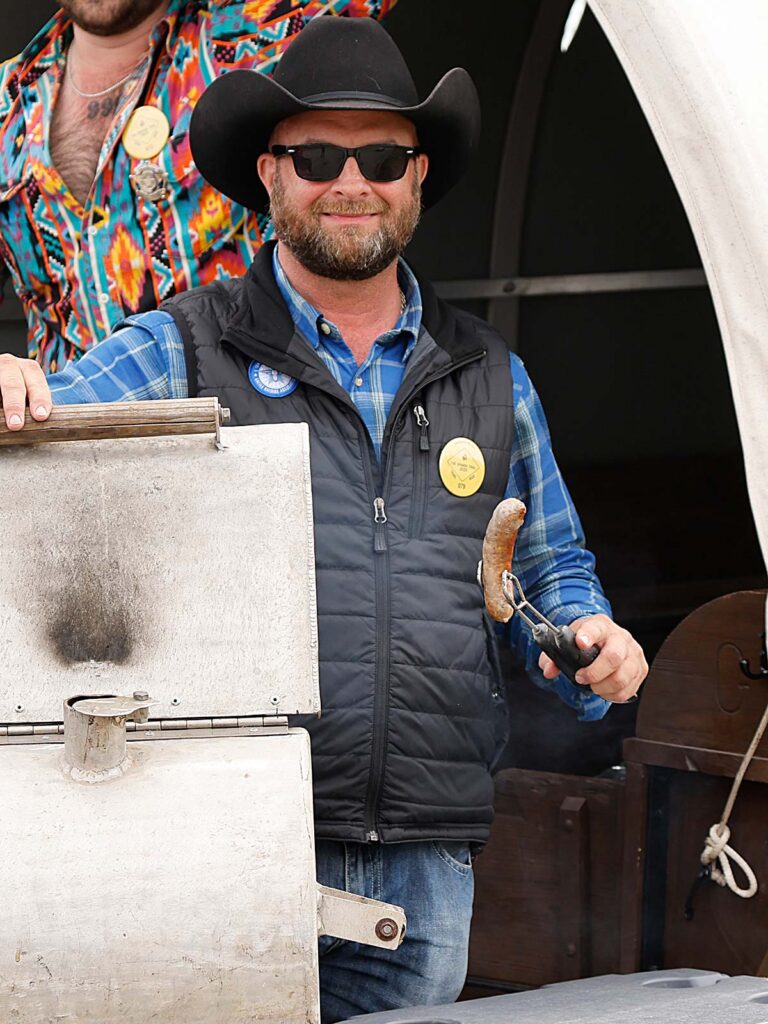
Modern conveniences such as a mobile charcoal grill allow for the Spanish Trail riders to enjoy cooked foods throughout the day.
Photo Courtesy Sam Houston EC
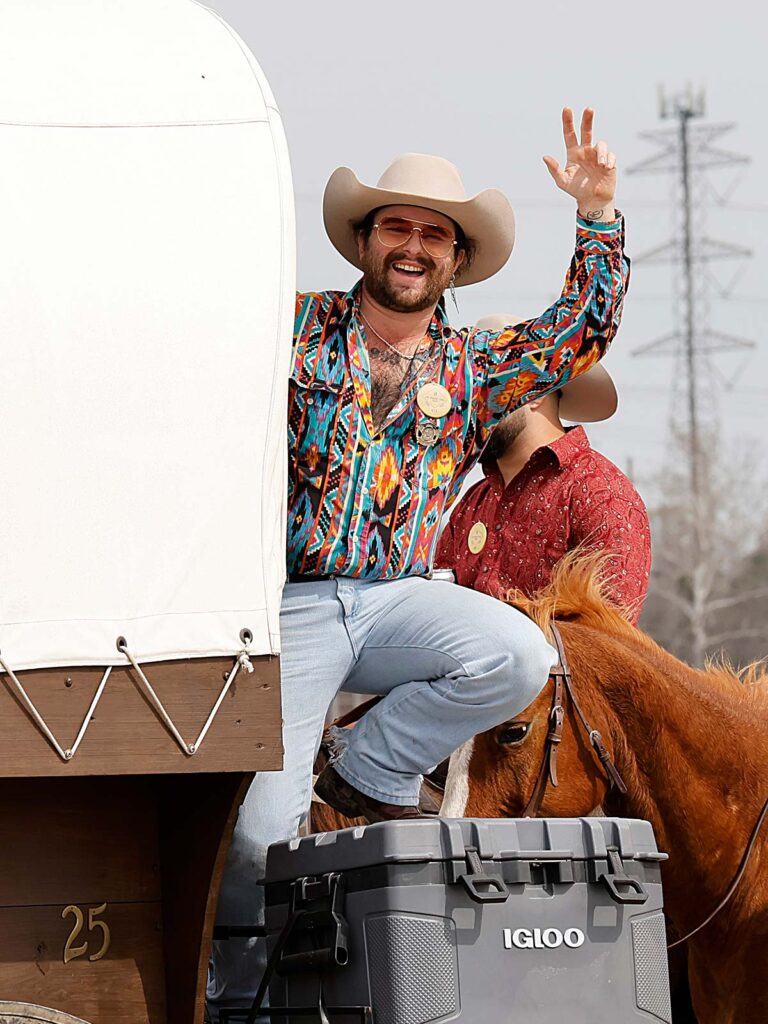
A rider waves as cars pass on Aldine Bender Road in Houston. Drivers often honk, wave and provide space on the road for trail riders.
Photo Courtesy Sam Houston EC
Cantrell then took on the literal and figurative reigns as the trail boss.
Today, the Spanish Trail Ride averages 50 riders, but Cantrell remembers a time in the ’80s when 200 participants would ride during the week and close to 400 on weekends.
After a day’s ride, the group breaks bread and shares conversation. “It’s kind of like getting together at a family reunion,” Cantrell said. “When we get to Memorial Park, which is our last day of the journey before the parade on Saturday morning, we light up the pit.”
While some trail riders continue participating well into their 80s, Cantrell’s oldest son made his first appearance on the trail just two weeks after his birth. The group has no age limits.
Shelly Young, an employee of Sam Houston Electric Cooperative and a trail ride member, accompanies her father—the oldest rider in their group.
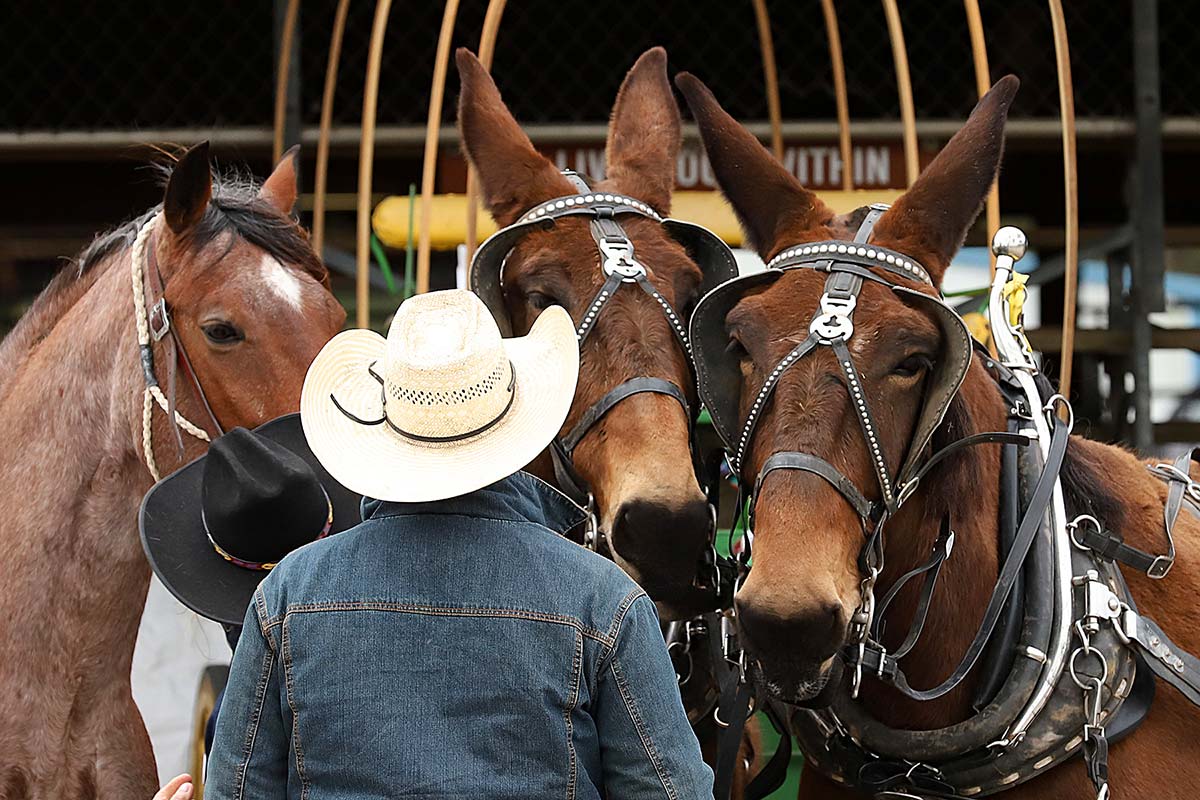
Riders prepare and look over their horses and mules before a day of trail riding.
Photo Courtesy Sam Houston EC
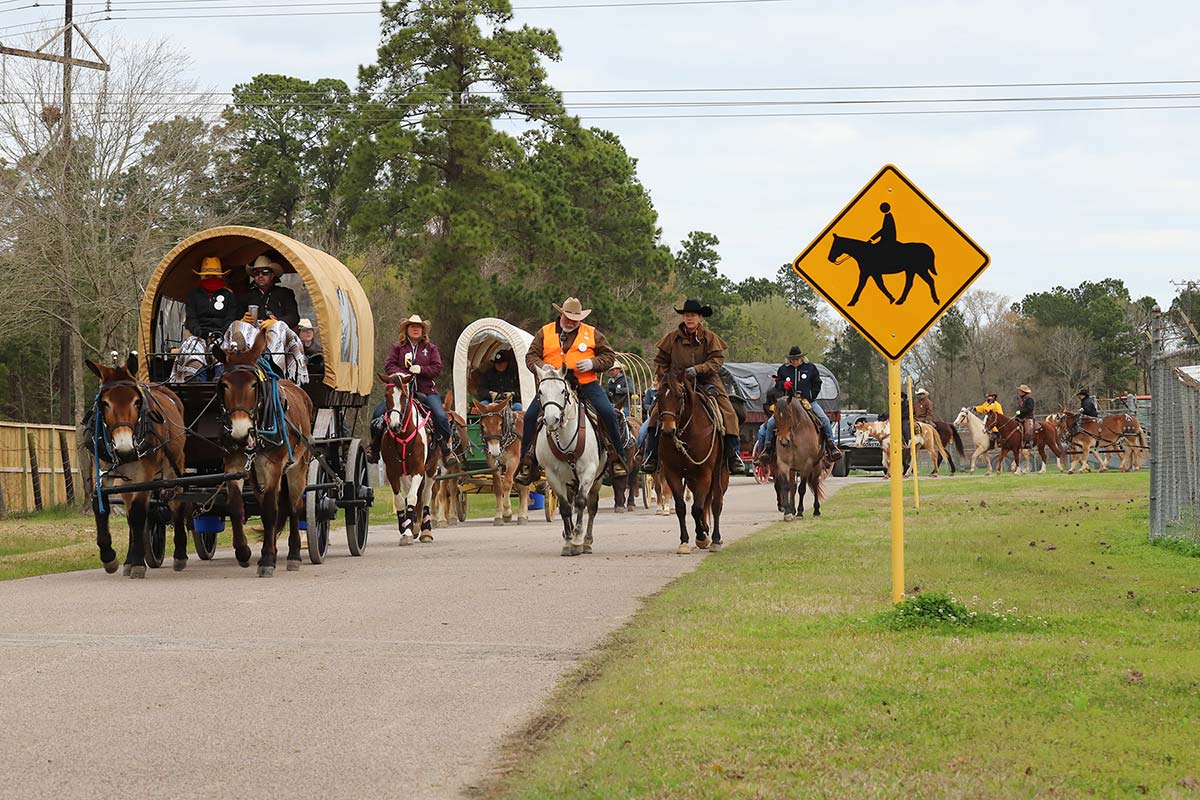
The Spanish Trail Ride departs from New Caney for a day of riding in 2020, just prior to the COVID-19 pandemic.
Photo Courtesy Sam Houston EC
“I grew up riding with family and friends,” Young said. “My dad [Steve Young] and I go on as many trail rides as possible. He’s been trail riding for over 60 years, and he was presented with the title of honorary trail boss for the Spanish Trail Ride in 2023.”
Trail rides also offer hands-on agricultural education for participating children. Working with animals is an invaluable experience. “Every night that animal must be fed, watered and brushed, so it gives kids more of a perspective than just turning on a video game,” Cantrell said.
Community is at the center of every trail ride. The Spanish Trail riders are supported by several churches, including HighPoint Fellowship Church in Splendora and Porter First Baptist Church. They offer the group a place to stop for breaks, often with coffee and doughnuts—and, of course, carrots for the horses.
“Modern-day trail rides keep alive the pioneer spirit, otherwise it would be lost for future generations,” Steve Young said. “People, young and old, gather just to pet a horse or mule, or feed them a carrot. They are excited to watch the old wagons weave down the modern-day trails.”
The closer the group gets to Houston, the riding conditions become more challenging. “The biggest challenge we have is always traffic,” Cantrell said. “Montgomery County Constable, Rowdy Hayden, and his mounted patrol come out and escort us on horseback.”
Despite the challenges on the trail, Cantrell feels calm on the back of a horse. “A lot of people look at [trail rides] and ask, ‘Why are you out there on those horses? It’s raining; it’s cold,’ ” he said. “If you enjoy it enough, it really doesn’t matter what the environment’s like. You’re going to do it anyway.”
The Houston Livestock Show and Rodeo is March 2–22. Until then, the Northeastern Trail Ride, the Spanish Trail Ride and several other trail-riding groups are preparing for their journey to the event.
Learn more at rodeohouston.com/trail-rides.
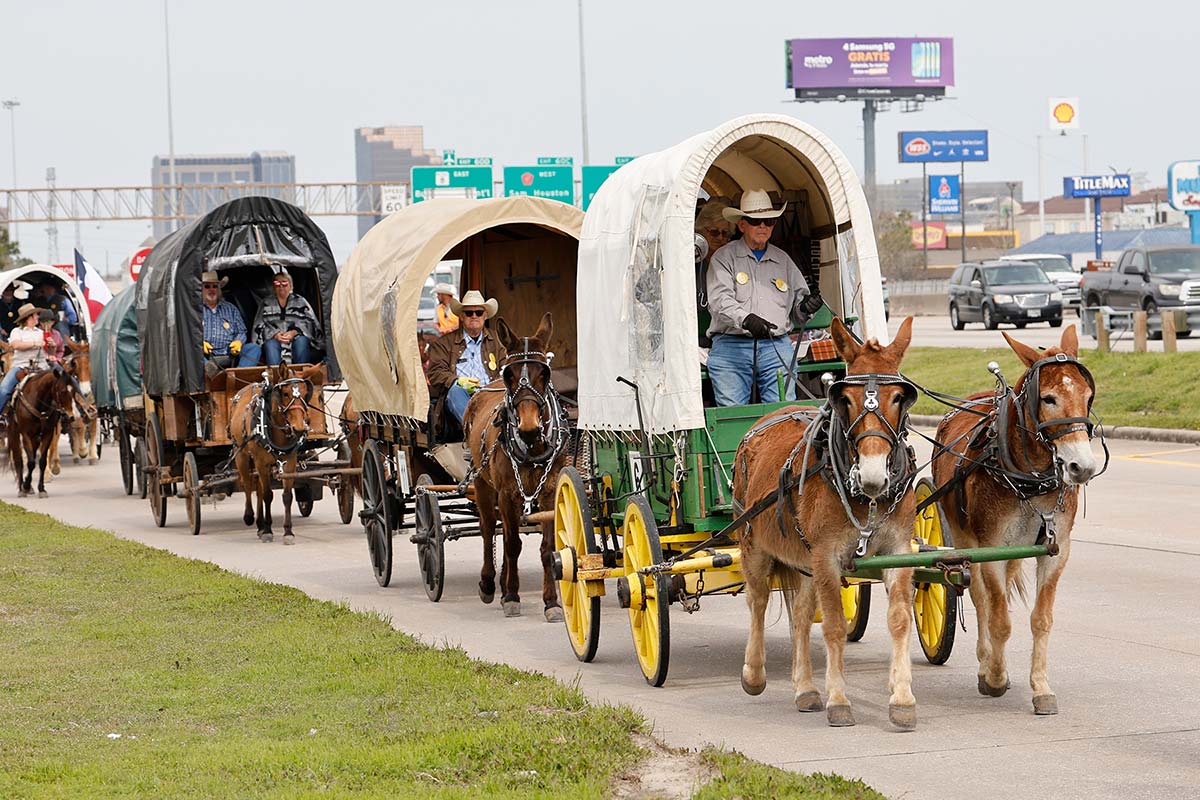
Steve Young, green wagon, is the oldest member of the Spanish Trail rider group. He has participated in trail rides for more than 60 years.
Photo Courtesy Sam Houston EC