Santa will be checking his list this month, and maybe we should take a cue from him when it comes to preparing for power outages.
Your electric cooperative works hard to keep the lights on in all conditions. But severe weather, like a winter storm, occasionally can mean the power goes out—no matter what we do.
Prepare now by making a checklist for navigating outages.
When the lights go out, your first step should be checking your breaker box to find out if there is a wider outage or an isolated problem with your home. If it’s wet outside, be careful and make sure your hands and clothes are dry before touching the breaker box.
Also check if your neighbors are without power. If the whole neighborhood is dark, you’re likely dealing with a wider outage.
Once you’re sure it’s an outage, the next item on your checklist should be reporting the outage to your electric cooperative.
During an outage, remain aware of your surroundings, watching for downed power lines. Report downed lines to the co-op.
Next, unplug any electrical equipment you can and turn off most lights. This will protect your devices from surges or spikes when the power comes back on. Leaving one light turned on can immediately alert you when power is restored.
Consider your food storage. While the power is out, keep fridge and freezer doors closed as much as possible. The more times you open these doors, the faster food will spoil. A full freezer can stay frozen for about 48 hours while a half-full one can last about 24. A full fridge can keep cold about four hours.
If you decide to use a portable generator, plug devices directly into the generator. For a whole-home generator that connects to your electric system, contact an expert to ensure it connects safely. An improperly connected generator can dangerously backfeed electricity, putting lineworkers’ lives at risk.
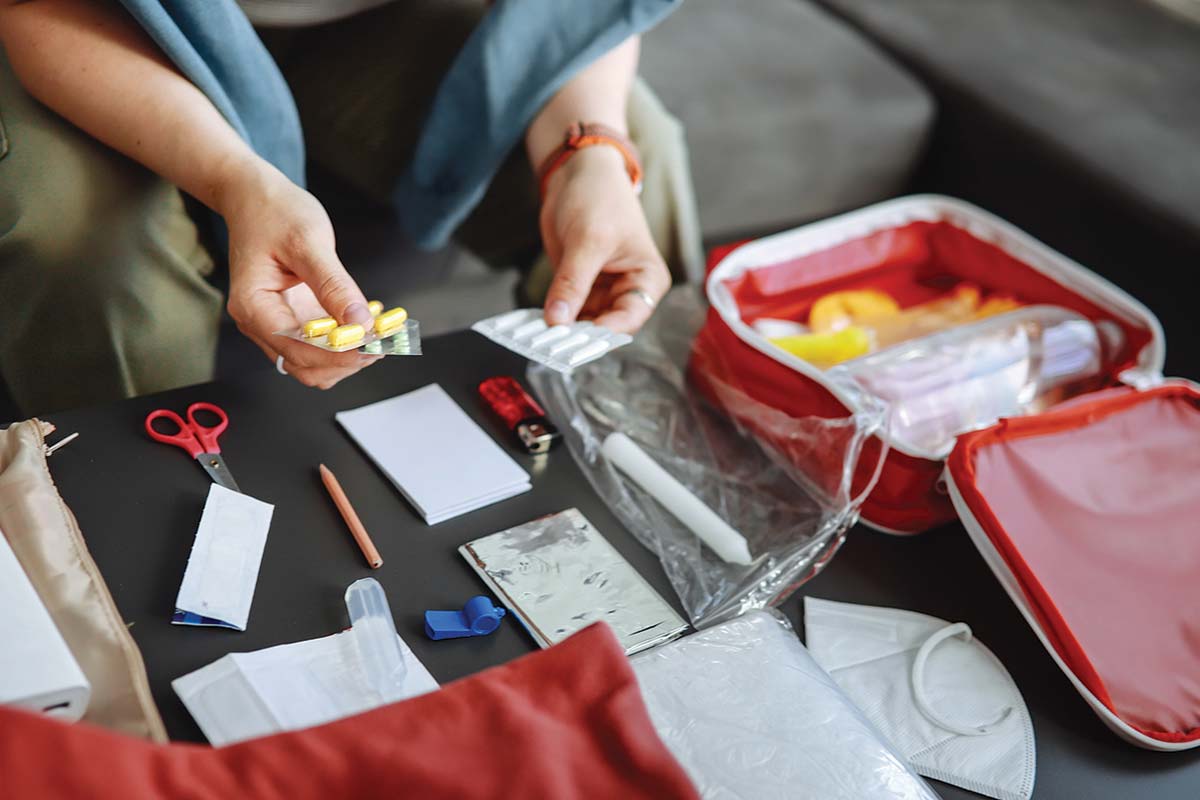
Before an outage happens, put together a kit with emergency supplies. The American Red Cross recommends these items for an emergency kit:
- Water—1 gallon per person, per day (three-day supply for evacuation, two-week supply for home)
- Food—nonperishable, easy-to-prepare items
- Flashlight (Don’t use candles during a power outage due to the risk of fire.)
- Battery-powered or hand-crank radio (a National Oceanic and Atmospheric Administration weather radio, if possible)
- Extra batteries
- First-aid kit, medications (a seven-day supply) and medical items
- Multipurpose tool
- Sanitation and personal hygiene items
- Copies of personal documents (medication list and pertinent medical information, deed/lease to home, birth certificates, insurance policies)
- Cellphone with chargers
- Family and emergency contact information
Power outages are generally rare and brief, but a little preparation can help you stay safe when they do occur.