
October is National Co-op Month. This is a time to reflect on and celebrate what makes cooperatives different—their commitment to the communities they call home. That commitment means more than providing reliable electric service.
MidSouth Electric Cooperative identified a community need for a secure, reliable communications network. This network would not only strengthen the resilience of the electric grid but would also provide co-op members with a safe, secure, fast and reliable internet connection.
MidSouth Fiber Internet’s safety standards and quality infrastructure caught the attention of the largest and most advanced 911 system in Texas, supporting 6.2 million residents throughout 49 cities—20% of the state’s population. An estimated 240 million calls are made to 911 in the U. S. each year, and the Greater Harris County 911 Emergency Network routes over 4.1 million of those calls.
To help keep critical communications connected when they’re needed most, MidSouth Fiber Internet serves as GHC 911’s redundant internet provider.
Redundant internet connectivity is critical for a public safety answering point, such as GHC 911, to ensure uninterrupted communication during emergencies. Public safety answering points rely heavily on digital systems to receive, process and dispatch 911 calls; outages or delays can jeopardize response times and, ultimately, lives.
A redundant internet connection provides a fail-over solution and keeps operations running smoothly if the primary connection fails. By maintaining continuous access to call-handling software, mapping systems and real-time data, redundancy safeguards the reliability and resilience of emergency services when they’re needed most.
The universal emergency number in the U.S.—911—was established in 1968. Since then, technology has advanced significantly. In early years, calls were made on landlines, but 91% of calls now come from wireless phones.
GHC 911 uses Next Generation 911, which enhances emergency services by enabling the transmission of voice, photos, videos and text messages. Simplifying the workflow for dispatchers so they can provide better and faster service to the community is their top priority.
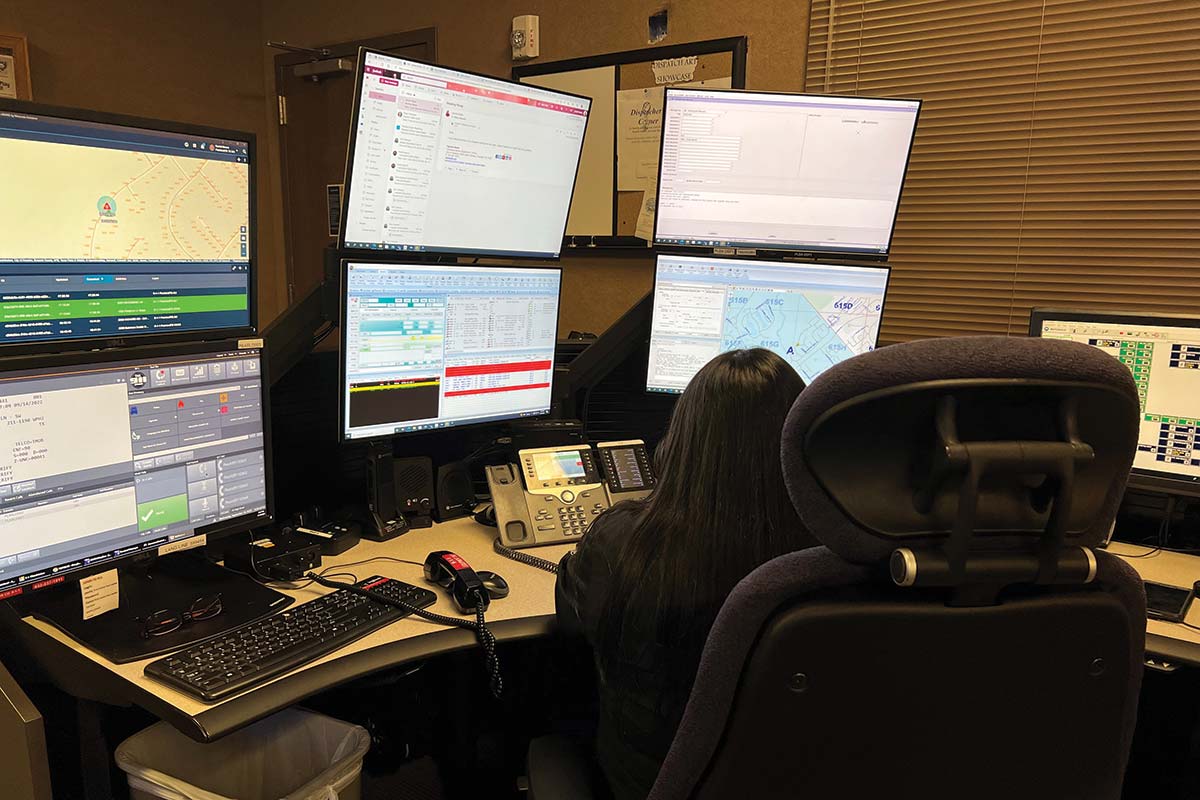
So what really happens when you call 911 in the counties served by GHC 911? A complex and highly coordinated technical process is triggered to route, locate and respond to an emergency:
- The caller dials (or texts) 911.
- The telecom provider flags the call as priority emergency.
- The call routes to a public safety answering point (911 call center), within the GHC 911 service area.
- The caller’s location and phone number are recorded and sent to the appropriate call center.
- A dispatcher answers the call and collects key details.
- Information is entered into a computer-aided dispatch system.
- The CAD system alerts proper emergency service(s).
- Emergency services are dispatched to the given location.
- The dispatcher remains on the line with caller and updates first responders with new information.
- Local emergency services arrive on scene.
Reliable and redundant internet connectivity plays a critical role in the 911 emergency response process, helping ensure that dispatchers and first responders can communicate without interruption when every second counts.
Similar to GHC 911 and first responders, MidSouth EC and MidSouth Fiber Internet provide different services, but they share the same purpose: Concern for Community.
October 28 is National First Responders Day. We extend our deepest appreciation to the dispatchers, law enforcement, firefighters, EMTs and paramedics who answer the call when others need help most. Thank you for your commitment to keeping our communities safe.
You can help: Since the 1990s, the 911 service fee listed on phone bills has been 50 cents per wireless line with no increase. Community members can call their congressional representatives and advocate for raising the rate to ensure emergency services can continue to respond quickly and save lives when every second counts.