Once upon a time, food came from somewhere you could actually point to on a map or better yet, a neighbor’s field. Fast forward a few decades, and our grocery store produce travels thousands of miles before landing in our kitchens.
But there’s a quiet—and delicious—revolution happening. It’s called farm-to-table. More than a buzzword on trendy restaurant menus, it’s a movement reshaping how we eat, cook and connect to our communities.
For restaurants, the benefits of farm-to-table sourcing are obvious. Chefs get to work with ingredients that are fresher, more flavorful and often more nutrient-dense than the goods that have been riding cross-country in a refrigerated truck. Seasonal menus come alive with freshly picked heirloom tomatoes in July or earthy root vegetables in November. It’s the type of produce that actually has flavor and taste.
Fresh products make it easier for chefs to let the food speak for itself and for consumers to literally taste the difference.
But it’s not just about better flavor or bragging rights for chefs. Farm-to-table relationships help keep small, local farms bountiful. Such is the case locally, where meat ranches, fruit and vegetable farms, honey producers, and dairies abound.
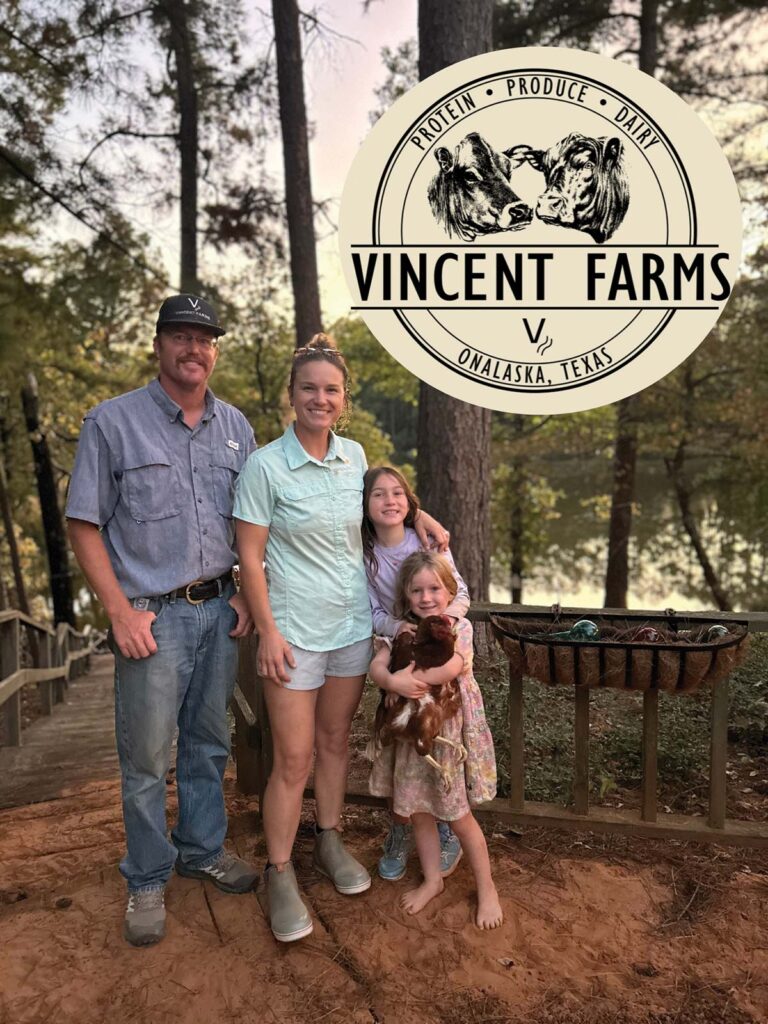
Vincent Farms founders Justin and Stephanie Vincent with daughters Addison and Ellie.
Jeff Miller

A chalkboard advertising Vincent Farms meats and eggs.
Jeff Miller
One of the newest farm-to-table facilities is Vincent Farms in Onalaska, owned and operated by husband-and-wife team Justin and Stephanie Vincent. They have found that farm-to-table is becoming increasingly popular, with an emphasis on eating healthy and supporting local businesses.
“Farm-to-table has grown tremendously in popularity,” Justin said. “Families today are placing more emphasis on health, transparency and connection. They want to know how their food is raised, and they want to support local farmers who share those values. I see this every day in the demand for nutrient-dense, local food. People are realizing they can invest in their health while strengthening their community at the same time.”
Before working full time at the farm, Stephanie operated River V Growers, a retail garden company that worked with the Arbor Day Foundation to provide over 1,500 trees to Polk and San Jacinto county residents who lost trees during the Ona-laska tornado in 2020.
“While I enjoyed the gardening business, I realized my true passion was in raising animals and producing food that directly nourishes families,” Stephanie said. “Shifting full time into farming allowed me to focus on stewardship of the land and the animals and to fully dedicate myself to creating a more transparent, sustainable food system.”
Buying fresh, locally grown food is good for the environment and economy. Fewer miles traveled means fewer emissions, less packaging and often fewer chemicals used in transit. For eco-conscious families, going farm-to-table is one of the most effective—and tasty—ways to live out their values.
In a world where industrial agriculture dominates, small-scale farmers can struggle to compete. When local restaurants commit to sourcing from nearby farms, they’re injecting life into the local economy. Farmers grow better because they’re supported; restaurants serve better because they have access to top-tier ingredients; and communities thrive with fresh food and strong local business ties.

Patrons can enjoy locally sourced Ruby Cattle Co. hamburgers and a large assortment of beer at Big Fish Icehouse in Onalaska.
Jeff Miller

Sam Houston EC
Such is the case at Big Fish Icehouse in Onalaska, where all meat products come from Ruby Cattle Co., a Polk County farm. The high-quality beef helped Big Fish win numerous accolades for their burgers.
Open for just four years, Big Fish Icehouse has won “Best Burger in Polk County” and “Best Burger in East Texas” eight times. Big Fish co-owner Patty Peacock attributes her success to buying local.
“Very early on, we made the decision to use Ruby Cattle for our beef and pork burgers, not only because the meat is fresh, but it also contributes to the local economy,” Peacock said. “For our exclusive pork burger, we also top it with microgreens, which are supplied to us by an herb farm in Point Blank, so everything but the bun is locally sourced.”
The farm-to-table ethos is often highlighted in the restaurant world, but its real power might be what it brings to families and home kitchens.
Ruby Cattle started out as a small ranch, selling beef, pork and other products right at the farm. They have since opened a storefront in downtown Livingston, where freezers chock-full of assorted meats draw large crowds every week.

Ruby Cattle Co. sells a variety of grass-fed beef and pork products in its Livingston store on Washington Street.
Sam Houston EC

The Ruby Cattle brand goes back several generations even though the storefront on Washington Avenue in Livingston is less than a decade old.
Jeff Miller
“We raise beef the old-fashioned way—on the family farm,” said Joe Gulley, Ruby Cattle Co. owner. “We don’t use antibiotics or steroids or growth hormones. Like most family farms, we focus on the future and sustainability, and as a bonus, we’re contributing to the local economy. We’re not trying to put grocery stores out of business; we’re just giving local residents and restaurants an alternative.”
In addition to supplying Big Fish, Ruby Cattle also provides 16-ounce premium New York strip steaks to Timbers Grille—the restaurant at the Naskila Casino just east of Livingston.
With Texas being a large beef and pork producing state, many other farms in the area raise cattle, hogs, lamb, chickens, goats, sheep and more. Most of the smaller farms do not have a retail presence and generally require an appointment.
Stone Farms Livingston provides Red Wattle heritage breed, pasture-raised pork, grass-fed lamb and duck eggs. All of their animal products are antibiotic- and hormone-free and raised on their farm near Livingston. Stone Farms also offers pork cuts, whole and half pigs, lamb cuts, and whole lambs.
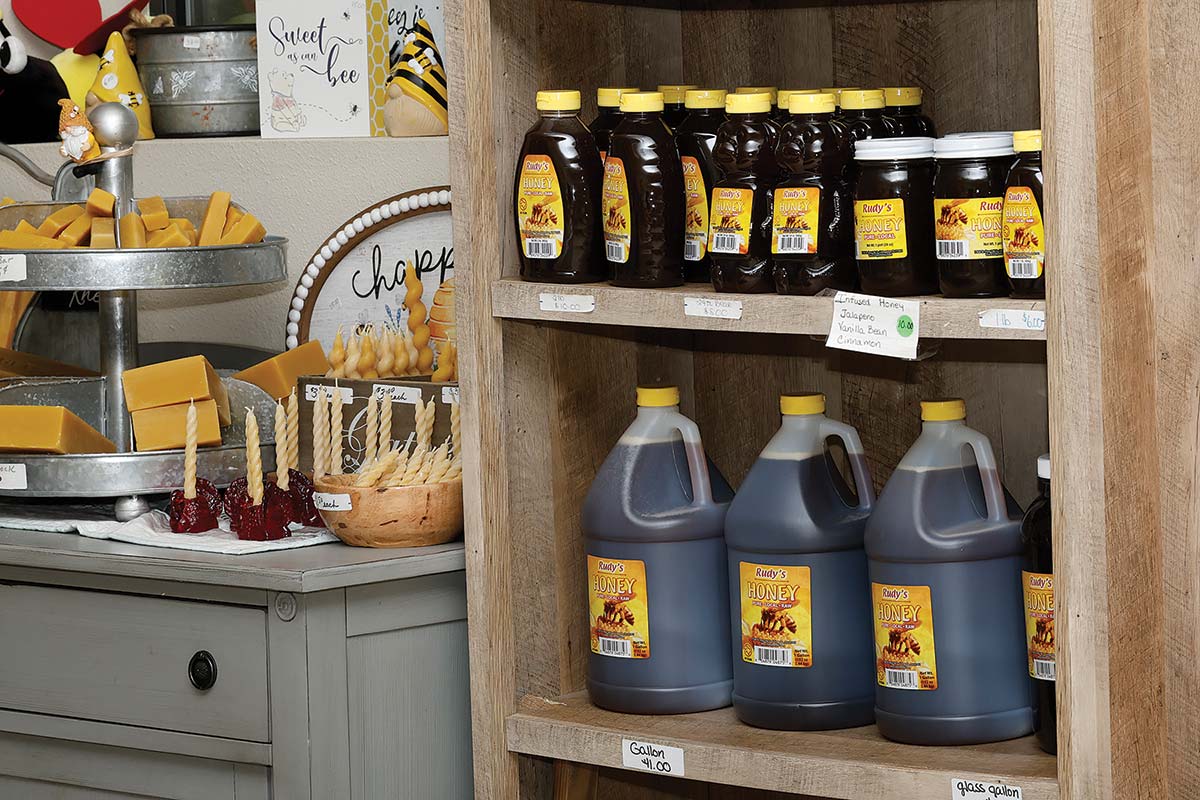
Rudy’s Honey sells a variety of honey products in its store south of Livingston on State Highway 146.
Sam Houston EC

Bees collect on a wood beehive at Rudy’s Honey farm in Polk County.
Sam Houston EC
Fresh meat is not the only farm-to-table item produced in our area. Tucked away in the dense, green Pineywoods is Rudy’s Honey, a small, family-run honey farm quietly creating something special.
Far from large-scale agriculture and the chemical sprays that often come with it, this peaceful corner of Southeast Texas provides a clean, natural environment where bees thrive. The bees rely on the area’s abundance of tallow trees and wildflowers for the nectar and pollen, which will eventually end up as 100% pure local honey.
“Feeding on a rich variety of wildflowers native to our region, our bees produce honey that reflects the landscape—floral, complex and deeply rooted in place,” said Karla Rudebusch, who owns Rudy’s with her husband, Dan.
“It’s not just an old wives’ tale that eating honey which was produced in the area where you live can help alleviate allergies, sneezing, watery eyes and the like, but the flavor makes the honey noteworthy. It blends tradition, care for the environment and a deep respect for the bees themselves,” Rudebusch said.
If Texas really is the land of milk and honey, we’ve covered the honey part, and another popular item right now is raw milk.
Answering that need is Five Oaks Dairy, a state-licensed Grade A raw milk facility offering many other products in addition to just raw milk. The company also offers lamb, pork, chicken and produce. However, the main product is milk.
“We believe that the best milk comes from happy cows, which is why we calf share and allow access to open pasture daily,” a Five Oaks employee said. “Our milk parlor is uniquely designed and is completely inside to ensure our products are produced in a controlled and sanitary environment while ensuring the comfort of our cows year-round. This makes our cows very happy.”

A welcoming gate greets visitors to Five Oaks Dairy, where the cattle can roam close to your car.
Jeff Miller
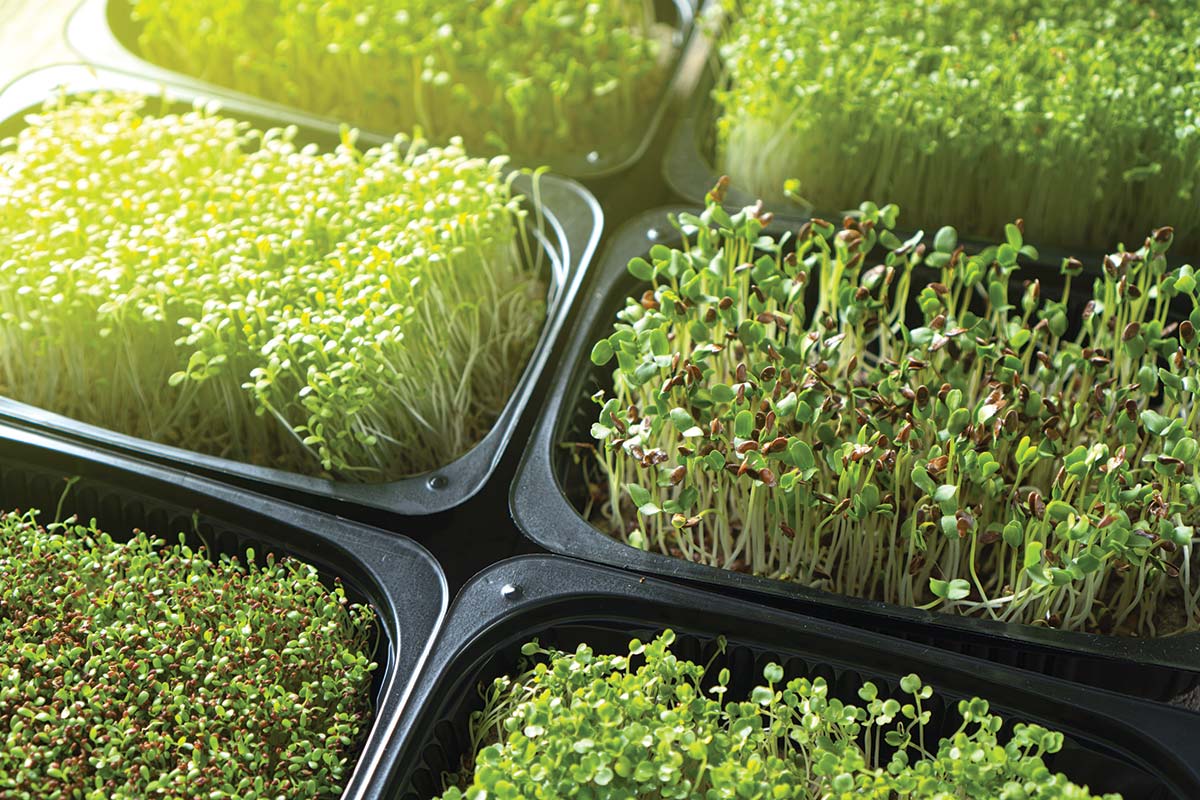
Microgreens are grown not only on many of the local farms, but amateur gardeners find them very easy to grow and maintain on windowsills and outdoor decks.
Jeff Miller
Justin Vincent said there is a powerful educational component to either growing your own food or picking it fresh from the farm. When kids and adults know where their food comes from, they’re more likely to respect it, waste less and eat healthily intentionally.
Visiting a farm, picking berries, talking to a grower at the market—these experiences bring food to life. It’s not just something that magically appears in a plastic bag; it’s the result of someone’s hands in the soil.
The Texas A&M AgriLife Extension Service for Polk County offers educational programs in agriculture, food safety, canning, livestock and forages. These extension services are often helpful in connecting people with local producers or providing information about what’s being grown nearby.
Ultimately, farm-to-table is about reconnection—between people and their food, between communities and their farmers, and between what we eat and how we live. It’s not elitist or exclusive; it’s a return to something older, wiser and fundamentally human (not to mention healthier).
Whether you’re a chef crafting a seasonal menu or a parent packing lunchboxes, remember that real food grown close to home isn’t just better—it’s essential.