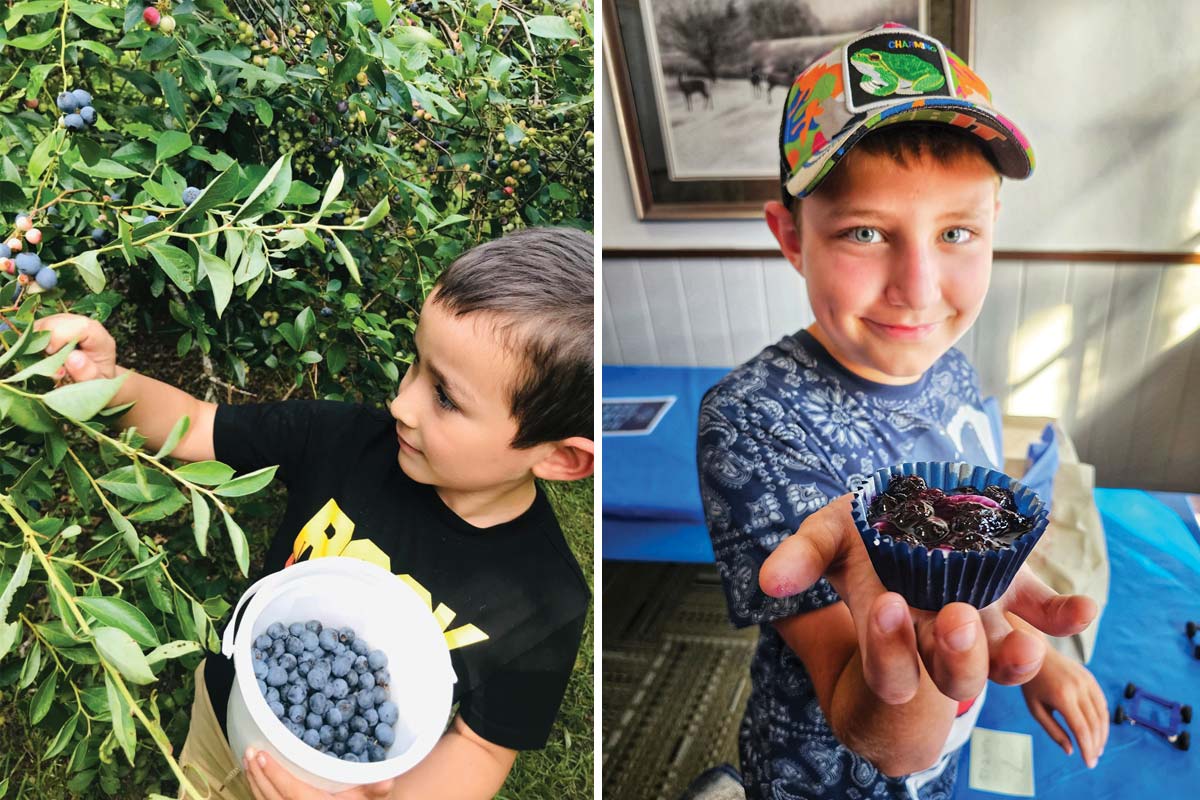
Historic Nacogdoches celebrates the peak of the annual blueberry harvest with the Texas Blueberry Festival. This beloved tradition in the oldest town in Texas will celebrate its 36th year Saturday, June 13.
Across the Lone Star State, festivals celebrate everything from fire ants to kolache to draw crowds, but the Texas Blueberry Festival aims to capture Americana nostalgia by bringing the community together around a superfood.
“We really feel like this festival captures the spirit of family and country and relationships, all centered around food,” says Kelly Augustine, president and CEO of the Nacogdoches County Chamber of Commerce.
Even if you aren’t a blueberry fanatic, the festival offers plenty of other food, live music and family-friendly activities.
“You could be wandering through Nacogdoches as an individual but still feel part of something bigger than yourself,” Augustine says.
Strolling through the festival, Augustine says visitors are transported into “an environment that is filled with delicious smells, toe-tapping tunes, all kinds of different sights and sounds where people have gotten very creative with everything you could do with a blueberry.”
Festivalgoers can duck in and out of open businesses and take breaks in the shade between festival events. This day-long event is packed with competitions, entertainment and food. Everyone is free to explore and experience the festivities at their leisure without needing to make reservations.
“For people just coming in to enjoy a day in Nacogdoches at the Texas Blueberry Festival, it’s what I like—unplugged and laid-back,” Augustine says.
Even the surrounding community participates in the kickoff of blueberry season. Local restaurants incorporate blueberries into their dishes, stores display blue decorations and some businesses offer deals on blue items.
“The whole area of Nacogdoches is actually kind of turned blueberry during that second week of June,” Augustine says.
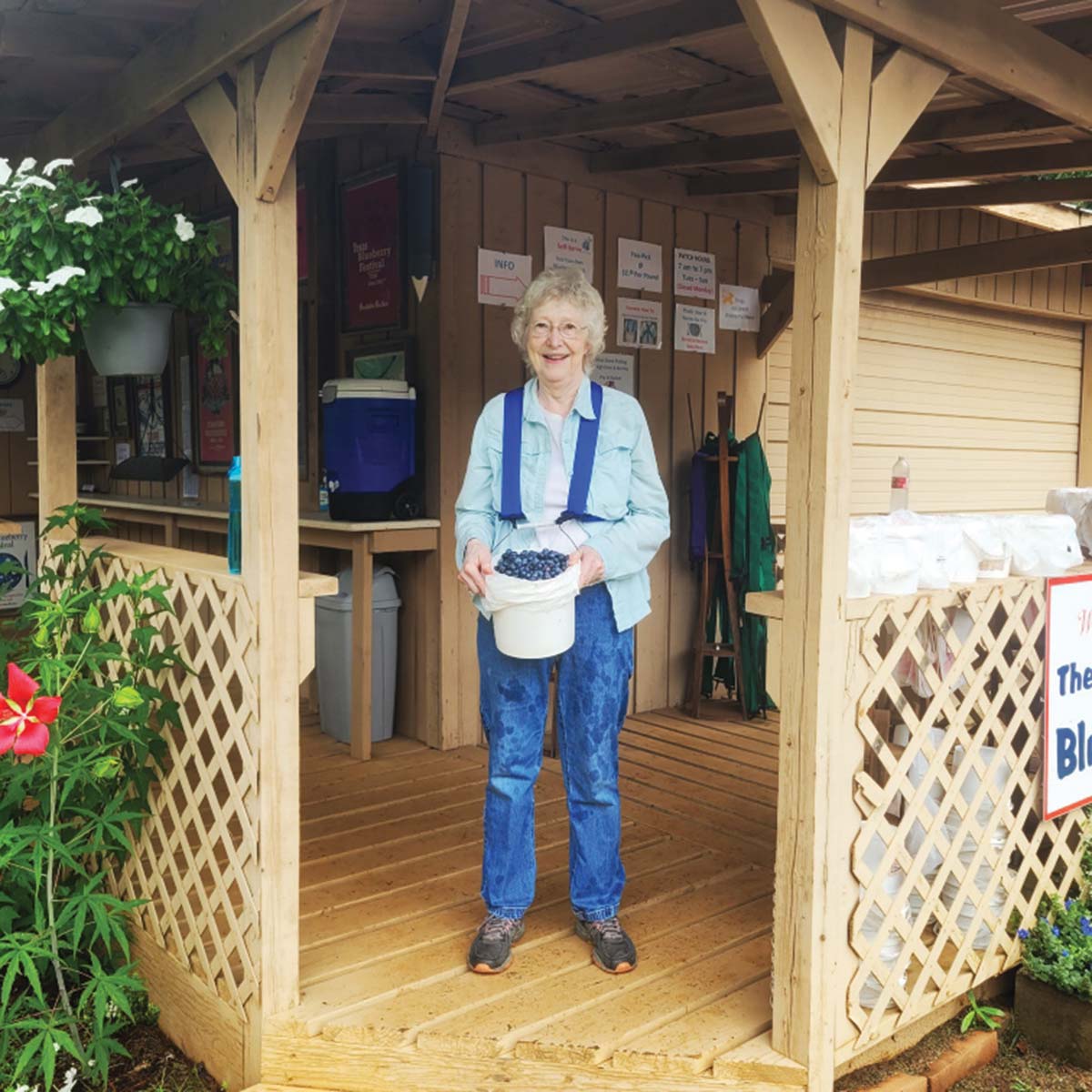
The first picker of the 2025 Texas Blueberry Festival with a full bucket from the Blueberry Place.
Sherrie Randall
Something for Everyone
Throughout the day, there are several competitions, including a cupcake-baking battle, a blueberry pie-eating contest, 5K and 10K runs, and a 42 tournament—celebrating the popular domino game often called the national game of Texas. Live music and fun activities for children and adults take place throughout the day.
Home cooks can gain new skills at a cooking demonstration by a local chef. History lovers can enjoy presentations by volunteers and staff from the Stone Fort Museum who attend the festival to showcase traditional cooking methods, fabric dyeing and tool use. There’s even a car show for gearheads.
There’s no shortage of blueberry-themed street food or classic fair food from vendors throughout the festival.
“Eat when you want to eat,” Augustine says. “Walk when you want to walk. Shop when you want to shop. And then the rest of it is just going to happen.”
A short drive from the festival, a 10-acre farm called the Blueberry Place opens to the public on festival weekend. Sherrie Randall and her late husband, Roger, bought the property in 2001, but they didn’t plan to make it a pick-your-own patch.
The couple moved in on a Friday, and they were welcomed—in a peculiar way—the next day.
“I woke up Saturday morning, and I looked out the master bedroom window because you can see in the patch, and there were people out there,” Randall says.

Festival day starts with the Kiwanis Blueberry Pancake Breakfast, benefiting Nacogdoches Kiwanis Club projects.
Connor Bronson
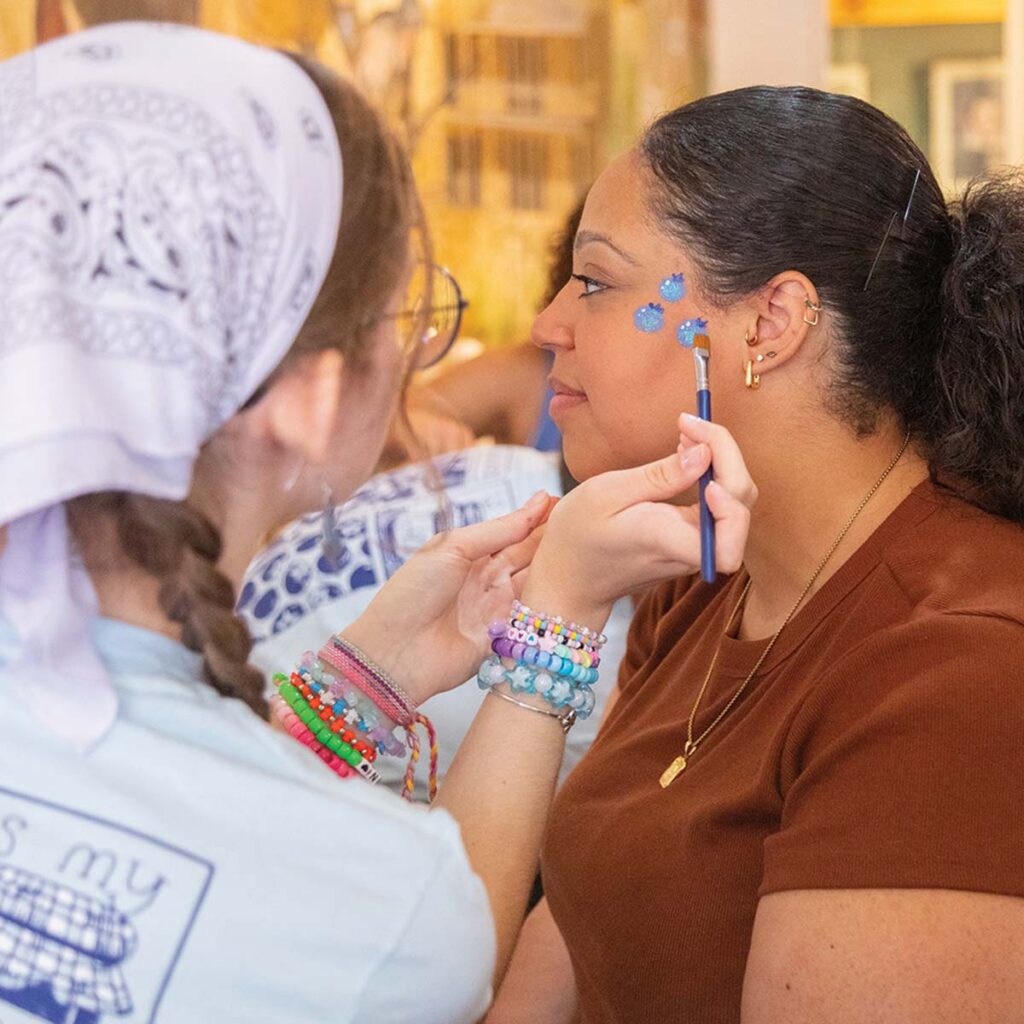
Whether you want to participate in a competition, learn a new skill or just relax, the Texas Blueberry Festival has something for everyone.
Connor Bronson
The pickers were Kiwanis Club members, and they were picking berries to use for the festival’s pancake breakfast. Randall decided to give the people what they wanted, and she continues to open the patch each year for blueberry season.
“I have pickers that I have now known for 20-some years,” she says.
The Blueberry Place offers buckets, bags, harnesses and a scale. Pickers weigh their hauls and pay $2 per pound on an honor system. Blueberries freeze well, so there’s no need to worry about picking too many.
“You literally take them off the bush and put them in a ziplock bag and put them in the freezer,” Augustine says.
“It’s a no-spray patch, so there’s nothing used on the bushes or on the berries,” Randall added.
Randall prepares for festival crowds by grooming the patch and patrolling the rows for fire ants. Her children and grandchildren even fly in every year to help.
“So, it’s a fun time for me, too, in that regard,” she says. “It’s busy, but it’s a good busy.”
While she normally can’t attend the festival herself, Randall is glad to see her community celebrating.
“It’s a great pleasure to be a part of it, to be honest,” she says. “It’s very rewarding to see all the people’s appreciation.”
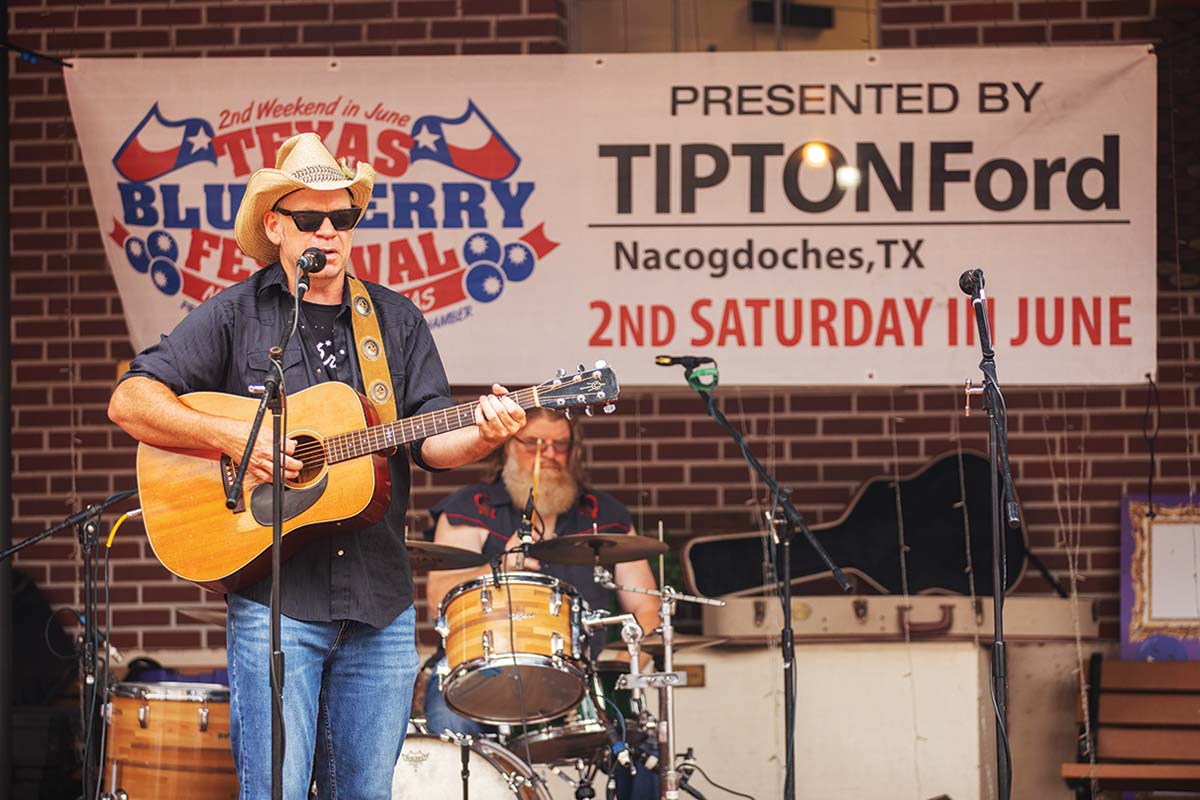
The city of Nacogdoches hosts the Blueberry Bluegrass Concert in the Park the Friday before the festival.
Connor Bronson
A Growing Heritage
Augustine says the original festival planners wanted a free, family-friendly event to celebrate local agriculture and showcase Nacogdoches—founded in 1779 and boasting a beautiful downtown with red brick streets, historic brick buildings and a tree-lined square.
Just a stone’s throw from downtown Nacogdoches is Stephen F. Austin State University, which has a robust agriculture department. David Creech, a horticulturalist at the university and director of SFA’s 138-acre garden, was a part of introducing blueberries in Texas in the 1960s. While studying under Hollis Bowen at Texas A&M University, Creech helped plant some of the first blueberries in the state.
“‘You don’t know this today, but this could be the most momentous occasion in your entire career,’ ” Creech recalls Bowen saying. “And it’s kind of bizarre because 50 years later, I’m still working with blueberries.”
Nacogdoches has become the blueberry capital of Texas, thanks in part to researchers like Creech. And he’s even taken his expertise abroad.
“I’ve spent part of my career in China—believe it or not—there is a burgeoning blueberry industry there,” Creech says.
Since China’s middle-class boom, there’s been increased demand for blueberries. Chinese farmers and scientists are starting to breed their own varieties using genetics from U.S. varieties, and they turn to experts like Creech for advice.
For the past 36 years, the Texas Blueberry Festival has grown alongside the local berry industry. Creech says many fruits don’t succeed in the commercial market, so seeing the success of the blueberries over the years has been gratifying.
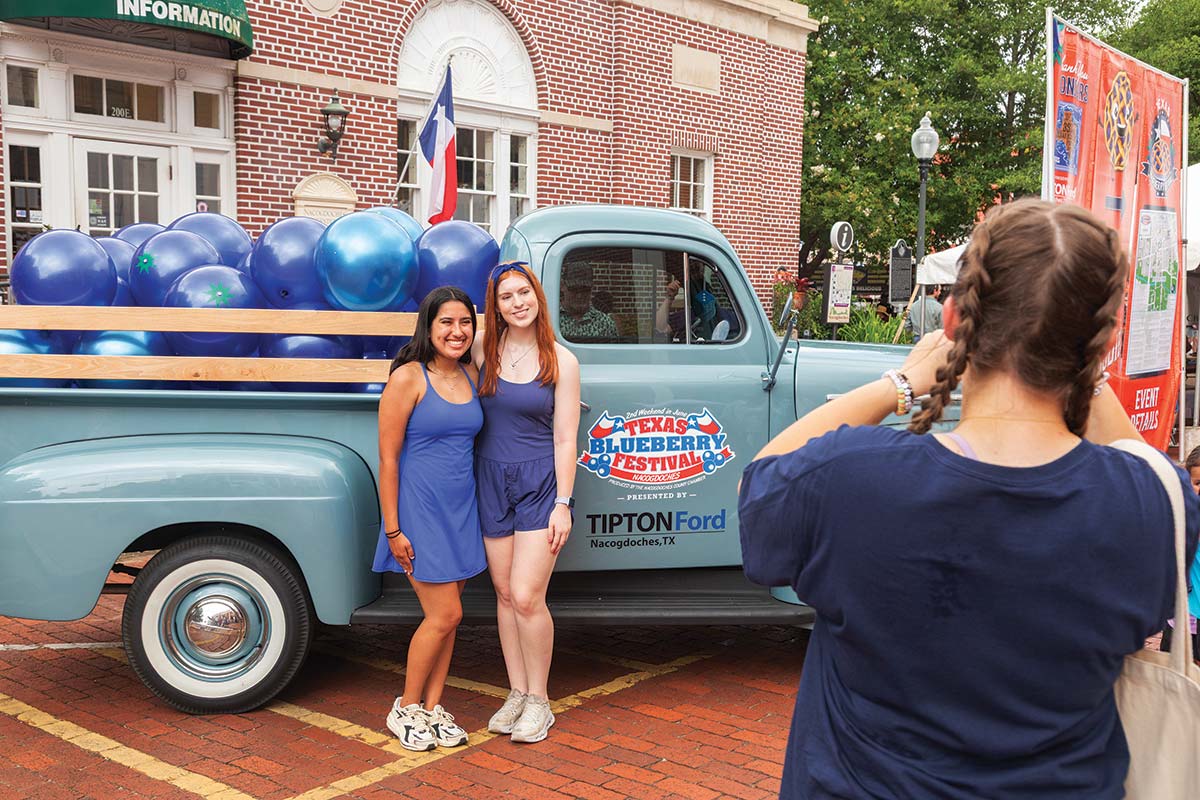
Located in beautiful downtown Nacogdoches, the Texas Blueberry Festival celebrates local agriculture and showcases the city’s brick streets, historic brick buildings and tree-lined square.
Connor Bronson
“The Blueberry Festival has really taken off, and we have a huge crowd,” he says. “A lot of times—as a professor—I’m a researcher and love teaching students. But to hang your hat on something that actually worked out, that’s kind of amazing to me.”
Northern states like Maine are known for their blueberries, but the fruit can thrive in Texas, too. Choosing the right species is key. In Maine, blueberries grow on small bushes close to the ground, and they’re more tolerant of colder temperatures. However, rabbiteye blueberries in East Texas grow 6–10 feet tall and thrive in warmer temperatures.
It took extensive research during the 1970s to establish blueberries as a viable commercial crop in East Texas. Researchers discovered that high calcium and sodium quantities in well water can be detrimental, for example.
Blueberry farmers still face challenges including pests, late frosts and competition from growers in Mexico and California, but blueberries and the Texas Blueberry Festival remain a part of Nacogdoches’ identity.
“It creates this similar and universal thread through our community,” Augustine says.
For Nacogdoches, the only thing sweeter than the blueberry harvest is how the community comes together every June to celebrate it.
Experience the 36th annual Texas Blueberry Festival, presented by Tipton Ford, 8 a.m.–4 p.m. Saturday, June 13. Entry is free. Visit texasblueberryfestival.com to learn more and plan your visit.