David Alvarado remembers digging holes alongside other volunteers near the Rio Grande when he was in high school, almost 20 years ago. Nowadays he has lots of little helpers.
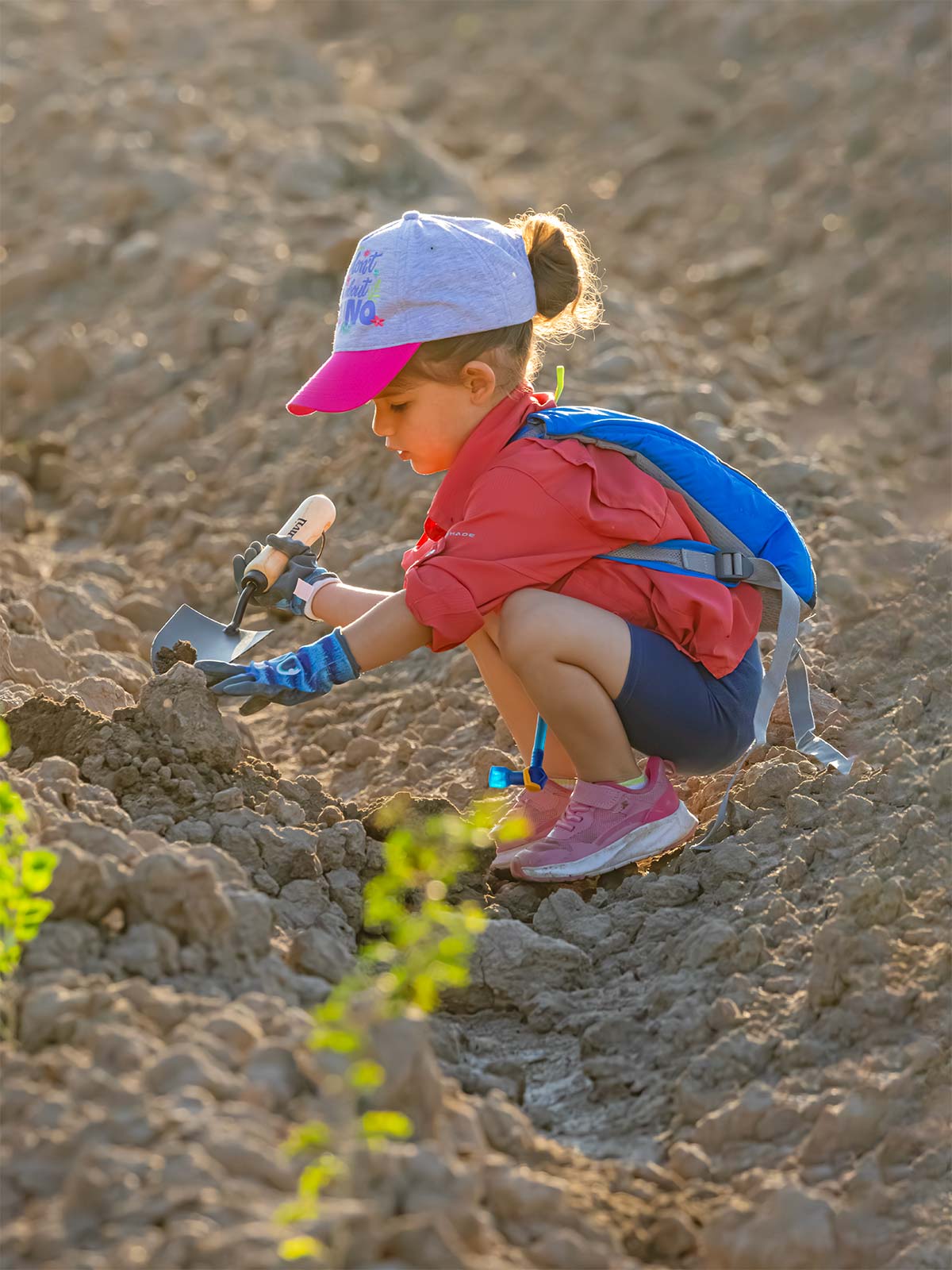
“I wanted to share this with my family,” says the San Juan resident, plunging his shovel into the earth again—this time with the help of his 14-year-old son, Jeremiah. His daughter, Adalee, 3, uses a trowel and her hands to pat soil around freshly planted seedlings that his wife, Berenize, places in the ground and backfills.
The Alvarados are among some 1,800 volunteers on this October morning who traveled to this 9-acre patch of federal land south of the rusty-red slats of the border wall and less than a mile north of the Rio Grande. They’re here with a lofty goal: plant 10,000 native seedlings.
The 2025 gathering marked the 31st year volunteers have come out to revegetate a piece of the Lower Rio Grande Valley on U.S. Fish and Wildlife Service land. The Tamaulipan thorn forest once covered 1 million acres along the Rio Grande, but just 10% of it remains intact today.
Green Goals
By reintroducing native seedlings like Texas ebony, wild olive, fiddlewood and snake-eyes to former farm fields, the Rio Reforestation project aims to restore the thorn forest. The plants attract bugs, which bring birds, rabbits, snakes, bobcats, tortoises and javelinas. Extending the wildlife corridor allows plant and animal populations to thrive and avoid genetic isolation.
“Rio Reforestation is the biggest community planting event in the U.S. Nothing else comes close,” says Jon Dale, a senior director for American Forests. The nonprofit collects seeds and grows native plants for the USFWS at Marinoff Nursery in Alamo.
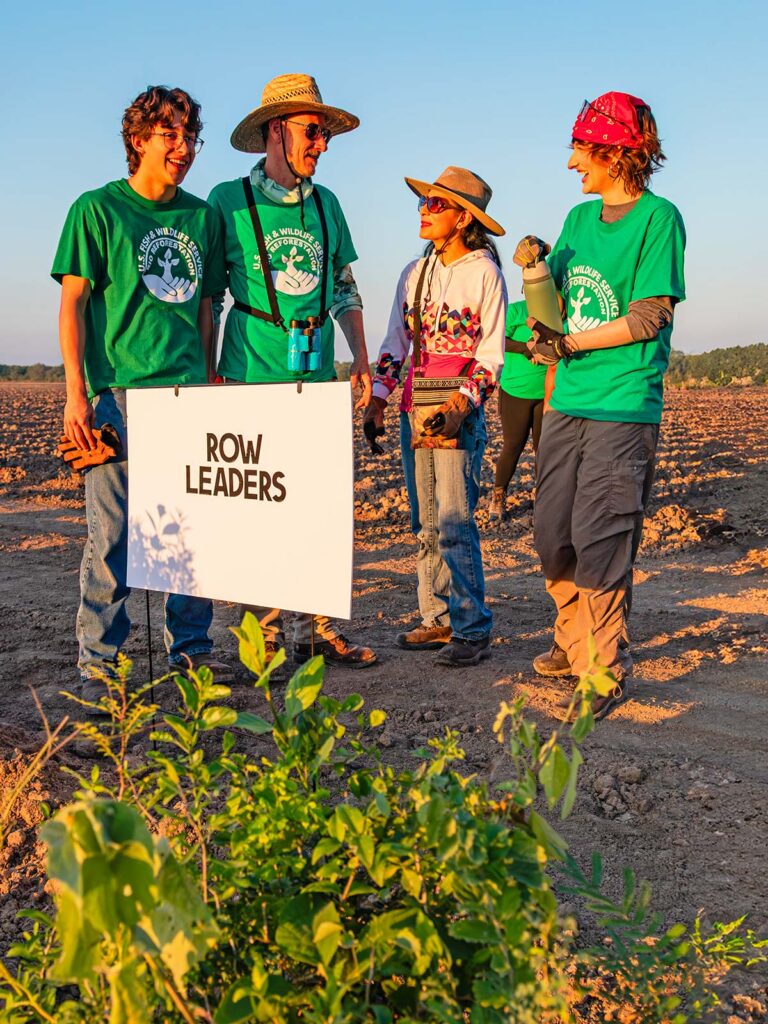
Reforestation volunteers gather at sunrise on a patch of federal land near the Rio Grande.
Larry Ditto
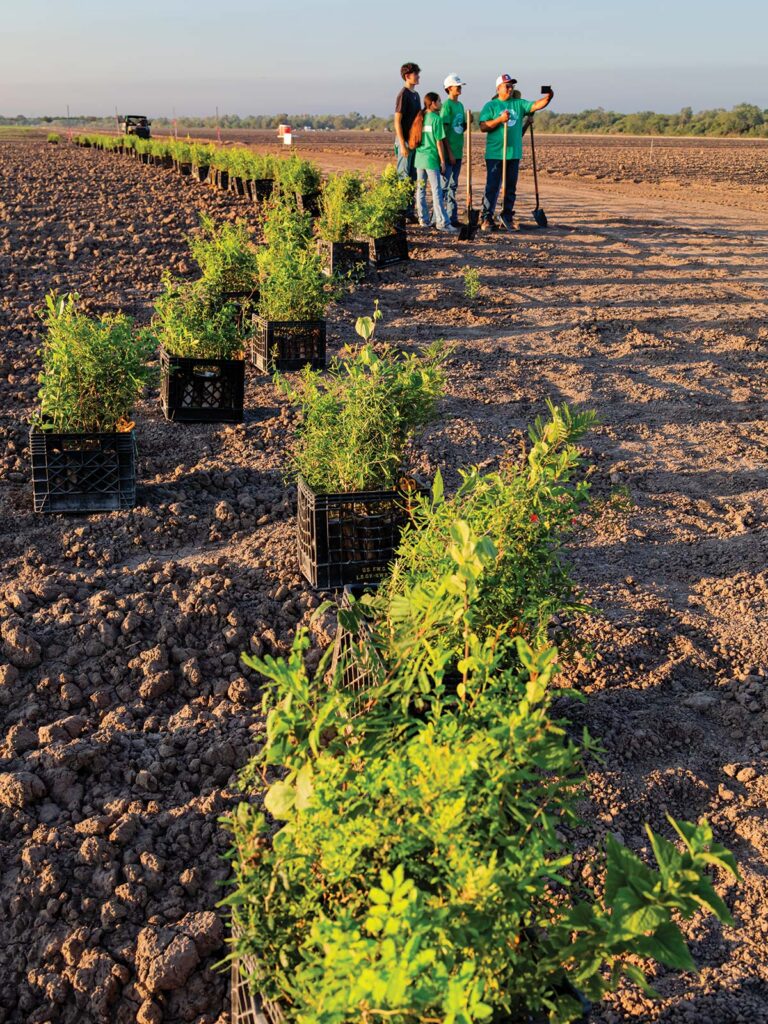
After a selfie, volunteers will get the waiting plants into the ground.
Larry Ditto
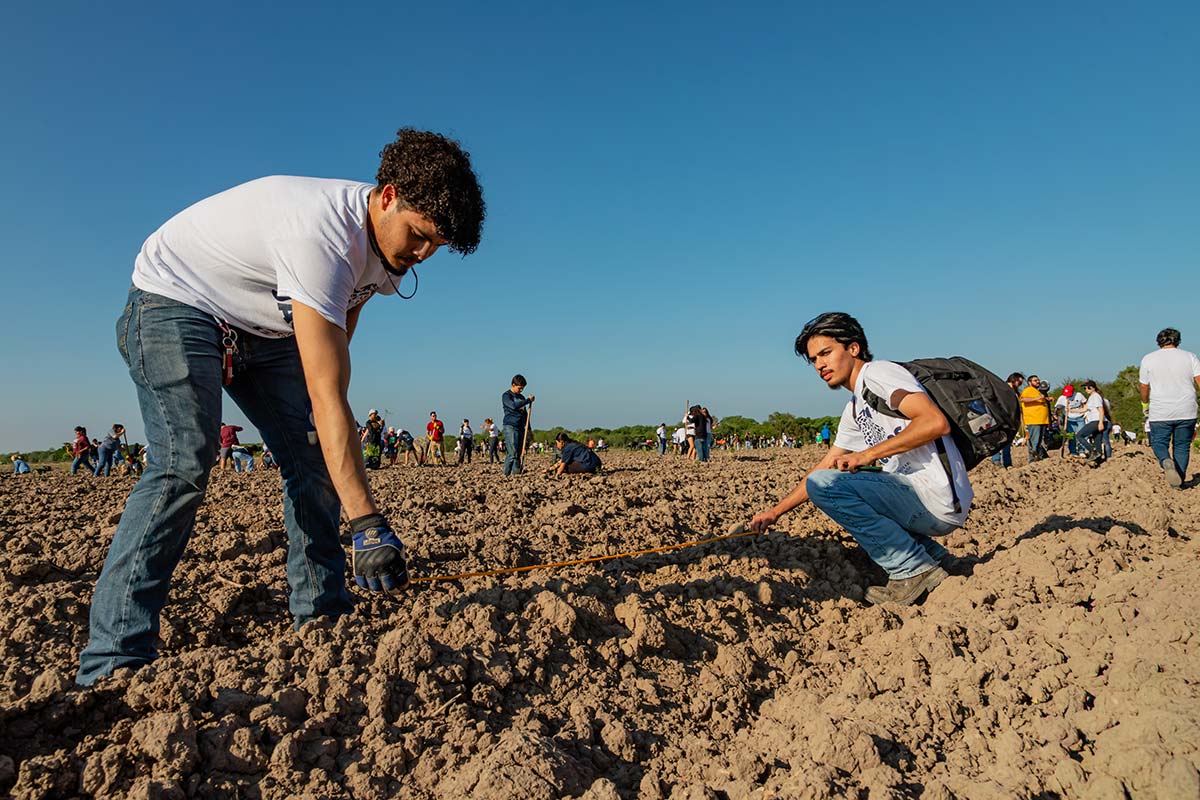
The planting crews use 6-foot ropes to ensure adequate spacing between seedlings.
Larry Ditto
“In the last 30 years, we have restored 18,500 acres of USFWS-owned farmland by planting over 10 million native thornscrub seedlings,” says Imer de la Garza, a USFWS project leader.
Over those years, they discovered best practices that increase seedlings’ chance of survival, now around 90%. One factor is high-density planting: 10,000 plants on 9 acres works out to more than 1,000 per acre.
The native seedlings are drought- and heat-tolerant as well as freeze-, flood- and fire-resistant. Reforestation goes beyond canopy trees like mesquite and Texas persimmon to include understory plants such as allthorn, cenizo and coyotillo, plus ground covers like heliotrope and frogfruit.
It takes a year of preparation to put crates jammed with an assortment of 35 native species into the field with an army of volunteers. Seeds are collected from the wild and Marinoff’s orchard year-round, with ripe seeds intercepted before the wind or animals carry them off.
Many seeds require finicky processing techniques for successful germination. For example, wolfberry fruit must be squeezed to disgorge the seeds. Texas persimmon fruits are rolled on hardware cloth to release their large seeds. Hard ebony seeds are abraded with sandpaper.
Marinoff staff fills biodegradable plant bands with a mixture of vermiculite, local soil, fertilizer and a seed in the spring. Through the summer the plants sit on grow-out benches under shade cloth. Rio Reforestation’s fall planting gives seedlings months to establish strong root systems before the next summer’s heat.
The nursery contracts with private growers to help it supply this project and the other 185,000 native seedlings USFWS needs to revegetate about 200 acres annually.
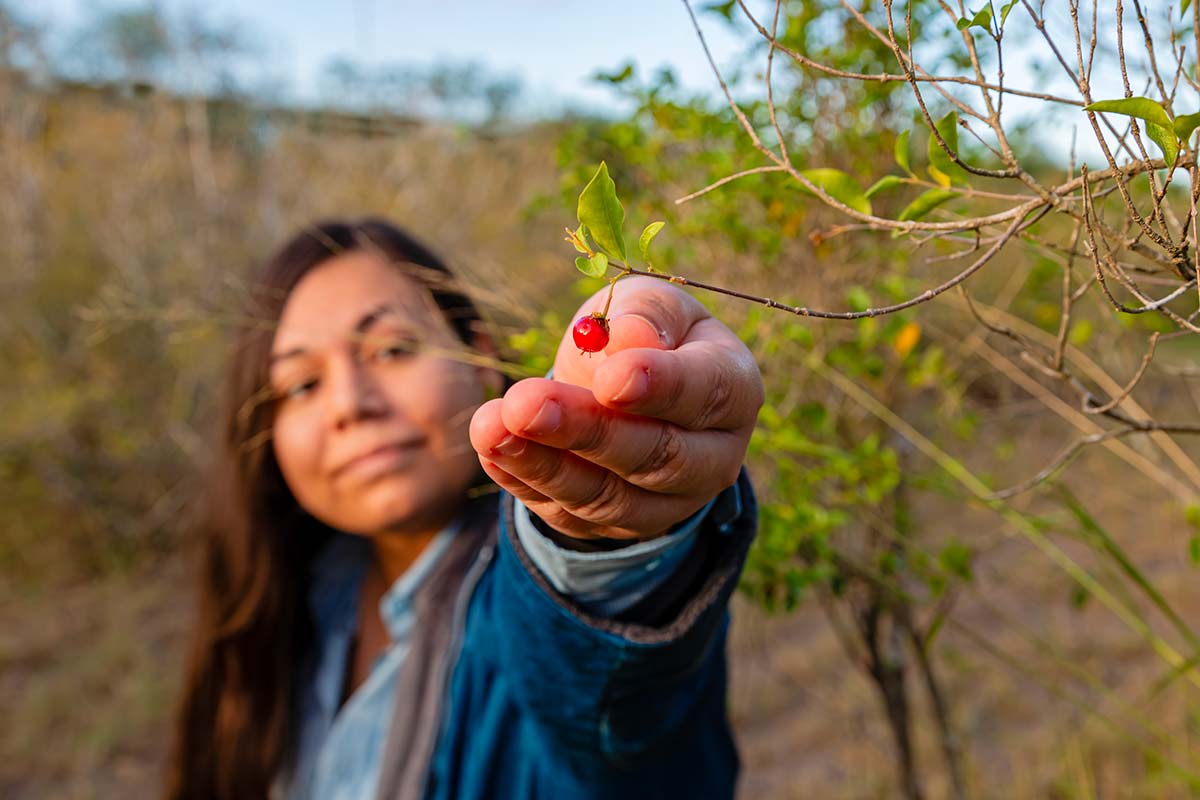
A manzanita fruit is collected at Marinoff Nursery in Alamo, where seeds are prepared for planting.
Larry Ditto
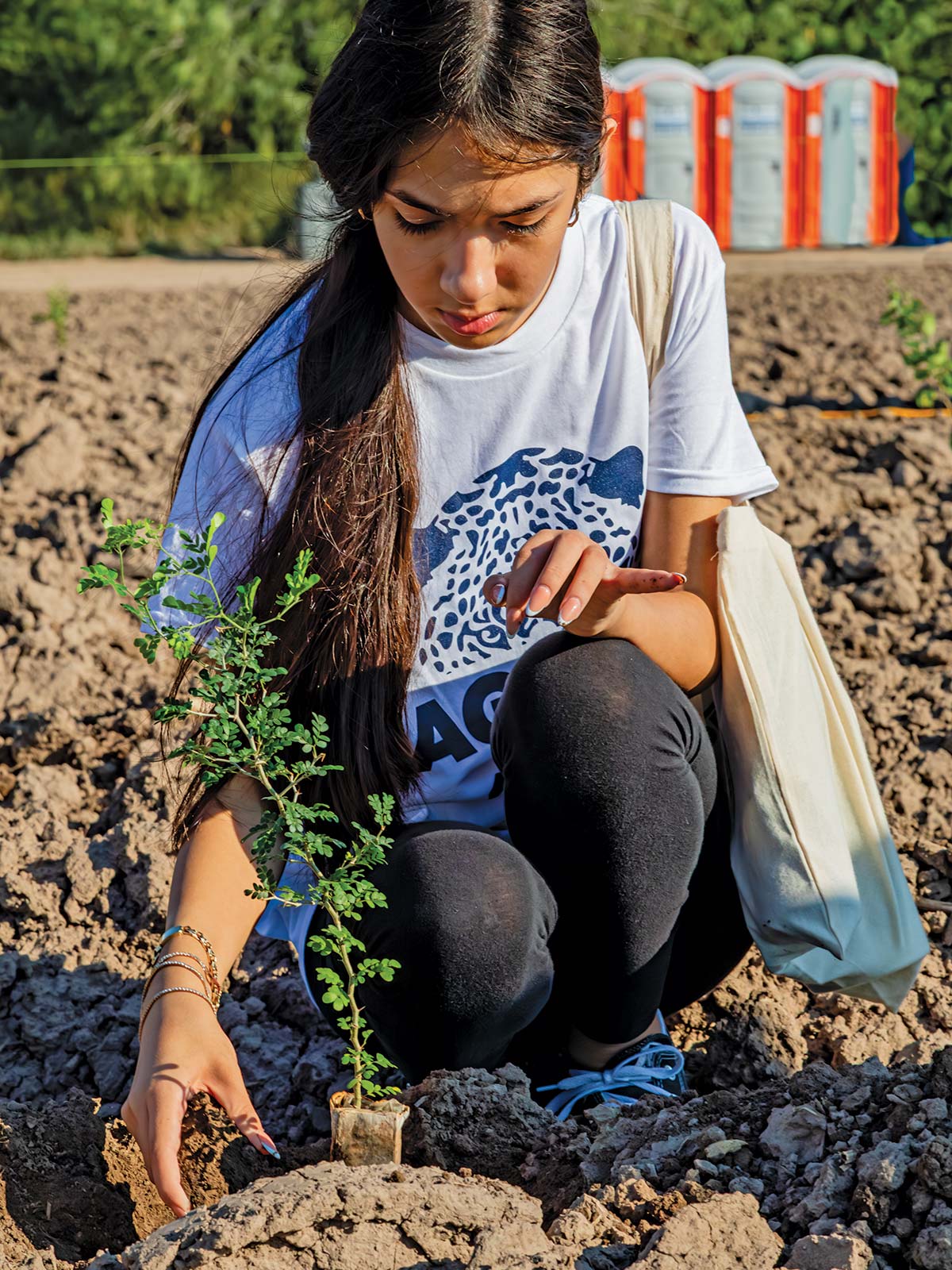
A volunteer plants a Texas ebony seedling.
Larry Ditto
From Field to Forest
Last year the 9 acres of the Milagro tract produced a crop of organic cabbage for Rio Fresh, a third-generation produce grower and packer. Before the Reforestation volunteers arrive, a tractor has plowed the soil into east-west rows. A dense thicket of 100-year-old mesquites, ebony trees and understory bushes borders the tract to the west and north.
Volunteers sign in near a banner that reads, “Let’s Restore the Thornforest Together.” It outlines the work ahead: Get your shovel. Go to one of the 200 rows where a leader awaits. Pick up a blue crate. Use a 6-foot rope to measure the distance between seedling holes. Dig a hole as deep as the top of the plant band. Put it in and backfill.
Small groups of family or friends work eastward down each row. Some organize a division of labor: the leads measuring the spacing and wielding shovels or post-hole diggers. Then come the planters with a crate of seedlings. In other rows, two or three dig, then plant and then measure to the next site. Dragonflies flit past while a turkey vulture tilts overhead.
Wearing hats and leather gloves, Mitchell, Michelle, Lindsey and Joaquin Sternberg of Mission show they know about getting down and dirty. “It’s different every year—the people, the location, the weather,” says Mitchell, who has been participating since the 1990s.
School buses of elementary, middle and high school students arrive. Idea Los Encinos of McAllen sends three buses of students. Another school sends nearly 200 students.
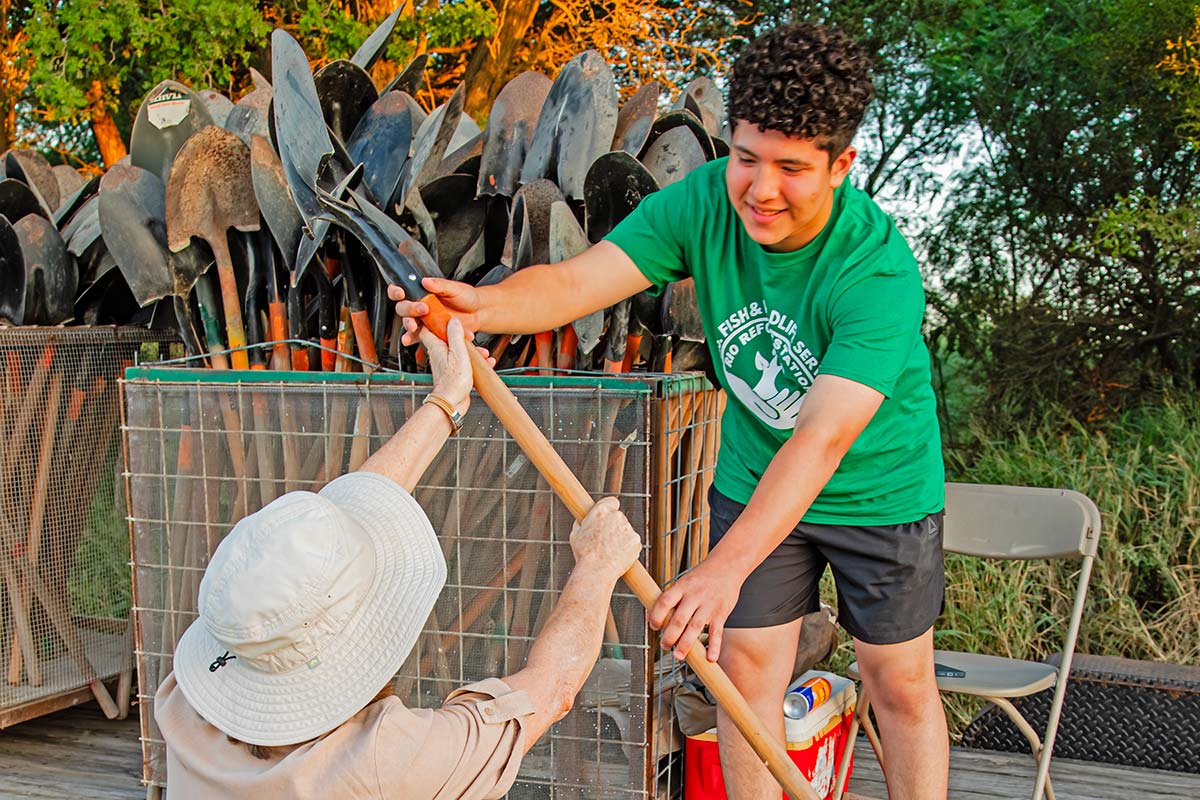
The Rio Reforestation project provides plenty of shovels for volunteers to use for the day.
Larry Ditto
Berta Palacios of Pharr oversees 20 Hidalgo County 4-H kids participating as a community service project. She spies high-spirited fifth graders larking and asks them, “Is that safe, the way you’re holding that shovel?”
Low humidity and a constant breeze temper the 85-degree air, which is filled with happy chatter. “It’s really fun, something to do on the weekend with friends. We all like doing it,” says Jennavie Juarez, one of 15 from the Weslaco High School National Honor Society here for their third year.
Girl Scout Troop 269 from La Feria has returned as well. “The girls enjoy it,” says Krystal Cruz, a scout leader and parent of a volunteer. “This is something we hope to continue every year.”
Maria Ortega and her three young children tackle a row themselves. “This is the very first time we have planted anything,” she says.
Near them Victor Ostolaza Jr. is digging holes with his father while his wife, Cynthia, and daughter Kiara follow with the seedlings. He explains that Kiara’s school involvement brought them out. “We participated before because of her.”
Row leader Chad Wilmoth, a retired Rio Hondo science teacher and member of Magic Valley Electric Cooperative, grew some of the seedlings Marinoff distributes. Row leaders know not to fuss if seedlings are not planted at the exact spacing or depth. Volunteers familiar with the event understand that engaging and energizing the community is an important part of the work.
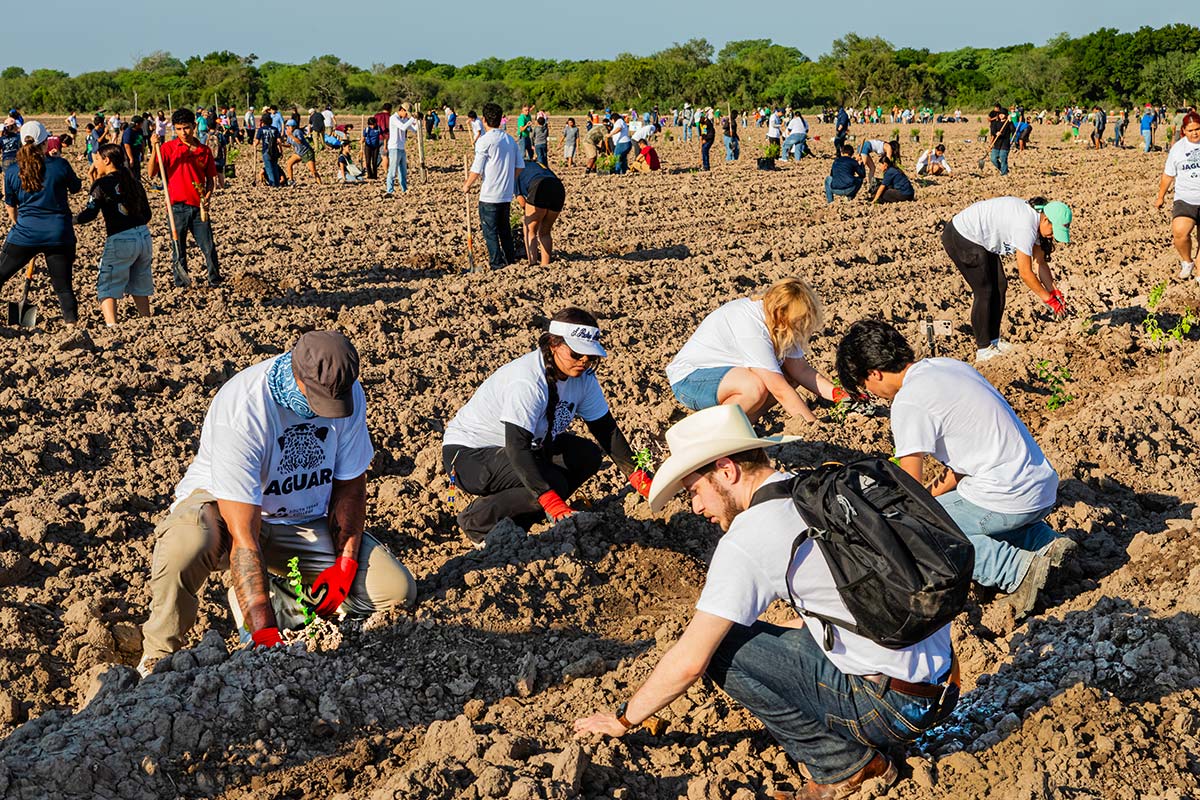
Hundreds of volunteers are scattered among the 200 rows that will be filled with plants.
Larry Ditto
A young boy jumps on a shovel his mom holds steady, upright. A teen girl empties her water bottle onto a newly planted Western soapberry. After completing their rows, 23 kids in the Green Club of Idea Mission lean on their shovels, listening to Tejano music from a small speaker.
“It’s controlled chaos,” Dale says as the event winds down. “Survival could be 100% this time since the tract is surrounded by agriculture and its moisture. Tight proximity results in a more diverse habitat.”
Set Up for Success
Dropped gloves and empty crates litter the field as volunteers head home after picking up a boxed lunch. If they want, workers can take home a pot of chile pequin, crucita or Mexican hat. After all, they now know how to plant them.
Soon after Rio Reforestation, contractors insert a 3-foot-tall durable tree tube around each plant. Besides thwarting plant nibblers, morning moisture collects on the tubes and trickles down to the seedlings. That’s the only moisture the young plants get besides rain.
Over time, wild seedlings will pop up under the taller trees, taking advantage of the shade and moisture. Insects, birds and other creatures will spread out into restored habitat.