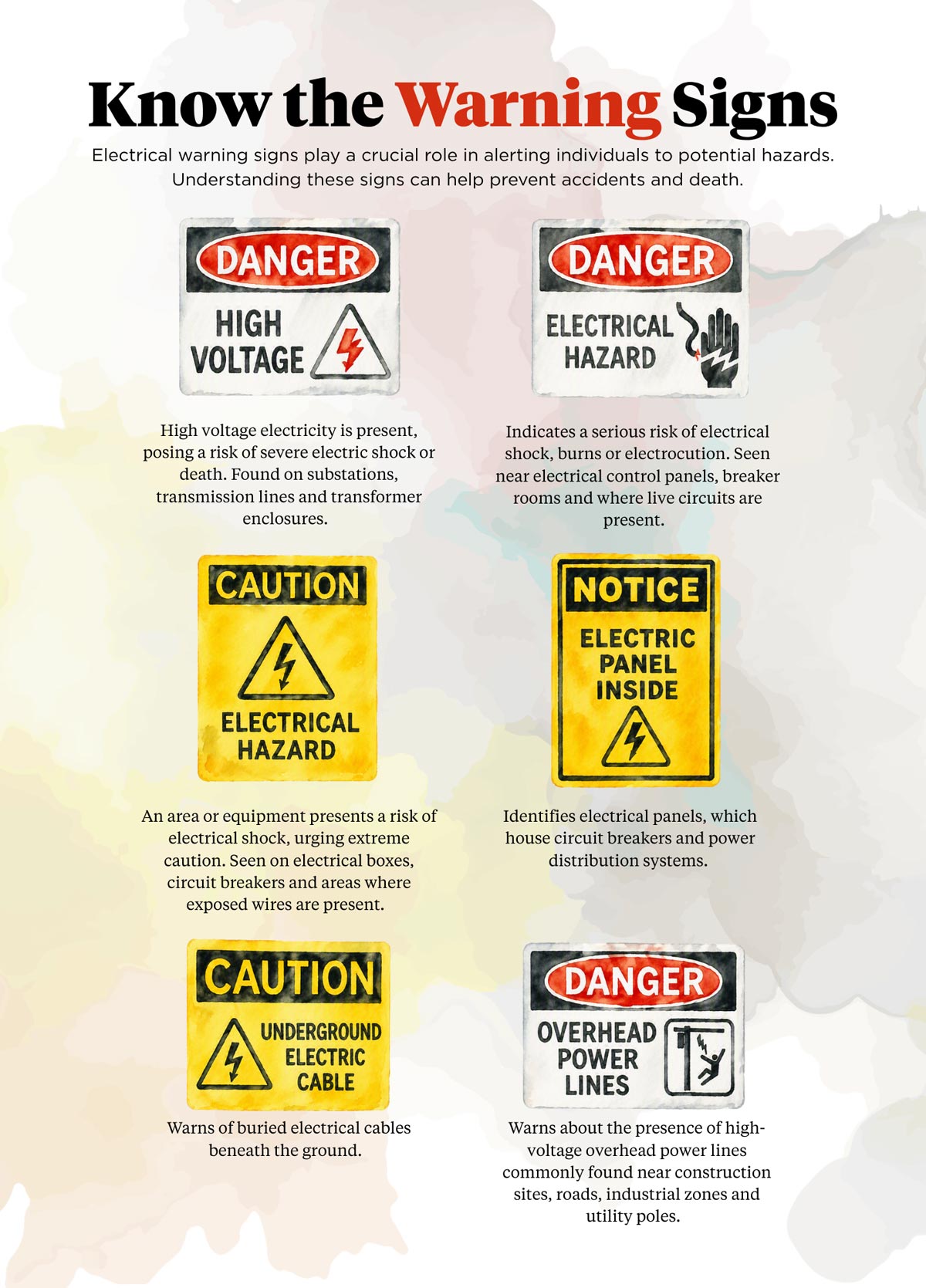
From the power lines that string across roadways to the green transformer boxes that occupy your neighborhoods and lawns, electric equipment is a vital part of delivering safe, reliable power to homes and businesses. Chances are you pass by this equipment every day and understanding its purpose can reinforce the importance of staying safe around electrical components.
Overhead Power Lines:
Long, visible wires strung between poles that carry high-voltage electricity.
- Maintain a 10 ft. distance at all times.
- Keep toys, drones and personal items away.
- Never touch a downed power line and stay at minimum 35 ft. away.
- Call MidSouth EC immediately if you see a downed or damaged line.
Guy (Guide) Wires:
Steel cables used to stabilize utility poles, anchoring them to the ground often covered by a yellow guard marker.
- Do not climb, swing on, play around, cut or remove.
- Call MidSouth EC if no yellow guard marker is present.
Underground Power Lines:
Buried lines below the ground that carry high-voltage electricity.
- Texas law requires calling 811 at least 48 hours prior to digging. This allows utility companies to flag/mark underground services.
Transformer Boxes:
Green boxes commonly located in yards and along roadways containing energized electrical equipment.
- Stay at least 10 ft. away.
- Never climb, sit or play on boxes.
- Avoid planting shrubs, trees, flowers or structures within 10 ft.
Meter Boxes:
Secure enclosure housing electrical meter to measure electricity consumption. Typically mounted on or near a home or building.
- Do not tamper with seals or wiring.
- Keep the area around the meter accessible.
Electrical Panels and Breaker Boxes:
Central hub that distributes electricity throughout homes and buildings. Contains circuit breakers to protect against power overload and potential electrical fires.
- Keep panel clear and accessible.
- Never handle with wet hands or in wet conditions.
- Properly label breakers for easy identification.
Ground Fault Circuit Interrupters (GFCIs):
Special outlets that quickly shut off electricity when detecting dangerous energy leaks. Commonly installed near water sources to prevent electric shock.
- Test GFCIs monthly using the “test” and “reset” buttons.
- Install in bathrooms, kitchens, garages and outdoor locations.
- Replace outlets that do not function properly (consider hiring a professional).
Substations:
Facilities that transform and distribute power across communities.
- Never climb, damage or enter the fence surrounding a substation.
- Maintain a safe distance of 35 ft. from fencing.