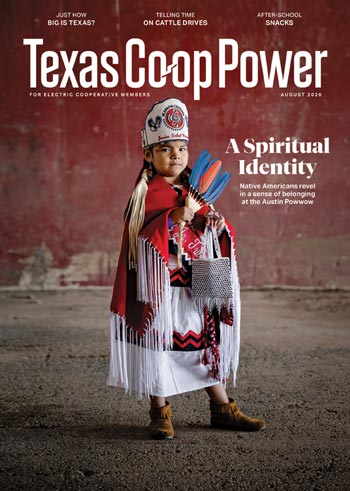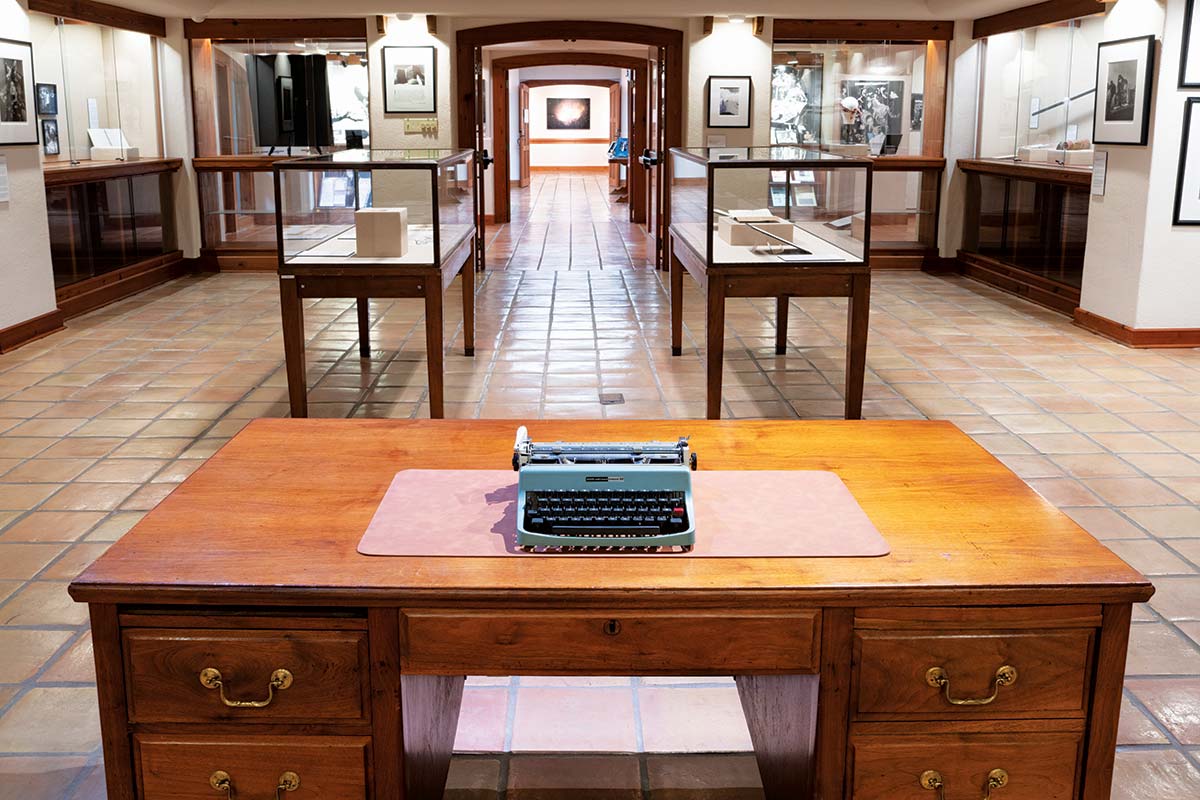
Cormac McCarthy’s writing desk and the last guitar pick used by Stevie Ray Vaughan are part of a new exhibit that celebrates the 40th anniversary of the Wittliff Collections—a research center, archive and museum on the Texas State University campus in San Marcos.
The exhibit, The Spirit of the Wittliff in 40 Objects, showcases 40 items—some iconic and some obscure—that embody the essence of a collection that’s dedicated to preserving the cultural heritage of Texas, the Southwest and Mexico.
Originally founded in 1986 by screenwriter Bill Wittliff and his wife, Sally, the collection started as the Southwestern Writers Collection with the archive of folklorist J. Frank Dobie. A few years later, Wittliff donated his production archive of the Emmy-winning Lonesome Dove miniseries, which he wrote, and convinced many of the crew, including the set and costume designers, to do the same, creating a permanent exhibit.
In 1996, the Southwestern & Mexican Photography Collection was established, followed by the Texas Music Collection in 2017.
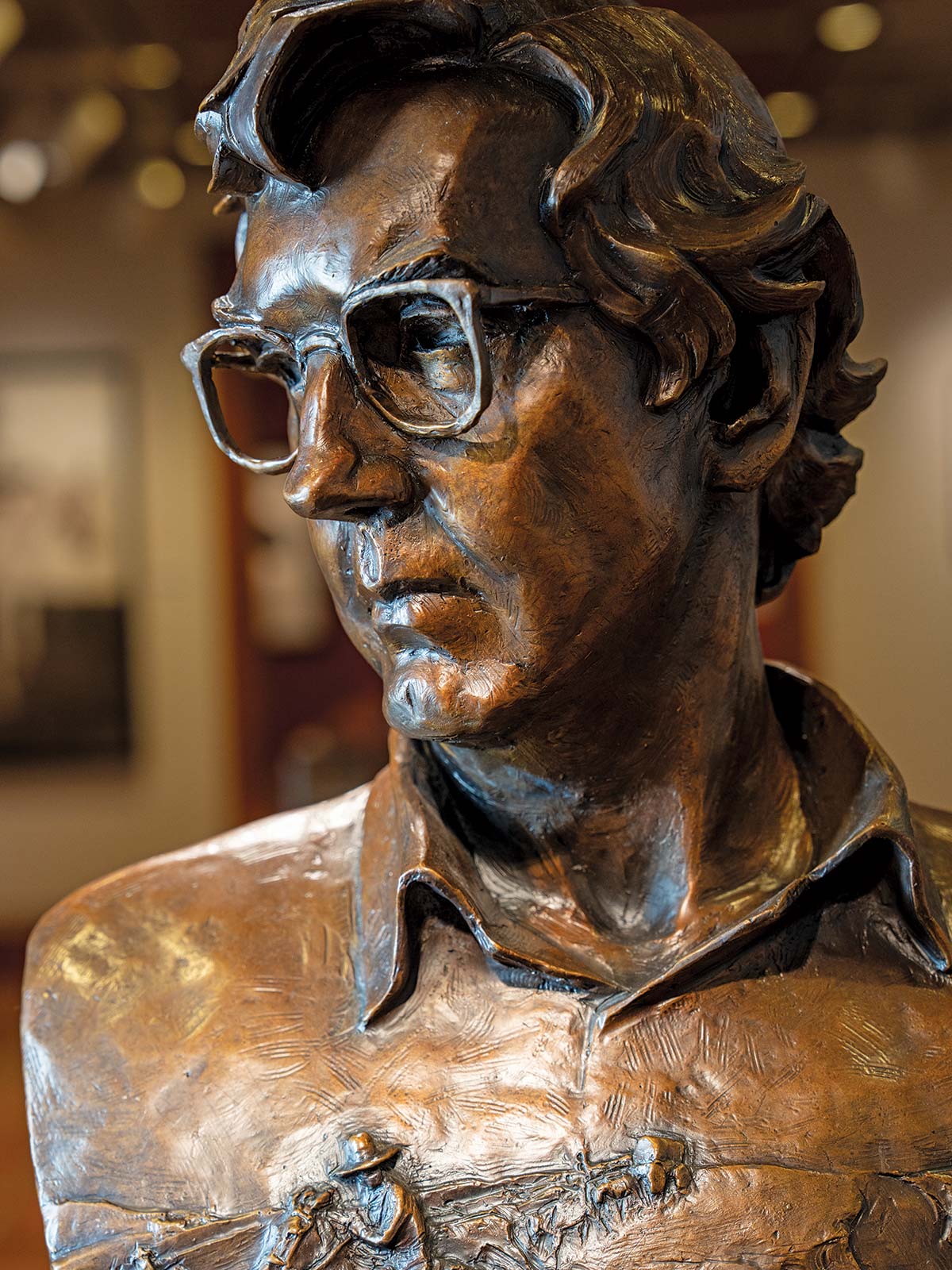
A bronze bust of author Larry McMurtry by sculptor Clete Shields.
Anna Mazurek
Literary curator Carrie Fountain selected the items for the new exhibit. “I saw it as an opportunity to really learn the collections myself,” says Fountain, a New Mexico native and the 2019 poet laureate of Texas who joined the Wittliff last July.
Her goal was to make a well-rounded exhibit with multigenerational appeal. The exhibit entrance features one of Willie Nelson’s bandannas and a Wyatt McFadden photograph of Beyoncé sporting pigtails, a headband and a T-shirt showing a photo of Nelson—also in pigtails and a headband—illustrating one generation’s influence on the next.
During the curation process, Fountain gravitated toward items that “signified a larger narrative or an interesting little piece of a larger narrative.” One of those objects was a historical American Girl doll named Josefina Montoya. It’s accompanied by correspondence between the Pleasant Co., which manufactured the doll, and historian Marc Simmons, who oversaw a multiyear process to ensure the doll was a historically and culturally accurate depiction of a girl living in 1824 New Mexico.
First drafts of famous works and inklings of future success by writers Sandra Cisneros, McCarthy and poet Naomi Shihab Nye are also on display. Other unique highlights include a drafted alternate ending scene of the movie Cast Away by William Broyles Jr. and the first letter author Rick Riordan received from an editor about Percy Jackson and the Olympians, a series that would later achieve global fame.
“(Bill Wittliff) wanted these materials to inspire people,” says Texas music curator Hector Saldaña, a former music journalist for the San Antonio Express-News who joined the organization in 2017. Saldaña has fond memories of his three-hour job interview with Wittliff that “flew by” thanks to Wittliff’s charisma, along with Wittliff’s last visit to the gallery just days before his death from a heart attack in June 2019.
Saldaña, like Wittliff before him, loves seeing students motivated by the first drafts on display and the perseverance of following a dream. “I always try to notice what people are attracted to,” says Saldaña, who crafts exhibits based on observations, including The Selena Effect, an exhibit about the Grammy-winning Tejano singer that runs through December 6.
When an unpublished photograph of teenage Selena dancing on stage by photographer Al Rendon was displayed in a remote gallery corner, Saldaña noticed students taking selfies and gathering around it, deep in thought. He instantly became curious about the emotions the image evoked in younger generations.
“It was right then that I thought of the title The Selena Effect and knew I would do some kind of exhibit about that feeling,” he says. The exhibit inspired a Texas State class assignment in the fashion merchandising department about how to style Selena today.
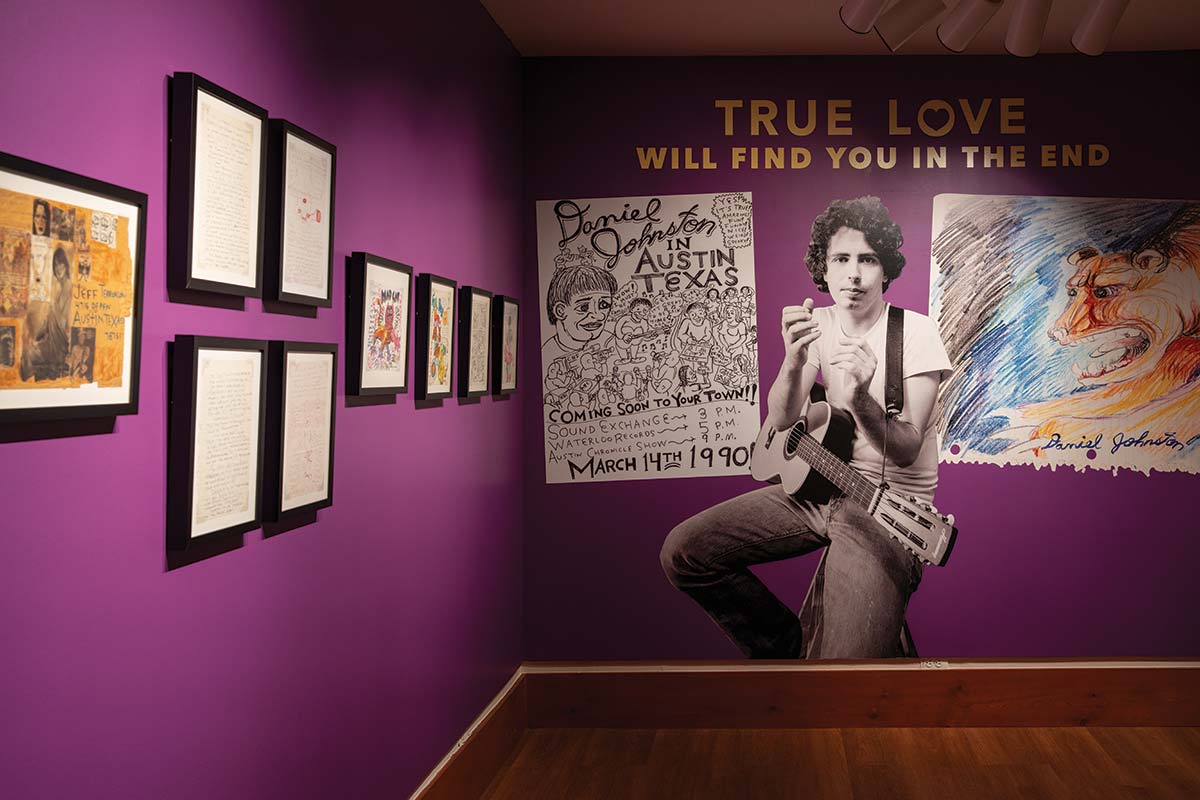
The archive of musician and artist Daniel Johnston.
Anna Mazurek
Several Wittliff exhibits focus on recent acquisitions, including the archives of Grammy-winning singer-songwriter Shawn Colvin and Austin artist Daniel Johnston and a first look at the 2024 McCarthy acquisition that doubled the size of the collection. These, along with the permanent Lonesome Dove exhibit, are open to the public for free.
One of the most pivotal moments for the Wittliff Collections was finding a home at Texas State, Saldaña says. The collection is funded by the university, an endowment from the Wittliff family and donations. Located on the seventh floor of the Albert B. Alkek Library, the 15,000-square-foot space went through two expansions, in 2009 and 2020, with plans to expand further in the next five to 10 years.
The university’s May 2025 master plan included a new campus building for a dedicated gallery and programming space, while the current location will be utilized for research. A fundraising drive for the expansion is underway to raise $20 million, which the university will match.
“The biggest challenge has been processing acquisitions,” says Saldaña, noting it’s very labor-intensive, and staffing would likely increase with the expansion. The museum has a staff of 15, including photography curator Carla Ellard. In March, Marise McDermott, former president and CEO of San Antonio’s Witte Museum, took over as executive director.
The team’s focus is programming and processing notable acquisitions, including works of artist Kerry Awn, singer-songwriter and actor Stephen Bruton, country musician and songwriter Chris Wall, and folk singer Carolyn Hester. The museum is in the process of acquiring the archives of Yellowstone screenwriter Taylor Sheridan.
“Everyone that works at the Wittliff realizes … we are only temporary stewards of this material,” Saldaña says. “We’re privileged to do it.”
Fountain is focused on the future and keeping a pulse on topics researchers and students want to study, drawing inspiration from the collection’s founding archive of Dobie, who said, “Great literature transcends its native land, but none that I know of ignores its soil.”
That weighs on Fountain. “For me, the future of the Wittliff is both expanding the geographical definition of the American Southwest and making that bigger geographically, culturally (and) artistically,” she says. “It’s a tremendous responsibility.”