It’s not every day that a ghost town comes back to life. But that’s what’s happening in Washington, a town along the Brazos River resurrected so visitors can experience a linchpin in Texas’ history.
Touted as the birthplace of Texas, it was here that delegates signed the declaration of independence, 190 years ago March 2, that created the Republic of Texas. It was also here, in one of the short-lived nation’s interim capitals, that the Texas Congress voted for annexation by the U.S. in 1845.
“We are the place where Texas became Texas,” said Jonathan Failor, director of the Washington-on-the-Brazos State Historic Site, “where people came together and stood against a tyrannical dictator and set their sights on something greater, something better, and eventually joined the United States 10 years later.”
Those two historic decisions took place in buildings that sat roughly 300 feet apart, but over the course of decades, those buildings—along with the rest of the original town—south of College Station, disappeared into farmland after locals bet on steamboat trade and let the railroad bypass them.
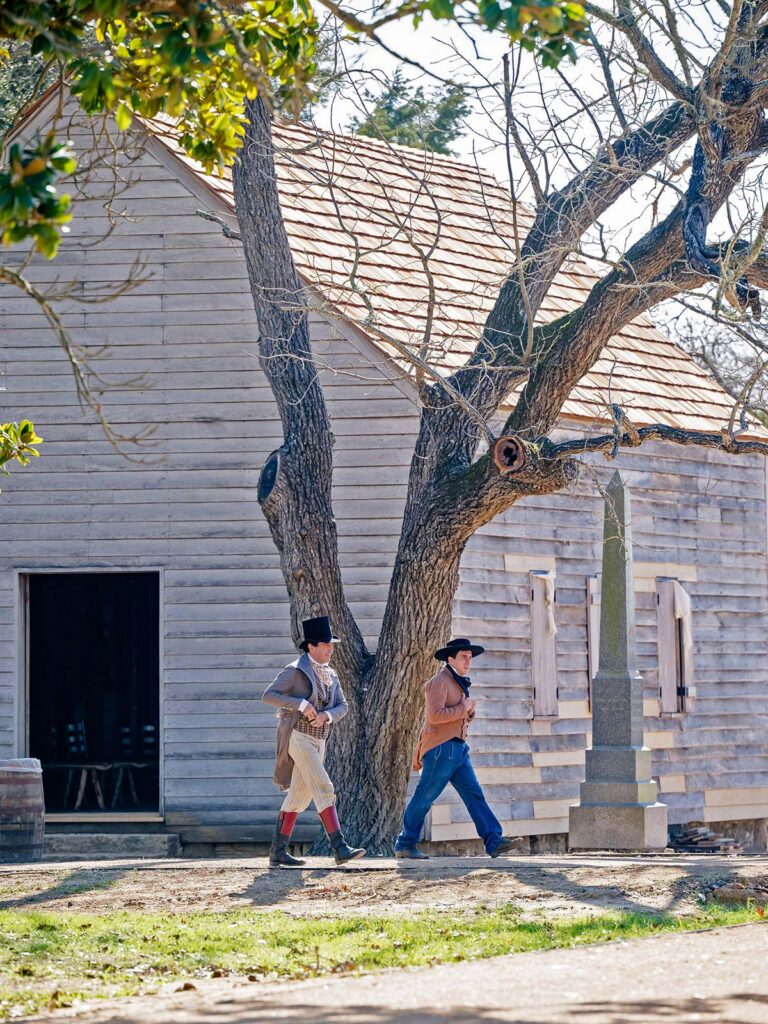
Historical reenactors at Independence Hall and the 1899 marker at Washington-on-the-Brazos State Historic Site, where the Texas Declaration of Independence was signed March 2, 1836.
Tiffany Hofeldt
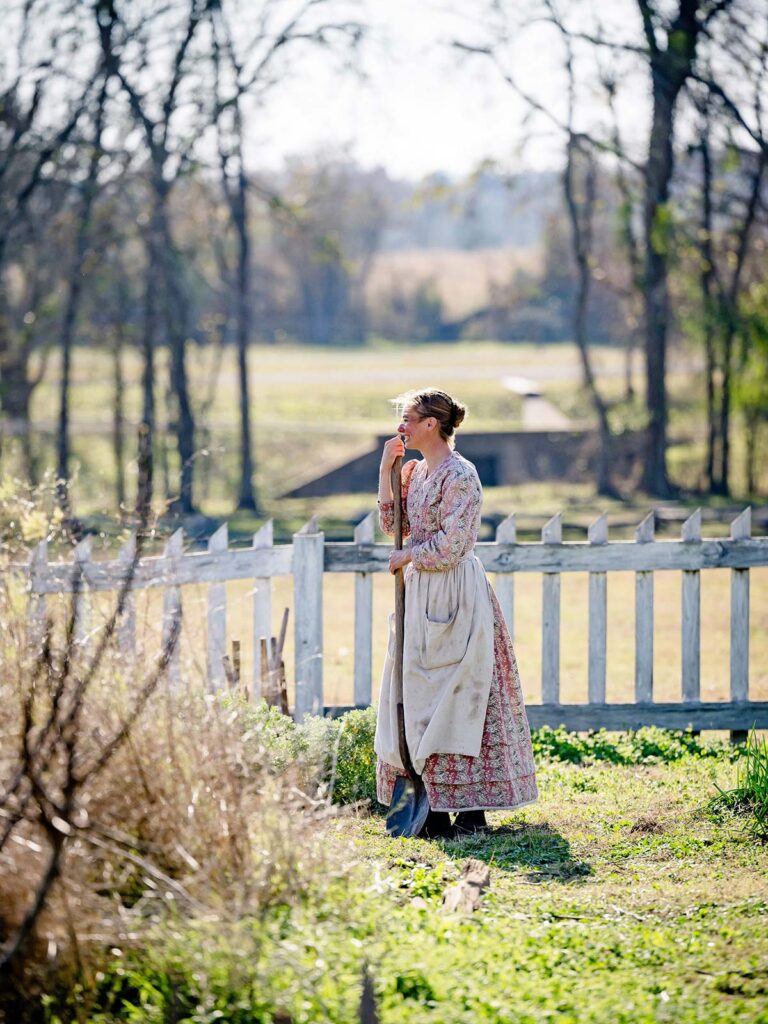
A reenactor tends a garden.
Tiffany Hofeldt
“The affluence went to the railroad towns like Brenham and Navasota,” said Michael Moore, project manager for the historic townsite. “The brick buildings here were sometimes dismantled and the bricks moved to Navasota to build a new building. Washington was left forgotten and kind of vanished into the landscape.”
It became a park and historic site in 1916, and a replica building of Independence Hall, where the 59 delegates met, was constructed in the 1920s and rebuilt in 1969.
“That for the longest time was the only thing out here,” Failor said. “This was one building that told the story of Texas independence in a town of which there was at one time 1,000 people.”
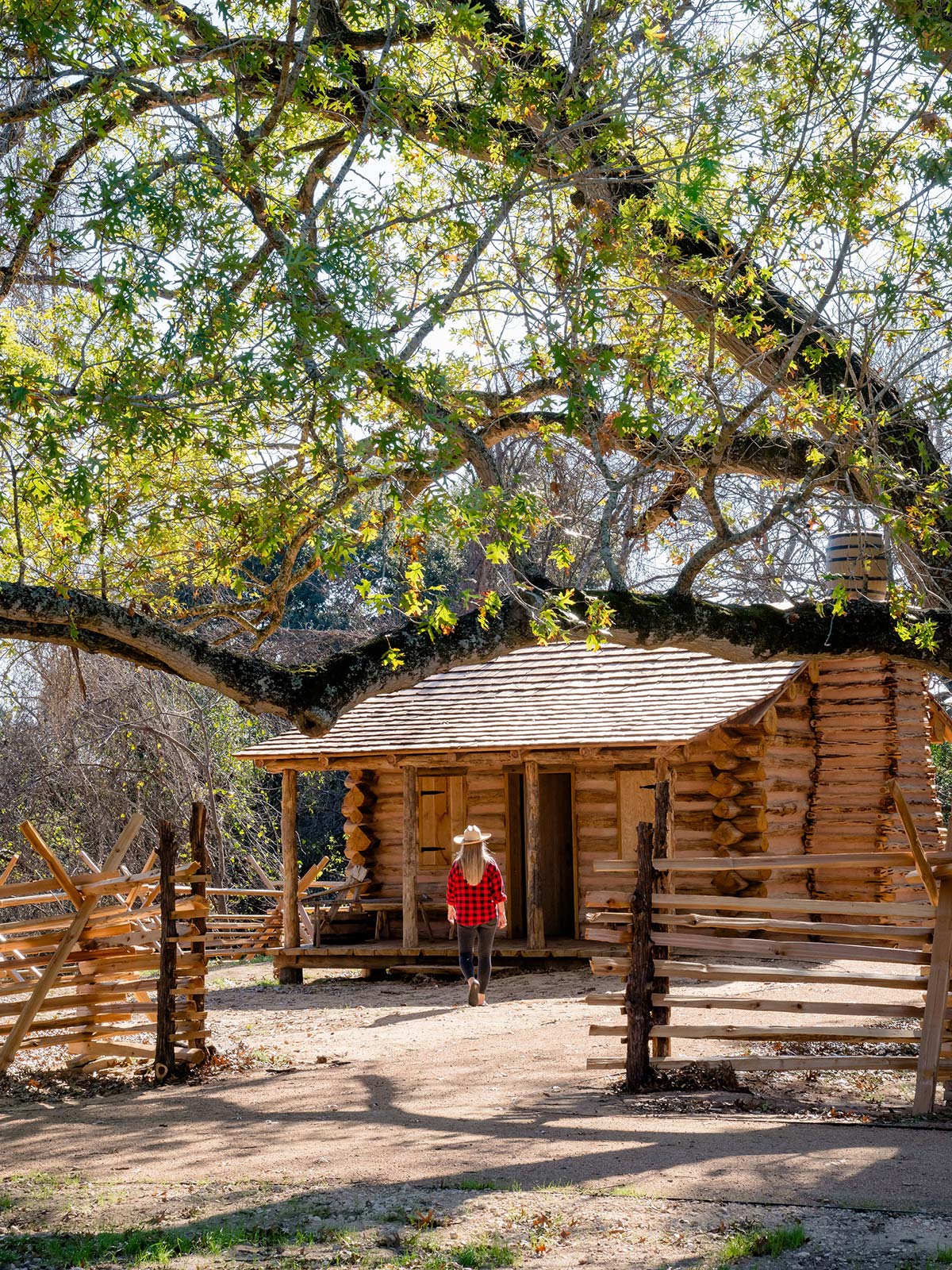
But now people are once again strolling down Main, Austin and Ferry streets beneath the shade of pecan and live oak trees, meandering in and out of a drugstore, an apothecary shop, Sam Houston’s presidential office and a blacksmith shop thanks to a $57 million renovation project, mostly funded by the state. Ten replica structures dot the original townsite, which reopened in November after two years of extensive archaeological exploration, construction and renovations.
Moore and his team researched and re-created buildings as near to their original locations as possible while balancing the preservation of ruins. Some of the new buildings are only partially built out to give visitors a sense of the space it once occupied or a view of the remnants of the original town uncovered in an archaeological dig.
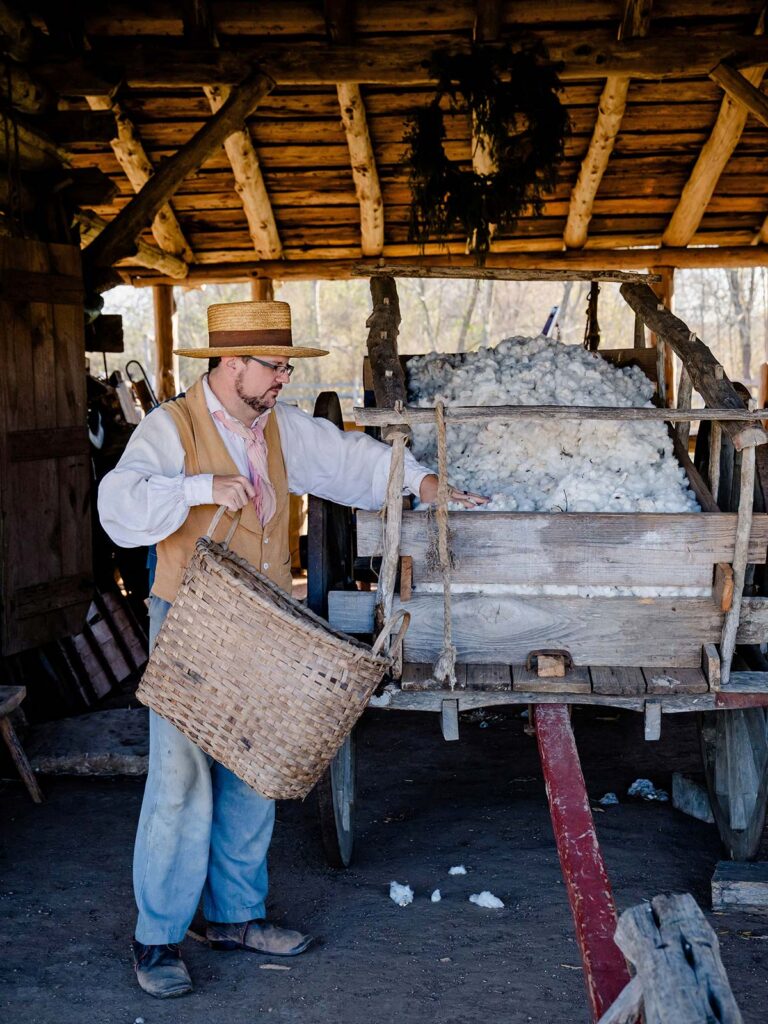
A reenactor deposits freshly picked cotton into a wagon.
Tiffany Hofeldt
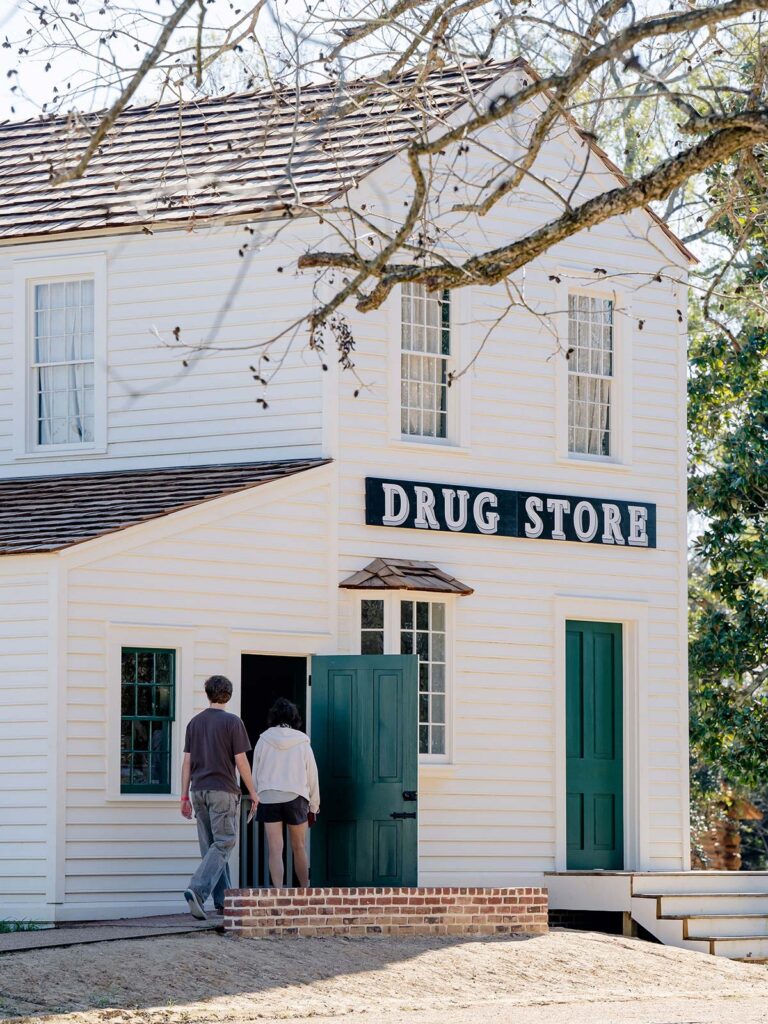
A drugstore is one of 10 replica structures on the original townsite.
Tiffany Hofeldt
Inside Hatfield’s Exchange, visitors can walk past a bar and upstairs to where the Texas Congress met while Washington was the capital, 1842–45. They can stop at a carpentry shop, watch demonstrations and hear the stories of the delegates who lodged there during the 1836 convention. For children, the townsite offers an immersive experience.
“They come and have fun, but also they can connect something visual, something tangible, to what they’re learning in school,” Moore said.
The visitors center and Star of the Republic Museum located on the same nearly 300-acre property managed by the Texas Historical Commission were also updated. The star-shaped museum, originally opened in 1970, underwent upgrades in technology and accessibility. Its six galleries contain artifacts, films and exhibits that walk visitors through the story of Texas, from its pre-Republic era through annexation and beyond.
Interactive exhibits let children dress in clothing of the time and barter in a re-created market. An Oregon Trail-type game helps kids understand the perils of transporting cotton to the market.
The complex includes Barrington Living History Farm, which was the homestead of Dr. Anson Jones, who was the last president of Texas. Visitors can expect to spend a half a day to take in everything the site has to offer, which includes trails and a picnic area.
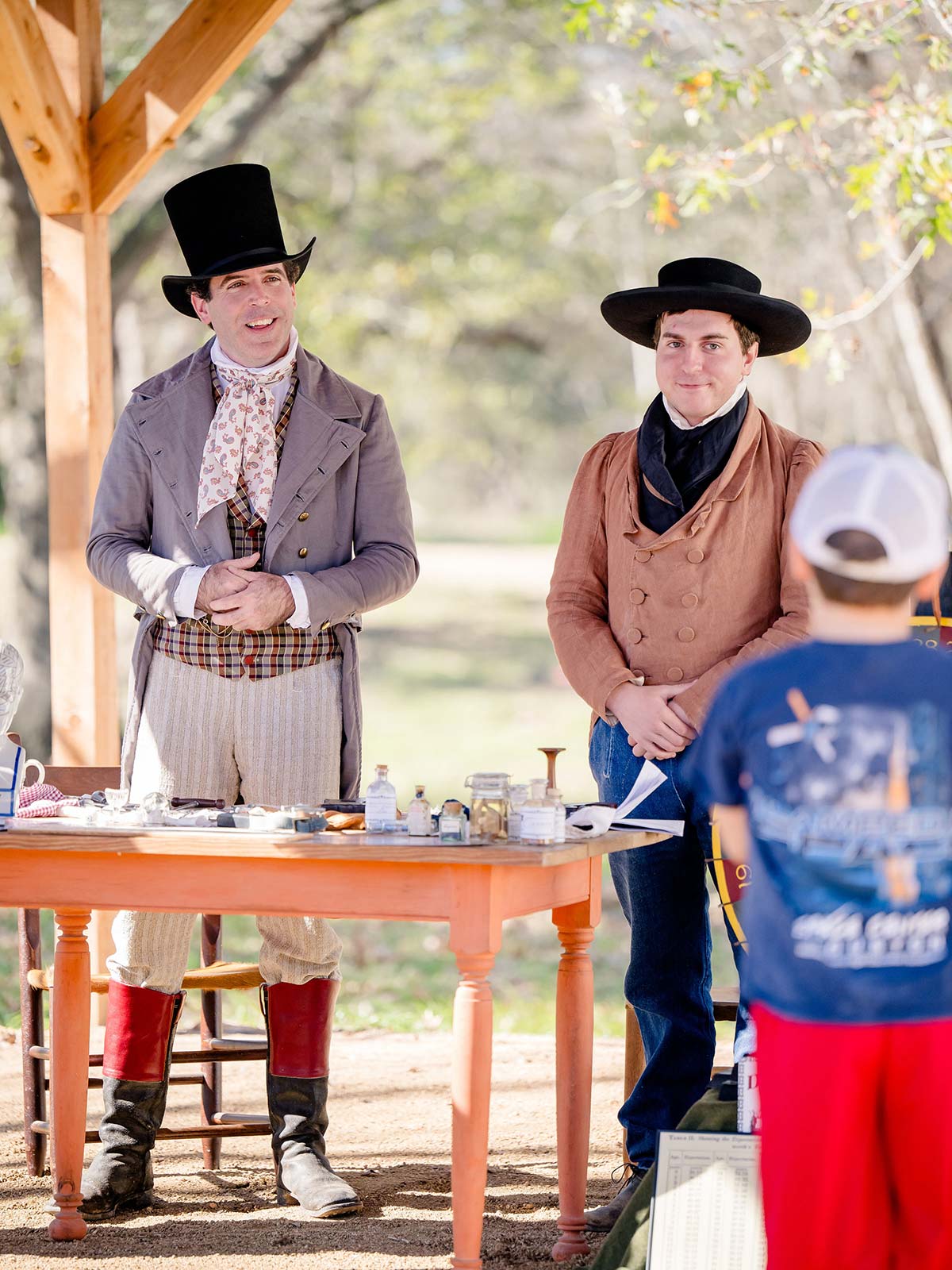
At Washington-on-the-Brazos reenactments, visitors learn about 1830s medicine that often used botanicals as part of homemade remedies.
Tiffany Hofeldt
Hall and Lott Tavern, the newest replica building, opens this spring. Davy Crockett spent the night here on his way to the Alamo, a place that every Texas schoolchild is admonished to remember.
“There’s so much connection between the delegates and the Alamo,” Failor said. “The drama, the risk, the uncertainty—it was very real, very palpable. It wasn’t like these are separate events where they aren’t communicating or they have no idea what’s going on. They’re completely connected.”
Improvements to Washington are meant to leave a lasting impression as well.
“We know Texas existed as its own country,” Failor said. “It’s a point of pride, it’s something that Texans know and non-Texans know. But where can Texans who’ve been here for seven, eight, nine generations and folks who have just got here, where can they go get that story? We want that to be here.”