Oak trees and prairies surround the campus of Texas A&M University, with sodium-rich water flowing through the clay and sandy loam soil that fills a 2,000-foot-deep aquifer. Rainfall can be unpredictable in this Post Oak Savannah ecoregion that receives about 10 inches less in an average year than nearby Houston, and sometimes experiences years of drought.
For gardeners, especially someone new to the area, the region may require an education before placing a trowel in the dirt.
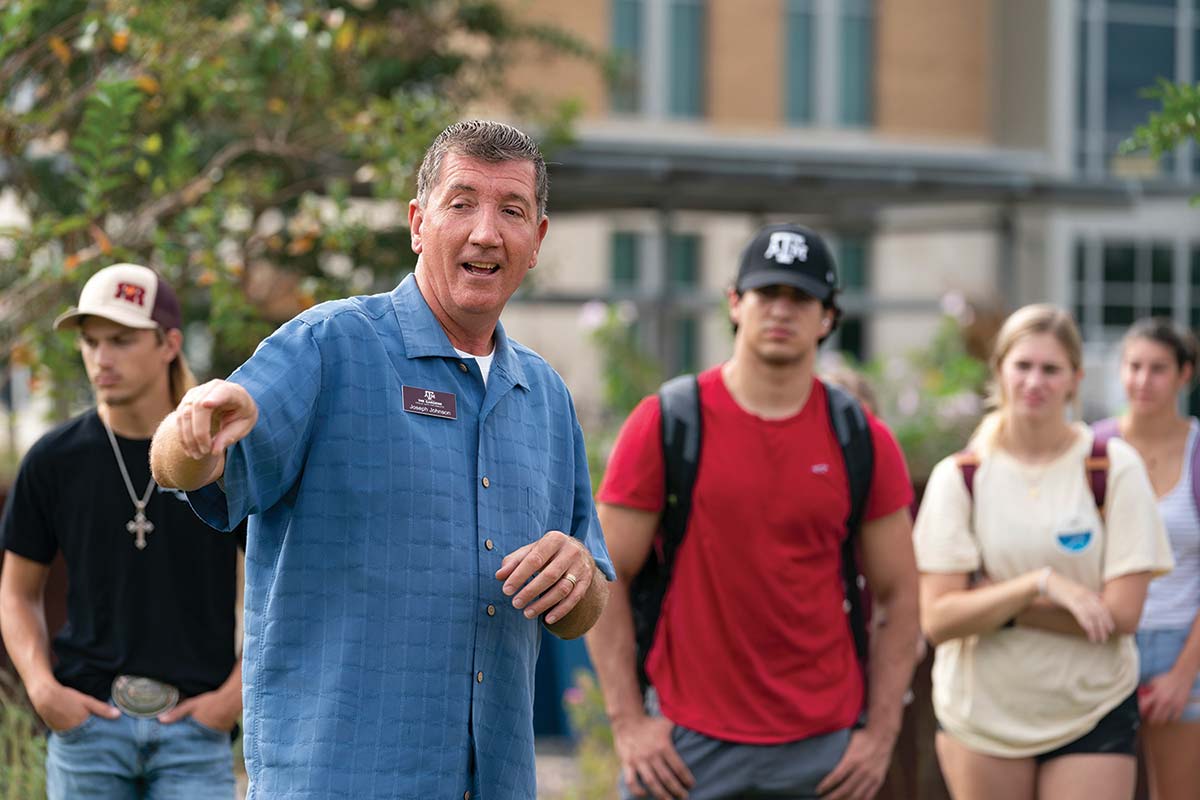
“It’s very challenging here because of the soil, water and climate,” says Joseph Johnson, gardens manager at the Gardens at Texas A&M. “There’s this joke that they put the college here because if you can grow it here, you can grow it anywhere in Texas.”
Johnson hopes to use the Gardens to help longtime residents and transplants to the Bryan-College Park metropolitan area learn how best to grow plants, use native soil to its full advantage, and capture and harness rainwater for irrigation.
The bigger picture is for visitors to develop a relationship with plants, trees and landscaping.
“My main goal is to connect people with nature,” he says.
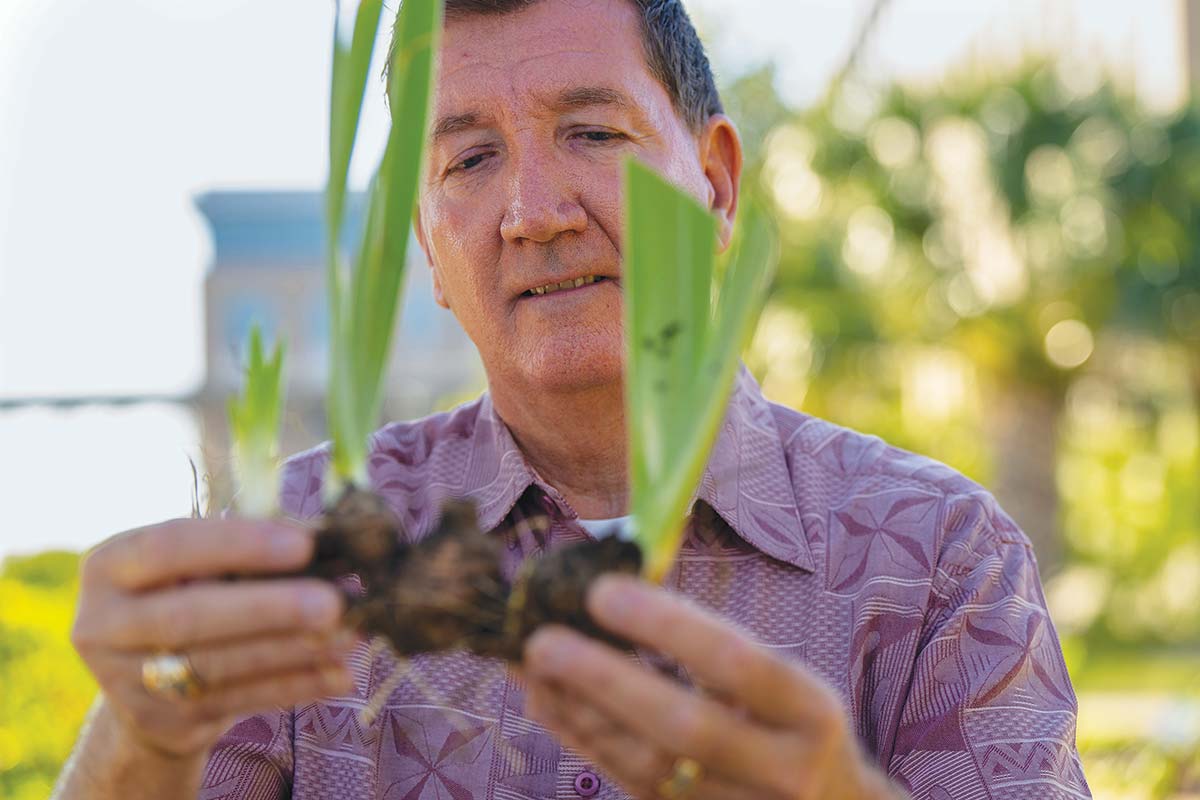
Johnson discusses bulbs such as daffodils and amaryllis.
Michael Miller/Texas A&M AgriLife
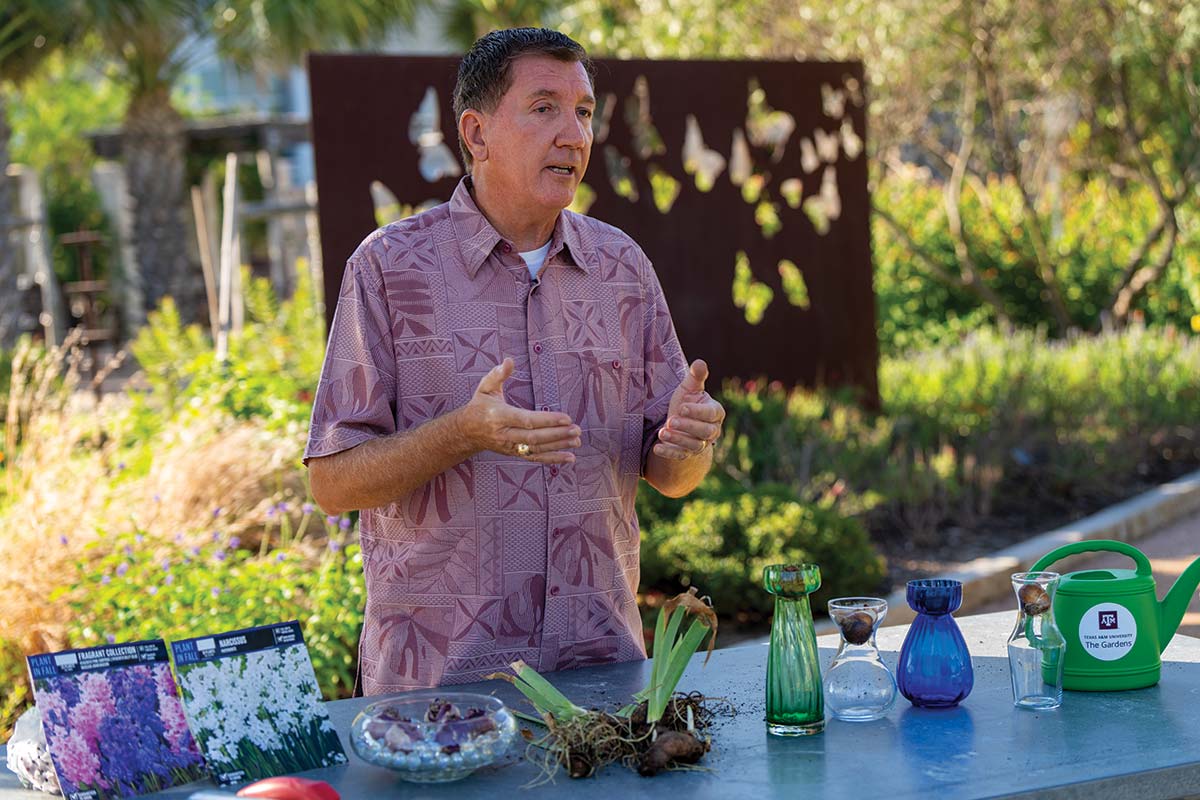
Johnson talks about bulbs during a landscaping presentation.
Michael Miller/Texas A&M AgriLife
Johnson graduated from Texas A&M with a degree in horticulture in 1988, a time when a campus teaching garden was just a dream. He worked at the Dallas Arboretum after graduation. Later, he managed 50 acres of landscape gardens and 300 acres of campus, interior public spaces and satellite properties for the University of Texas MD Anderson Cancer Center in Houston. He also served as director of horticulture at the 252-acre Shangri La Botanical Gardens and Nature Center in Orange.
“My niche is public gardens,” he says.
A Teaching Garden
The Texas A&M Board of Regents designated White Creek and the surrounding riparian area as the West Campus Greenway in 1998. In 2011, Mark Hussey, former vice chancellor and dean for agriculture and life sciences, set in motion a plan to expand the use of the greenway. Focus groups gathered input from students, faculty, garden clubs and master gardeners. Construction began in 2015, followed by Johnson coming on board in 2016 to manage the property.
The Leach Teaching Gardens opened in June 2018 with a focus on hands-on learning and demonstrations on native plants, water conservation and healthy living.
“Alumni Tim and Amy Leach were big supporters,” Johnson says. “They always had a connection with outdoor spaces, and this project really spoke to them.”
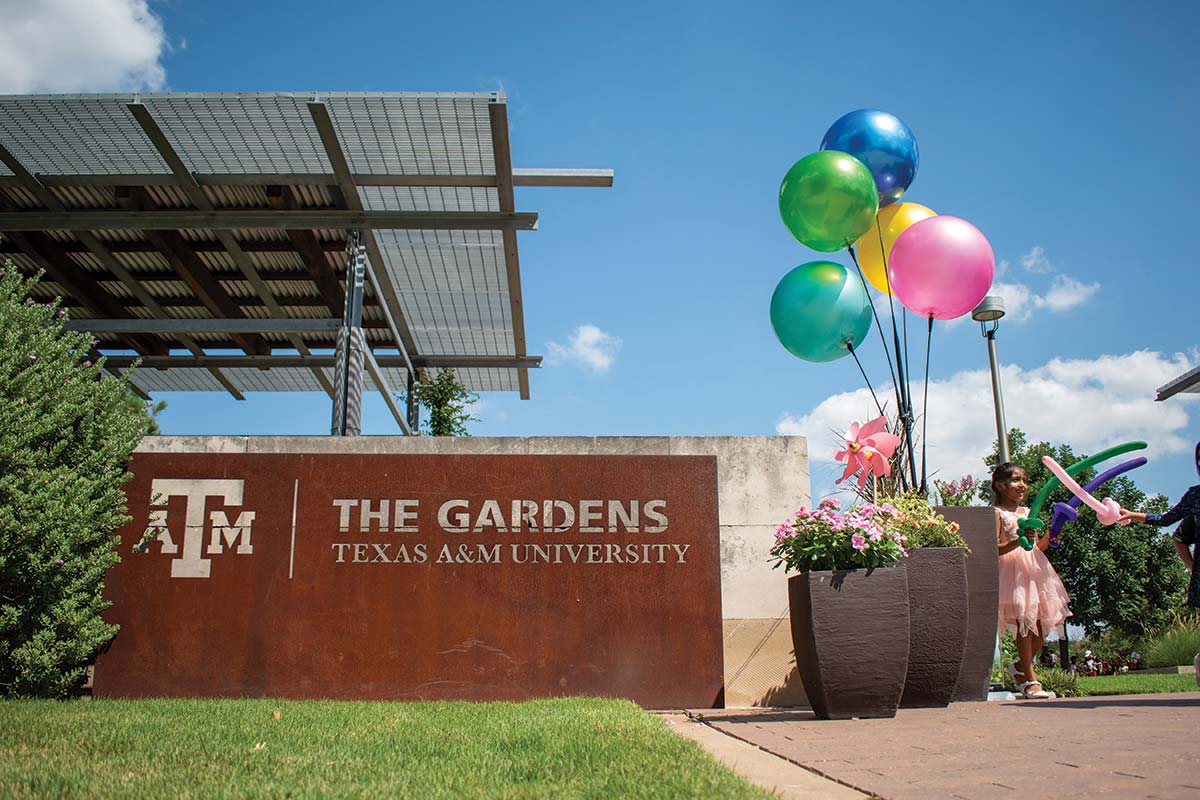
The entrance to the Gardens is decorated for the Summer Celebration.
Robert O’Brien/Texas A&M AgriLife
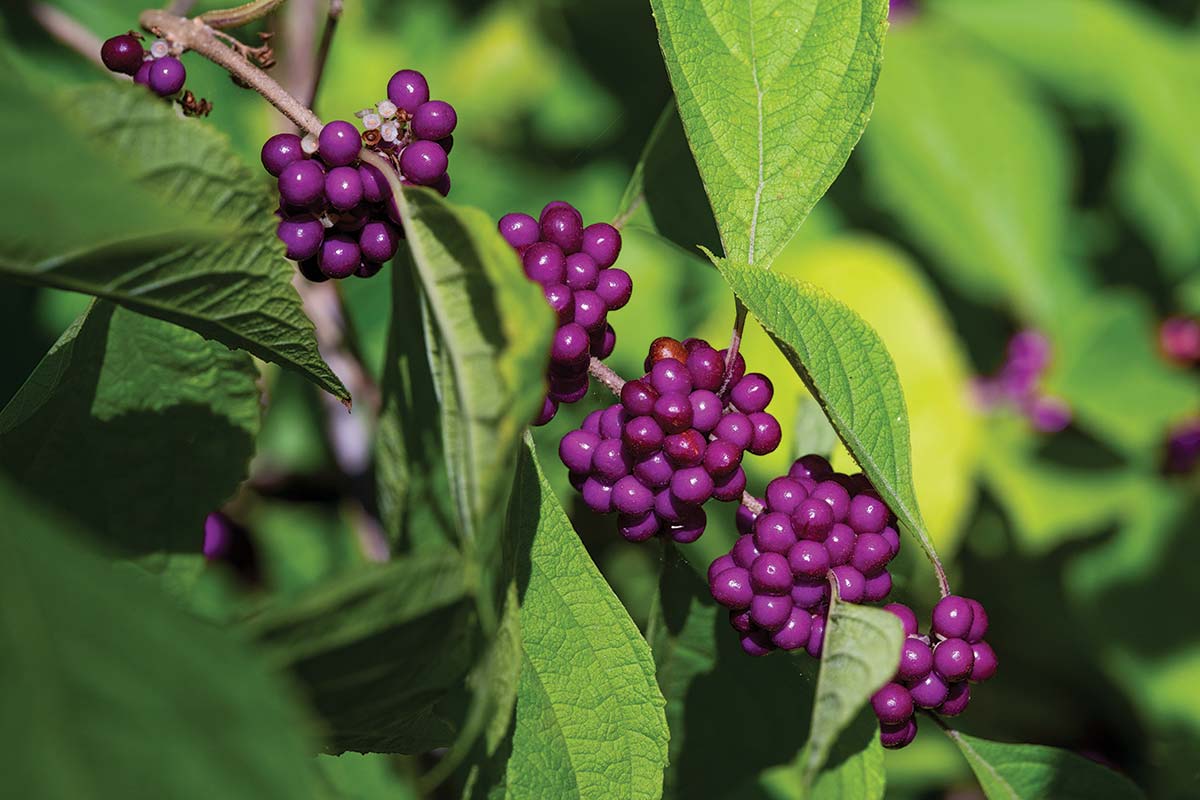
The American beautyberry is a Texas-native deciduous shrub famous for its showy clusters of iridescent and vibrant purple berries. Recognized as a Texas Superstar plant by Texas A&M AgriLife Research, it’s prized for its extreme resilience, wildlife value and natural insect-repelling properties.
Michael Miller/Texas A&M AgriLife
Phase I, a 7-acre green space for outdoor education, includes the Pavilion, patterned after the 1800s German architectural style known as the Carolingian octagon, which is found in many Central Texas German communities.
The Gardens is home to 21 thematic gardens, including the Butterfly and Bee Garden, Vegetable Garden, and Mexican Heritage Garden, as well as more than 300 citrus, other fruit and nut trees.
Crops are on display as well, including A&M cotton, which boasts burgundy leaves to complement the white cotton—the university’s colors. In addition, the Gardens features walkways, overlooks, water features and structures made of Texas limestone.
According to Johnson, the primary objective of Phase I is to help people learn what to plant and how to manage a small garden in their own yard.
“We want people to get ideas for the Brazos Valley area,” he says. “We wanted to show how to use native soil, water and climate.”
For instance, the region’s native loam soil can pose unique challenges.
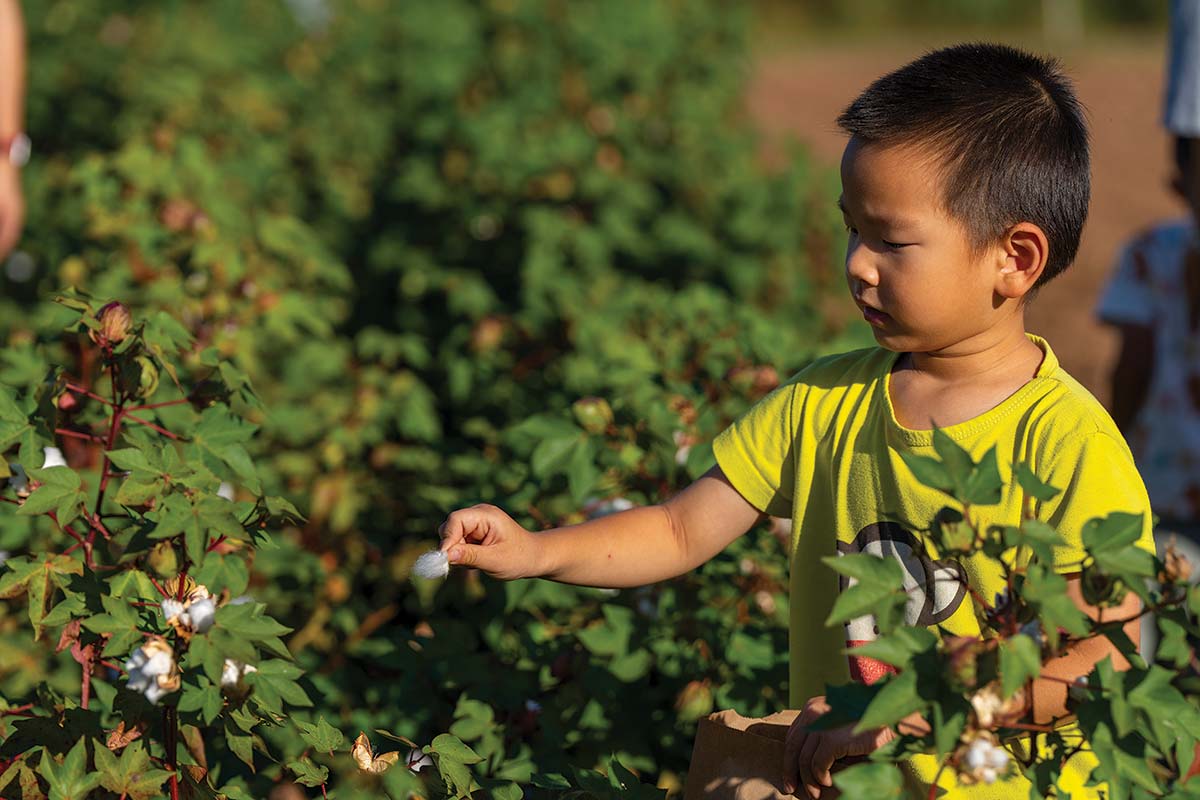
A visitor picks cotton from the Food and Fiber Field for the annual Fall Festival.
Michael Miller/Texas A&M AgriLife
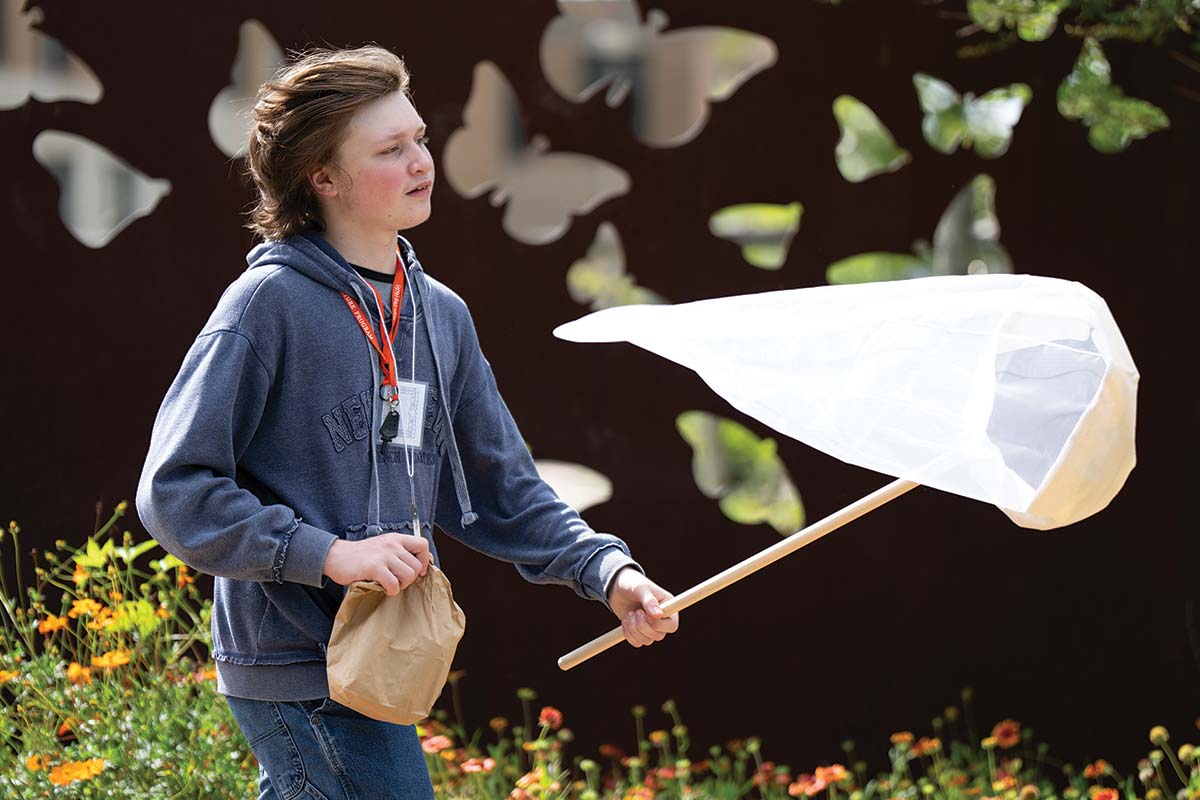
The Entomology Youth Adventure program is a weeklong, immersive summer camp for rising seventh to 10th graders. Students dive into insect science, careers, and hands-on collecting and pinning—frequently using the Gardens to learn basic field collection practices.
Chris Swann/Texas A&M AgriLife
“By the time you get it wet, it’s a sticky, gooey mess. It’s not the best soil, but it’s what we have here,” Johnson says. “We want to show people what they can do.”
To showcase the native soil’s ability to produce healthy plants, 2 feet of the garden’s topsoil was removed and stored while grading and construction took place. Once plants were introduced, the topsoil was replaced and high-grade compost was added.
Water from the aquifer, what Johnson calls “domestic water,” is highly alkaline and presents challenges as well. One way to irrigate a yard without tapping into the grid is by capturing rainwater in cisterns, rain barrels and water fences. Using native plants such as Texas bluebonnets and perennials that don’t require excessive watering is also helpful.
“We have Texas bluebonnets as well as maroon ones; we call them the Aggie bluebonnets,” Johnson says. “We also have perennials such as yarrows, Turk’s cap and lantana, and a lot of these are adaptable to our climate.
“Even a little bit helps,” he adds, when it comes to plant, water and soil conservation. “It makes a big difference.”
The Gardens also showcases Texas A&M’s internationally-recognized plant-breeding programs in crops, fruits, vegetables and ornamental plants. Some of these plants are Basye roses, Texas A&M wheat varieties and Texas Superstars, which are ornamentals developed for the Texas ecoregions. Other plants cultivated to join the colorful bluebonnets for Aggie pride include maroon carrots and maroon hibiscus.
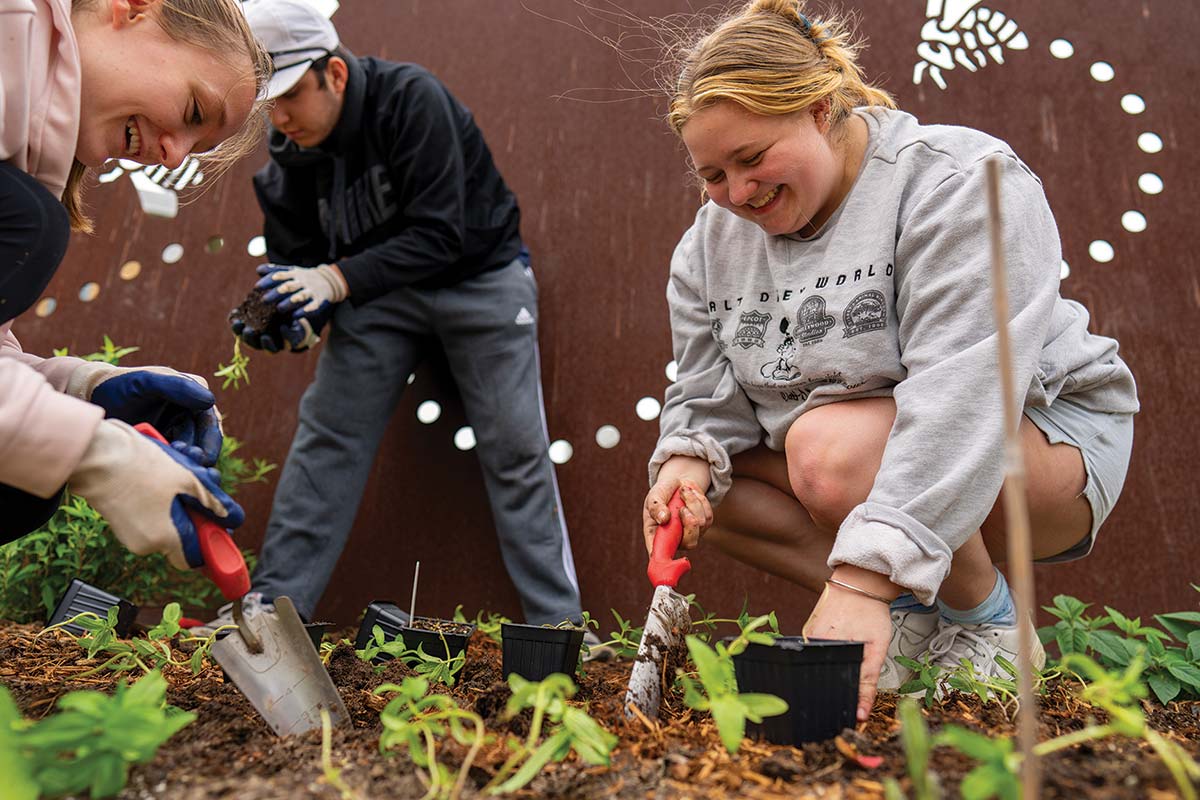
Planting in the Gardens is always a learning experience for students.
Michael Miller/Texas A&M AgriLife
Visiting the Gardens
The Gardens at Texas A&M, located on the west campus in College Station, is open daily from dawn to dusk with free admission. Visitors may stroll through the learning gardens to acquire new gardening information or simply relax and connect with the great outdoors.
Faculty and students regularly visit to do just that, Johnson says, to study pollinators and identify plants or have a picnic or nap in the green space.
“Sometimes they come and do yoga,” he says. “It’s so peaceful.”
Special events happen throughout the year, usually to mark the seasons. The family-friendly Hullabloom Fest, which celebrates the arrival of spring, usually falls around Earth Day and includes the release of native butterflies. Last year, 450 butterflies were released in front of about 1,000 visitors.
The Fall Festival centers on the harvest with guests picking cotton from the fields and ginning the cotton at the Gardens’ small cotton gin.
“People can see the cotton from a raw product to a finished product,” he says.
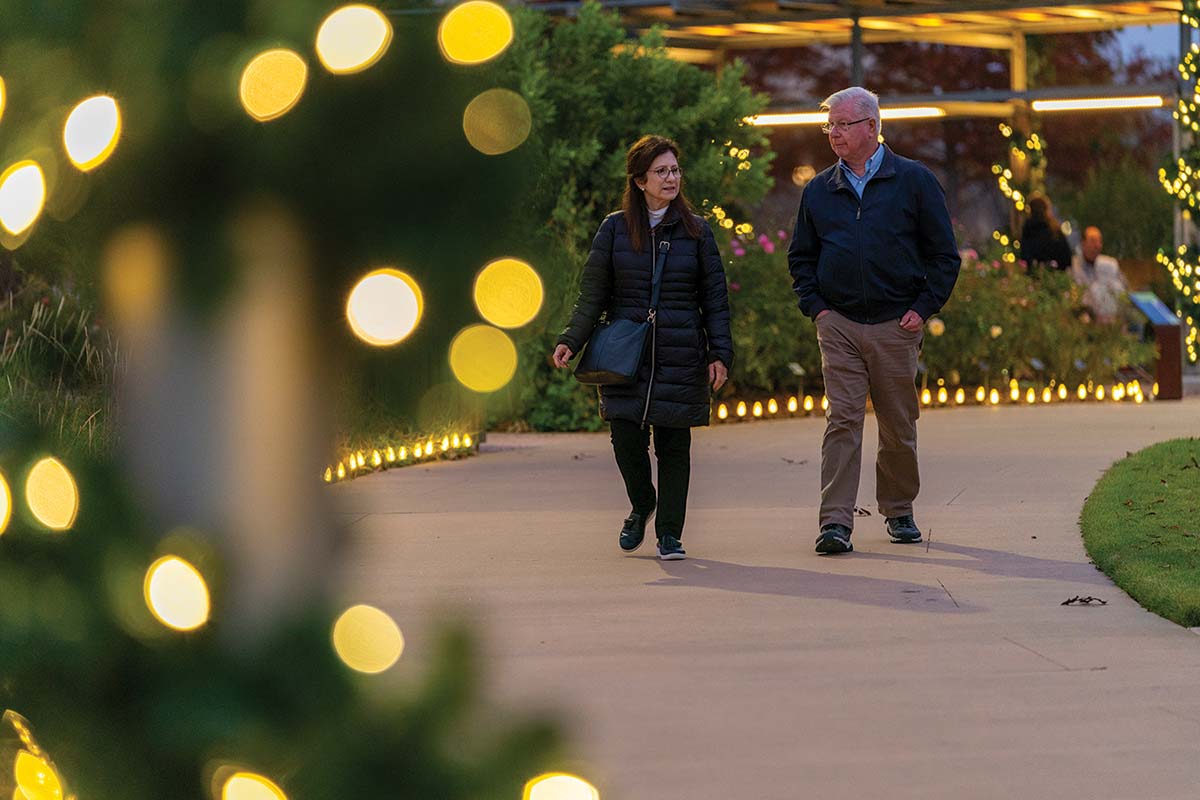
The Gardens are lit with thousands of lights for the Holiday Stroll.
Michael Miller/Texas A&M AgriLife
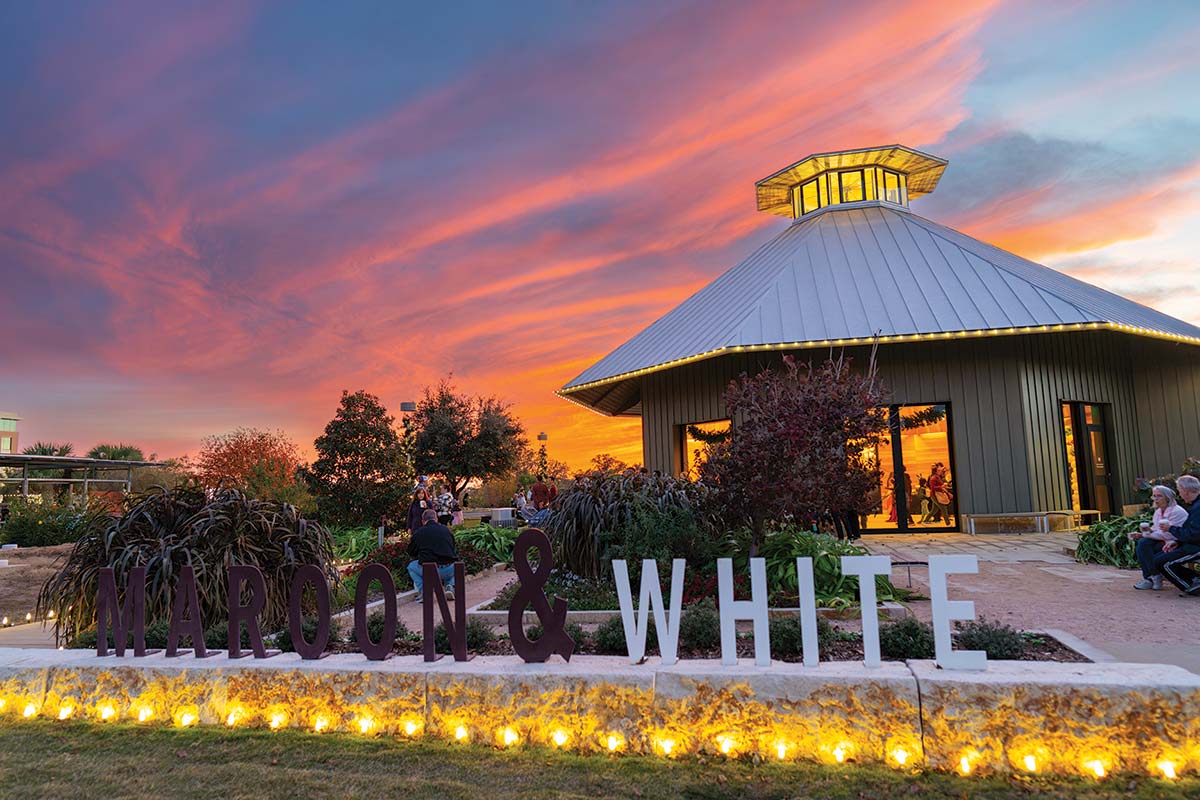
The Pavilion and the Maroon & White Garden are decked out in holiday décor.
Michael Miller/Texas A&M AgriLife
Other events include the Summer Celebration and Anniversary in June and the Holiday Stroll, when the Gardens glow with thousands of lights, featuring live seasonal music and a visit from Santa.
Lectures, children’s summer camps and communitywide events sponsored by university departments—such as Darwin Day, which celebrates all things biology—are also held. The Gardens may also be rented out for private events.
Guests are encouraged to bring their own snacks and picnic as there are no on-site food vendors. However, food and drink can be purchased at West Campus Dining, a short walk away, or at the Rosenthal Meat Center, a full-service retail area featuring meat and dairy products processed at the Rosenthal Meat Science and Technology Center.
The Gardens are accessible with surfaces of concrete, pavers and compacted decomposed granite. Accessible ramps and seating are available throughout the gardens and within most themed garden rooms. Guests must bring their own wheelchairs.
Leashed dogs are allowed, but wildlife in the area, such as birds and reptiles, should be viewed from a distance.
For more information about the Gardens and parking, for directions to the site, and to view a self-guided map, visit gardens.tamu.edu.