It was a Saturday in the early spring of 1939 and by noon, farm families were arriving in droves to San Augustine. They’d left early in their horse-drawn wagons and dusty Model A pickups in case the winding dirt roads to the county seat were especially muddy or rutted, as they often were.
They parked along West Columbia Street, excited for the Saturday market on the courthouse square. The soil in their fields and gardens was rapidly warming, rich with the promise of bountiful yields. The farmers needed to buy burlap bags of field seeds—cotton, ribbon cane and corn—to get them in the ground, hoping for a good cash crop that season.
It was still the Great Depression after all. Farmers also had to sort through paper packets of kitchen garden seeds—from carrots and peas to okra and cucumbers. These seeds would feed their family for the upcoming year and hopefully yield extra produce to sell on a future market day.
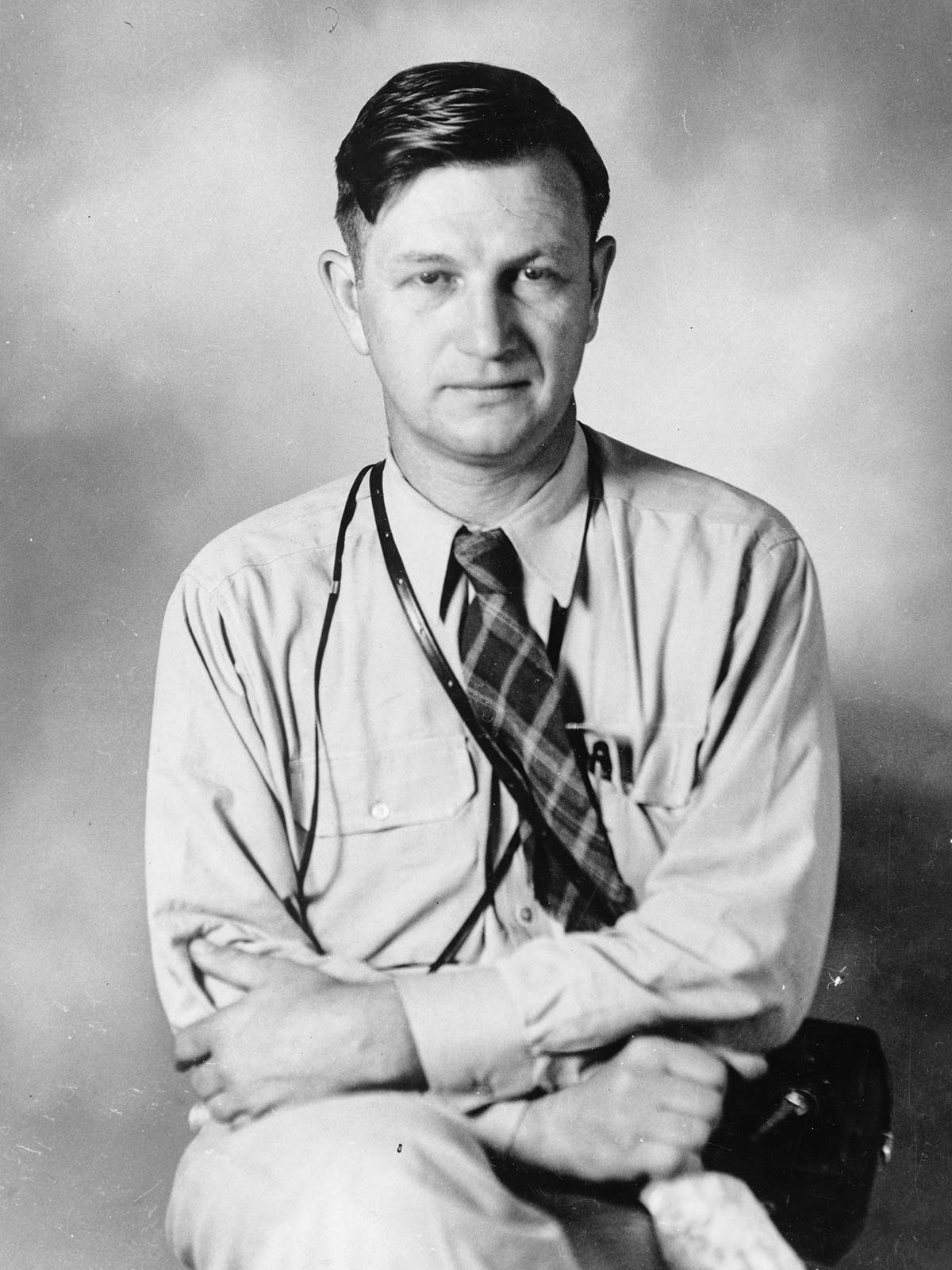
Russell Lee looked for the humanity in his subjects, including those in San Augustine that he photographed in 1939.
Russell Lee
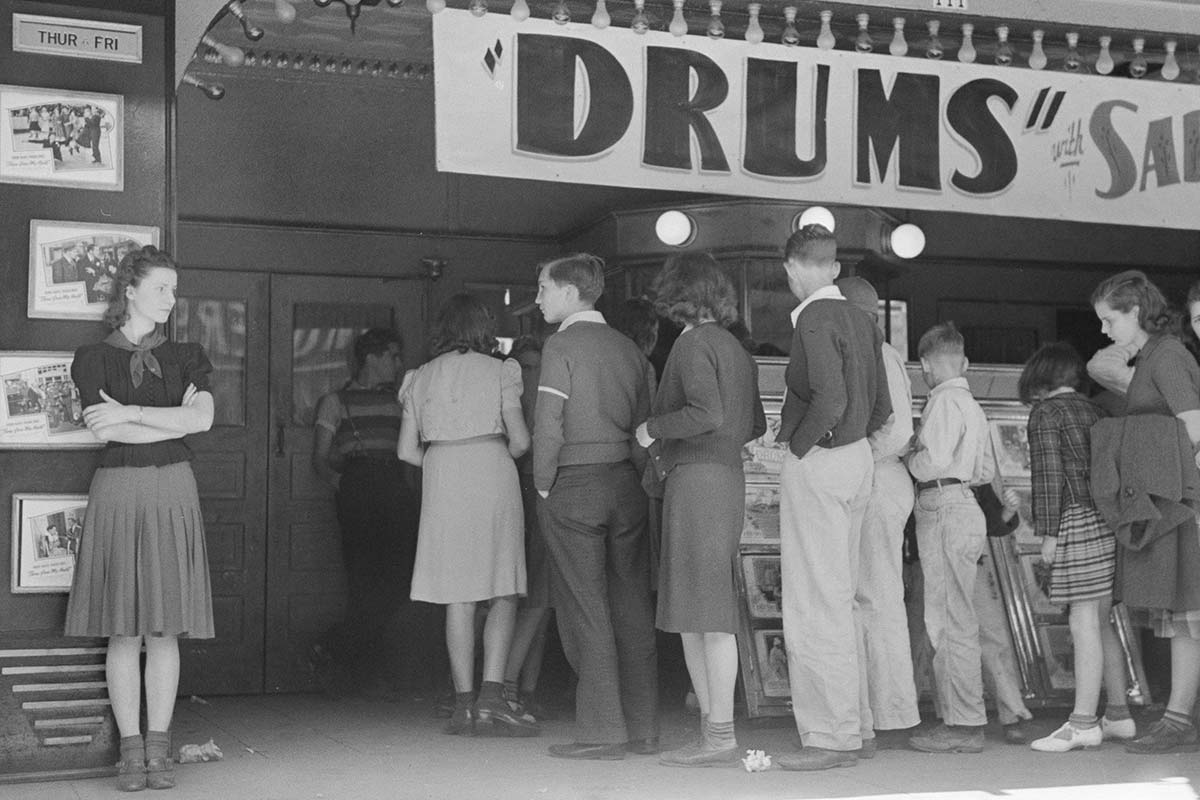
Schoolchildren going to the movies, lining up outside the Augus Theatre.
Russell Lee
General mercantile stores were bustling with Saturday shoppers. If a customer was short on cash, many stores allowed the purchase of goods on credit. This was a standard practice to accommodate customers who earned their income from harvesting crops.
Farm implement stores were busy, too. Although times were tough, gardens still needed to be tilled and draft animals needed sturdy bridles and collars. Farmers who couldn’t afford new implements brought in what they had for maintenance and repair at the blacksmith’s forge. The auto garage was also busy servicing and repairing cars and trucks, as was the Sinclair gas station down the street.
Market day was a time for taking care of business, it was also a time to reconnect with friends and neighbors you hadn’t seen since perhaps the last San Augustine Saturday. Society ebbed and flowed in streams and waves around the courthouse square. The large statue of James Pinckney Henderson, the first governor of Texas, watched over the hubbub.
Some folks dressed up for the occasion—men in dark suits and felt hats, while women gussied up as if Saturday was Sunday. Some men dressed in khaki pants and button-down shirts or denim overalls and straw hats. Many women wore dresses they’d made themselves from patterned feed sack cloth.

Farm kids play in the back of a rusty Ford Model A.
Russell Lee
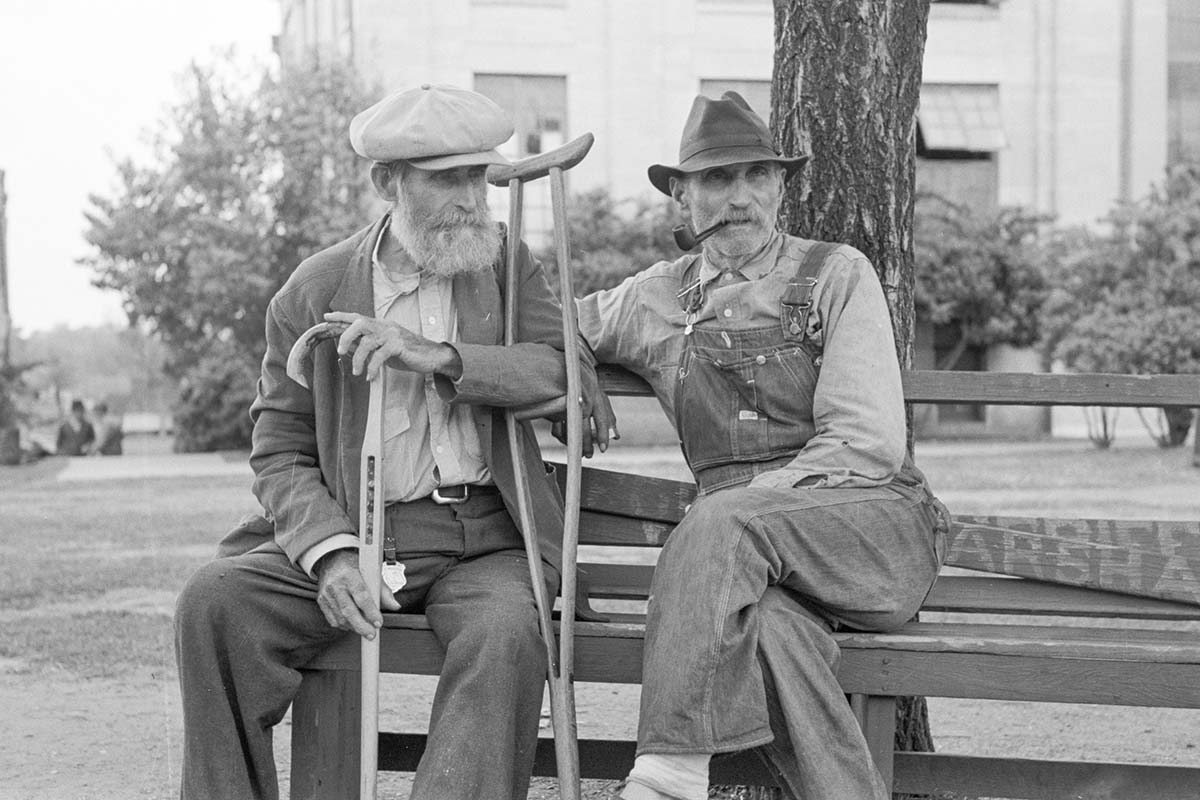
Old-timers swap stories on a bench on the courthouse square.
Russell Lee
Barefoot kids chased each other around the dirt streets and side lots as old men sat on wooden benches and observed all the goings-on. Eyeing each other were small groups of young people—a foursome eating ice cream on the raised sidewalk, another group leaning on a display window lined with stylish suits and hats. A long line of teens, more intent on each other than the movie posters or the bustling activity surrounding them, packed the entrance to the Augus movie theater.
The busyness of this Saturday market day was typical, but something was different today. Observing these scenes was a stranger, a man with a camera and a flash. He moved efficiently, carefully, as if his time was short and his goal was large—to chronicle in film the rhythm and routine of life in San Augustine.
The man’s name was Russell Lee. He was among a group of young photographers hired between 1937 and 1946 by the Farm Security Administration, one of President Franklin D. Roosevelt’s New Deal programs, to depict the state of American life during the Great Depression. The FSA especially wanted to shine a light on tough living and working conditions of farm families, conditions which New Deal programs aimed to alleviate.
In the end, Lee proved to be the longest-tenured and most prolific, though lesser known, FSA photographer. He shot 19,000 photos in 29 states. He cherished the work and ended his FSA career in 1942 to join the military during World War II.
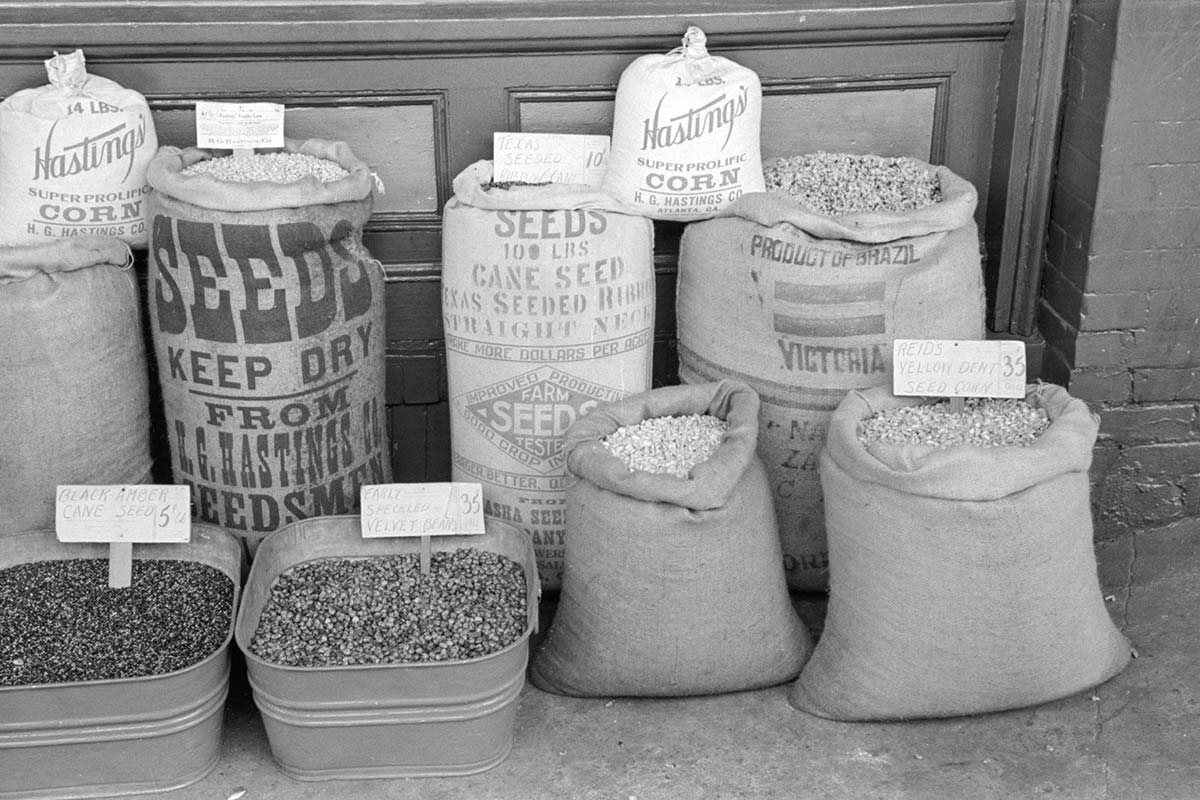
Sacks of seeds, such as cotton, corn, beans and sugarcane, attracted farmers ready to plant.
Russell Lee
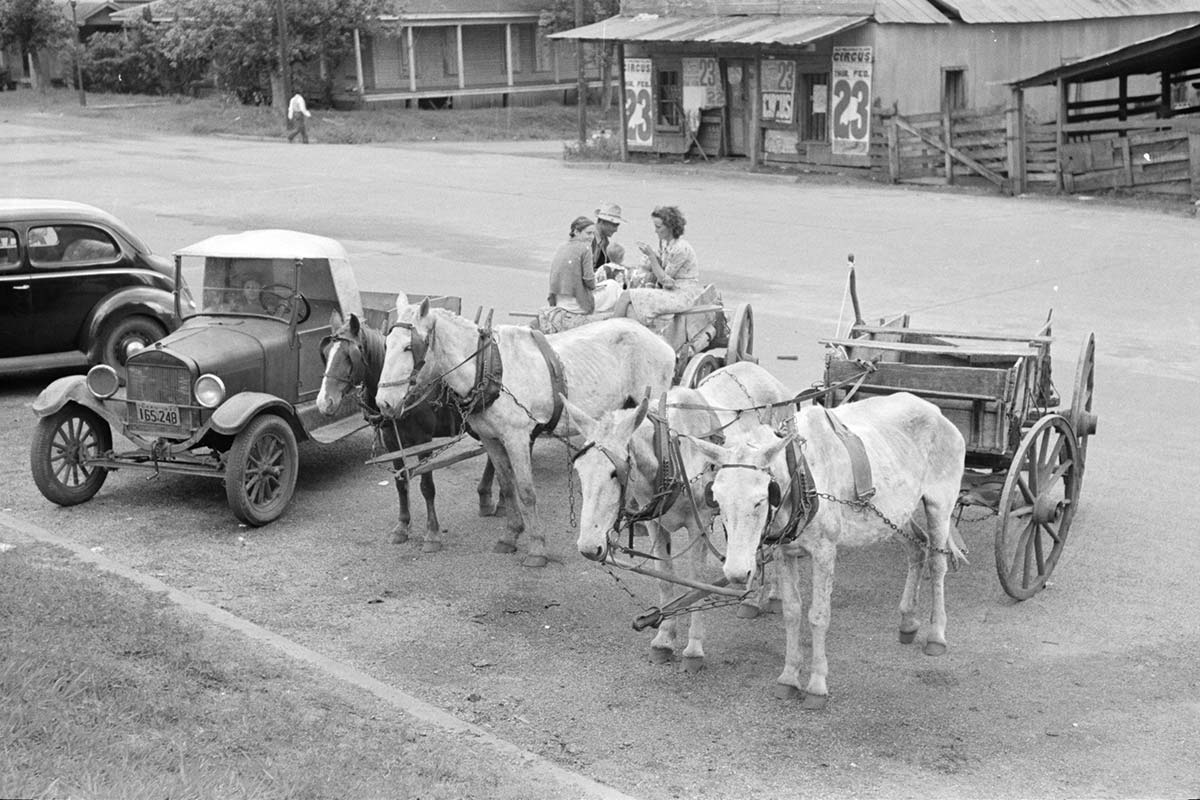
Farmers’ vehicles parked near the county courthouse, cars and wagons alike.
Russell Lee
Lee first came to Texas in 1939 and fell in love with the Lone Star State, as noted by historian Mary Jane Appel in her book Russell Lee: A Photographer’s Life and Legacy. Though Lee was a Midwesterner and from a wealthy family, he found a kinship with the people of Texas. He was especially drawn to the all-American look and feel of small-town life in San Augustine.
Lee hit the road for the FSA at a time when rural homes were only beginning to get electricity through the federal Rural Electrification Act loan program. While municipal electric service had already been established in San Augustine, families outside of the city limits did not have electric service.
Deep East Texas Electric Cooperative was organized in 1938 with the first lines energized in San Augustine County by year’s end. Other electric cooperatives soon followed in lighting the farms and ranches throughout the Pineywoods of East Texas.
While documenting rural America, Lee developed a new photography technique to produce well-lit photos inside of buildings. Unlike other photographers of his era, Lee’s direct flash photography allowed the whole scene to be illuminated, not just the foreground.
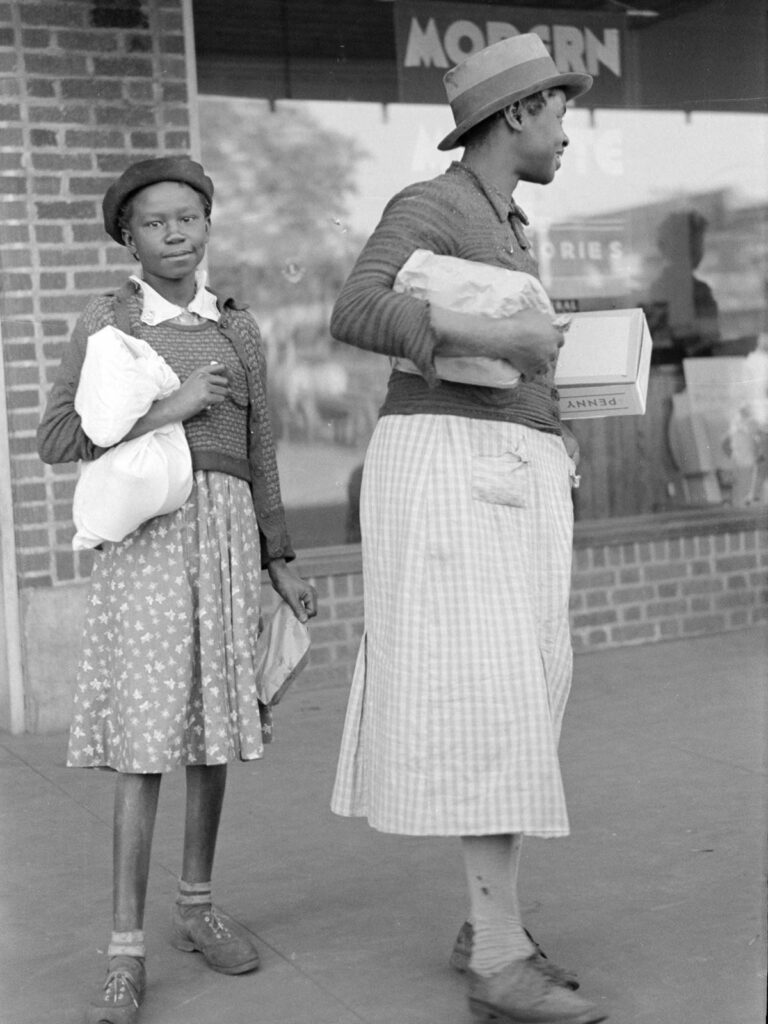
Sisters in town shopping; note the homemade dresses, possibly made from flour sacks as was the custom.
Russell Lee

Saturday was a busy time for car repairs at San Augustine garages.
Russell Lee
Much of Lee’s photography was shot on black-and-white film using a 35 mm Contax camera. At first, he processed the film himself, typically in a hotel bathroom that he made light-tight, removing all opportunities for outside light to ruin the development process. But after a batch of bad chemicals ruined some of his film in 1938, he started shipping undeveloped film rolls to Washington, D.C., where FSA staff processed them and sent him prints.
Lee was so enamored with Texas that after World War II he made Austin his home. In 1965 he set up the first photography degree program at the University of Texas. He continued to teach photography until his retirement in 1974.
He died in 1986 at age 83.
Today, many of the buildings in Russell Lee’s FSA photos still grace San Augustine’s downtown square, in particular the courthouse, which was restored in 2010 by the Texas Historical Commission. That San Augustine Saturday, 87 years ago, was much different than today, but luckily Lee’s images hold open a window to the past. Appel notes that “when people at the time asked him why he was doing this, he told them he was taking pictures of the history of today.”
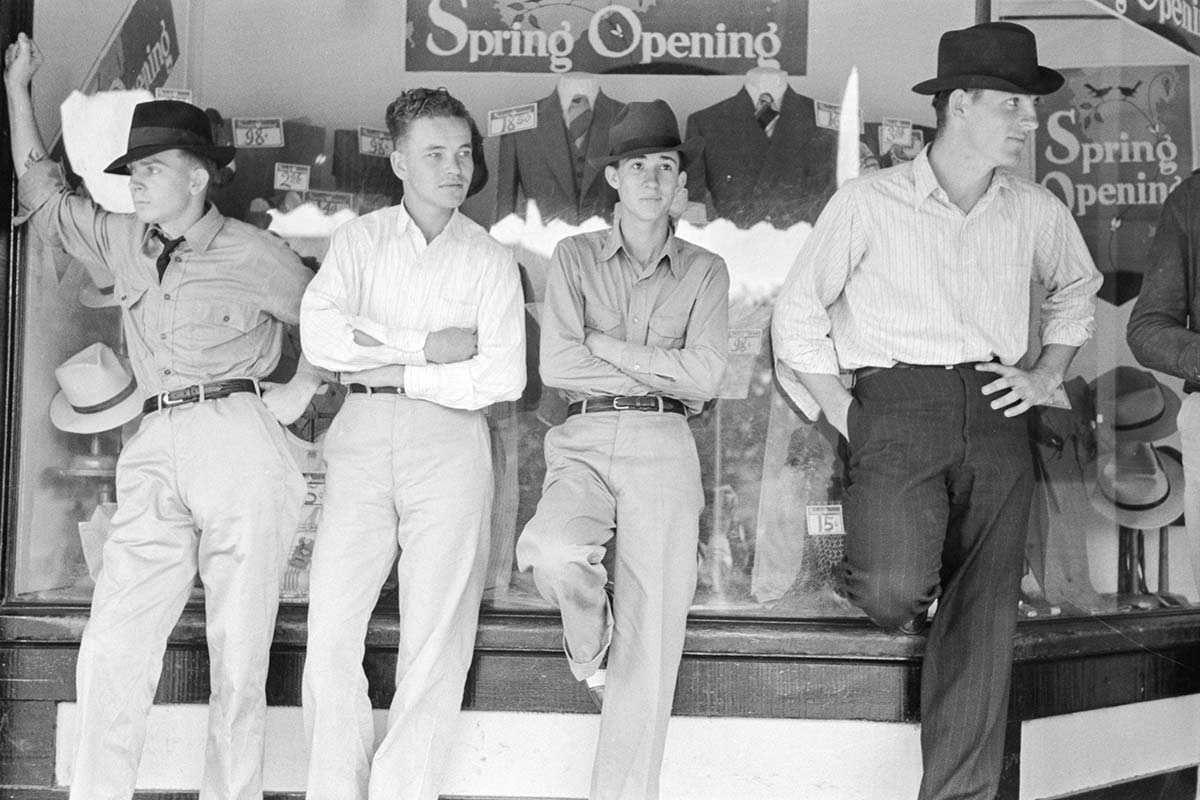
The younger generation watches the sights outside a fashionable clothing store.
Russell Lee
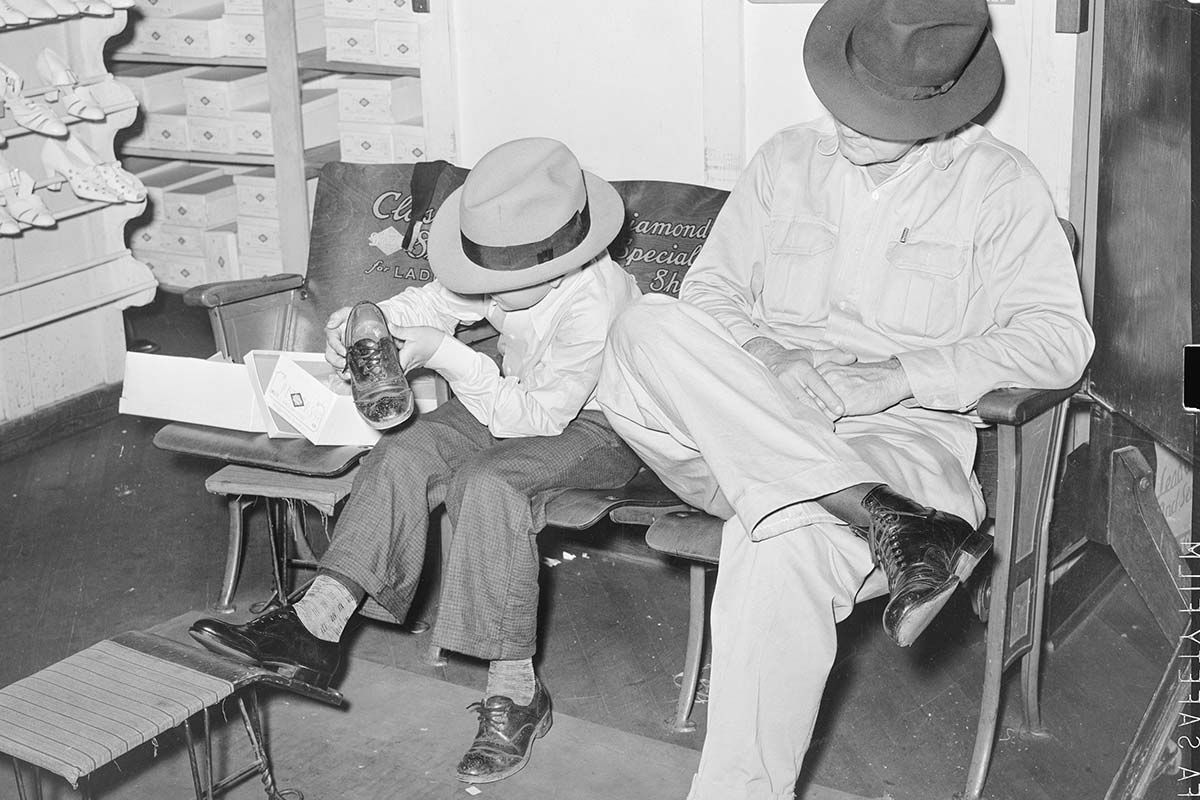
A youngster tries on a clean, new pair of shoes.
Russell Lee
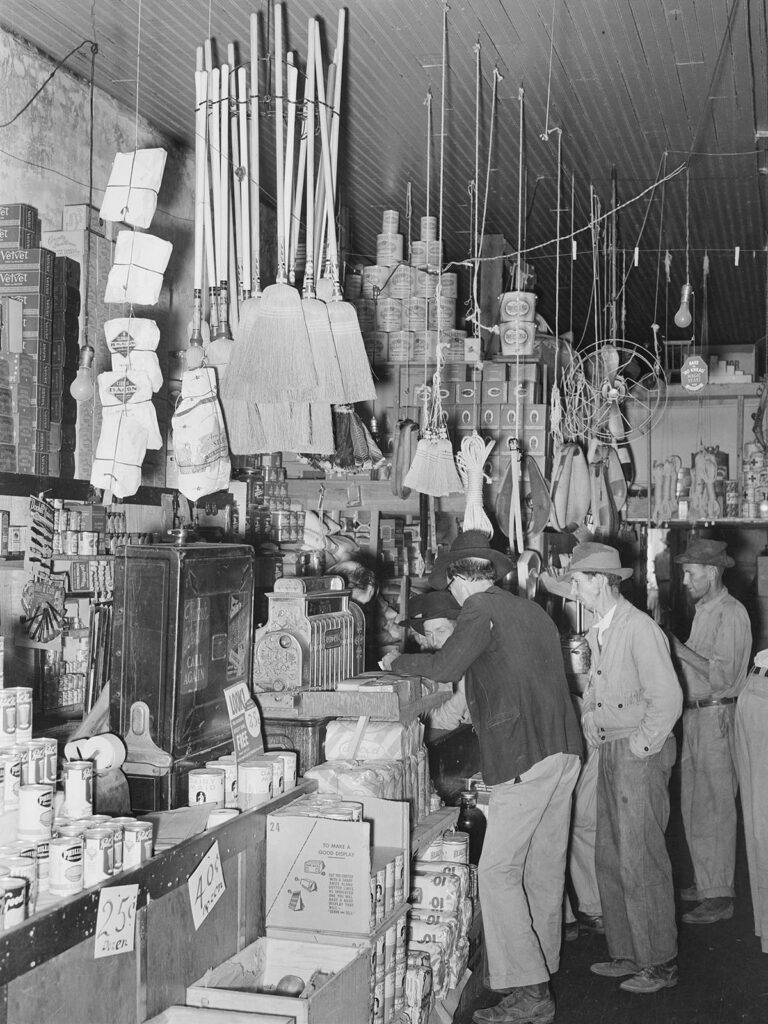
Customers stock up on supplies during a Saturday shopping visit at a general store on the square.
Russell Lee
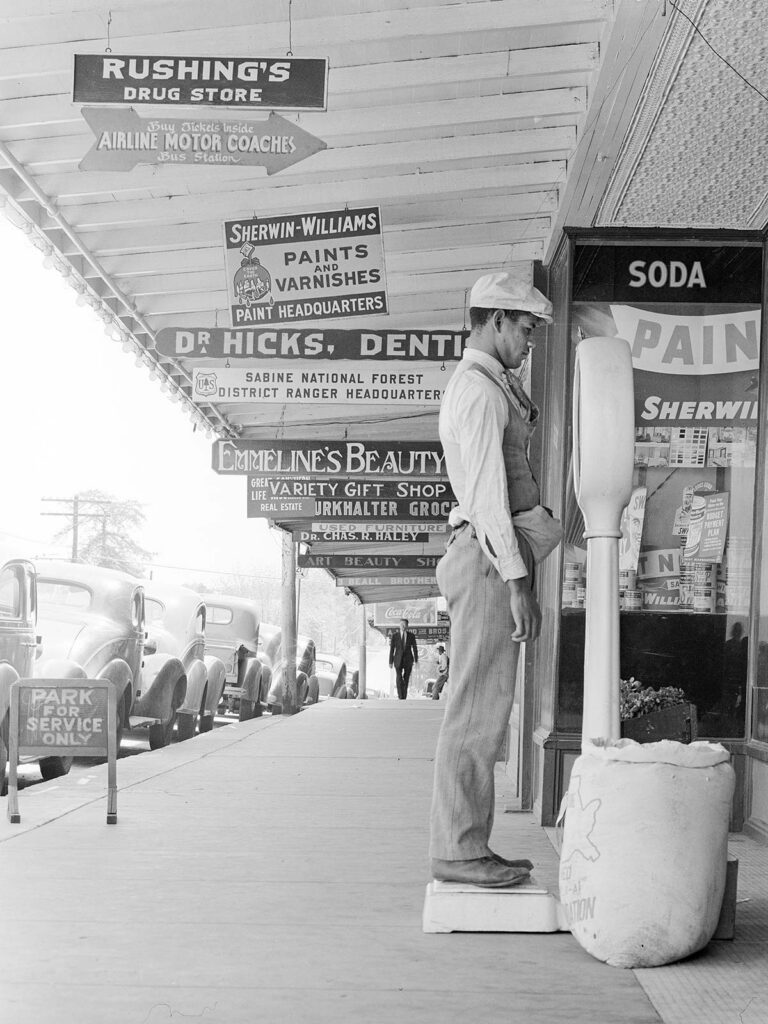
A young dandy checks his weight on a coin-operated scale on a downtown sidewalk.
Russell Lee

An employee helps a farmer select seeds for a vegetable garden.
Russell Lee
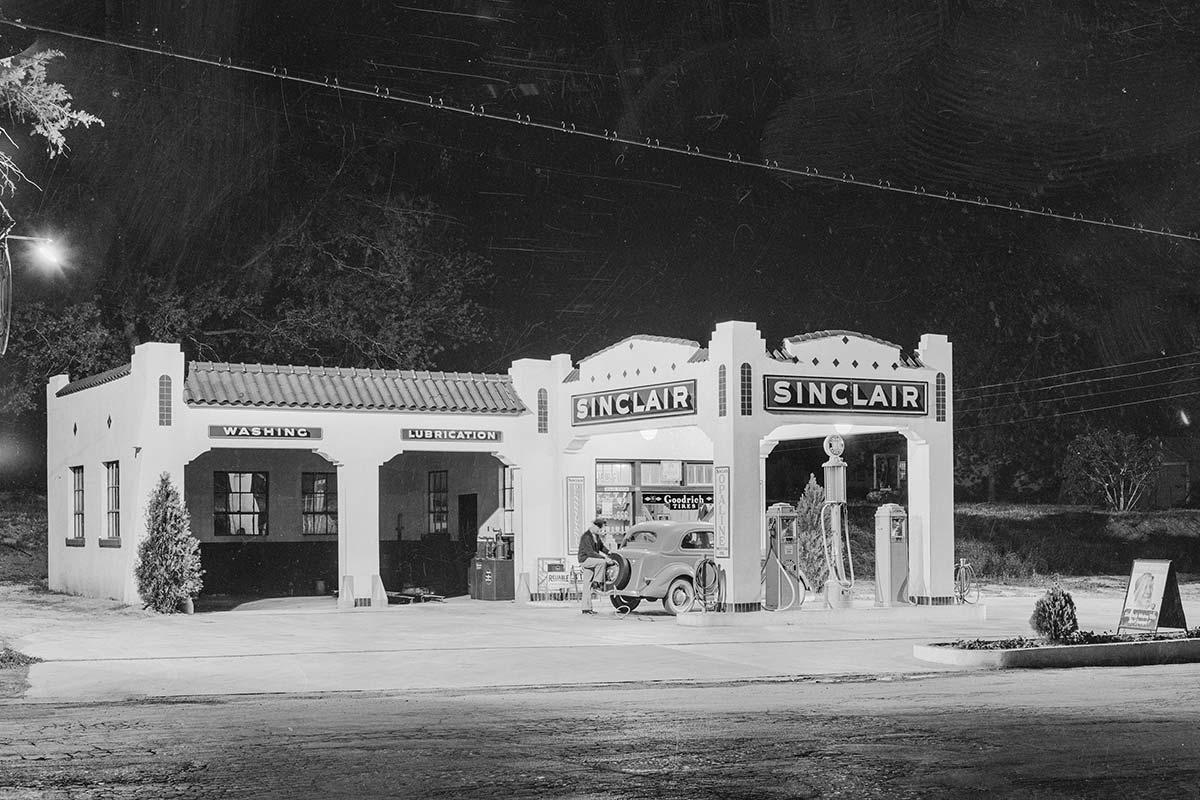
Visitors could get their car or truck repaired and washed at the Sinclair gas station.
Russell Lee
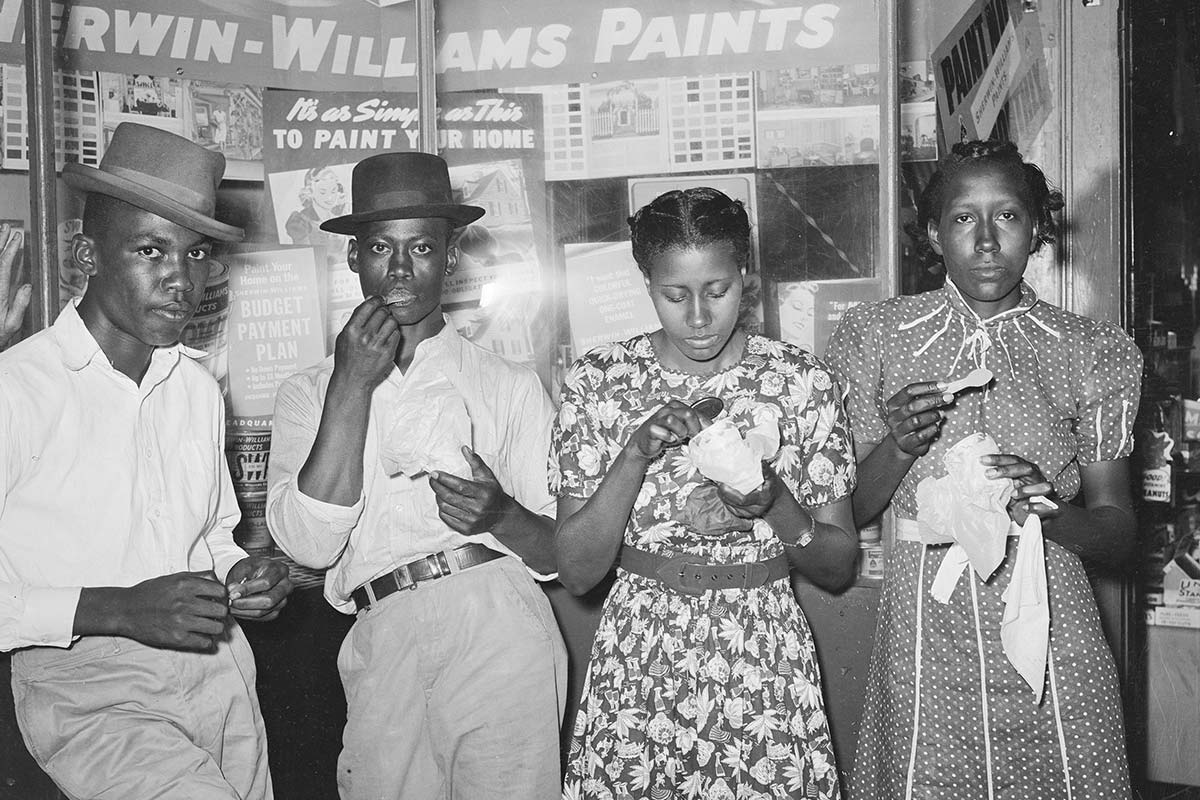
Teenagers enjoy ice cream on their Saturday visit to downtown.
Russell Lee